
Looking for a compact, quiet generator that can keep your RV comfortable and keep household essentials running during an outage?

Quick product snapshot
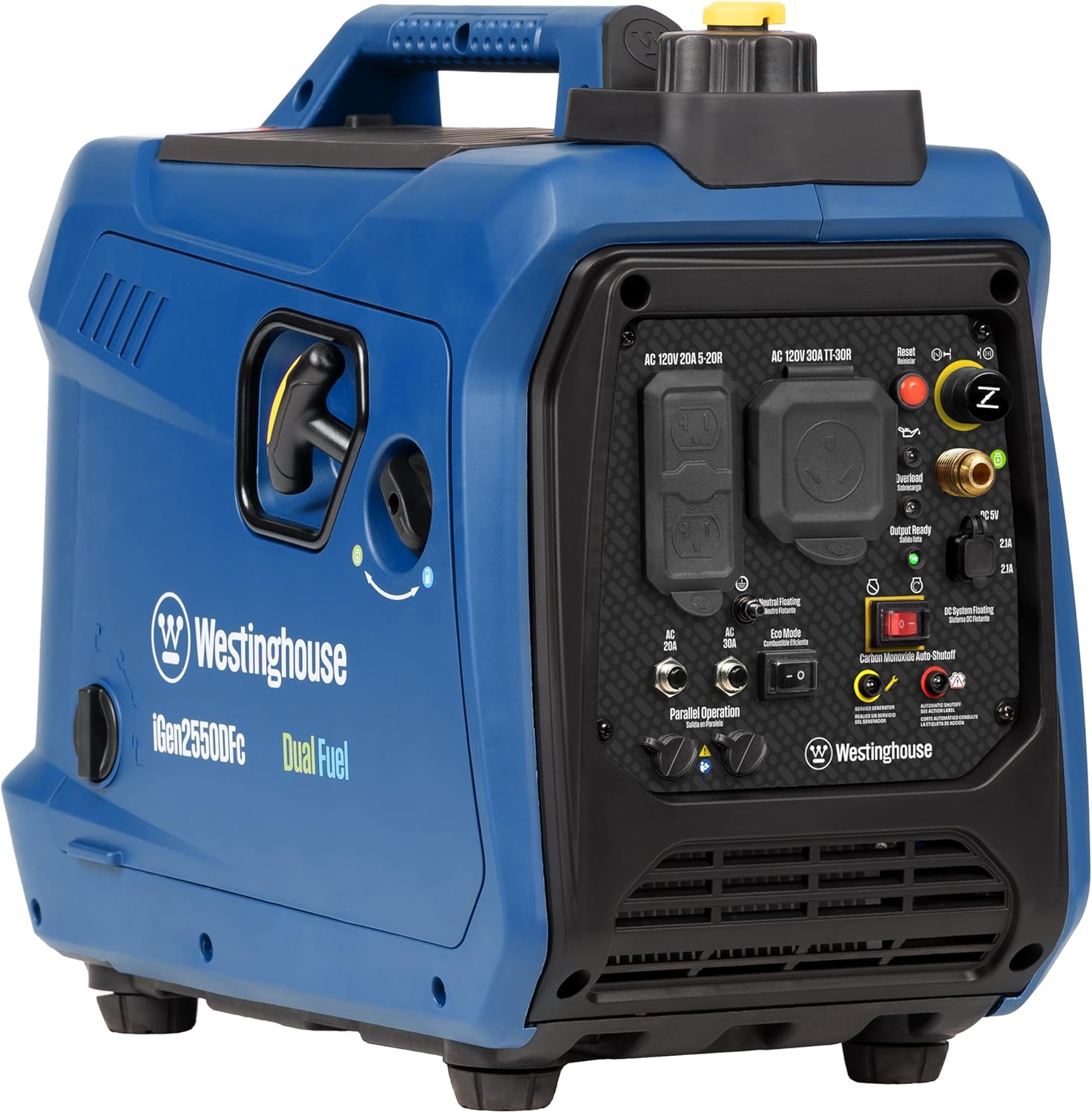
You want a generator that balances power, portability, and quiet operation without a lot of fuss. The Westinghouse 2550 Peak Watt Super Quiet & Lightweight Portable Inverter Generator, RV Ready 30A Outlet, Gas and Propane Powered, CO Sensor, Parallel Capable, Long Run Time is designed to do just that: deliver reliable power for camping, tailgating, light job-site use, and emergency home backup while being easy to move and operate.
This snapshot gives you the headline specs so you can quickly tell whether it matches your needs before getting into the finer details.
| Feature | Specification |
|---|---|
| Model / Product Name | Westinghouse 2550 Peak Watt Super Quiet & Lightweight Portable Inverter Generator, RV Ready 30A Outlet, Gas and Propane Powered, CO Sensor, Parallel Capable, Long Run Time |
| Peak Watts | 2550 W |
| Rated (Running) Watts | 1900 W |
| Total Harmonic Distortion (THD) | Less than 3% |
| Weight | 42.4 lbs |
| Fuel | Gasoline or Propane |
| Gas Tank Capacity | 1.16 gallons |
| Run Time | Up to 12 hours (on 1.16 gal at light load) |
| Noise Level | As low as 52 dBA |
| Outlets | 1 × TT-30R RV 30A outlet, 2 × 120V 20A household outlets, 2 × USB ports |
| Safety | CO sensor (auto shutoff) |
| Parallel Capability | Yes (parallel cable required) |
| Included | Oil, oil funnel, tool kit, user manual |
| Compliance & Warranty | EPA compliant; 3-year limited coverage with nationwide service |
What’s in the box?
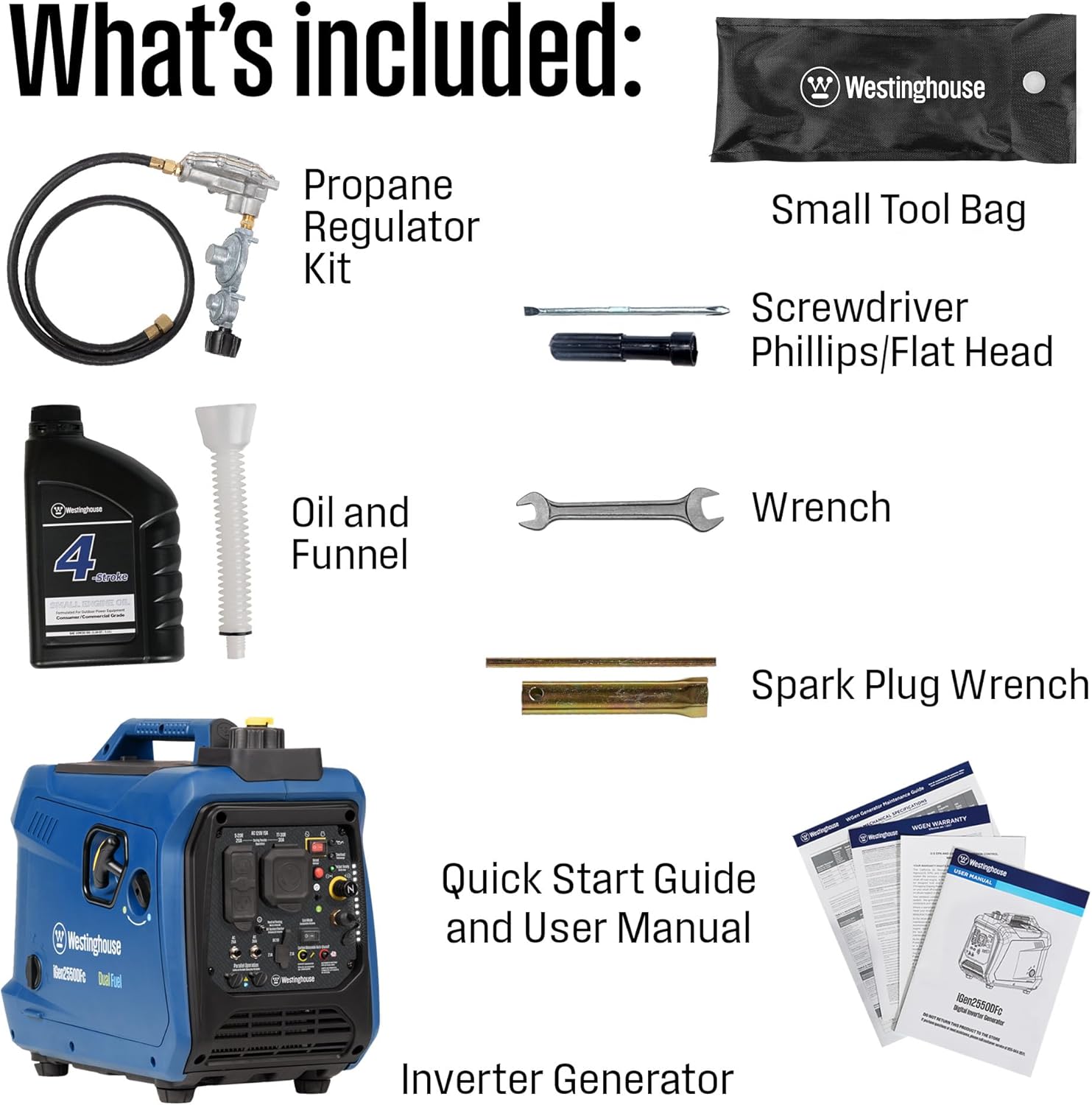
You’ll find the generator basically ready for first use, with all the small but important extras to get started. The package includes oil (so you don’t have to rush out to buy it), an oil funnel to make filling easier, a simple tool kit for setup and maintenance, and a user manual to walk you through operation and troubleshooting. Minimal assembly is required, so you can get it running quickly.
Performance and power output
You’ll want to know what this generator can actually run and how it behaves under real load. With 2550 peak watts and 1900 rated watts, this unit sits squarely in the small inverter generator class and is best suited to powering sensitive electronics and mid-sized loads reliably.
The inverter design helps keep voltage stable and THD under 3%, which is important for laptops, TVs, phones, and modern appliances that don’t tolerate dirty power. You’ll appreciate this if you plan to run sensitive devices or small medical equipment.
Starting and running watts — what you can expect
Starting (peak) watts are what the generator can deliver for a short time to handle motor starts, while running watts are what it can sustain continuously. With 2550 peak and 1900 running:
- You can start medium-load appliances such as a standard refrigerator (which often needs 600–1200 W to start) and keep it running.
- You can operate essential home items like LED lights, a laptop, phone chargers, a Wi-Fi router, and a small countertop microwave (if the combined load stays under 1900 W).
- You can comfortably run RV air conditioners? Not likely a full-size rooftop A/C, unless it’s a very small, low-power model — most RV A/C units require more starting and running power than this unit provides by itself.
Always check the starting and running watts of each device you plan to run to avoid overloading. You can combine several small loads to fit within the 1900 W limit as long as the combined start-up surges don’t exceed the 2550 W peak.
THD and electronics safety
You’ll want clean power when you’re running sensitive electronics. The generator’s less-than-3% THD rating means the output is stable enough to safely power phones, laptops, TVs, and other sensitive equipment without special conditioners. That’s one of the reasons inverter generators like this are favored for camping and RV use — they create smoother electricity than many conventional portable generators.
Fuel, efficiency, and runtime
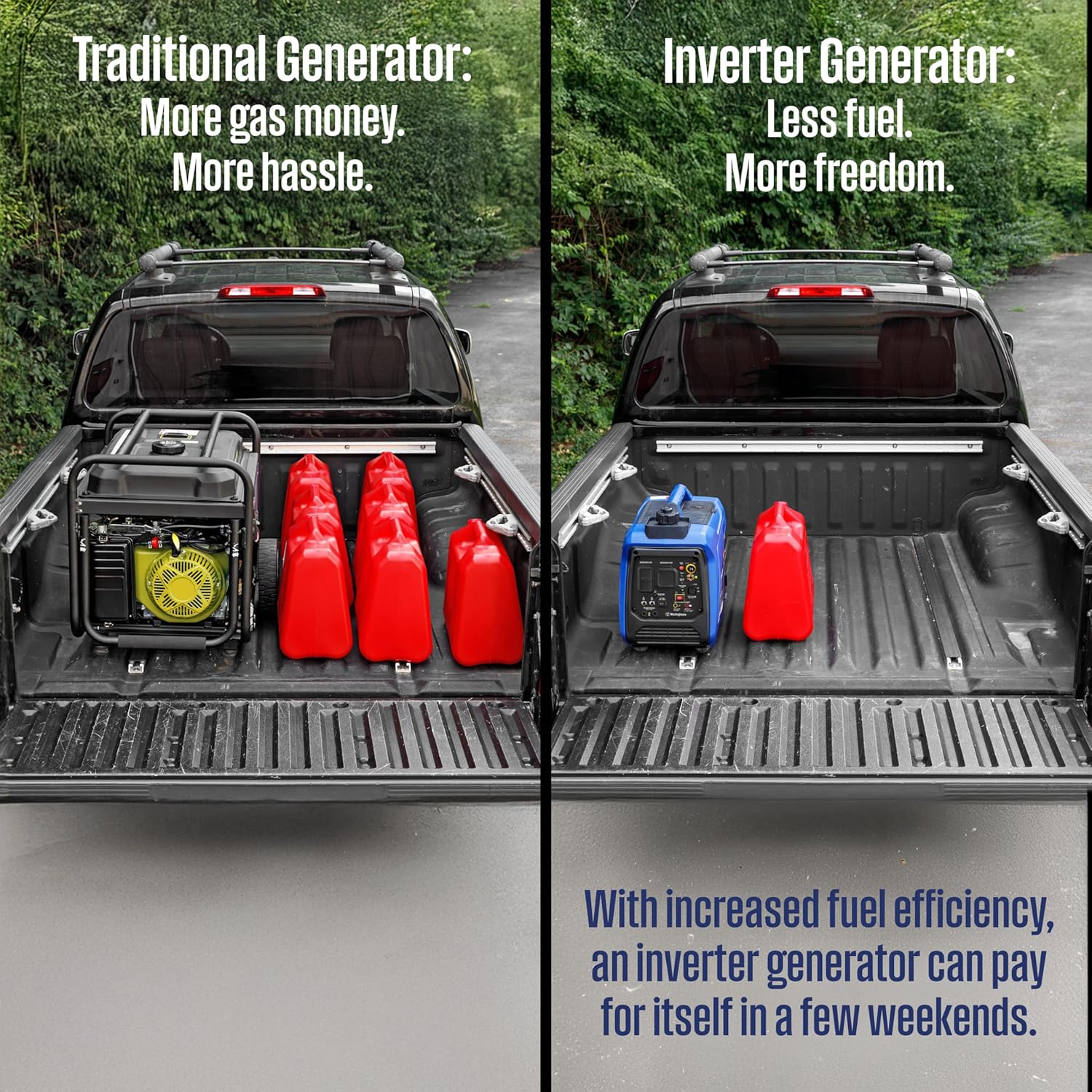
Efficiency matters when you’re camping or preparing for a power outage and don’t want to refill frequently. This Westinghouse unit emphasizes fuel efficiency without sacrificing portability.
Fuel options and tank
You can run this generator on gasoline or propane. The 1.16 gallon gas tank is fairly small, which keeps the weight down (42.4 lbs) and makes it easier to transport. Westinghouse rates the runtime at up to 12 hours on that 1.16 gallon tank with a light load, which is impressive for the tank size and useful if you want overnight operation without refueling.
If you prefer propane, you’ll like the cleaner storage and longer shelf life of propane fuel. Propane runtime will depend on tank size and load, and you should plan for slightly different fuel consumption characteristics than gasoline.
Economy Mode and fuel savings
Economy Mode is designed to optimize engine speed to match load, lowering RPMs when demand is light. You’ll notice lower fuel consumption and reduced noise when this mode is on. It’s ideal for charging phones, running LED lights, or powering a fridge and a few small devices. Just be aware that when your load suddenly spikes, the engine will ramp back up to meet demand, which is normal behavior.
Noise level — what 52 dBA feels like
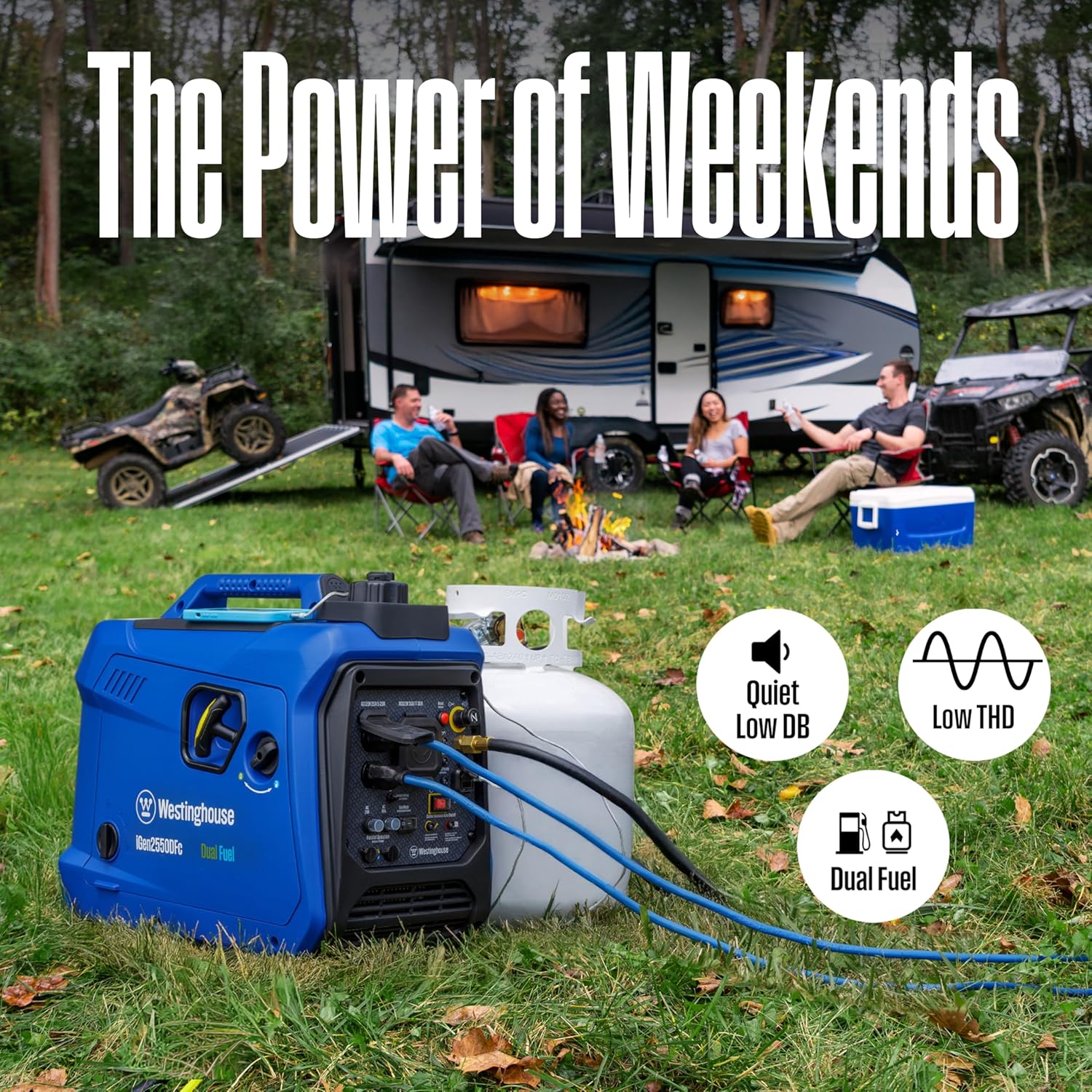
With a minimum noise rating as low as 52 dBA, this model is notably quiet for its size. For context, 52 dBA is similar to the hum of a quiet conversation or a moderate refrigerator. You’ll find it suitable for nighttime camping, tailgating, and RV parks where noise matters. Noise increases under heavier load, but the inverter design and muffler engineering keep its signature quiet profile.
Portability and build
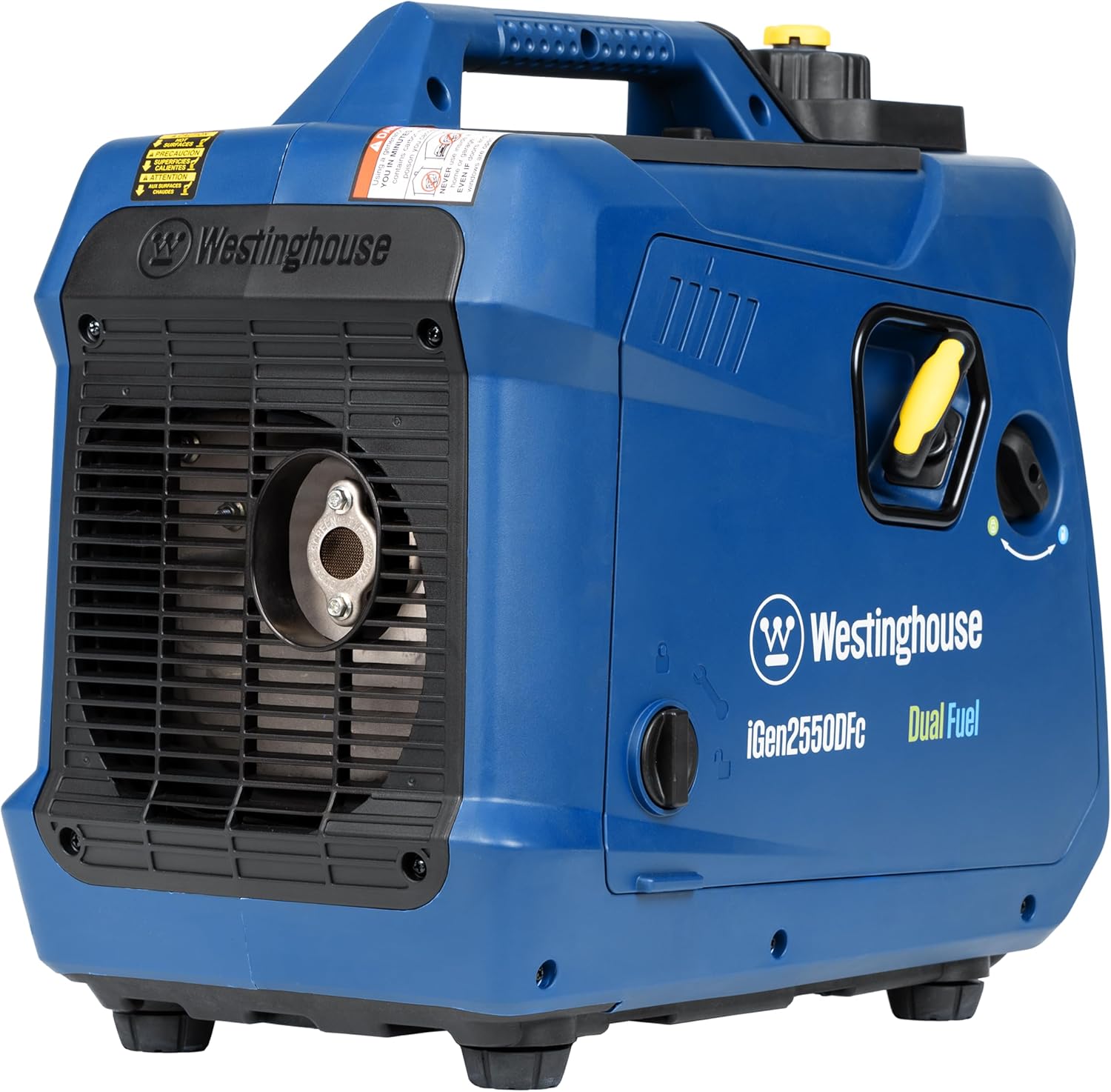
You’ll appreciate the lightweight construction if you plan to move the generator frequently. At just 42.4 lbs, it’s much easier to carry than many traditional units, and you can manage it solo for short distances or with two people for more awkward lifting.
The chassis is compact with a molded handle that makes transportation straightforward. The build quality strikes a balance between portability and durability — it’s not an industrial job-site behemoth, but it’s robust enough for camping, occasional job-site use, and emergency home backup.
Outlets and real-world use cases
You probably want to know exactly what you can plug in. This unit offers a practical selection of outlets for RV, household, and personal electronics.
Outlet breakdown and uses
You get one TT-30R 30A RV outlet, two 120V 20A household outlets (GFCI-protected), and two USB ports. That combination lets you:
- Plug an RV directly using the 30A outlet to run interior lights, smaller A/Cs (check A/C requirements), and appliances that don’t exceed total capacity.
- Run household items like a refrigerator, microwave, lights, and power tools within the wattage limits through the 120V outlets.
- Charge phones, tablets, and USB gadgets directly without adapters using the built-in USB ports.
This setup is particularly useful for weekend trips, powering a small tailgate setup, or keeping essential circuits active during an outage.
RV-ready functionality
The built-in TT-30R RV outlet is a major convenience if you use this for RV travel. You can plug your RV directly without a separate adapter in many cases, though you should always check your RV’s power requirements. You’ll need to manage total load carefully — some RV A/C units may draw more power than this generator can continuously supply.
Safety features
Safety is a big part of selecting a portable generator, and Westinghouse includes features that help you run this unit with more confidence.
CO sensor and automatic shutdown
The integrated carbon monoxide (CO) sensor is an important safety feature: it detects elevated CO levels and automatically shuts down the generator to prevent CO buildup. You’ll still need to operate the generator outdoors and away from windows and vents, but the CO sensor adds a layer of protection in case of unexpected exhaust flow or placement issues.
Overload protection and circuit safeguards
The generator includes standard overload protection and circuit breakers to safeguard both the unit and your devices. If you accidentally exceed the rated wattage, the generator will trip a protective breaker rather than continuing to operate in damaging conditions. This helps protect appliances and reduces the risk of mechanical stress.
Setup, operation, and maintenance
You’ll appreciate straightforward setup and the inclusion of starter items in the box. Routine maintenance is key to keeping the generator reliable over time.
Initial setup and first run
Setup is straightforward: add the provided oil, ensure proper fuel selection (gasoline or propane), and follow the user manual for the first startup. The oil funnel and tool kit included in the box simplify this process. Start the unit on a flat, well-ventilated surface and allow it to warm up before applying heavy loads. If you’ve never used an inverter generator before, do a short test run at home so you know how it behaves and how loud it will be at your campsite or park.
Regular maintenance tasks
To keep your generator running smoothly, you should perform basic maintenance on a schedule:
- Change the oil after the initial break-in hour period recommended by the manual, then every 50–100 hours of operation or seasonally depending on use.
- Check and replace the air filter as needed.
- Inspect and clean the spark plug annually or per the manual.
- If you use gasoline, consider fuel stabilizer for long-term storage; for propane, ensure fittings and hoses are checked.
- Run the generator periodically during storage so seals stay lubricated and the batteryless system stays operational.
Proper storage during winter or long periods of non-use includes draining fuel or using a stabilizer and placing the generator in a dry, protected area.
Real-world performance scenarios
You’ll want to picture how this generator handles real situations. Below are several common use scenarios and realistic expectations.
Weekend camping or tailgating
For a weekend camping trip, you can expect to run lights, a mini fridge or cooler, a couple of small appliances, and multiple device chargers. Economy mode will help extend runtime for overnight charging and low-power needs. Noise will be low enough to avoid disturbing neighbors in most campgrounds.
RV travel and boondocking
When boondocking, you’ll appreciate the RV-ready outlet. You can power lights, slide-outs, water pumps, and some appliances, but be careful with air conditioning and high-wattage devices. If you need more sustained power for an RV A/C, consider pairing this generator in parallel with another matching unit (parallel cable required) or using shore power at campgrounds.
Emergency home backup
For short-term emergency backup, this generator can keep essentials running: refrigerator, lights, a router, and medical devices if their combined draw stays under the running watts threshold. For whole-house backup or heavy loads like central A/C or electric ovens, this unit is not intended to handle those alone.
Pros and cons
You’ll want a balanced look at strengths and limitations so you can decide whether this generator fits your priorities.
Pros
- Lightweight and portable at 42.4 lbs, so you can move it easily.
- Clean inverter power with <3% thd, safe for sensitive electronics.< />i>
- RV-ready 30A outlet for direct RV connection.
- Dual fuel capability (gasoline or propane) for flexibility.
- Relatively quiet operation (as low as 52 dBA) and an Economy Mode to save fuel.
- Up to 12 hours of runtime on a small 1.16 gal tank under light load, which is practical for overnight use.
- CO sensor for added safety and automatic shutdown.
- Comes with necessary starter items: oil, funnel, toolkit, manual.
- 3-year limited warranty and nationwide service network.
Cons
- 1900 running watts limits you from powering larger A/C units, well pumps, or whole-house needs.
- Small gas tank may require refueling during heavier use.
- Parallel operation requires purchasing a separate cable and possibly another identical generator to scale power.
- Not designed for heavy, continuous job-site loads — more tailored to recreational and emergency use.
Comparison with other generator types
You’ll likely compare this unit with conventional portable generators and other inverter models. Compared with conventional gasoline generators of similar power, this inverter generator is quieter, lighter, and provides cleaner power suitable for electronics. Compared with higher-capacity inverter models, it’s more affordable and portable but sacrifices top-end sustained power. If you need pure quietness and clean power for electronics, this unit is a solid middle-ground. If you need large continuous power for heavy RV A/C or full-home backup, look at higher-wattage alternatives or consider parallel operation.
Who should buy this generator?
You should consider this unit if:
- You camp, tailgate, or travel with an RV and need a lightweight, quiet power source.
- You want to power laptops, phones, a small fridge, lights, and a few household items during outages.
- You value clean inverter power for sensitive electronics.
- You need something portable that you can manage alone for short-distance transport.
- You want the option to run on propane for cleaner storage and longer shelf life.
This is less suitable if you need a primary power source for large air conditioning units, whole-house backup, or heavy power tools that require sustained high amperage.
Tips for buying and using
You’ll get the most from this generator if you follow a few practical tips:
- Add up the starting and running watts of everything you plan to use at once to ensure you stay within the peak and running capacities.
- If you need more power, purchase a matching Westinghouse generator and a parallel cable to combine outputs safely.
- Test the generator at home before you head out to be familiar with sound, starting procedure, and load handling.
- Use propane when you need long-term fuel storage and cleaner burning; use gasoline for slightly more runtime per fuel volume in many conditions.
- Keep the unit outdoors and well-ventilated; never run it inside a vehicle or enclosed space.
- Carry spare oil, a fuel stabilizer, a basic maintenance kit, and a set of gloves and ear protection.
- Use a transfer switch and a licensed electrician if you intend to connect the generator to home circuits — never backfeed into the grid.
Frequently asked questions
You’ll likely have some quick questions — here are clear answers to common ones.
Q: Can this run my RV air conditioner? A: Most RV rooftop air conditioners require more starting and running wattage than 1900 W can provide. You’ll need to check your specific A/C unit’s start and run watt requirements. Some very small A/C units might start if the combined load doesn’t exceed the 2550 W surge, but in general this generator isn’t ideal as the sole source for standard RV A/C.
Q: How long will it run on a full tank? A: Westinghouse rates up to 12 hours of run time on its 1.16 gallon gas tank at a light load. Expect shorter runtimes under heavier loads. Propane runtime depends on tank size and load.
Q: Is it safe to power sensitive electronics? A: Yes. The inverter design and less-than-3% THD rating make it safe for laptops, TVs, phones, and other sensitive devices.
Q: Can I run it inside an enclosed space? A: No. Even with a CO sensor, you must run the generator outdoors and away from windows, doors, and vents. The CO sensor is an additional safety layer, not a license to run it indoors.
Q: Do I need any extra accessories to use it with my RV? A: You may need a propane hose, adapters for your propane tank if you switch fuels, and possibly a heavy-duty power cord depending on your RV’s inlet. For more power via two units, you’ll need a compatible parallel cable.
Final verdict
You’ll find that the Westinghouse 2550 Peak Watt Super Quiet & Lightweight Portable Inverter Generator is a strong contender if your priorities are portability, quiet operation, and clean power for electronics and small household or RV loads. It’s not a replacement for large, whole-house generators or for powering heavy-duty air conditioners continuously, but it’s a practical, user-friendly solution for camping, light RV use, and emergency home backup. With its combination of inverter technology, dual-fuel capability, RV-ready outlet, CO sensor, and a helpful accessory package, you’ll have a reliable and convenient power source that’s easy to move and operate.
If you want a compact, quiet generator that’s easy to transport and safe for modern electronics while giving you the flexibility to run on gas or propane, this Westinghouse model is worth strong consideration.
Disclosure: As an Amazon Associate, I earn from qualifying purchases.