
? Want a reliable portable power source that keeps your devices running while you’re camping, traveling, or handling a power outage?
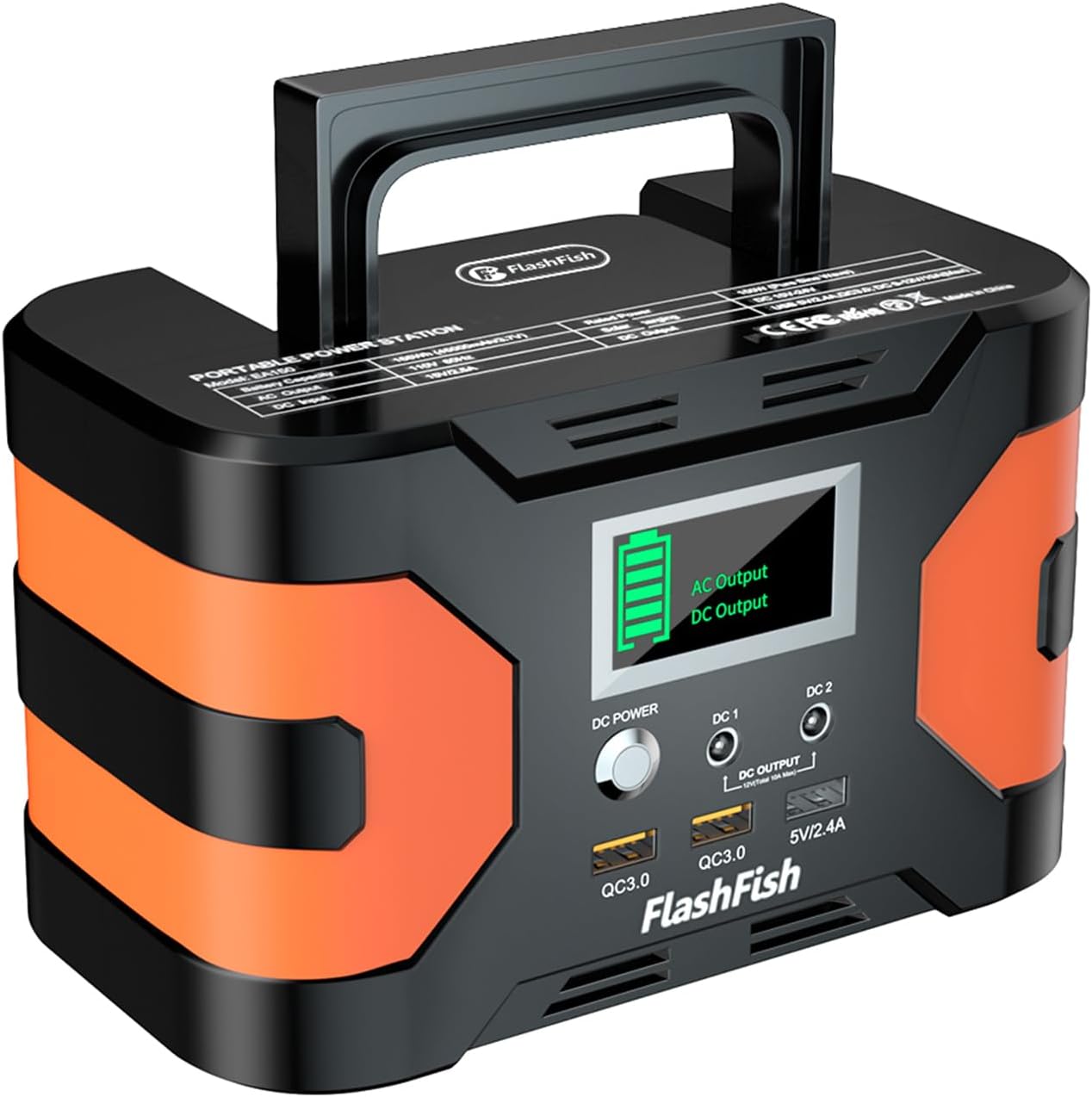

Overview of the Flashfish 150W Portable Power Station 166Wh
You’ll find the Flashfish 150W Portable Power Station 166Wh, 300W Peak Solar Generator with 2 AC Outlets, 2 DC Ports & 3 USB Ports, Backup Battery Pack for Camping, Outdoor Emergency, Home Power Supply convenient for short trips and emergency backup. This compact unit aims to give you multiple output options in a lightweight package so you can charge small to medium devices without carrying a heavy generator.
Quick summary of what it promises
You can expect two AC outlets, multiple USB ports (including quick-charge), and DC outputs for car-style accessories and vehicle tools. The manufacturer lists a 166Wh capacity and a 150W continuous AC output while advertising a peak output—there’s some inconsistency in listings between 200W and 300W peak, so you should confirm the labeled peak value on your unit before running high startup-load devices.
Why that inconsistency matters
You need accurate peak-power info to know whether the power station will handle appliances with high startup draws like some mini-fridges or power tools. If you plan to run devices that have a big surge at startup, err on the side of caution and check the printed specifications or manual before use.
Key specifications (at-a-glance)
You’ll appreciate a clear breakdown when you’re shopping for or comparing power stations. Below is a compact table that summarizes the essential specs to help you quickly understand the Flashfish unit’s capabilities.
| Feature | Specification |
|---|---|
| Model name | Flashfish 150W Portable Power Station 166Wh, 300W Peak Solar Generator with 2 AC Outlets, 2 DC Ports & 3 USB Ports |
| Battery capacity | 166Wh (advertised), 45000mAh (advertised) |
| Nominal continuous AC output | 150W |
| Peak/Surge output | Advertising inconsistent: 200W or 300W (verify on device) |
| AC outlets | 2 × 110V AC |
| USB ports | 3 USB ports (2 quick charge) |
| DC ports | 2 DC ports; includes 12V car socket adapter |
| Recharge methods | Wall outlet, 12V car socket, solar panel (not included) |
| Weight | Approx. 4.5 lb |
| Protections | Overheat, short circuit, low-voltage, over-voltage, over-current, lock-on |
| Notable limitation | Cannot charge and use at the same time (per manufacturer) |
Notes about capacity: Wh vs mAh
You’ll see both 166Wh and 45000mAh listed. Watt-hours (Wh) measure total energy, while milliamp-hours (mAh) depend on nominal battery voltage—so mAh alone isn’t directly comparable unless you know the nominal voltage. Treat 166Wh as the reliable figure for calculating run-times of devices.
What’s in the box
You’ll typically get the main power station, a power adapter, a car/cigarette-lighter adapter, and the user manual. The solar panel is not included, so you’ll need to buy a compatible panel separately if you want solar recharging.
Accessories and what you may need to add
You’ll want a good quality solar panel if you intend to recharge outdoors, and possibly extra charging cables for niche devices. Since the product cannot be used while charging, planning additional portable battery options may be helpful for continuous use scenarios.
Design and build
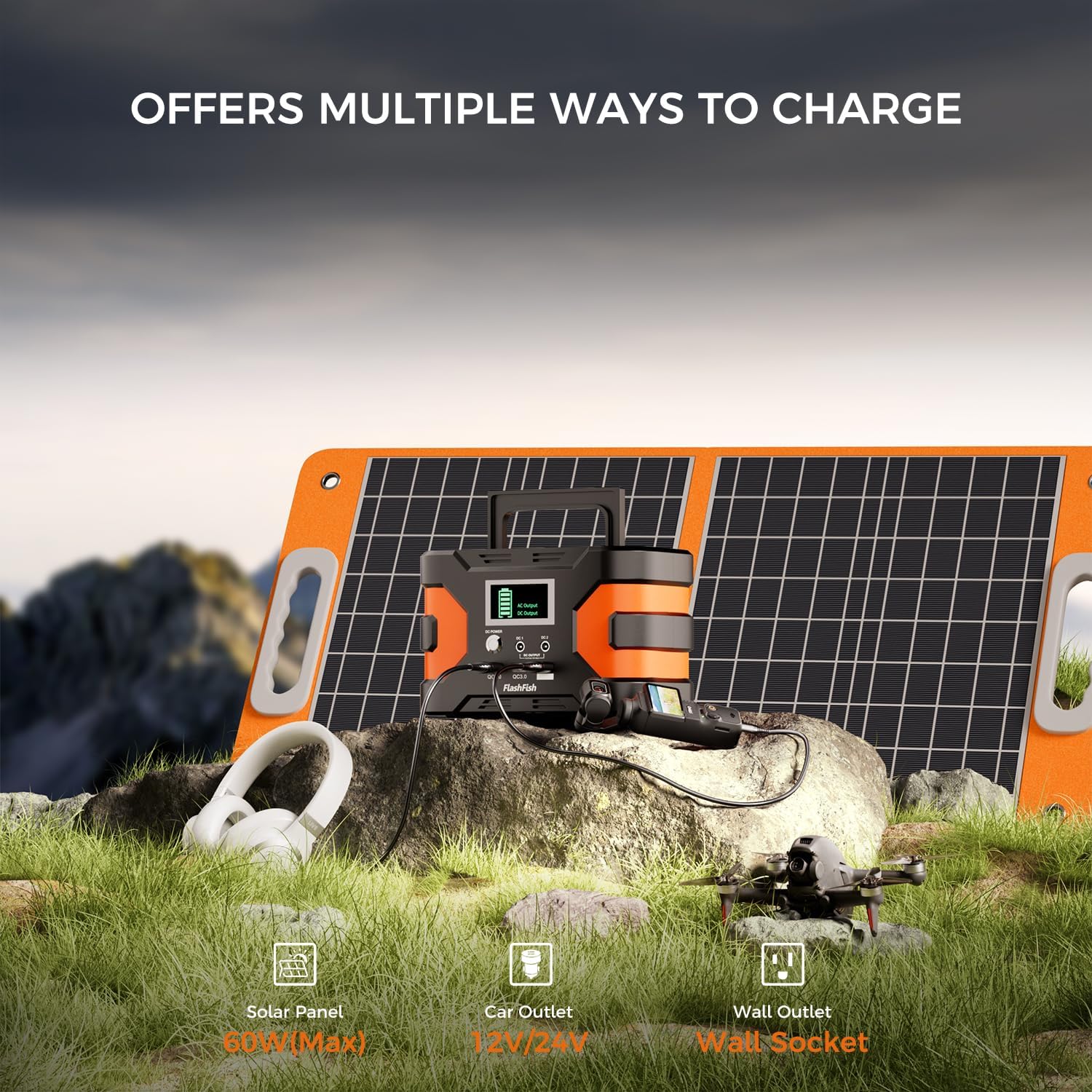
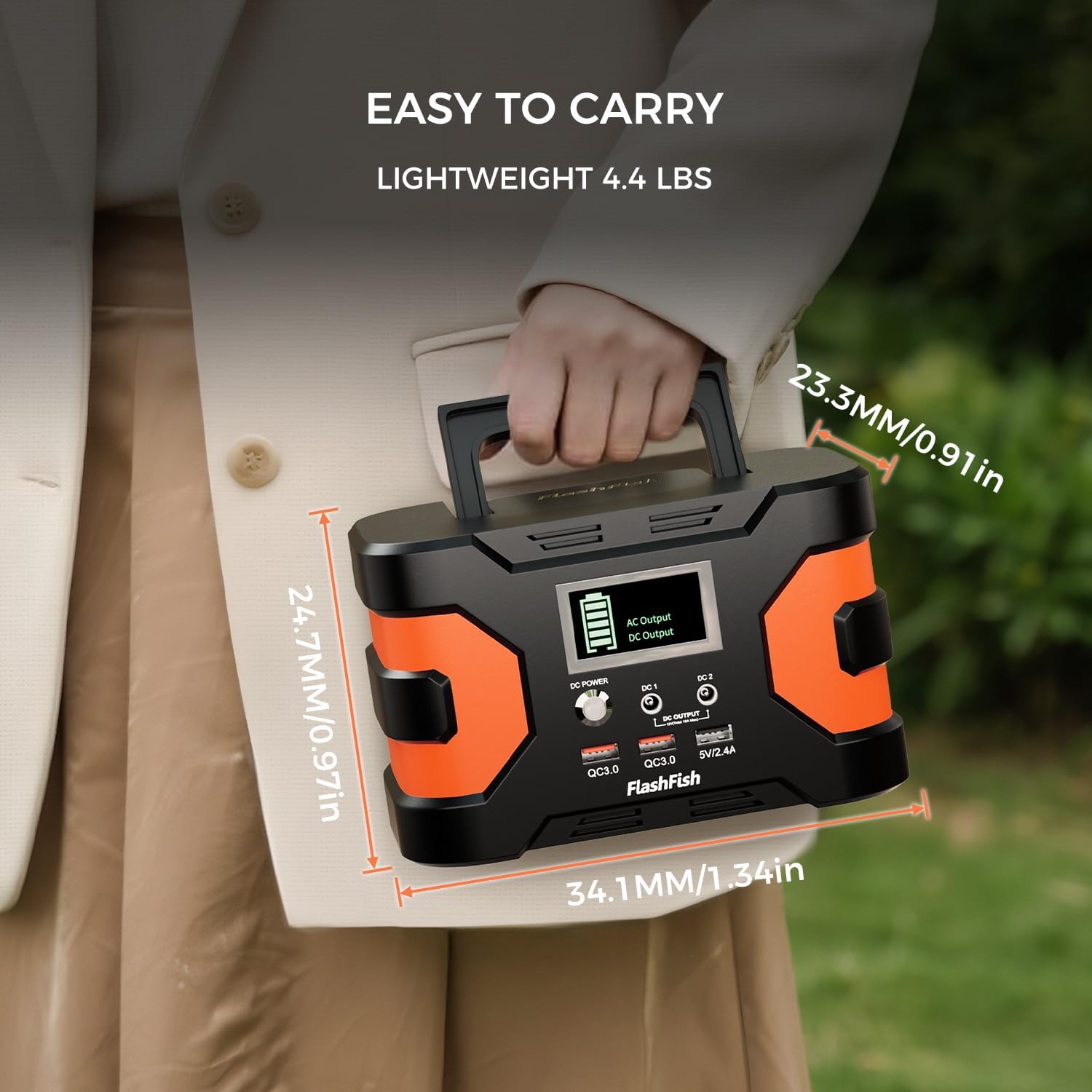
You’ll notice a compact, portable design that emphasizes lightweight convenience over heavy-duty output. The unit is built to be transported easily and stored without taking much space.
Handling and controls
You’ll find a single central power button to switch the unit on and off, making operation straightforward and intuitive. The arrangement of ports is usually grouped for convenience so you can plug in multiple devices without awkward cable routing.
Portability and weight
You’ll appreciate the 4.5 lb weight if you’re carrying it in a backpack or trunk for day trips and short camping outings. Its compact footprint lets you fit it into a car compartment, RV shelf, or closet for emergencies.
Practical portability considerations
You’ll still have to think about where you’ll store cables and how long you need power—lighter weight doesn’t equate to unlimited run-time. If you regularly need multi-day power, plan to either bring multiple units or supplement this station with higher-capacity systems.
Power capacity and performance
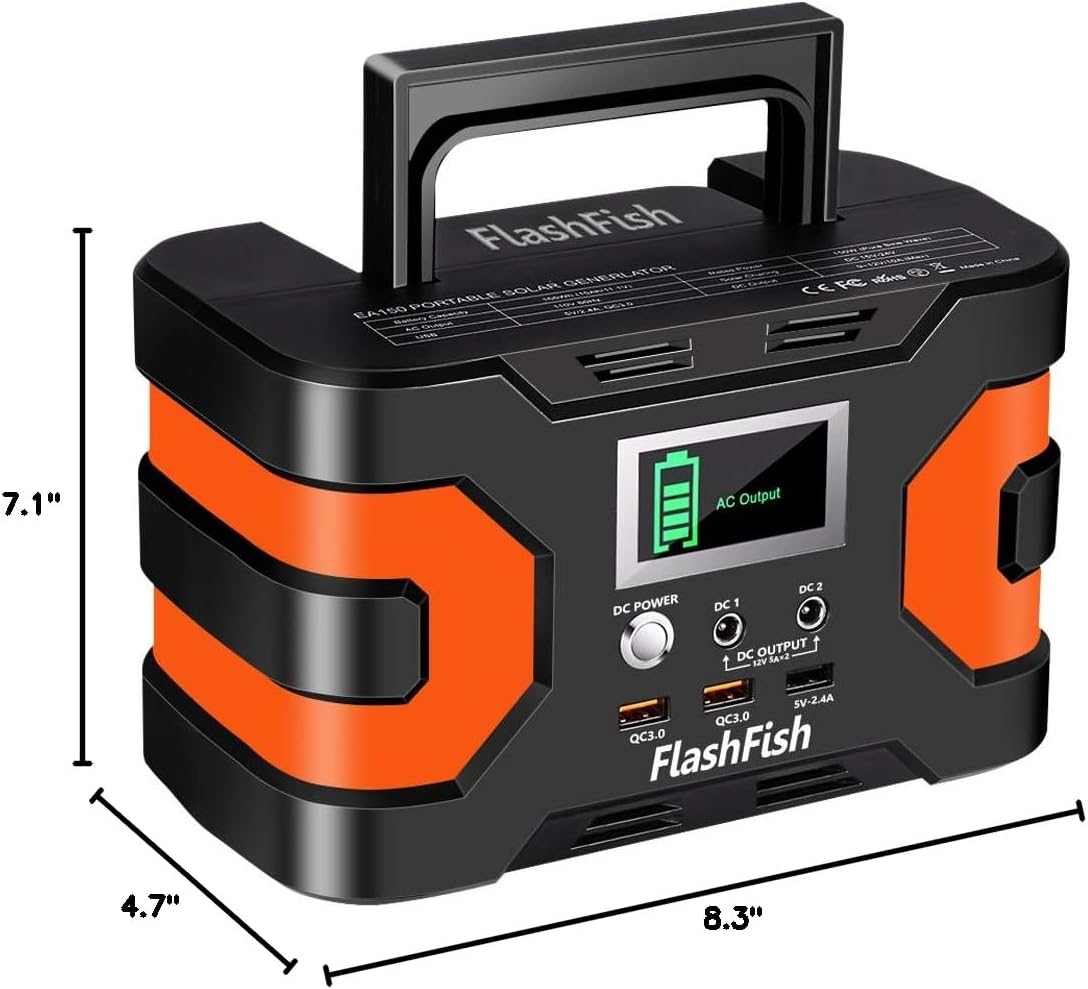
You’ll get 166Wh of battery energy to work with. That’s enough for multiple phone charges, several hours of a laptop or lights, and short sessions on small appliances up to the continuous 150W rating.
Understanding continuous vs. peak output
You’ll use continuous (150W) to estimate steady running times for devices, whereas peak output matters for short surges when motors or compressors start. Because peak specs vary between listings, you should check your unit’s label if you plan to run devices with higher startup draws.
Practical runtimes: how long will your devices run?
You’ll find the following runtime estimates helpful when deciding if this unit meets your needs. These are rough estimates using 166Wh capacity and assuming about 85% inverter/efficiency losses, which is a realistic figure for small power stations.
| Device | Typical draw (W) | Estimated runtime (hours) |
|---|---|---|
| Smartphone (charging) | 10W | ~14 full charges (or ~14 hours of charging) |
| Tablet | 12W | ~11–12 hours of charging |
| Laptop | 45W | ~2.6 hours |
| CPAP machine (basic, without humidifier) | 30W | ~4–4.5 hours |
| CPAP with humidifier | 50–60W | ~2–3 hours |
| LED camping lights (10W) | 10W | ~14 hours |
| Portable fan | 20–30W | ~4–7 hours |
How you should interpret these numbers
You’ll use these estimates for planning; actual runtime varies with device efficiency, usage patterns, and environmental factors. Consider the unit’s inability to charge and supply power simultaneously when planning continuous-power needs.
Charging the station: three ways
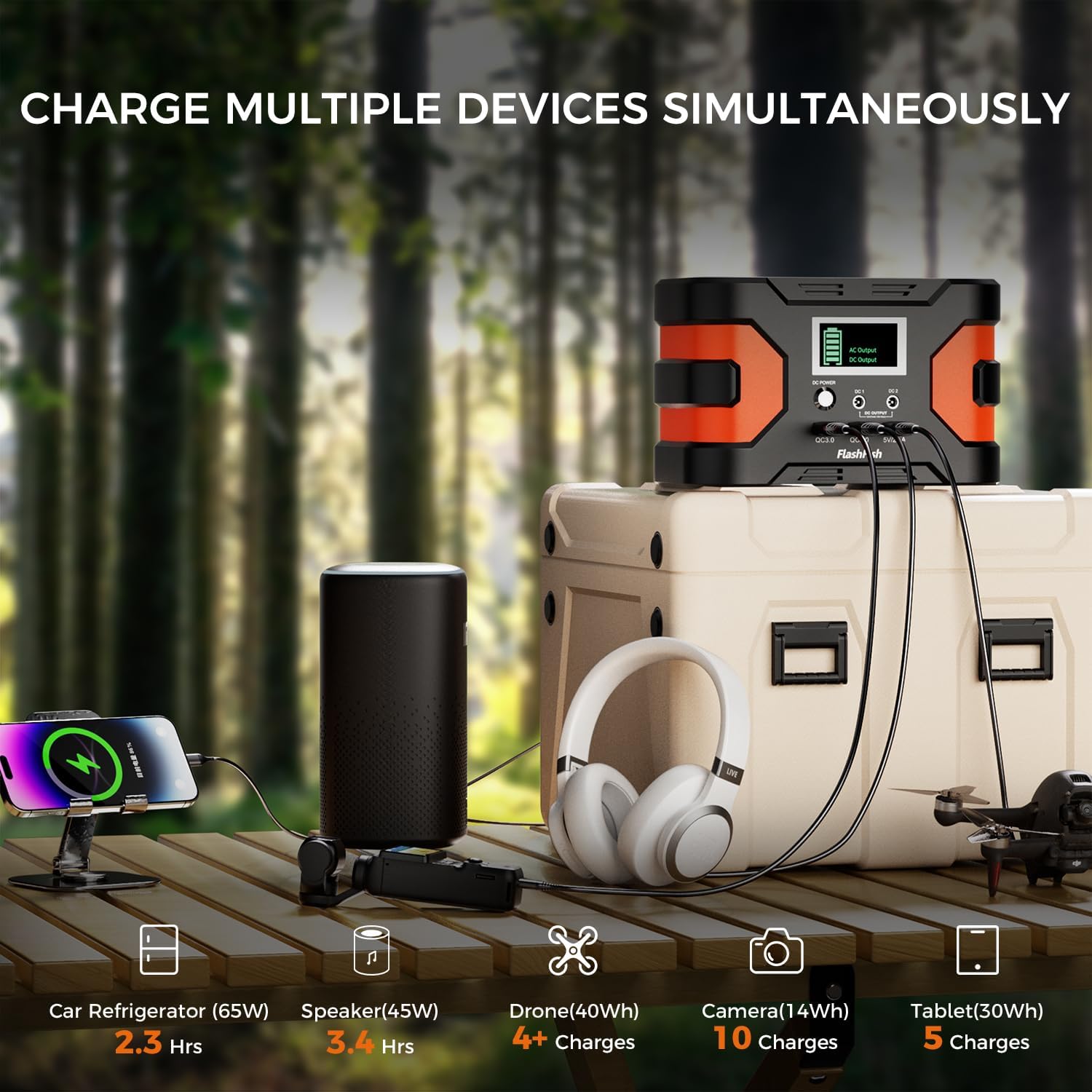
You’ll be able to recharge the unit via a wall outlet, a 12V car socket, or a solar panel (sold separately). Each method has trade-offs in terms of speed and convenience.
Wall charging
You’ll typically get the fastest, most reliable recharge from the included AC adapter. Expect a few hours to fully recharge from empty—roughly 3–6 hours—depending on the adapter’s actual output and battery state.
Car charging (12V)
You’ll find car charging handy when you’re traveling; it’s slower than wall charging but keeps the unit replenished during long drives. Expect several hours for a full charge, and remember that continuous driving is the most convenient time to top up.
Solar charging
You’ll appreciate solar charging for off-grid use, but the time depends on the panel’s wattage and sun conditions. Because the power station reportedly cannot be used while charging, you’ll need to schedule solar charging when you don’t need the outputs active.
Safety features and protections
You’ll have multiple protections built into the unit: overheat, short circuit, low-voltage, over-voltage, over-current, and lock-on protection. These protections help keep your devices and the power station safer during routine and fault conditions.
Why those protections matter to you
You’ll sleep easier knowing the unit will shut down or regulate output under dangerous conditions, reducing the risk of damage to expensive electronics. However, safety features are not a substitute for sensible usage—avoid exposing the unit to water, heat, or physical abuse.
Use cases: where this unit shines
You’ll find this power station well suited to short trips, day hikes that require power, tent camping, powering lights and small fans, charging phones and laptops, and running a CPAP for a few hours. It’s also a good lightweight option to have on hand for brief power outages in the home.
Use cases where you should be careful
You’ll want caution when attempting to run devices with high initial surge currents like some refrigerators, larger power tools, or heavy pumps. Because of the moderate continuous rating and inconsistent peak claims, those heavier loads can trip the unit’s protections or simply exceed its safe limits.
CPAP use and medical considerations
You’ll see mention that the unit can support CPAP machines; this is true for many basic CPAPs that draw 30–50W. If you rely on CPAP nightly, plan carefully as the unit may provide roughly 2–5 hours depending on your machine model and whether you run a humidifier.
Medical backup planning
You’ll want a dedicated solution if you rely on life-sustaining medical equipment for extended periods, and you should test the setup ahead of any critical use. Always consult your medical device manufacturer or a medical professional to confirm compatibility and safe runtime.
Everyday outdoor use: camping and travel
You’ll find it convenient for charging phones, powering small lights, running a compact fan, or charging cameras and drones between uses. If you bring a camera or drone, you’ll appreciate the multiple quick-charge USB ports for fast recharge on the go.
Multi-day trips and power budgeting
You’ll need to plan how many charge cycles you’ll need because 166Wh is modest for multi-day autonomy. Consider pairing with an additional power bank, a larger generator, or a solar panel if you expect to be off-grid for multiple nights.
Noise and operation
You’ll be pleased to know the Flashfish unit operates silently, with no loud engine noise like a gas generator. This makes it ideal for quiet campsites, indoor emergencies, or around sleeping family members.
Heat and ventilation
You’ll notice some warmth while the unit is in use or charging, especially at higher loads. Make sure you place it in a well-ventilated area and avoid covering the vents while it’s operating to keep temperatures down.
Maintenance and storage
You’ll want to store the station in a cool, dry place and keep it charged to roughly 50–70% if storing long-term. Periodically topping the charge and avoiding extreme temperatures will help the battery maintain capacity over many cycles.
Battery care tips
You’ll benefit from avoiding deep discharges whenever possible and recharging after moderate use to maximize cycle life. Avoid leaving the battery completely empty for extended periods, and don’t expose it to heat or moisture.
Pros and cons
You’ll appreciate the convenience and lightweight design, but you should weigh those benefits against capacity and load limits. Below are the main strengths and weaknesses to consider before buying.
Pros
You’ll like the unit’s portability, multiple port types (AC, DC, USB), quick-charge USB ports, and built-in safety protections. You’ll also value its quiet operation and simple, user-friendly controls.
Cons
You’ll be limited by the moderate 166Wh capacity and the 150W continuous output for larger or longer-running devices. You’ll also need to remember that the manufacturer notes you cannot charge and use simultaneously, which could be a drawback in certain use scenarios.
How it compares to similar portable power stations
You’ll find competitors in the same price/capacity range like compact Jackery and Anker units. Compared to those, Flashfish’s strengths are its light weight and fast-charging USB ports, while competitors may offer clearer peak output specifications and larger accessory ecosystems.
Buying decision considerations
You’ll want to compare energy capacity (Wh), continuous output (W), surge output (W), port variety, and whether the unit supports pass-through charging (this one does not). Choose based on the balance of portability vs. power you need for your typical use.
Troubleshooting common issues
You’ll run into a few common issues like not turning on, outputs not working, or the battery not charging fully—most of which are solvable with simple checks. Try checking the power button, ensuring cables are securely connected, and verifying the input power source before contacting support.
When to contact support
You’ll reach out to customer support if the unit fails to charge, overheats quickly, or shows persistent error indicators after basic checks. Keep your purchase info and serial number handy to speed up support requests.
Tips for maximizing value and longevity
You’ll get the most from the unit by matching it to devices that fit its power profile and by using it as a multipurpose day-to-day backup or travel accessory. Store it properly, avoid frequent deep discharges, and use quality solar panels if you plan to recharge off-grid.
Smart usage habits
You’ll extend the battery’s life by keeping it between 20–80% charge as much as practical and by avoiding extreme ambient temperatures. Also, keep firmware updated if such updates are ever provided by the manufacturer.
Frequently asked questions (FAQ)
You’ll likely have practical questions, so here are straightforward answers to common concerns.
Can you use the unit while it’s charging?
You’ll see the manufacturer warn that the power station cannot be charged and used at the same time. Plan charging periods separately from usage if you rely on continuous power.
How long does it take to fully charge?
You’ll usually see full recharge times from a wall outlet in the range of a few hours, depending on adapter output and initial battery state. Solar charging times vary widely based on panel wattage and sunlight; a 100W panel in ideal conditions could take roughly 2–3 hours for a full charge, but real-world conditions are usually slower.
Is it safe for CPAP machines?
You’ll find the unit capable of running many basic CPAP units for several hours, but you’ll need to test with your specific machine and consider adding a dedicated backup for overnight medical needs. Confirm compatibility with your CPAP model manufacturer.
Final verdict
You’ll find the Flashfish 150W Portable Power Station 166Wh useful if you need a lightweight, quiet, and multipurpose power bank for camping, short trips, and emergency top-ups. It’s particularly good for phones, tablets, laptops, LED lighting, and brief runs of small devices, but it’s not a substitute for higher-capacity power solutions when you need extended run-times or to power heavy loads.
Who should buy this
You’ll want this product if you prioritize portability and quiet operation for day trips, short camping outings, or occasional home backup for small devices. If you routinely need long runtimes or to power higher-wattage appliances, consider stepping up to a larger-capacity station.
Quick checklist before you buy
You’ll want to double-check the labeled peak output on the unit, verify charging expectations (wall/car/solar), and consider the inability to charge and use simultaneously. Also, examine the ports and included accessories to ensure you have everything you need or budget for extras like a solar panel.
Parting practical note
You’ll get peace of mind carrying a lightweight power source like this if you plan realistically for its limitations and pair it with good habits—regular maintenance, sensible load planning, and pre-testing with your devices. When used appropriately, the Flashfish 150W Portable Power Station can be a trustworthy companion for short-term portable power needs.
Disclosure: As an Amazon Associate, I earn from qualifying purchases.