
Are you trying to decide if the DieHard Portable Power Station 300-Watt (600-Watt Peak) 288.6Wh is the right compact power solution for your home backup, emergency kit, outdoor weekend, or jobsite needs?


Quick take
You get a compact, reasonably powerful portable power station built on a legacy brand known for durability. It’s aimed at people who want a balance between portability and usefulness — enough juice to run laptops, lights, fans, a CPAP for a night, or small kitchen appliances — without the bulk of larger generators.
What this product is, in plain terms
You’re looking at a 288.6Wh lithium-ion battery pack with a 300W continuous pure sine wave inverter and 600W peak capability. It’s a small, transportable energy hub with multiple outputs and a handful of charging methods, including optional solar. If you want to keep your essential devices running during outages or on the go, this is designed for that kind of role.
Design and build
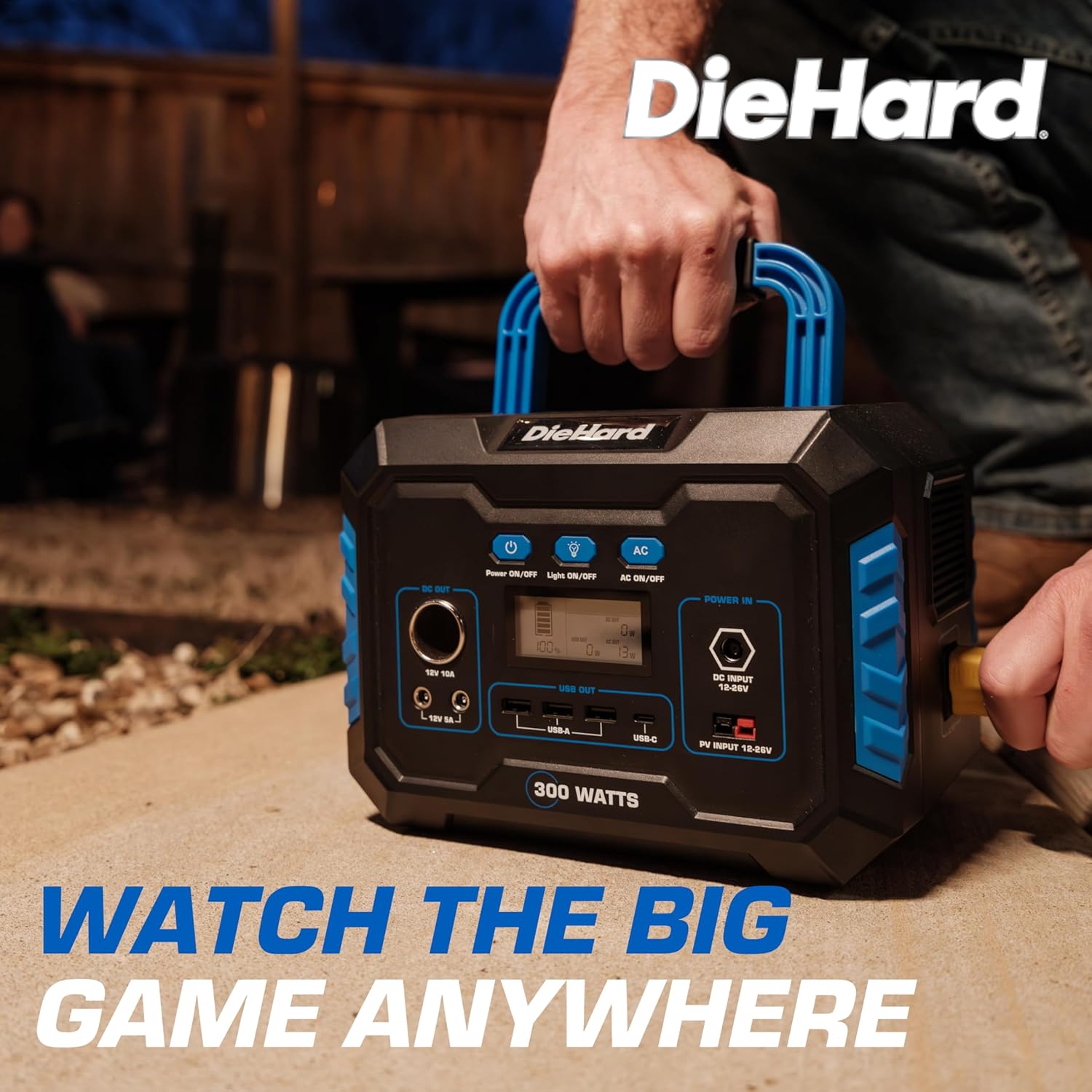
The DieHard power station is compact and intentionally simple to use. Its small footprint makes it easy to stow in a car, closet, or under a workbench, and the layout of ports is straightforward so you won’t fumble when you need power quickly.
Look and feel
You’ll notice its rugged, no-nonsense aesthetic that aligns with DieHard’s reputation. It’s not a fashion accessory, but it feels solid and practical, which is exactly what you want from an emergency-ready power device.
Portability
At roughly 9.26 pounds and dimensions of 8″ x 6″ x 6.5″, you can carry it with one hand and set it up quickly. You won’t need a dolly or two people; it fits comfortably into backpacks, trunks, and toolboxes, and is well suited to camping trips and tailgate days.
Durability and weather resistance
The unit is labeled weather-resistant and built to take some rough handling. You should still avoid prolonged exposure to heavy rain or submersion, but it will stand up better than many consumer electronics if you’re using it outdoors or on a jobsite.
User interface and port layout
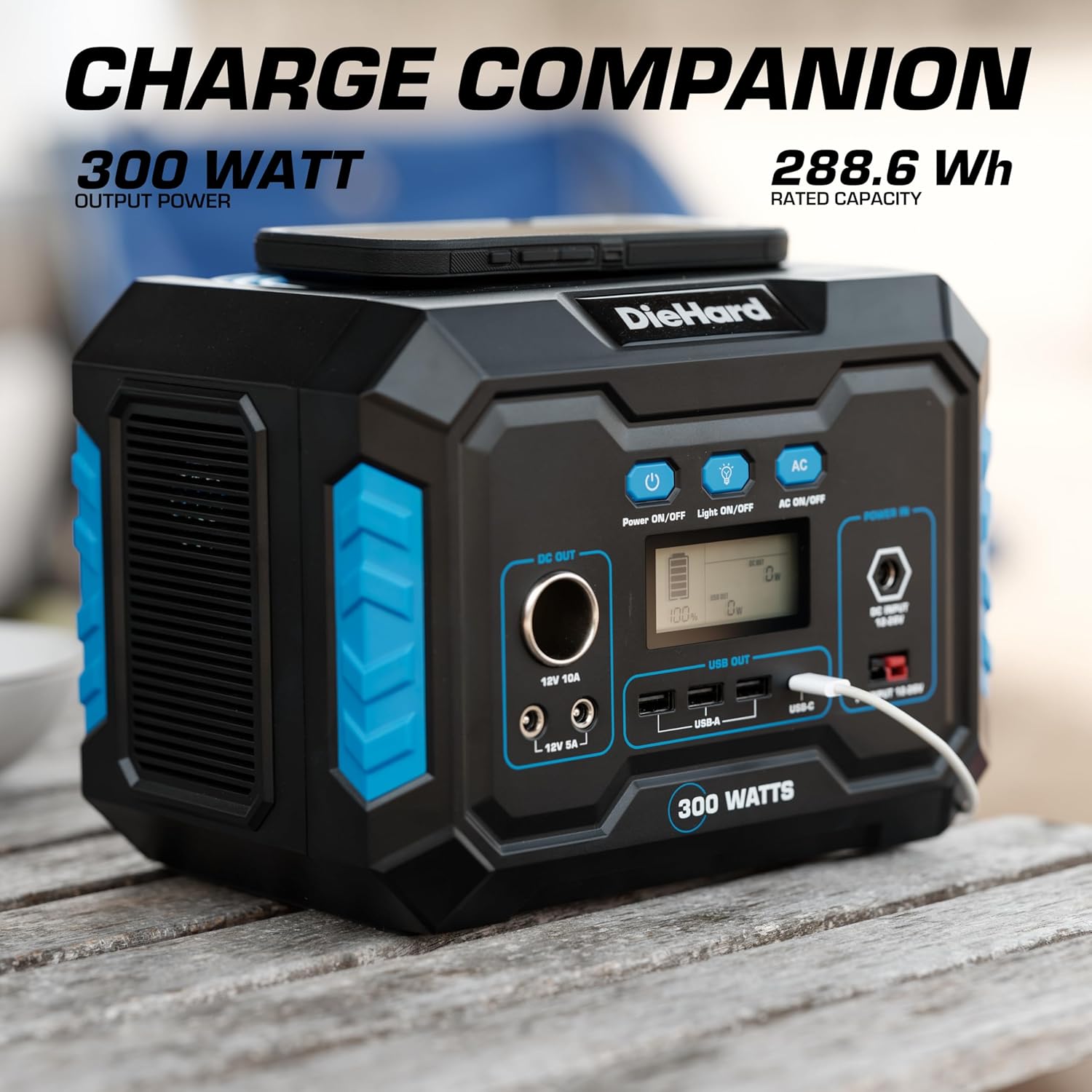
You’ll find an intuitive layout: an AC outlet, USB-A ports (QC3.0), USB-C, DC outputs, car charger port, and a wireless charging pad on top. The display and buttons are easy to read, so you can check charge level and output status quickly.
Specifications at a glance
Below is a compact table summarizing the key specs so you can quickly compare and decide if it meets your requirements.
| Attribute | Specification |
|---|---|
| Product name | DieHard Portable Power Station 300-Watt (600-Watt Peak) 288.6Wh – Solar Generator (Solar Panel Optional) |
| Battery type | Lithium-ion |
| Capacity | 288.6 Wh |
| Continuous AC output | 300 W |
| Peak AC output | 600 W |
| AC waveform | Pure sine wave |
| Wireless charging | 5 W pad |
| USB ports | 3 x USB-A (QC3.0/18W) |
| USB-C | 1 x USB-C |
| DC outputs | 2 x 12V/10A DC |
| Car charger port | 12V/10A |
| Recharge options | AC wall, DC car charger, Solar (120W or 200W DieHard panels optional) |
| Dimensions | 8″ x 6″ x 6.5″ |
| Weight | 9.26 lb |
| Protections | Overcharge, temperature, low battery, safety circuits |
| Ideal uses | Home backup for small loads, emergency power, camping, jobsite tools (low-wattage) |
Power and performance
You’ll want to understand what 288.6Wh and 300W continuous actually mean in everyday use. The capacity tells you how much energy the battery stores, while the inverter rating tells you how much power you can draw at once.
Battery capacity and AC output explained
288.6 Wh is the total energy stored when the unit is fully charged. The 300W continuous rating means you can run devices that draw up to 300 watts at a constant rate. The 600W peak helps cover startup surges from devices like small power tools or compressors that briefly require more power to spin up.
Why pure sine wave matters
Because the inverter produces a pure sine wave output, you can safely power sensitive electronics — laptops, smartphones, CPAP machines, and certain medical devices — without introducing noise or risk. You’ll avoid unusual behavior or potential damage that can occur with modified sine wave inverters.
Typical run-time estimates (real-world)
Below is a table of common devices, approximate power draw, and estimated run time based on the 288.6Wh capacity and accounting for inverter/efficiency losses (approximate 85% usable conversion). These are estimates — actual times vary based on device efficiency and usage patterns:
| Device | Approx. draw (W) | Estimated run time (hours) |
|---|---|---|
| Smartphone (charging) | 10 W | ~24 hours |
| Tablet | 15 W | ~16 hours |
| Laptop (average) | 45 W | ~5.5 hours |
| CPAP (standard) | 30 W | ~8 hours |
| LED lights (10 W total) | 10 W | ~24 hours |
| Small fan | 20 W | ~12 hours |
| Mini-fridge (average running) | 60 W | ~4 hours (intermittent) |
| Electric kettle / microwave | 700–1500 W | Not suitable (exceeds 300W) |
| Small blender (<300w)< />d> | 200–300 W | ~1–1.5 hours |
You should factor in that appliances with motors or compressors cycle on and off (e.g., fridges), so their effective runtime can be longer than the simple division suggests. Devices with large surge starts may exceed the continuous rating even if their running wattage is acceptable, so always check both peak and continuous ratings.
Charging methods and times
You’ll appreciate having multiple ways to recharge the power station. Each method has trade-offs you should know about.
AC wall charging (fast and convenient)
Plugging into a standard wall outlet will usually give you the most consistent recharge. For a 288.6Wh pack, expect an approximate full charge time between 2.5 and 4 hours depending on the input rating and charging efficiency. That makes it practical to use during the day and recharge overnight or during downtime.
Solar charging (optional solar panels)
You can pair this unit with DieHard 120W or 200W portable solar panels (sold separately). On a bright, unobstructed day:
- With a 200W panel, expect the fastest solar recharges — potentially around 1.5–3 hours under ideal peak sun conditions, though real-world conditions usually extend that.
- With a 120W panel, expect roughly 2.5–4+ hours in optimal sun.
Keep in mind solar charging depends heavily on sun angle, shading, weather, and panel orientation. Solar is great for off-grid use and reducing grid dependency, but don’t treat the quoted times as guaranteed.
DC car charging (on the go)
You can recharge via a car’s 12V socket or DC connection. This is convenient when traveling, but car chargers tend to be slower and may take several hours depending on the charging input. Use this when you’re on the road and don’t have access to AC or reliable sun.
Wireless charging convenience
The integrated 5W wireless pad is handy for topping off your phone without cables. It’s not fast charging, but it’s convenient for overnight or short-term wireless charging.
Real-world usage scenarios
You should choose your power station based on the most common situations you’ll face. Here are realistic ways you’ll use this unit.
Home backup for essentials
For power outages, this station is ideal for keeping your phone, laptop, a few lights, a router, and small medical devices running. It won’t power a house or heavy appliances, but it will maintain essential communications and small comforts while you restore power or wait for assistance.
Weather emergencies and safety
You’ll appreciate that it’s ready for emergency kits — lightweight, easy to carry, and powerful enough to keep you connected and safe. It can run a medical device or provide light for several hours, helping you stay comfortable and informed.
Outdoor recreation and camping
For weekend trips, you can charge cameras, phones, lights, and run small cooktop accessories. The solar option is handy if you camp in sunny spots and want to avoid draining the battery entirely.
Jobsite and DIY use
For low-wattage tools, chargers, and small power needs on a jobsite, it’s a portable solution. It won’t replace gas generators for heavy tools, but it’s great for running controls, phones, lights, and small cordless tool chargers.
Recreational vehicles and tailgating
You’ll find it useful to run a couple of devices inside an RV or during tailgate events, such as lights, a small speaker, or a mini-fridge for a limited time.
Port selection and practical tips
You have a wide range of ports suitable for virtually every small device in your kit.
USB and wireless ports for convenience
Three QC3.0 USB-A ports and one USB-C give you fast charging for phones, tablets, and modern peripherals. Use the wireless pad for convenience when you want a cable-free top-up.
AC outlet and DC outputs for appliances
One 110V AC outlet lets you run small appliances and chargers. Two DC outputs and a car port cover many older devices and specialized gear. When using AC, remember the 300W limit.
Cable management and adapters
You’ll want to keep your charging cables organized and have car-to-DC adapters if needed. An inexpensive multi-outlet extension (rated for the power station) can make using several devices easier without blocking the port layout.
Safety features and protections
You’ll benefit from integrated safeguards that protect both you and your equipment.
Built-in protections
Overcharge protection, temperature management, and low-battery safeguards work together to keep the battery and devices safe. These protections also extend the lifespan of the unit by preventing extreme states.
Safe for sensitive electronics
Because of the pure sine wave output and built-in protections, you can feel confident plugging in laptops, chargers, and devices that can be finicky with poor power quality.
Accessories and optional add-ons
To get the most out of the unit, consider a few accessories you might want to buy.
- DieHard 120W or 200W portable solar panels (optional) — for off-grid recharging.
- A protective carry bag — for easier transport and to protect ports.
- Extra charging cables and multi-port car adapters — for more flexible charging setups.
- A small power strip (surge-protected and within the unit’s wattage limits) — to manage multiple AC devices.
Pros and cons
It helps to weigh strengths and weaknesses before you commit.
Pros
- Compact and very portable at under 10 pounds.
- Pure sine wave output safe for sensitive electronics.
- Multiple charging options including solar (optional).
- Good selection of ports: USB-A QC3.0, USB-C, DC, wireless pad.
- Built on DieHard’s legacy of dependable products and solid build quality.
Cons
- 288.6Wh capacity is limited for heavy or extended loads.
- Single AC outlet limits simultaneous AC device usage.
- Not suitable for high-power appliances like microwave, full-size refrigerator, or large power tools.
- Solar charging performance depends heavily on conditions and additional panel purchase.
How it compares to other compact power stations
You’ll find many competitors in the 200–400Wh range, and this unit competes well on portability and price-to-feature balance. If you need more continuous power or longer run times, you’ll want to step up to larger capacity models. If you need maximal portability and minimal weight, lighter battery packs (with fewer ports) might be preferable, but they often sacrifice AC output or pure sine wave capability.
Maintenance and storage tips
Taking good care of your station prolongs battery health and reliability.
- Store in a cool, dry place away from direct sunlight.
- If you don’t plan to use it for a long time, charge to around 50–60% and recharge every 3–6 months.
- Avoid exposing the unit to extreme temperatures (both heat and cold) for extended periods.
- Keep vents clean and don’t block airflow while charging under heavy loads.
- Use manufacturer-recommended chargers and cables to avoid stressing the battery.
Practical setup and usage tips
A few practical steps will improve your experience and extend runtimes.
- Prioritize what devices you need during an outage and plan which devices to run together to avoid exceeding 300W.
- Use energy-saving settings on laptops and mobile devices to maximize run time.
- If using solar, orient the panel directly toward mid-day sun and avoid shade — small obstructions drastically reduce output.
- Consider a small power meter to track real-world device draw so you can plan runtimes more accurately.
Buying advice — is it the right pick for you?
Think about the most common scenarios you’ll face. If you need a lightweight, portable station to keep essential devices running and occasionally power small appliances, the DieHard 300-Watt Portable Power Station makes a lot of sense. If your needs include long-term backup for multiple household appliances, or running heavy tools, you’ll want a higher-capacity solution.
Who should buy this
- You want a compact and portable power station to handle phones, laptops, lights, fans, and small appliances.
- You need a pure sine wave inverter for sensitive electronics.
- You value portability for camping, tailgating, or jobsite convenience.
- You want the option to add solar panels for off-grid charging.
Who should consider something else
- You need to run high-draw appliances (microwave, large refrigerator, heavy power tools).
- You require multiple AC outlets or longer multi-day autonomy without recharging.
- You prefer built-in oversized battery capacity for extended home backup.
Frequently asked questions
You’ll likely have a few common questions before buying; here are some concise answers.
Q: Can this power a CPAP overnight? A: Yes, many CPAP machines draw around 30W–60W depending on settings. With an average draw of 30W, you could expect roughly 7–8+ hours. Check your CPAP’s actual power consumption.
Q: Can it run a refrigerator? A: It can power small fridges for a short period; full-size refrigerators often have higher startup surges and longer runtime needs that exceed this unit’s capacity.
Q: Can I use any solar panel? A: The unit is designed to accept DieHard 120W or 200W panels as optional accessories. If you choose third-party panels, ensure the voltage and connectors are compatible and that you use the correct MPPT/charge input specifications.
Q: How long does the battery last over years? A: Lithium-ion capacity gradually declines with charge cycles. To maximize lifespan, avoid deep discharges, store at moderate charge levels when not in use, and avoid extreme temperatures.
Q: Is it safe to leave plugged in all the time? A: Most modern power stations have built-in management systems. While it’s generally safe to keep it plugged in, it’s healthy for battery longevity to cycle it occasionally rather than keeping it at 100% constantly.
Final thoughts
You’ll find the DieHard Portable Power Station 300-Watt (600-Watt Peak) 288.6Wh to be a practical and well-rounded pick if your priority is a balance of portability and capability. It’s especially good for keeping essentials running during short outages, for outdoor activities, and as a reliable backup for sensitive electronics. While it’s not a home-sized generator, the pure sine wave output, multiple ports, and optional solar charging give you flexibility and peace of mind in a compact package.
If your needs align with the limitations and strengths outlined here, this DieHard unit will serve you well as a convenient, dependable power source for everyday emergencies and adventures.
Disclosure: As an Amazon Associate, I earn from qualifying purchases.