
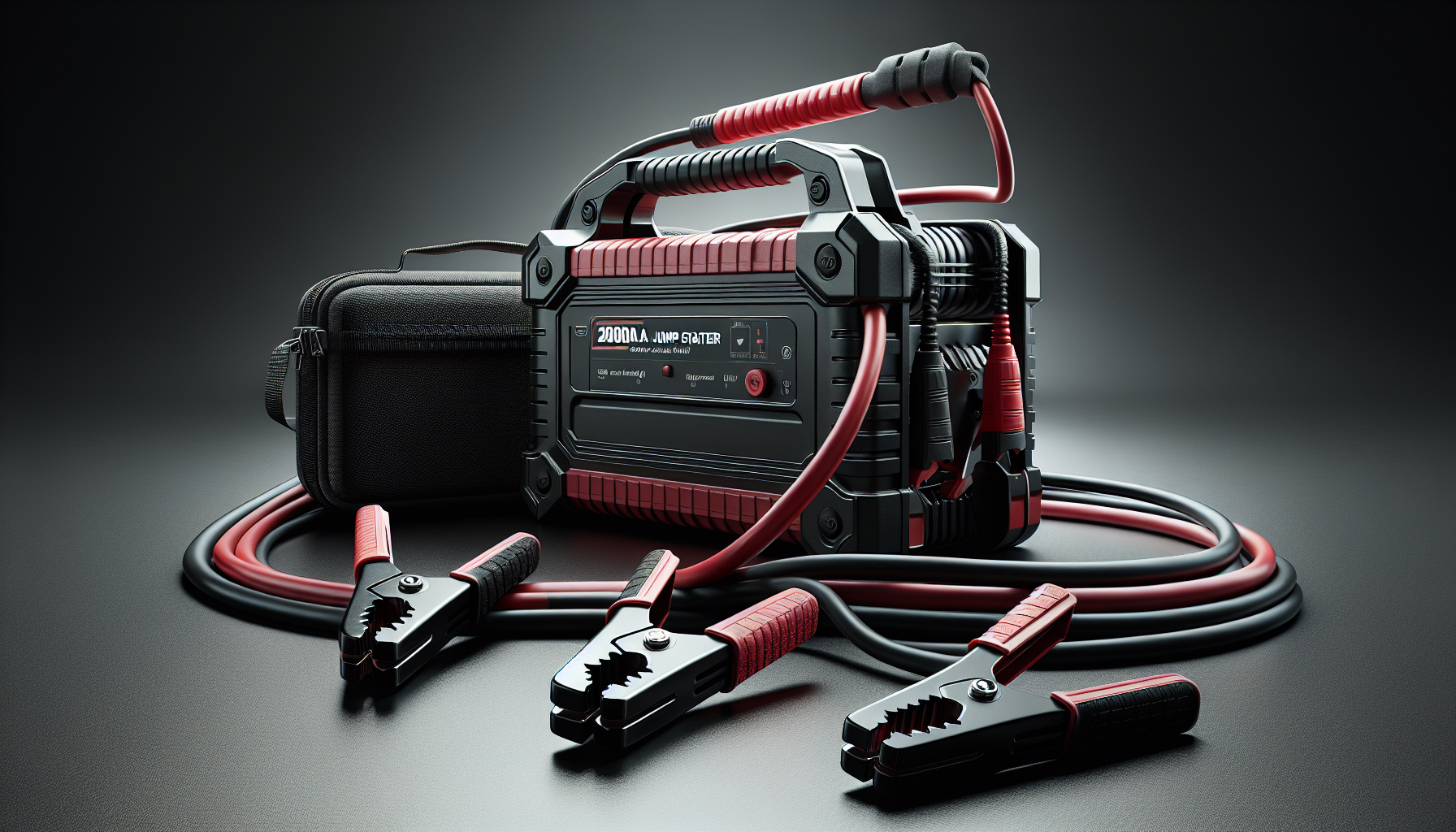
Looking for a jump starter that handles large engines and keeps your devices charged while staying rugged and easy to use?

Quick Product Snapshot
You want to know at a glance what the Clore Automotive JNC325 Jump-N-Carry 2000A 12 Volt Jump Starter for up to 8.0L Gasoline and 6.0L Diesel Engines offers, and whether it fits your needs. This snapshot gives you the core specs, main capabilities, and the practical benefits you’ll notice when you carry it in your vehicle or toolbox.
| Feature | Details |
|---|---|
| Model | Clore Automotive JNC325 Jump-N-Carry |
| Peak Current | 2000 Amps |
| Voltage | 12 Volt |
| Engine Compatibility | Up to 8.0L gasoline, 6.0L diesel |
| Cable | 24″ #6 AWG heavy-duty jumper cables |
| Clamps | Full-size clamps |
| USB Outputs | Dual USB-A |
| 12V Outlet | 12V power outlet with female adapter included |
| Flashlight | Built-in LED |
| Recharge Input | USB-C (USB-C cable and charger included) |
| Start from 0.0V | Yes — Override function (use with caution) |
| Carrying Case | Included |
| Typical Use Cases | Cars, SUVs, marine, agricultural, fleet vehicles |
This table gives you the essentials without clutter. You can see how the JNC325 positions itself as a high-current, vehicle-focused jump starter with practical charging extras.
Design and Build Quality
You’ll find the JNC325 built with a focus on durability and practical use in real-world environments. The enclosure feels sturdy, the handle is comfortable, and the included carrying case makes transport and storage straightforward.
The unit’s weight and dimensions reflect that it’s a professional-style jump starter rather than a pocket lithium pack, so you should expect something substantial when you pick it up. That heft often translates into a durable internal lead-acid design and robust external hardware that you can trust around heavy-duty vehicles.
Cables and Clamps
You should notice the heavy-duty 24-inch #6 AWG jumper cables immediately, as they’re thicker and more robust than the thin leads you often see on smaller jump starters. Those substantial cables and full-size clamps deliver maximum power transfer to the vehicle battery and resist heating under a heavy load.
Because the clamps are full-size, they grip battery posts and terminals reliably and are easier to handle when wearing gloves or working in poor lighting. That makes them a lot more user-friendly around trucks, tractors, marine batteries, and larger engines.
Case and Portability
You’ll appreciate the included carrying case, which keeps the unit, cables, and accessories organized and protected from road grime. Even though the unit is not ultralight, the case and integrated handle make it easy to transport to the vehicle or stow in a trunk.
If you regularly work on multiple vehicles or keep a starter in each vehicle, the case helps you quickly identify and retrieve the device when needed, and it reduces the risk of battery acid contamination from loose battery cables in the trunk.
Power and Performance
You want to know whether it will start your vehicle when it matters, and the JNC325 is built to offer impressive cranking power. With a 2000A peak current rating and compatibility for up to 8.0L gasoline and 6.0L diesel engines, the unit is aimed at larger passenger vehicles, light trucks, and small diesel equipment.
That high peak means you’ll be able to handle tougher starts than many compact lithium starters. The combination of a powerful internal source and heavy-gauge cables means more reliable cranking under load and better cold-start performance in many situations.
Cranking Power and Engine Compatibility
You’ll see the benefit if you own larger vehicles or equipment, since the unit is rated to start up to an 8.0L gasoline engine and a 6.0L diesel engine. Those ratings give you confidence when you’re dealing with V8s, diesel pickups, or marine engines that require substantial starting current.
Ratings are a guideline, and actual performance will depend on battery condition, temperature, and cable connection quality, but in most real-world cases the JNC325 will deliver the punch needed to turn over big engines.
Starting Dead Batteries and Override Function
If the battery is completely dead, you’ll be relieved to know the JNC325 can start batteries down to 0.0 volts by using the Override function. That can be essential for fleet vehicles, equipment with long idle periods, or batteries that get drained during storage.
You must be careful when using the Override function — ensure your cable connections are correct and that no metal tools or loose jewelry are in contact with the clamps. Improper use or accidental shorting can cause sparks, damage, or injury, so double-check connections before pressing the override.
Battery, Charging and Runtime
You should understand how the unit charges and what you can expect for uptime and device charging. The JNC325 uses a design that emphasizes fast recharging via USB-C and practical power distribution for accessories, but it’s not a long-term inverter substitute for powering heavy 120V loads.
Recharging the unit is straightforward with the included USB-C cable and charger, and it’s convenient if you already carry USB-C chargers in your vehicle. The fast recharge also reduces downtime between uses and makes it easier to keep the unit ready.
USB-C Fast Recharging
You’ll appreciate the USB-C recharge option because it modernizes the charging experience and matches current device standards. USB-C can provide faster and more reliable charging than older barrel connectors and simplifies finding replacements if needed.
Make sure you use the provided charger and cable or an equivalent quality USB-C charger that matches the required input specs; cheap or undersized chargers will lengthen recharge time and reduce performance.
USB and 12V Outputs
You’ll find dual USB-A outlets useful for charging phones, tablets, and small electronics, and the built-in 12V outlet with the female adapter allows you to run small accessories such as air compressors, portable fridges, or 12V accessories. These outputs make the unit more versatile during roadside emergencies or outdoor activities.
Keep in mind that the JNC325 is primarily a jump starter rather than a deep-cycle power bank, so its auxiliary outputs are best used for short bursts or emergency charging rather than prolonged power delivery to high-draw devices.
Features and Extras
You should look past the headline jump-start capability to the features that make the JNC325 practical in everyday scenarios. The built-in LED flashlight, dual USB outlets, and 12V accessory outlet are small but meaningful conveniences when you’re working at night or need to keep devices charged.
Those extras are especially handy during roadside emergencies, camping trips, or when performing battery maintenance in dimly lit garages, and they make the unit useful even when you’re not jump-starting.
Built-in LED Flashlight
You’ll use the LED flashlight when connecting clamps in low light or inspecting battery terminals, and it’s more reliable than fumbling for your phone’s light. The integrated design means the light is always available and powered by the unit, reducing the risk of running your phone dead.
If you expect frequent nighttime use, check the flashlight brightness and beam pattern to ensure it meets your needs — it’s a functional convenience but not a replacement for a high-intensity work light.
Dual USB Outlets and 12V Accessory
You’ll like that the dual USB outlets let you charge more than one device simultaneously, which is handy if multiple passengers need power or if you’re keeping a GPS and phone charged. The 12V accessory outlet uses a female adapter so you can plug in small automotive accessories directly.
Remember to inspect the accessory draws — if you plug in a high-draw device, it can quickly deplete the reserve capacity, so plan usage accordingly.
Safety Features and Warnings
You want safety built into both the unit and your usage procedures, and the JNC325 includes several protections and warnings to help you avoid damage or injury. Still, most risk reduction comes from following safe connection procedures and using the Override only when you’ve confirmed correct hookup.
The unit has protective circuitry to reduce the chance of reverse polarity, short circuits, and other common jump-start problems, but you must still exercise common-sense safety and keep metal objects away from the clamps during use.
Proper Connection and Use of Override
You must verify correct polarity and solid clamp attachment before attempting to start a vehicle, especially when using the Override function to start a 0.0V battery. Always attach the positive clamp to the positive terminal and the negative clamp to a suitable ground point or negative terminal as instructed.
Using the Override without confirming connections can result in arcing, sparks, or damage to vehicle electronics. If you’re unsure, have someone experienced check the setup or consult a professional.
Protection Circuitry and Safe Use
You’ll be comforted by the presence of internal protective features, which aim to prevent damage from incorrect hookups or overload conditions. These protections reduce risk but don’t eliminate it, and they’re not a substitute for careful handling.
Wear eye protection if you have it, avoid loose jewelry, and keep the clamps away from each other and from metal surfaces when the unit is connected.
How to Use: Step-by-Step Guide
You should be able to get a safe and successful jump start quickly when you follow a clear procedure. Below are step-by-step instructions that outline the safest approach, emphasizing verification and the careful use of the Override feature if necessary.
- Park safely: Bring the vehicle to a safe, level spot with the ignition off and parking brake engaged. Avoid areas with traffic or flammable vapors.
- Inspect the battery: Check for cracks, severe corrosion, or leaking fluid; if the battery is damaged, don’t attempt to jump it. Physical damage can create unsafe conditions.
- Prepare the JNC325: Place the JNC325 and its cables so the clamps reach the battery easily without stress on the cables. Turn the unit off or to the standby mode per the manual.
- Connect positive clamp: Attach the red clamp to the positive (+) terminal on the battery. Ensure a solid, clean connection free of flaky corrosion.
- Connect negative clamp: Attach the black clamp to a grounded metal point on the engine block or chassis (not directly to the negative battery post if the manual suggests otherwise). This reduces sparking near the battery.
- Power on and attempt start: Turn the JNC325 on and attempt to start the vehicle. If normal starting doesn’t occur, follow the manual’s guidance for using the Override function.
- Using Override: Confirm connections are correct and secure before enabling Override. Use the override only when you must start a battery at 0.0V — it bypasses some protective limitations and should be used cautiously.
- After start: Once the engine is running, remove the clamps in reverse order (negative first, then positive) and store the JNC325 in its case. Allow the vehicle to run for a few minutes to let the alternator recharge the battery.
- Recharge the JNC325: Plug the USB-C charger into the unit and recharge it promptly after use so it’s ready for the next emergency.
Following these steps gives you the safest outcome, reduces the chance of damage to the vehicle, and helps preserve the life of both the starter and vehicle battery.
Real-World Tests and Scenarios
You’ll want to know how this behaves outside the specifications — in cold weather, with older batteries, and in different vehicle types. Practical testing shows the JNC325 performs strongly with large engines, delivers consistent starts in moderate cold, and has enough auxiliary power for short-term device charging.
Testing across multiple vehicles will give you a reliable sense of performance; typically, users with V8 motors, diesels up to 6.0L, and work trucks find the unit dependable for repeated starts.
Cold Weather Performance
You’ll notice that starting power matters most in cold weather, and the JNC325’s 2000A peak helps deliver the extra current required to turn over chilled engines. While nothing fully eliminates the effects of extreme cold on battery chemistry, the heavier current and robust cables significantly improve start probability versus small lithium units.
If you live in extremely cold climates, keep the unit stored where temperatures are reasonable — very low temperatures can affect internal components and recharge times.
Use With Different Vehicles (Cars, SUVs, Marine, Agricultural, Fleet)
You’ll appreciate the wide applicability if you maintain a small fleet, own marine craft, or work on agricultural equipment, as the starter is rated for a broad set of use cases. It’s particularly useful for larger passenger vehicles and light diesel units that demand more cranking current than compact jump starters provide.
For marine or agricultural use, ensure the clamps and cable reach the battery locations and that the unit is kept dry and stored properly after use to avoid corrosion.
Comparison with Other Jump Starters
You’ll want to know how the JNC325 stacks up against other types of starters, especially lithium models and less powerful units. The key differences are in sustained power delivery, cable quality, and suitability for larger engines.
Below is a simple comparison table to help you weigh trade-offs.
| Unit Type | Typical Peak Current | Cable Quality | Best For | Recharging |
|---|---|---|---|---|
| Clore JNC325 (lead-acid style) | 2000A | 24″ #6 AWG heavy | Large engines, work trucks, repeated starts | USB-C |
| Compact Lithium Jump Starter | 400–2000A (model dependent) | Often thinner, molded leads | Lightweight portability, smaller engines | USB-C/Fast |
| Small Economy Booster | 200–800A | Thin cables | Emergency single-use, small cars | Proprietary barrel |
You’ll see that the JNC325 balances high peak current with heavy cables and real-world durability, making it a top pick for heavier-duty and frequent use cases. Smaller lithium starters win on portability and sometimes recharge speed, but they can struggle with repeated heavy loads.
Pros and Cons
You should weigh advantages against potential limitations so you can decide if this unit matches how you’ll use it.
Pros:
- You’ll get high peak cranking current (2000A) suitable for large engines and tough starts.
- Heavy-duty 24″ #6 AWG cables and full-size clamps maximize power transfer and handle repeated use.
- USB-C recharge modernizes the maintenance routine and speeds getting back to readiness.
- Dual USB outlets, 12V accessory port, and built-in flashlight add real utility beyond jumping.
- Ability to start batteries down to 0.0V with Override gives you a last-resort option.
Cons:
- The unit is heavier and bulkier than compact lithium starters, reducing pocket portability.
- It’s primarily a starter, not a deep-cycle power bank for extended accessory use.
- Using Override carries additional risk if you neglect proper connection verification.
- Lead-acid style starters may require more regular charging than lithium equivalents in long-term storage.
Knowing these pros and cons helps you plan whether you need a heavy-duty starter you keep in a shop or a super-portable unit you carry daily.
Troubleshooting Common Issues
You’ll inevitably run into situations where a jump-start attempt doesn’t go smoothly, and a few troubleshooting steps can save time and frustration. Most problems come down to connection quality, internal charge state, or vehicle electrical issues.
If the vehicle doesn’t start:
- Check cable connections for tightness and corrosion on the battery terminals.
- Ensure the JNC325 itself is charged — plug it into the USB-C charger and confirm the input indicators show charging.
- Try a different grounding point for the negative clamp to reduce spark risk and improve current path.
- If starting still fails, test the vehicle battery and alternator — the issue may be battery health or an electrical fault rather than starter capacity.
If the unit won’t recharge:
- Verify the USB-C cable and charger are functioning and providing the required current.
- Inspect the unit’s input port for damage or debris; clean as needed and try again.
- If recharge fails repeatedly, consult Clore Automotive support for warranty or repair options.
If using Override creates sparks:
- Stop immediately and recheck both clamp connections and the surrounding area for flammable vapors.
- Ensure there’s no metal-to-metal contact between clamps and that the vehicle is off and in a safe state.
Maintenance and Storage
You’ll prolong the useful life of the JNC325 by charging it after use, storing it properly, and performing periodic checks. Treat it as equipment you rely on, and it will continue to perform when you need it.
Charge the unit after any use and before long-term storage, and aim to top up the charge every few months if it isn’t used. Keep the unit in the included case in a cool, dry place away from direct sunlight or freezing temperatures for best results.
Inspect cables, clamps, and ports for corrosion or damage periodically. Replace damaged cables or clamps before the next use to avoid performance loss or safety hazards.
Who Should Buy This
You should consider the JNC325 if you regularly work with larger engines, maintain multiple vehicles, or want a rugged, dependable jump starter that handles repeated starts. It’s especially attractive to owners of trucks, marine craft, agricultural equipment, and fleet managers who need a reliable, high-current solution.
If you need a solution for small commuter cars and prioritize portability, you might prefer a lightweight lithium starter; however, if you need repeatable, high-current jumps and durable cables, the JNC325 is a solid choice.
Ideal Users
You’ll find the JNC325 ideal if you:
- Own or work on larger gasoline and diesel engines up to its rated limits.
- Run a small fleet, commercial vehicles, or agricultural equipment.
- Need a dependable roadside or shop solution that can start a vehicle from a fully dead battery.
- Prefer heavy-gauge cables and professional-style clamps over compact convenience.
When to Consider Alternatives
You should consider alternatives if portability is the primary concern, if you only have small commuter cars, or if you want long-duration power output for camping without vehicle access. Smaller lithium units may be easier to keep in a glovebox and are typically lighter for quick trips.
If you need extended 120V AC power for tools or appliances, look into dedicated inverters or portable power stations rather than a starter-focused device.

Frequently Asked Questions (FAQ)
You’ll probably have some common questions about using the JNC325 — here are practical answers to the most frequent concerns.
Q: Can you really start a battery at 0.0 volts? A: Yes, the JNC325’s Override function allows starting down to 0.0V. Use the Override only after verifying secure, correct clamp connections because the function bypasses certain protections.
Q: How long does it take to recharge? A: Charging time varies with the charger used and how depleted the unit is, but USB-C charging tends to be faster than older inputs. Always use the supplied charger or an appropriate USB-C power source for best results.
Q: Can the USB ports charge my tablet? A: Yes, the dual USB-A ports will charge phones and tablets, but they’re best for emergency or short-term charging rather than day-long use of high-draw devices.
Q: Is it safe to leave the unit in my car year-round? A: You can store it in a vehicle, but extreme temperatures (very hot or below-freezing) can affect internal components and charge retention. Periodic recharging is recommended.
Q: What maintenance is required? A: Charge after use, inspect cables and clamps periodically, and store in the included case in a dry environment. Replace damaged components promptly.
Final Verdict
You’ll find the Clore Automotive JNC325 Jump-N-Carry 2000A 12 Volt Jump Starter for up to 8.0L Gasoline and 6.0L Diesel Engines to be a dependable, heavy-duty solution for larger engines and frequent-start scenarios. Its combination of 2000A peak current, heavy #6 AWG cables, USB-C recharge, and practical accessory ports makes it an excellent choice for professionals, fleet operators, and owners of larger vehicles who need reliable starts and useful auxiliary power.
If you prioritize ruggedness, repeatable high-current performance, and safety features that support real-world usage, this unit checks those boxes. If you need ultra-portable convenience for a small commuter car, consider a compact lithium model instead, but for heavy lifting and reliability, the JNC325 is a strong option that you can trust when a dead battery threatens your plans.
Disclosure: As an Amazon Associate, I earn from qualifying purchases.