
Thinking about a solar generator that can actually run your home through an outage and still be quiet and clean?

First impressions and overview
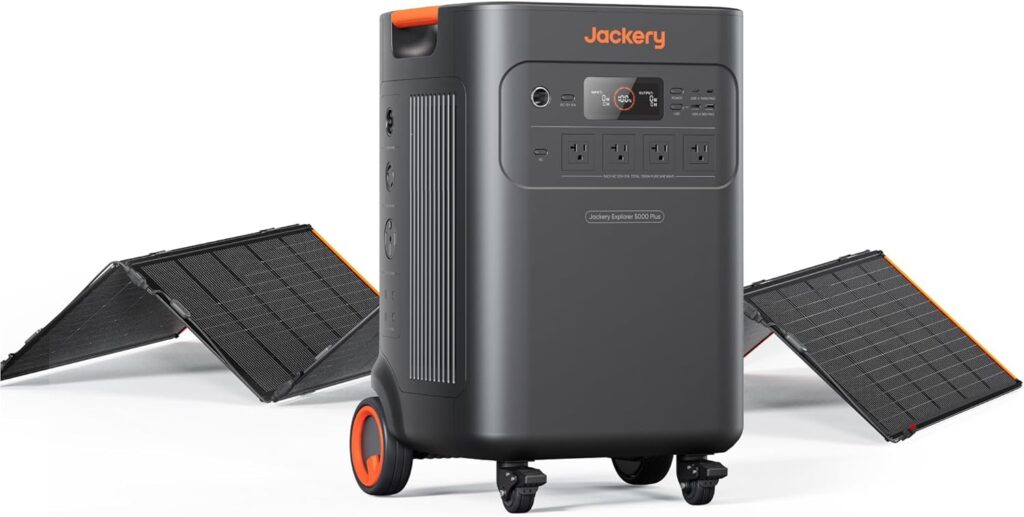
You’ll notice the full product name quickly: Jackery Solar Generator 5000 Plus with 500W(85Wx6) Solar Panels, 5040Wh LiFePO4 Battery Power Station, 120V/240V 7200W AC Output, Portable Generator for Home Battery Backup, Power Outages. The unit is built to look and feel like a high-capacity home backup solution, and it’s designed to be used either as a standalone unit or expanded into a larger system. You’ll appreciate that it’s framed around real-world blackout scenarios and includes features aimed at minimizing interruption to your daily life.
What this model aims to solve
You want reliable power when the grid fails, and you likely want to do that without fumes, constant noise, or complicated setup. This model aims to keep critical loads running — refrigerators, WiFi, computers, and even heavier equipment depending on your configuration — while giving you options to expand capacity. You’ll also get smart controls via app connectivity and an automatic transfer for instantaneous switching, which is important for sensitive electronics.
Key specifications
Below you’ll find the main specs condensed for quick reference. These numbers describe the base unit and included panels as advertised, and they’re the foundation for understanding how it will perform for your needs.
| Specification | Detail |
|---|---|
| Battery type | LiFePO4 (5040Wh) |
| Nominal battery capacity | 5040Wh (5.04 kWh) |
| Included solar panels | 6 × 85W (labeled 500W total) |
| Max solar input | (As included) ~500W from panels; supports higher inputs when configured (refer to Jackery specs) |
| AC Output | 120V / 240V dual voltage |
| Rated AC output | 7200W (continuous) |
| Expandable output | 7200W to 14400W (with expansion units or parallel) |
| Expandable capacity | 5 kWh to 60 kWh (with additional battery packs) |
| UPS response time | 0 ms in Online UPS mode |
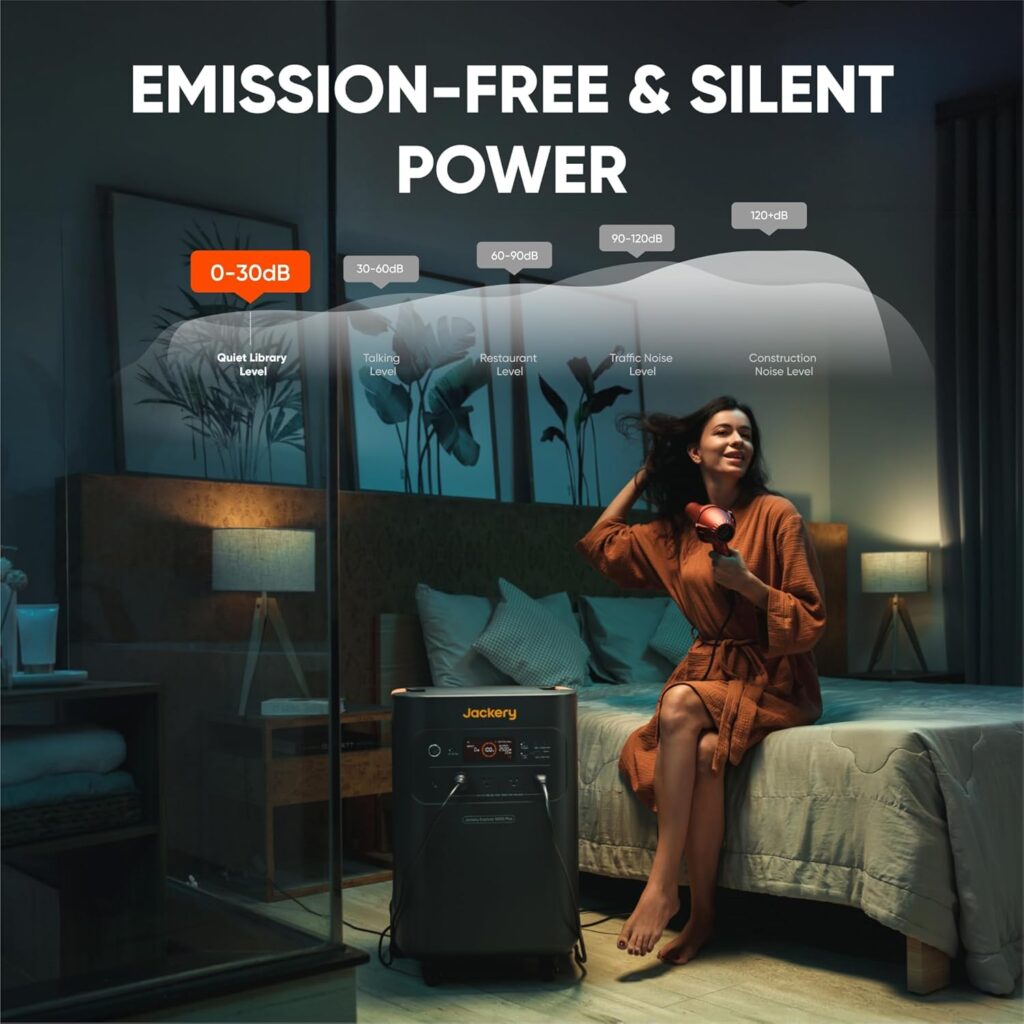
| Noise | <30 db while charging (quiet operation)< />d> |
| Controls | Jackery App (WiFi/Bluetooth) |
| Emissions | Zero on-site (no CO/diesel fumes) |
You’ll want to consult the full manufacturer spec sheet for any specific input limits, cable types, or accessory compatibility, but this table gives you the rough landscape of capability.

Battery capacity and chemistry
You’re getting a 5040Wh LiFePO4 battery, which is one of the most stable chemistries for deep-cycle, long-life use. LiFePO4 batteries typically offer more charge cycles and better thermal stability compared to older lithium chemistries. You’ll find the long cycle life helpful if you plan to use the system regularly for daily backup or off-grid living.
Because the battery is LiFePO4, you can expect a longer usable life before capacity drops significantly. You’ll also like that it handles full-depth discharges better than many alternatives, so the advertised capacity is more usable in practice.
AC output, voltage options, and heavy loads
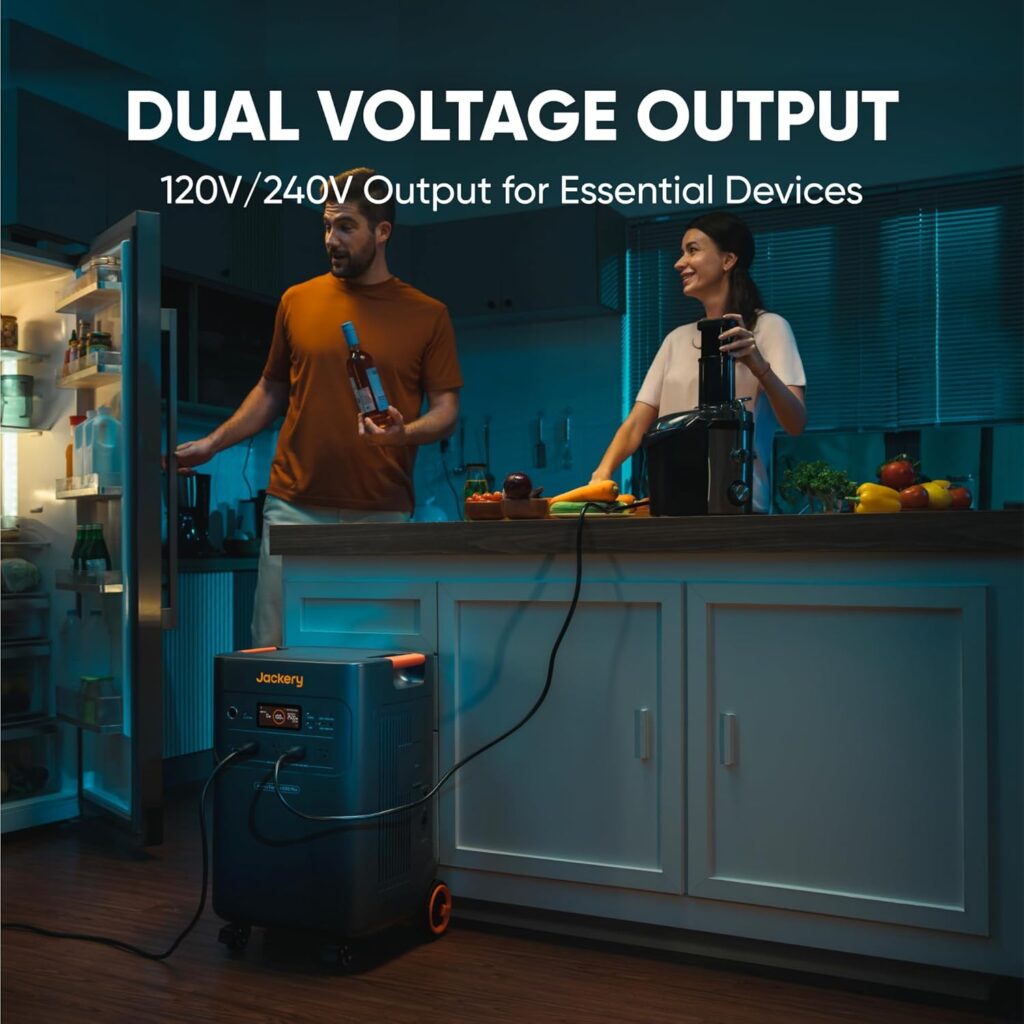
You’ll be able to power both 120V and 240V devices thanks to dual voltage outputs. The base package advertises a 7200W AC output, and the system is expandable up to 14400W. This makes it possible to run large appliances — think dryers, water pumps, or electric ovens — when the unit is configured for higher output or expanded.
If you need to run large single-phase loads that require 240V, the dual-voltage design is especially useful. You’ll still need to account for surge/startup currents, for example motors and compressors might draw several times their running wattage at startup. The 0ms UPS feature and the advertised continuous/expandable output help mitigate these startup demands when configured correctly.
Real-world runtime estimates
You want practical numbers so you can plan your outage strategy. Below are conservative runtime estimates using the 5040Wh battery. These estimates assume about 80% usable battery (common for LiFePO4) and do not account for expansion. Actual runtimes depend on device duty cycles, inverter efficiency, and whether startup surges are brief.
| Device / Load | Typical wattage (running) | Estimated runtime on 5040Wh |
|---|---|---|
| LED lights (10 bulbs, 10W each) | 100W total | ~40 hours |
| Refrigerator (modern, efficient) | 150W average | ~26 hours |
| Refrigerator with frequent cycles | 300W average | ~13 hours |
| WiFi router + small electronics | 40W total | ~100 hours |
| Laptop (charging/working) | 60W | ~66 hours |
| Desktop computer + monitor | 250W | ~16 hours |
| Electric oven (baking) | 2000W | ~2 hours |
| Electric dryer | 3000W | ~1.3 hours |
| Sump pump (intermittent) | 800W average while running | ~5 hours |
| Window AC (5,000–8,000 BTU) | 600–900W | 5–10 hours at lower end, less at higher |
You’ll want to remember that motor-driven appliances have startup surges which can be several times the running wattage. The Jackery supports large surges and has a strong continuous rating, but for repeated heavy-start loads you may need to plan capacity expansion.
Solar charging and recharge times
You’ll be using six 85W panels (advertised as 500W total), which gives you a modest solar input for recharging during the day. In ideal conditions, direct peak sun of 1,000 W/m2 for each panel will yield near their rated outputs. However, real-world conditions and losses in wiring/inversion mean you’ll see less.
For estimating recharge time:
- Theoretical minimum (perfect conditions): 5040Wh / 500W = ~10 hours of peak sun.
- Real-world reasonable estimate: plan on 12–20 hours of combined peak-equivalent sun depending on angle, shading, temperature, and system losses.
You’ll often find that a single day of good sun will partially recharge the battery rather than fully replenish it. If you plan to use the unit to fully offset daily consumption, you’ll need more solar or to expand capacity.
AC and alternative charging options
You can charge the unit from AC mains when available, and many users configure automatic off-peak charging. You’ll appreciate that AC charging is typically much faster than relying solely on included solar panels. If you have access to higher-wattage solar arrays or additional Jackery solar inputs, you can drastically shorten recharge times.
The smart app allows you to schedule charging to coincide with cheaper off-peak rates, providing both resilience and bill savings if your utility supports time-of-use plans. You’ll likely combine AC, solar, and optional generator inputs in mixed setups to maximize uptime.
0 ms Online UPS mode and why it matters
You’ll benefit from the advertised 0ms response time in Online UPS mode because it means devices don’t experience any interruption when switching from grid to battery. For sensitive equipment — like routers, modems, servers, or medical devices — that zero-gap switching prevents restarts or data loss.
If your priorities include keeping a computer, network gear, or a small home office running seamlessly during outages, the UPS-like behavior is a key feature that will reassure you.

App and smart features
You’ll have remote monitoring and control through the Jackery App, accessible via WiFi or Bluetooth. The app allows you to monitor current charge levels, input/output power, and runtime estimates. You can also set charging behaviors such as automatic off-peak charging and peak shaving using the smart transfer switch.
These controls let you tailor the system to your household’s usage patterns and utility pricing, helping you reduce costs while optimizing backup capacity.
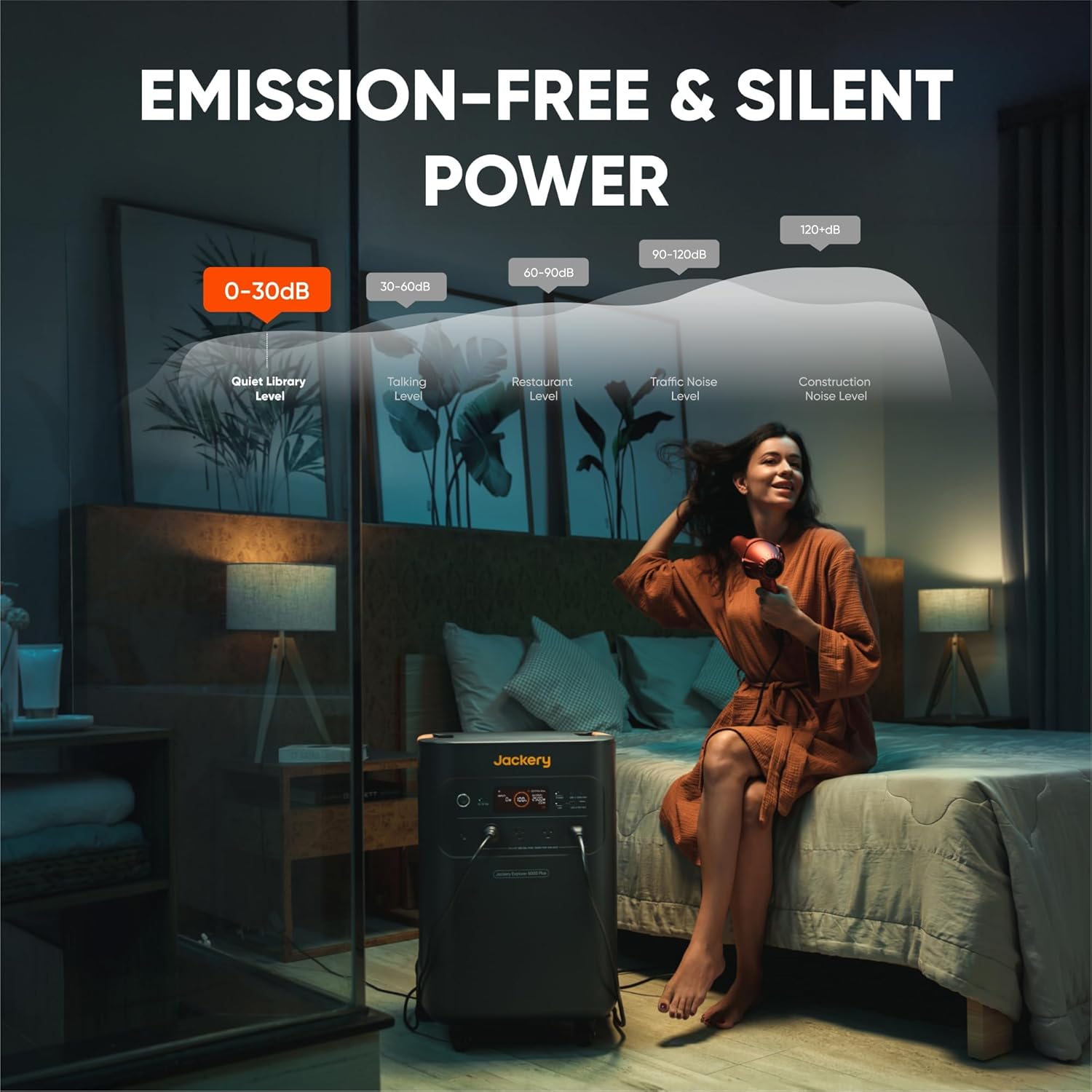
Quiet operation and emissions
You’ll notice that operation is silent compared to a gas generator. The unit claims charging noise under 30 dB, which is low enough to be unobtrusive in most environments and far quieter than engine-driven generators. Because it’s a zero-emission system on-site, you won’t have to deal with carbon monoxide risks, fuel storage, or exhaust-related smells.
This makes it a good option for urban or suburban settings where emissions and noise are a concern.
Expandability and scaling to your needs
If you want to scale beyond the base 5.04 kWh, the system supports expansion up to 60 kWh and output up to 14.4 kW in expanded installations. You’ll be able to start with one unit and add battery packs or parallel inverters to reach capacity tuned to your household’s needs.
Planning expansions requires thinking about physical space, wiring, and the transfer switch. You’ll likely need electrician support for larger setups, especially if you want to integrate at the panel level or support whole-home loads.
Installation, setup, and practical considerations
You’ll want to place the unit where it’s sheltered from weather if it’s not specifically rated for outdoor permanent placement. The included panels should be installed with good sun exposure and secure racking. For UPS integration into critical circuits, the smart transfer switch will route specified circuits to the generator during an outage.
If you’re integrating into your home service panel for whole-home backup, you’ll want a professional electrician to handle transfer switch wiring and to ensure the system complies with local codes. For less invasive uses — running selected circuits with extension cords or a critical-load panel — you can often set up with less formal installation.
Portability and physical handling
The product is called portable, but you’ll want to be realistic: this is a high-capacity unit and will be heavier than small consumer power stations. You’ll often need assistance or a dolly to move it safely. The tradeoff is that you get a powerful, robust battery and inverter system that’s still transportable if you plan to move it between locations rather than leave it permanently installed.
Plan where you keep it so it’s accessible during an outage and store panels where you can quickly deploy them on short notice.
Safety, maintenance, and lifespan
You’ll benefit from the safety profile of LiFePO4 chemistry and the absence of on-site combustion. Still, standard care applies: keep the system dry, avoid extreme temperatures for storage, and follow recommended charging practices if you expect long idle periods. Check connections periodically, inspect solar panel mounts and cabling, and update firmware via the app as updates become available.
LiFePO4 batteries typically offer thousands of cycles before capacity degrades significantly, so you’ll see good long-term value if you use the system regularly.
Pros and cons
You’ll want to weigh advantages and limitations explicitly so you can decide if this unit fits your needs.
Pros:
- You get a large usable battery (5040Wh) with LiFePO4 longevity and stability.
- Dual-voltage output and high continuous power make it suitable for a wide range of appliances.
- 0ms UPS support helps keep sensitive gear running seamlessly.
- Quiet and emission-free operation for environmentally conscious users.
- App monitoring and smart charging let you optimize costs and performance.
- Expandable both in output and capacity for future-proofing.
Cons:
- Solar recharge with only the included 500W array can be slow for full recharges; additional solar is recommended for sustained off-grid use.
- Physical weight and size mean it’s portable only relatively — not a one-person, lightweight device.
- Whole-home integrations and higher power configurations may require professional installation and additional expense.
- Initial cost for a complete expanded system (multiple batteries and more panels) will be significant.
You’ll find the pros are meaningful if you prioritize quiet, clean backup and the cons are manageable if you plan your solar and capacity expansion thoughtfully.
Typical use cases and scenarios
You’ll find this product useful in the following situations:
- Power outages at home where you need continuous support for critical loads like refrigerators, medical devices, network gear, and some heavy appliances.
- RV or overland use where you want a clean, quiet portable power source, though consider weight and space.
- Temporary off-grid work sites that require reliable AC power without fumes or noise.
- Households on time-of-use billing that want to combine off-peak charging with peak-shaving to lower electricity bills.
If your needs focus on long-term off-grid living with heavy daily demand, you’ll likely expand capacity or augment with additional solar.
How to size this for your home
You’ll need to calculate your average daily consumption and then match that to the battery capacity plus recharge capability. A practical approach:
- List critical loads and their wattages.
- Estimate how many hours per day each device will run.
- Sum watt-hours for your daily critical load.
- Add a margin for inverter losses (~10–15%) and potential inefficiencies.
- Consider solar availability or AC/backup generator charging to replenish daily usage.
For example, if your critical loads total 2 kWh per day, a single 5.04 kWh battery gives you roughly two days of capacity at that draw (allowing for inefficiencies). If your average household blackout consumption is higher, scale up accordingly or add panels for faster recharging.
Cost considerations and ROI
You’ll face an upfront cost that’s higher than small portable power stations but typically lower in lifecycle maintenance costs than a gas generator when factoring in fuel and servicing. The ROI depends on:
- Frequency and duration of outages in your area.
- Willingness to avoid fuel costs and noisy operation.
- Time-of-use electricity pricing (useful if you use the unit for peak shaving).
- Long battery cycle life reduces replacement costs over time.
If you frequently face multi-day outages, the value proposition becomes more compelling, especially if you expand capacity and panel capacity.
Comparison with gas/diesel generators
You’ll notice major differences in form, use, and experience:
- Noise: the Jackery is whisper-quiet; gas generators are loud.
- Emissions: this system is zero-emission onsite; fuel generators emit CO and particulates.
- Maintenance: electric systems require less routine mechanical maintenance; fuel generators need oil changes and periodic engine work.
- Runtime: fuel generators can run indefinitely with fuel; battery systems are limited by capacity unless you have sufficient solar or refuelable sources.
- Instant switching: both can be integrated with transfer switches, but the Jackery’s 0ms UPS gives an advantage for sensitive electronics.
If you need indefinite runtime for heavy loads in a remote area without reliable sun or refueling service, a fuel generator or hybrid solution may be more appropriate. If you want quiet, clean, and low-maintenance backup, the Jackery is strong.
Setup checklist for first-time users
You’ll appreciate having a simple checklist when you unbox:
- Read user manual for safety and connection order.
- Position the power station in a dry, ventilated area.
- Mount panels where they get maximum sun and connect via the supplied MC4 or specified connectors.
- Install or configure the smart transfer switch if you’re integrating into the house panel.
- Pair the unit with the Jackery App to monitor status and set charge schedules.
- Perform a test blackout run to verify critical circuits and surges.
- Keep emergency contact/installer info handy for bigger integrations.
A little setup time now will save stress when a real outage happens.
Maintenance tips
You’ll get the best longevity with regular, simple maintenance routines:
- Keep panel surfaces clean and free of dust and debris.
- Check cable connections periodically for corrosion or wear.
- Avoid storing the battery at 0% charge for long durations; store in a cool, dry location if not in regular use.
- Update firmware when the app notifies you to get bug fixes and performance improvements.
- If using outdoors occasionally, make sure the unit is protected from rain and extreme temperatures.
Routine checks every few months are often sufficient for home backup readiness.
Warranty and support
You’ll want to verify the exact warranty length and terms before purchase, as these can differ by region and seller. Jackery typically provides product support and a warranty that covers manufacturing defects and battery health within specified parameters. If you rely on the unit for critical backup, register the product and keep documentation in case you need support.
Most users find manufacturer support adequate for setup guidance and replacement parts when needed.
Common questions and quick answers
You’ll likely have practical questions; here are short answers to frequent concerns.
- Can it run a whole home? Yes, with expansions to capacity and output and proper panel input you can configure whole-home backup, though you’ll likely need professional setup for panel-level integration.
- How long will the battery last? LiFePO4 batteries typically last for thousands of cycles. Actual lifespan depends on usage patterns and depth-of-discharge habits.
- Is it noisy? No — charging is claimed under 30 dB, very quiet compared to gas generators.
- Can I add more solar panels? Yes, additional solar input is recommended to speed charging; check manufacturer limits for maximum solar input and connector types.
- Do I need a transfer switch? For whole-home backup or circuit-level protection, yes. For running separate loads individually, you can use direct connections or a critical-load subpanel.
You’ll still want to consult the manual for any edge-case scenarios and electrical safety details.
Final verdict and who should buy it
You’ll find that the Jackery Solar Generator 5000 Plus is a compelling option if you want a quiet, clean, and flexible backup that can be expanded as your needs grow. The combination of a large LiFePO4 battery, 0ms UPS capability, dual-voltage high output, and smart controls makes it especially compelling for homeowners prioritizing reliability and low noise.
If you frequently experience multi-day outages, plan to gradually expand battery and solar capacity, and want to avoid the maintenance and emissions of combustion generators, this product will likely suit you very well. If you require instant unlimited runtime in remote locations without solar or are constrained by budget for a complete expanded system, you might evaluate hybrid solutions or supplement with a fuel generator.
If you want more detailed help calculating the exact configuration for your home — including how many add-on battery packs and panels you should buy — tell me your typical critical loads (lights, fridge, pump, medical devices) and I’ll help size the system and give a sample parts list.
Disclosure: As an Amazon Associate, I earn from qualifying purchases.