
Looking for a compact, reliable power source for your next camping trip, emergency kit, or roadside charge?

Product overview — WHAT this is and why it matters
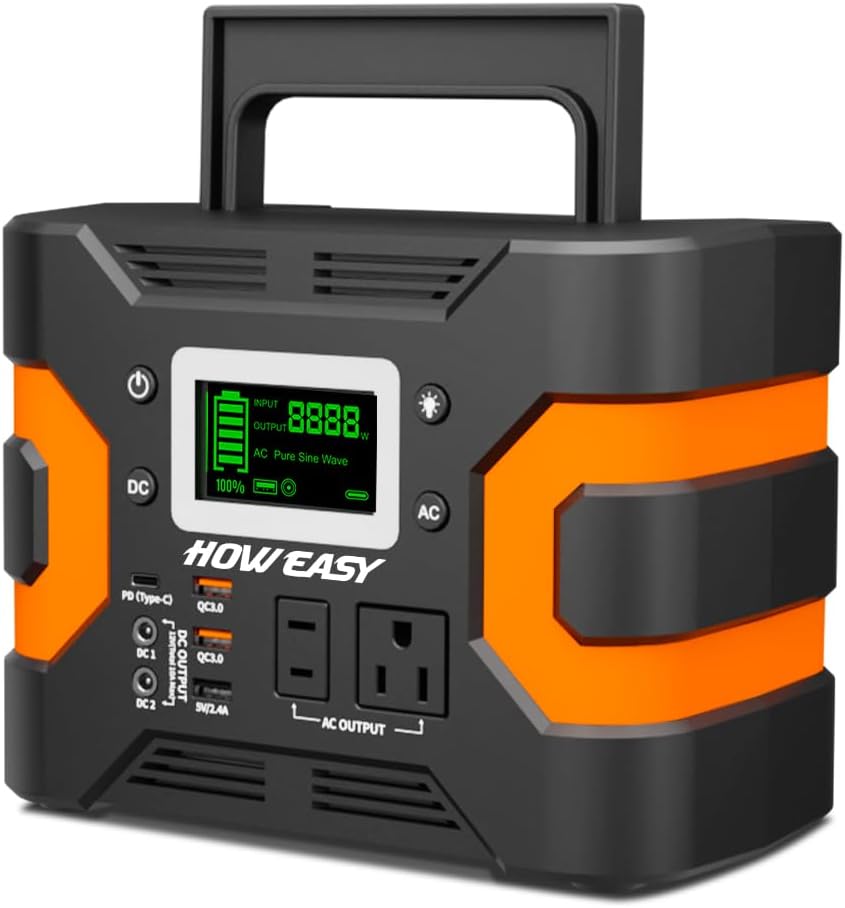
You’re looking at the HOWEASY Portable Power Station,120W(240W Peak) Solar Generator,88Wh Lithium Battery Power with 110V AC Outlet/DC/USB/LED Light for Outdoor Camping Trip Hunting Emergency(Solar Panel Optional). It’s a small, lightweight power station designed to give you portable AC and DC power for basic devices and emergency needs. If you want something that fits in a backpack and can handle phone charging, small fans, lights, and other essentials, this unit aims to do that.
Key features in plain language
You’ll get an 88Wh lithium battery inside a compact 6.6 x 4 x 3 inch package that weighs about 2.3 pounds. It offers two AC sockets (110V, 120W continuous with 240W peak), multiple USB ports including an 18W USB-C, DC outputs, a built-in LED light with modes, and three different ways to recharge the station. The unit also includes an AC adapter and a car charger, and you can optionally add a compatible solar panel.
Quick spec breakdown (table)
This table gives you the most important technical points at a glance so you can compare with other gear quickly.
| Specification | Detail |
|---|---|
| Model | HOWEASY Portable Power Station (88Wh) |
| Battery capacity | 88Wh (Lithium battery) |
| AC output | 2 × 110V AC sockets, 120W continuous, 240W peak |
| USB-C output | 1 × USB-C (18W) |
| USB-A outputs | 2 × QC 3.0 USB, 1 × USB-A (5V/2.4A) |
| DC outputs | 2 × DC ports (12V/10A) |
| Display | LED display showing working status and remaining power |
| LED light | Built-in; steady, flash, SOS modes |
| Recharging methods | AC adapter (included), solar panel (15-24V, optional), car charger (12V/24V, included) |
| Size | 6.6 × 4 × 3 inches |
| Weight | ~2.3 pounds |
| Cycle life | >1500 cycles |
| Accessories included | AC adapter, car charger, user manual |
| Warranty & support | 24-month product warranty, 24/7 customer service |

Design and portability
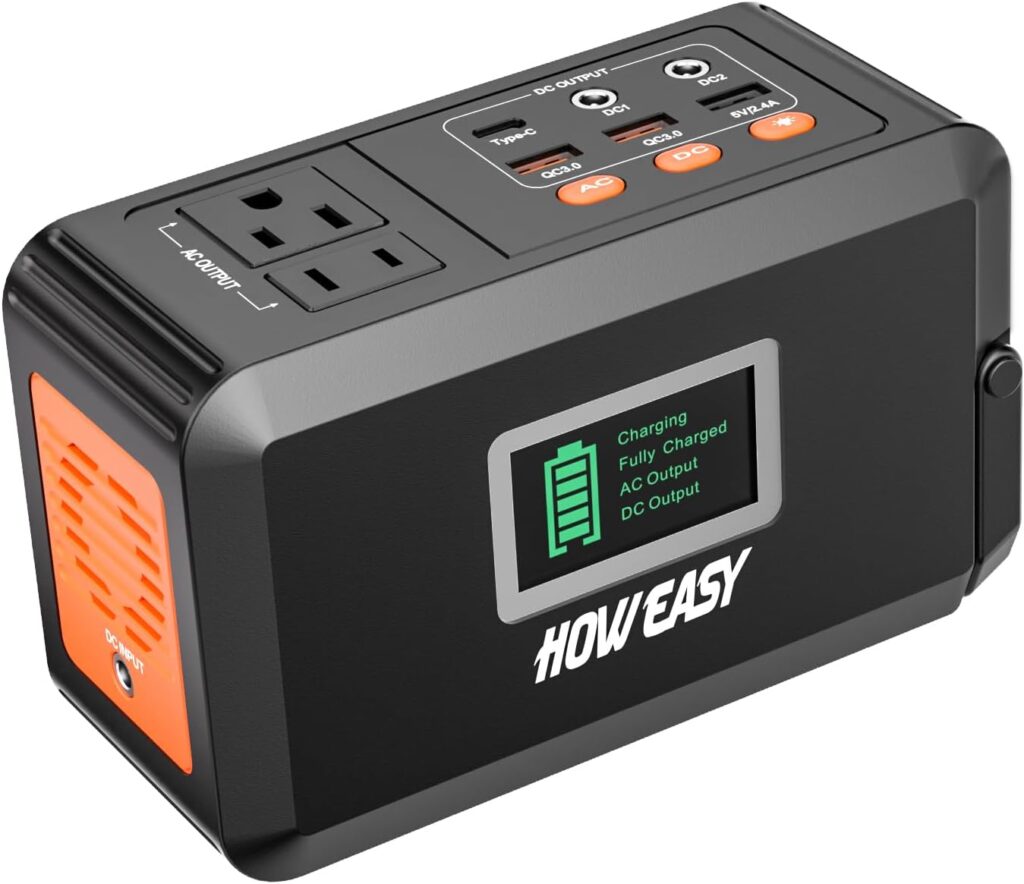
You’ll appreciate how compact and lightweight this unit is right away. The hidden handle is a clever addition that keeps the station streamlined while letting you carry it easily when you need to.
The small size makes it ideal for backpacking when you want minimal weight, for car trips where space matters, and for storing in a closet or emergency kit. At roughly 2.3 pounds, you won’t feel burdened carrying it in a daypack.
Build quality and layout
The housing feels sturdy for a lightweight device, with clearly labeled ports and a simple LED display so you can monitor remaining power. The AC and DC buttons being separate make switching outputs more intuitive when you’re operating multiple devices.
You’ll notice the ports are grouped logically — USB ports together, AC sockets side-by-side, and the DC ports in a discrete place — so cable management is easier at camp or in the car.
Ports and output options
You get eight ports total: two AC sockets, one USB-C 18W, two Quick Charge 3.0 USB-A ports, one standard USB-A (5V/2.4A), and two 12V/10A DC ports. This gives you a flexible mix to power phones, tablets, cameras, small fans, and other gadgets.
The 120W continuous AC output (240W peak) means you can run small appliances and essentials that stay under that limit. You’ll want to check device draw before connecting anything heavier like kettles or large heaters.
USB-C and Quick Charge usefulness
The USB-C 18W port is great for modern phones and some smaller tablets that support fast charging. The QC 3.0 ports help top off compatible devices faster than standard USB-A ports, which is handy when you’re juggling multiple gadgets in low-power settings.
Charging modes and recharge times
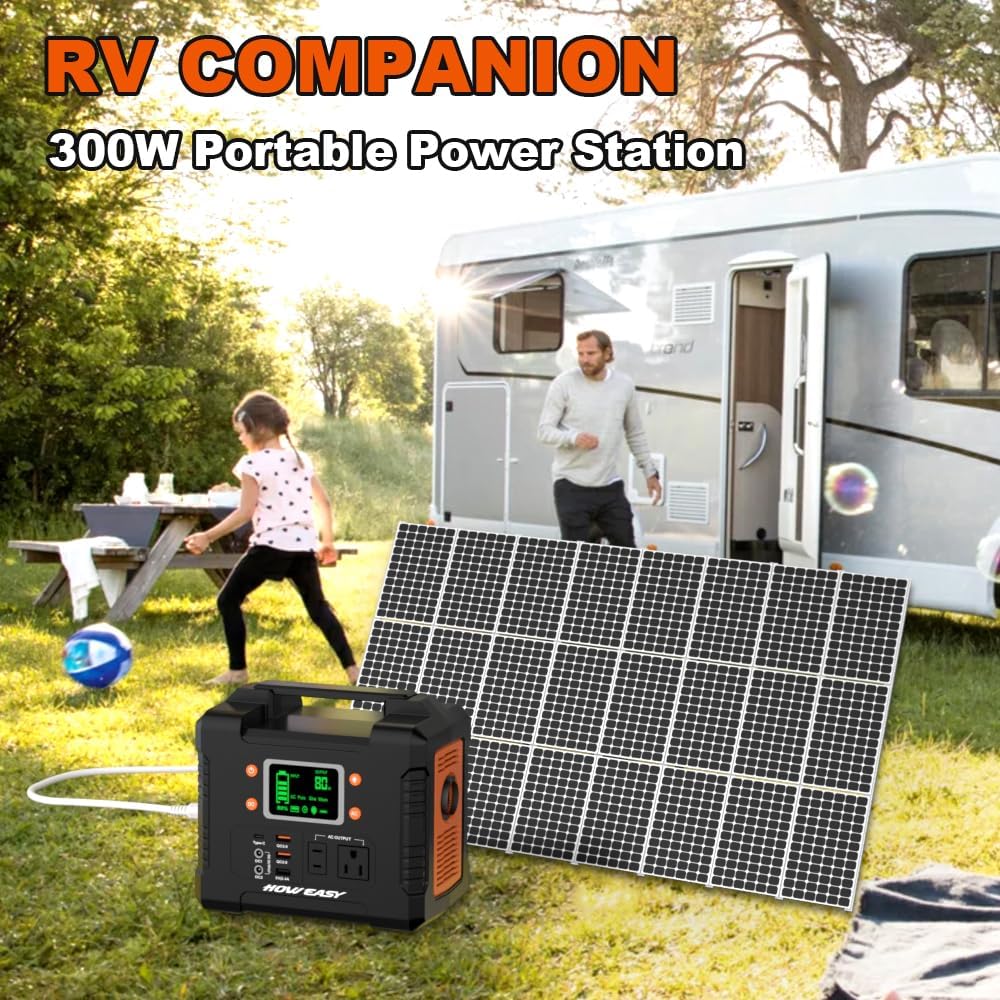
You can recharge the power station three ways: from an AC outlet using the included adapter, from a solar panel (15–24V) that you buy separately, or from a vehicle’s 12V/24V socket using the included car charger. You can also charge the station while simultaneously powering devices, which is convenient at base camp or in a car.
Typical charging times (estimates)
Actual charging times depend on input power and conditions, but here are approximate figures you can expect:
- AC outlet (included adapter): 3–6 hours depending on adapter specs and how much you’re drawing while charging.
- Solar panel (15–24V, optional): 6–12 hours under strong direct sun with a properly sized panel (varies with panel wattage and conditions).
- Car charger (12V/24V): 4–8 hours depending on vehicle output and how much device draw is happening concurrently.
Note that these are conservative estimates; efficiency, temperature, and simultaneous loads change outcomes.
Battery capacity and runtime expectations
With an 88Wh battery you can power small devices for reasonable periods. How long it lasts depends on the wattage of the attached device. The AC inverter and conversion losses will reduce runtime for AC-powered devices, while direct USB or DC connections are typically more efficient.
Practical runtime estimates (approximations)
Here’s a practical table to help you estimate what 88Wh will do in everyday scenarios. These are approximate and will vary in real use.
| Device | Typical power draw | Estimated runtime / charges |
|---|---|---|
| Smartphone (12Wh battery) | ~5–10W while charging | ~6–8 full charges |
| Small LED camp light (5W) | 5W | ~12–14 hours |
| Mini USB fan (6–10W) | 6–10W | ~8–12 hours |
| Laptop (30–60W) | 30–60W | ~1–2 hours (AC) |
| Camera battery charger (10W) | 10W | ~7–8 charges |
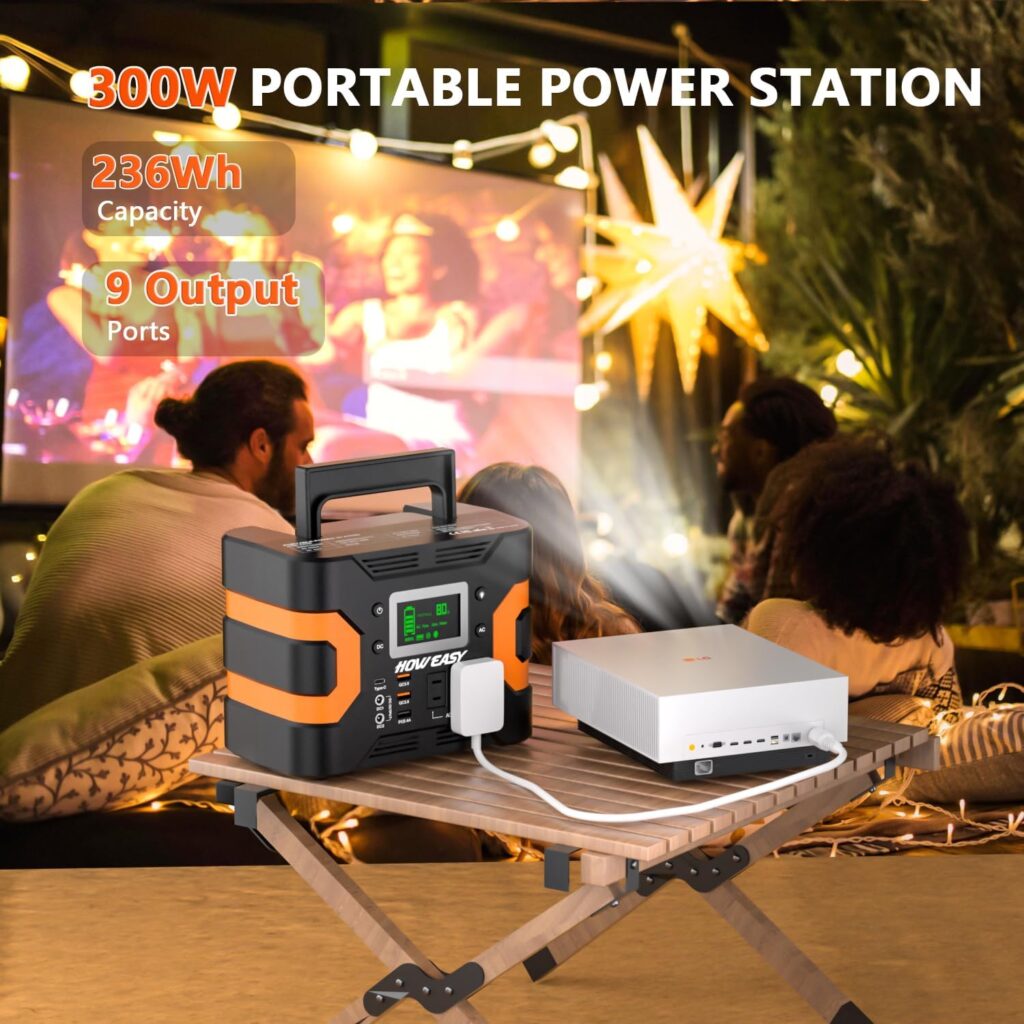
| Portable projector (30W) | 30W | ~2 hours |
| CPAP (low-power models ~20W) | 20W (depending on heating settings) | ~3–4 hours |
Remember: AC outputs suffer inverter losses (typically 10–20%), so AC-run devices will see shorter runtimes than DC/USB devices for the same wattage.
Performance for common real-world uses
You’ll find this unit especially suited for charging phones, powering LED lights, running small cooling fans, and keeping cameras or portable gaming devices charged during trips. It’s not meant to run large appliances or heavy-duty tools — check wattage limits before plugging in anything over 120W continuous.
If you rely on USB-C fast charging for your phone, the 18W USB-C will be helpful. For multiple people with small devices, the combination of ports means you can top off several items at once without waiting in line.
How it behaves under load
Under typical small loads (phones, lights, fans), the station remains stable and the LED display gives you a clear readout of remaining capacity. If you approach the 120W AC limit, the unit may throttle or display warnings — always confirm device draw before connecting larger items.
LED light and emergency features
You’ll get a built-in LED light with three modes: steady, flash, and SOS. These modes are great for campsite tasks, signaling in an emergency, or providing ambient light inside a tent.
The separate AC/DC buttons help you control outputs quickly — turn on only what you need to extend runtime and avoid accidentally draining the battery.
Practical emergency use
In an emergency power outage, this station can keep essential communication devices running, provide light, and run small medical devices that fall within the power limit. For overnight or extended medical needs (like full-size CPAPs with heaters), you’ll need larger-capacity solutions or additional batteries.
Safety, protection, and battery life
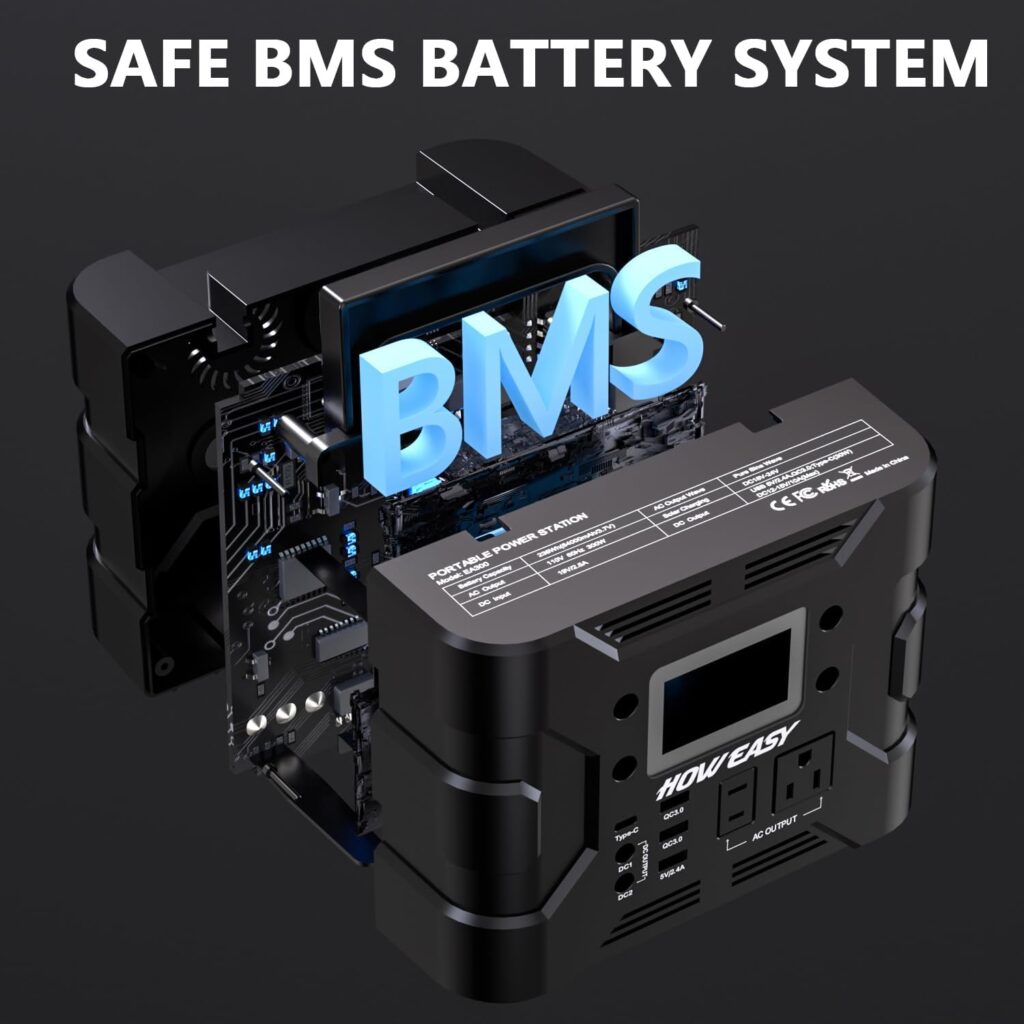
The HOWEASY station includes built-in safety protections typical of small power stations: over-current, over-voltage, short-circuit, and thermal protections. The advertised cycle life of over 1,500 cycles is excellent for this capacity class, suggesting long-term durability if you maintain it properly.
You’ll want to avoid extreme temperatures when using or storing the unit, and follow manufacturer guidance for best battery health. Frequent deep discharges and exposure to heat can shorten battery lifespan.
Storage and maintenance tips
Store the power station in a cool, dry place and keep it charged at around 40–70% for long-term storage if you won’t use it for months. Do a periodic recharge every few months to prevent deep discharge. Avoid leaving it in a hot car or direct sunlight for long periods.
What’s included and customer support
You’ll receive the HOWEASY 88Wh portable power station, an AC power adapter, a car charger, and a user manual. The manufacturer provides 24/7 customer service and a 24-month product warranty, which gives you helpful coverage if anything goes wrong.
How to get help if you need it
If you run into operational questions, the seller will send an operation guide on request and supports round-the-clock customer service. Keep your purchase information handy to expedite warranty or service requests.
Use cases — when this product makes sense for you
You should consider this station if you need a lightweight, compact power source for:
- Weekend camping and car camping where you want to charge phones, lights, and a mini-fan.
- A lightweight emergency kit for home power outages to keep phones, radios, and lights running.
- Short hunting trips or day hikes where you need a reliable way to recharge cameras and GPS.
- Road trips where you want to charge devices in a parked vehicle or keep things powered during stops.
- Outdoor photography or videography sessions for powering cameras and small accessories.
When it’s not the right fit
You shouldn’t expect to run high-wattage devices, full-size CPAP machines for extended periods, electric kettles, microwaves, or power tools. If your needs regularly exceed 120W continuous, look for higher-capacity units.
Comparing it to alternatives
Compared to ultra-small battery packs (power banks), you get AC output and more output flexibility with this station. Versus larger portable generators (500–1000Wh and up), you trade raw runtime and high-watt handling for compactness and portability.
If you need something ultra-light and only for phone charging, a slim power bank will be lighter. If you need long multi-day backup power for multiple appliances, a larger station will serve you better. This HOWEASY model sits in the sweet spot for minimal multi-port AC and USB convenience.
Pros and cons
You’ll want to weigh these points before deciding.
Pros:
- Very compact and lightweight (2.3 lbs) — easy to carry and store.
- Useful mix of ports including USB-C (18W) and Quick Charge 3.0.
- Two AC sockets with 120W continuous (240W peak) allow AC usage for small devices.
- Three recharging modes (AC, car, solar) give flexibility.
- Built-in LED light with SOS mode for emergencies.
- Long advertised cycle life (>1500 cycles).
- Included AC adapter and car charger; 24-month warranty and 24/7 support.
Cons:
- 88Wh capacity limits runtime for larger devices.
- AC output limited to 120W continuous — not for heavy appliances.
- Solar panel sold separately; solar performance depends on panel wattage and sun.
- Charging time depends on input; solar charging can be slow unless you have an adequately powerful panel.
- For multi-person extended power needs, you’ll need a higher-capacity solution.
Practical tips for maximizing performance
You’ll extend useful runtime and get the best value from the unit with these habits:
- Use DC/USB ports when possible because they’re more efficient than running through the inverter.
- Turn off unused outputs (use AC/DC buttons) to conserve battery.
- Charge the unit on AC before heading out to maximize charge cycles and avoid draining in the field.
- If you plan to solar-charge often, invest in a matching 60–100W foldable solar panel to reduce charging time.
- Keep device firmware up to date if applicable and follow the manual for safe operation.
Buying considerations and what to look for
When choosing this or a similar model, consider:
- How much wattage do your essential devices draw? Add up peak draws and compare to the 120W continuous limit.
- Do you need AC sockets or only USB/DC? If you only need USB, high-capacity power banks might be a lighter choice.
- Will you often use solar charging? Pairing with a higher-wattage solar panel improves usability.
- How many ports do you need simultaneously? This unit offers multiple but will share total power under heavy use.
- Warranty and support availability — HOWEASY includes a 24-month warranty and 24/7 customer support, which can be a deciding factor.
Frequently asked questions (FAQ)
Here are answers for the typical questions you’ll have when considering this product.
Q: Can you run a laptop on the AC outlet? A: Yes, for short periods. Many laptops draw 30–60W; you’ll get 1–2 hours depending on laptop draw and whether you charge while using it. Check your laptop’s power adapter wattage.
Q: Can it power a CPAP machine overnight? A: It depends on the CPAP model and power draw. Low-power CPAP models might run a few hours, but many CPAPs require larger capacity for a full night. For reliable full-night use, consider a unit with greater watt-hours.
Q: Is the solar panel included? A: No — the solar panel is optional and sold separately. Use a 15–24V panel and choose adequate wattage (e.g., 60–100W) for practical charging times.
Q: How many phone charges can I expect? A: Roughly 6–8 full smartphone charges depending on your phone’s battery size and charging efficiency.
Q: Is it airline-legal? A: Many airlines restrict lithium batteries above certain Wh. 88Wh is within common airline carry-on limits (typically up to 100Wh without airline approval), but check specific airline policies before flying with it.
Final verdict — is it worth it for you?
If you want a very portable, versatile power station for charging phones, running lights, powering small fans, camera batteries, and handling basic AC needs up to 120W, this HOWEASY 88Wh unit is a strong contender. You’ll like its light weight, handy port mix, built-in LED light, and the flexibility of AC/car/solar charging.
If you require multi-day continuous power for several high-watt devices, you’ll need a larger capacity station. But for weekend trips, emergency kits, short hunts, or car-based outings, this unit gives you reliable, convenient power in a small package.
Quick checklist before you buy
You should verify:
- Your critical devices draw under 120W continuous.
- You’re comfortable with an 88Wh capacity for the expected runtime.
- You’ll buy a solar panel separately if you plan on off-grid charging frequently.
- Airline travel plans (if any) accept 88Wh battery packs in carry-on.
If all that checks out, you’ll have a compact, easy-to-use power station that covers most everyday portable power needs.
Closing tips for use and care
Always charge the unit fully before storing, keep it away from extreme heat, and avoid complete depletion for long-term battery health. Use the included car charger for road trips and the AC adapter for faster top-ups at home. For regular outdoor solar charging, pair it with a good quality 60–100W foldable solar panel matched to the station’s input range.
With proper care and realistic expectations about capacity limits, this HOWEASY power station will be a dependable part of your outdoor gear and emergency preparedness plan.
Disclosure: As an Amazon Associate, I earn from qualifying purchases.