
Have you thought about whether a compact 200W power station can actually cover your needs for short trips or emergency backup?
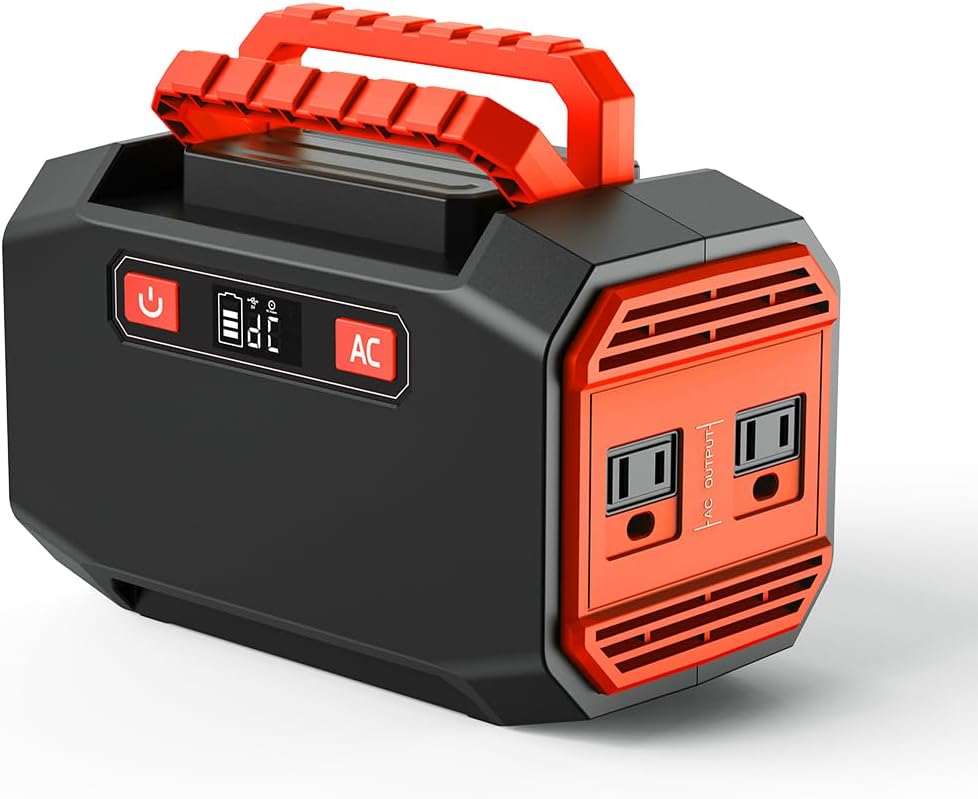

Product snapshot: 200w Power Station, Portable Solar Generator 36000mAh/133Wh with 110v AC Outlet, Lithium Battery Backup Supply Pack (solar panel not included) with LED Light, for Outdoor Camping Home
You’ll find the full product name useful when searching for specifics or matching accessories. This mini power station is marketed as a lightweight, travel-friendly option for charging multiple small devices and providing short-duration AC power.
What the product promises
The manufacturer positions this unit as a safety-minded, easy-to-carry backup that supports solar recharging and multiple outputs. It aims to give you a convenient power source for camping, short trips, and emergency situations at home.
Key specifications at a glance
Below you’ll get a clear breakdown of technical specs so you can quickly see whether this unit fits your needs. The table shows the main numbers and port counts included in the product listing.
| Specification | Details |
|---|---|
| Battery capacity | 36000mAh / 133Wh (lithium battery) |
| Nominal AC output | 110V, 200W continuous (two AC outlets) |
| USB outputs | 2 × 5V 3.1A (USB-A) |
| DC outputs | 3 × 12V DC ports |
| DC input / solar input | 1 × rechargeable DC input (supports solar recharging; panel not included) |
| Display | Smart LED display (charging status, remaining capacity; auto-off after 15s idle) |
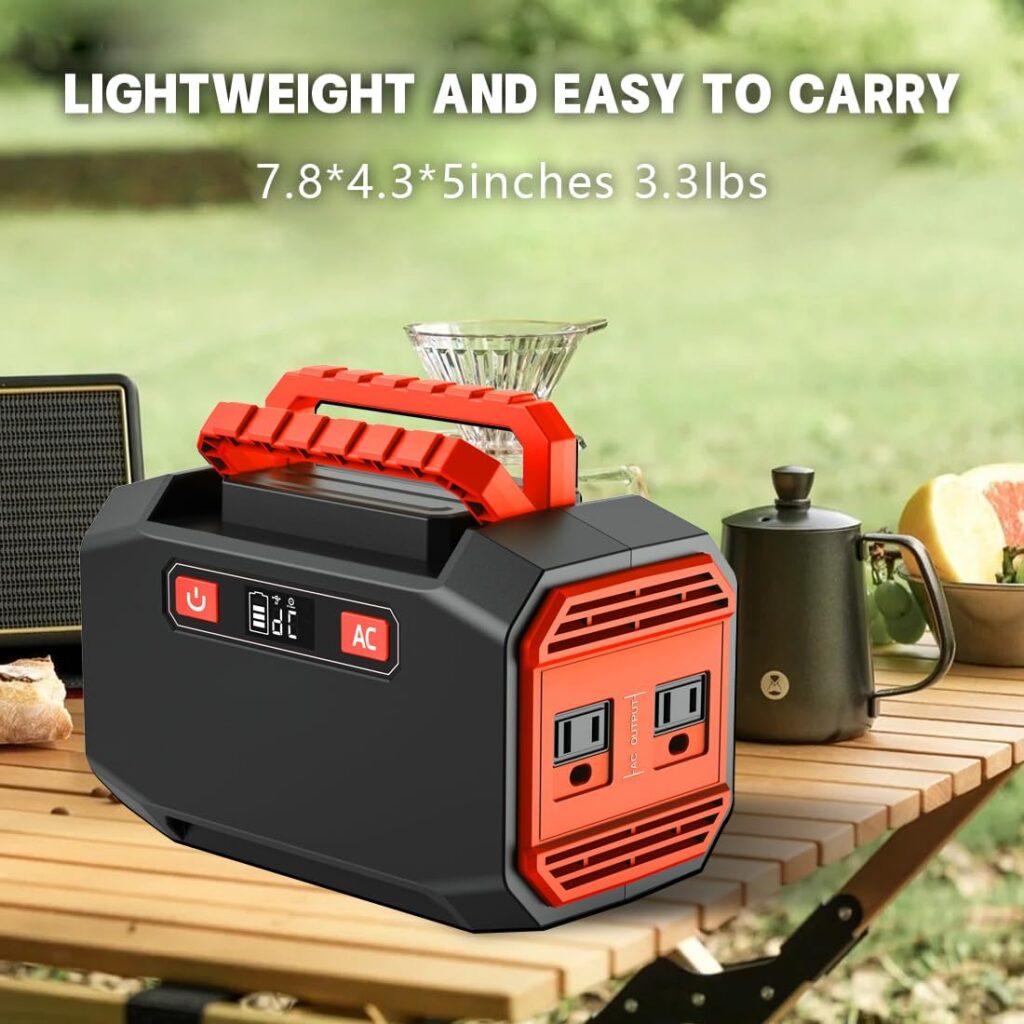
| Weight | 3.3 lb |
| Dimensions | 7.8 × 4.3 × 5 in |
| Accessories included | Wall charger adapter, USB-A to Type-C converter, user manual |
| Warranty | 1 year |
You’ll notice the specs focus on portability and multiple small-output ports, which are ideal for phones, tablets, cameras, and small 12V devices.

Design and build quality
The unit’s boxy form and folding handle are designed for convenient carrying, and the weight is intentionally kept low for portability. You’ll appreciate how compact it is if you’re packing light, though it sacrifices capacity compared with larger power stations.
Physical feel and portability
At 3.3 lb and roughly the size of a small lunch box, you can easily pick it up with one hand and toss it into a daypack or car trunk. Because it’s lightweight, you won’t mind carrying it on hikes or road trips, and the folding handle helps when grabbing it quickly.
Display and interface
The smart LED display gives you a snapshot of charging status and remaining capacity, which helps you manage loads without guessing. The display will automatically turn off after 15 seconds of no output, which conserves display life and reduces small distractions when you’re trying to sleep or relax.
Ports and real-world connectivity
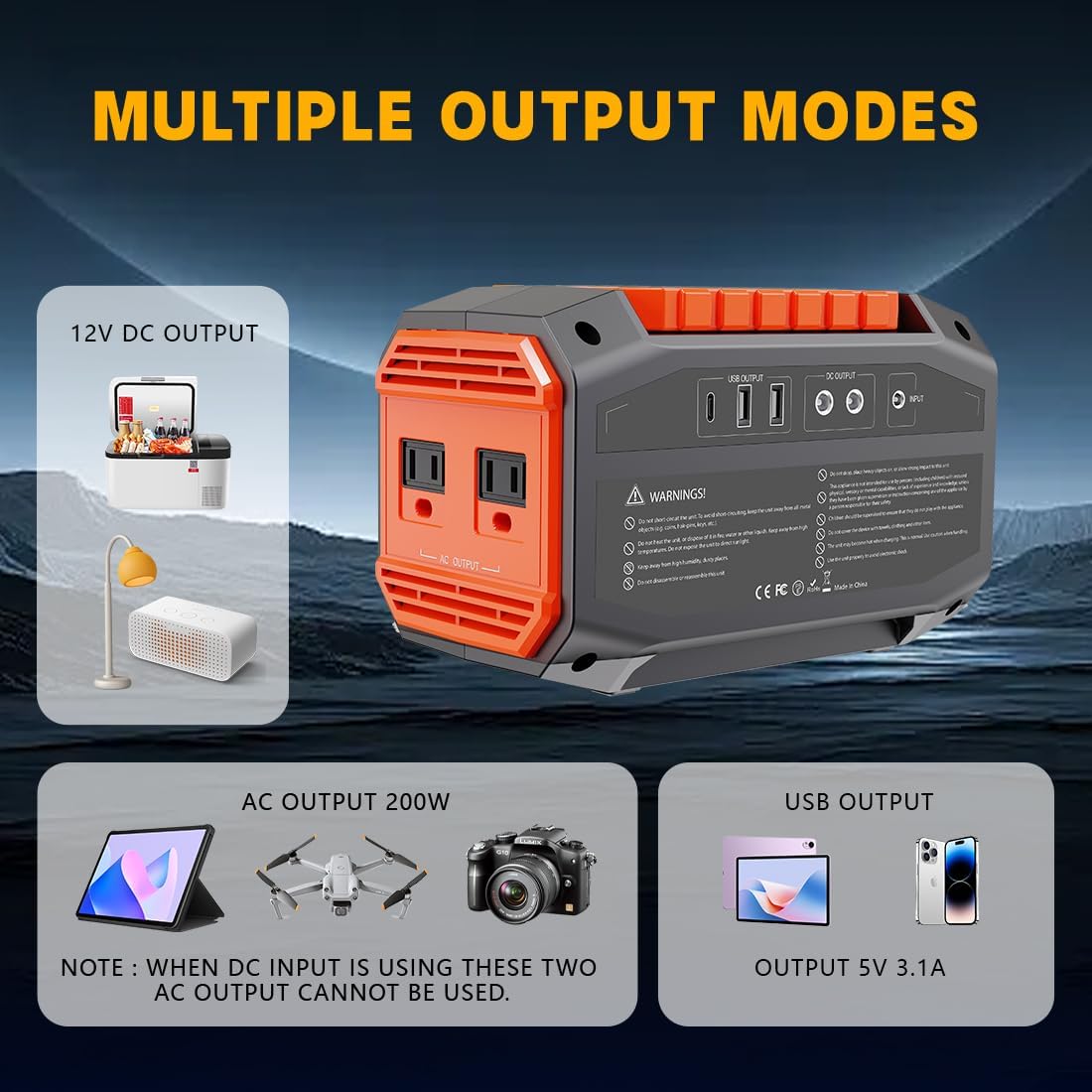
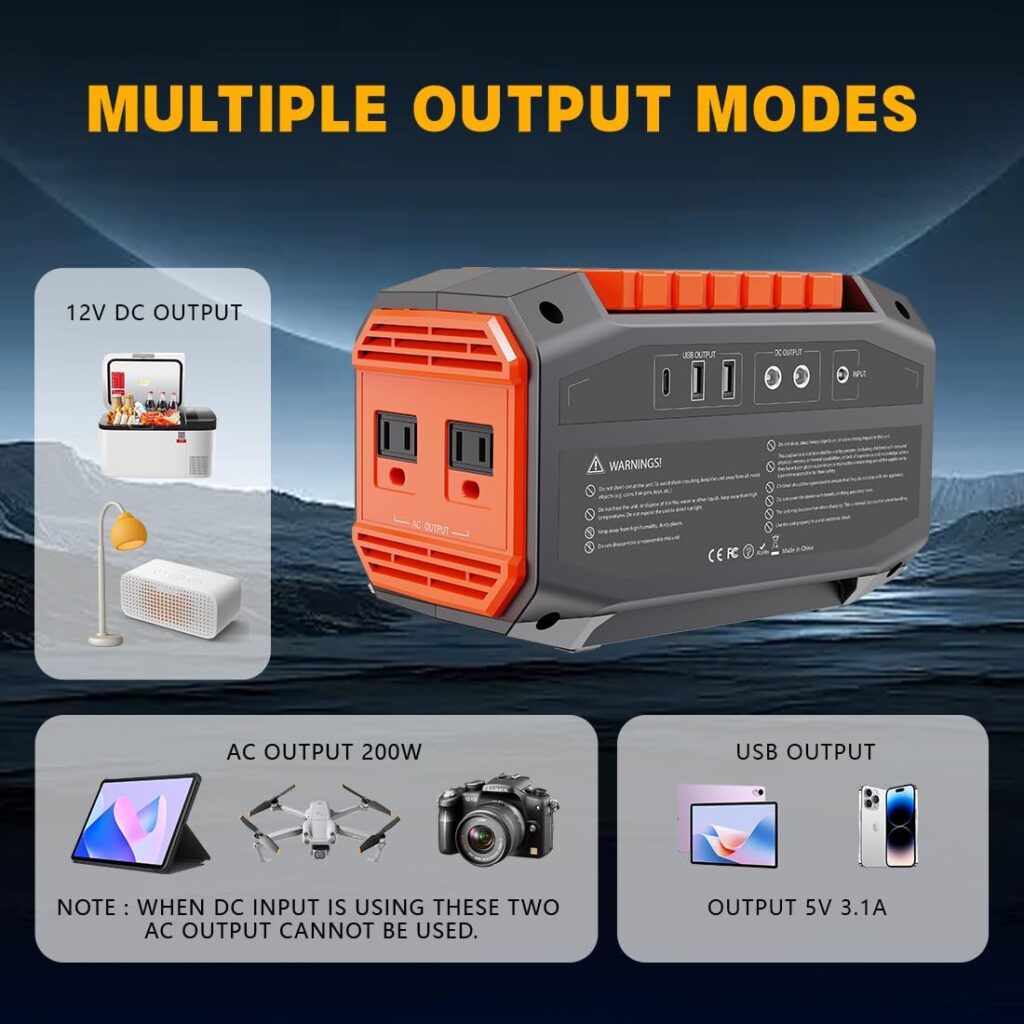
You’ll find a practical selection of ports for everyday devices, including two AC outlets, USB-A ports, and multiple DC ports. These outputs allow you to charge several devices at once, but you should plan the load with the 200W AC limit in mind.
AC outlets
Two 110V AC outlets let you plug in small appliances and chargers, but the total continuous output is capped at 200W. You can use your laptop charger, a small TV, or an LED light through the AC port, but high-draw devices and heavy compressors are not suitable.
USB and DC ports
The 2 × 5V 3.1A USB-A ports and three 12V DC ports make charging phones, cameras, portable fans, and 12V accessories straightforward. Charging over USB is generally more efficient than converting to AC, so you’ll maximize runtime by favoring USB and DC loads when possible.
Battery capacity and expected performance
You’ll want to understand how the 133Wh capacity translates into practical usage because raw mAh figures don’t tell the whole story. Using the Wh number lets you estimate runtimes for different devices more accurately.
How to think about 133Wh
133Wh describes how much energy the battery stores. In practice you’ll get slightly less usable energy due to conversion inefficiencies: expect roughly 85–95% usable energy depending on whether you use AC (inverter losses) or direct DC/USB outputs (higher efficiency). Keep this in mind when planning longer runs.
Typical output limits and efficiency assumptions
When running AC loads, assume about 85% efficiency (inverter losses). For USB/DC, assume around 90–95% efficiency. These assumptions let you calculate realistic runtimes and charge counts for smartphones, laptops, lights, and other small devices.
Practical run-time and charge examples
Below is a table showing estimated runtimes or number of charges for common devices, using conservative efficiency assumptions. These are practical examples to help you plan how you’ll use the unit.
| Device | Typical power or capacity | Estimated usable energy type | Estimated runtime / number of charges |
|---|---|---|---|
| Smartphone (typical battery 3000–4000 mAh ≈ 10–15Wh) | 10–15 Wh per full charge | USB/DC efficiency (~95%) | ~8–12 full charges |
| Tablet (e.g., iPad ~30–40Wh) | 30–40 Wh per full charge | USB/DC efficiency | ~3–4 full charges |
| Laptop (light 45W) | 45W | AC (85% eff ≈ 113Wh usable) | ~2.5 hours of use |
| Laptop (60W) | 60W | AC (85% eff) | ~1.9 hours of use |
| LED light | 10W | AC (85% eff) | ~11 hours |
| Portable fan | 15W | AC (85% eff) | ~7.5 hours |
| Mini fridge (running avg. 40W) | 40W | AC (85% eff) | ~2.8 hours (compressor cycles may extend or reduce this) |
| CPAP (travel or low-power ~30W) | 30W | AC (85% eff) | ~3.8 hours |
| TV (small LED 32″) | 50W | AC (85% eff) | ~2.3 hours |
| Camera batteries | ~10Wh per charge | USB/DC efficiency | ~10–12 charges |
These figures are estimates meant to guide your expectations. Actual results will vary with device efficiency, usage patterns, and environmental factors.
Charging the power station: wall, car, and solar
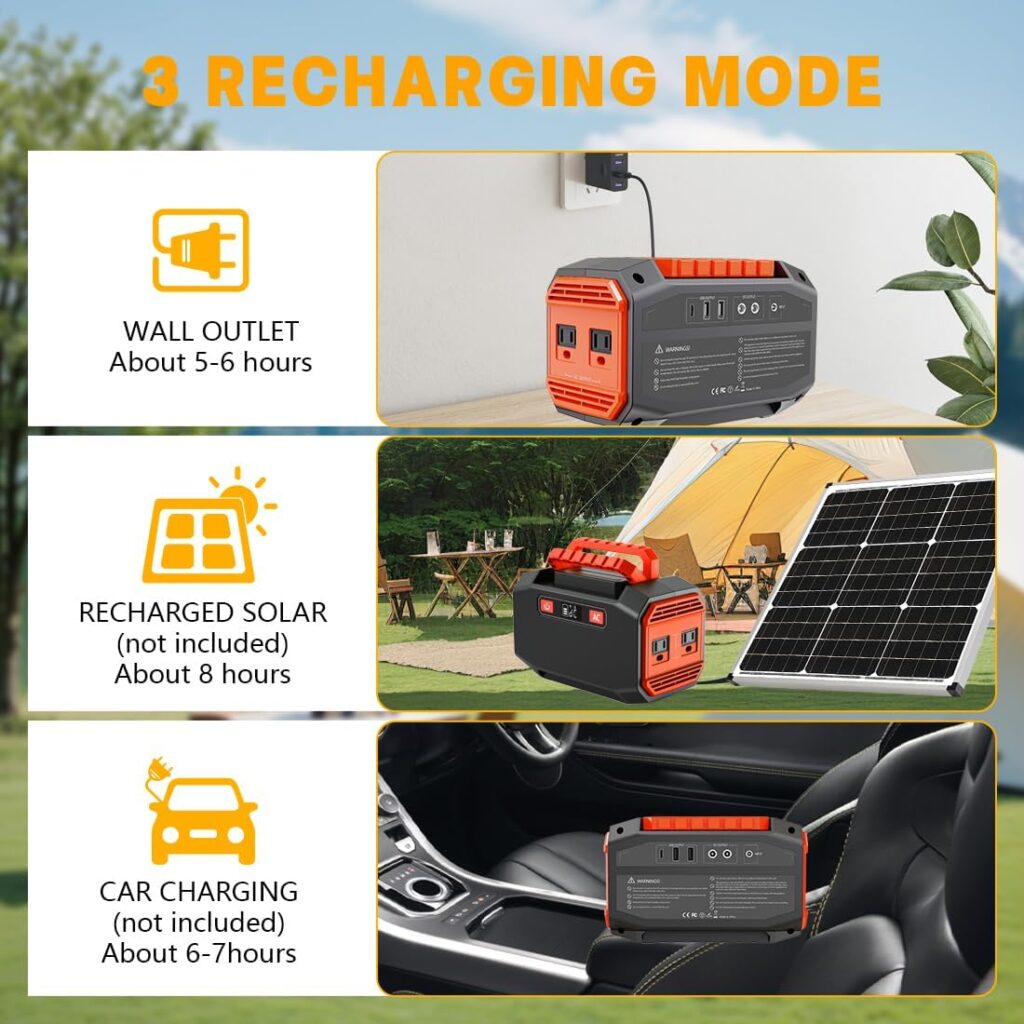
You’ll need to recharge the station after use, and you have several options including the included wall adapter, car charging, and solar panels (not included). Each option has trade-offs in time and practicality.
Wall charging
The included wall charger will recharge the battery from a standard outlet, and it’s typically the fastest and most convenient method. Exact charging time depends on the adapter output; expect a few hours for a full tank under normal household charging speeds.
Car charging
You can generally recharge from a 12V vehicle outlet using the appropriate cable or adapter. Car charging is slower than wall charging but useful when you’re on the road or without shore power. Plan to run your car for prolonged periods if you’re using this as your primary recharge method.
Solar recharging
The unit supports solar recharging through its DC input, but the product does not include a solar panel. You should match the panel wattage and connector type to the unit’s input specifications. In ideal sun, a small 60W solar panel could recharge the battery in a few hours, while a 20–30W panel will take longer. Check the max input current and voltage before connecting panels to avoid overcharging or damaging the unit.
Real-world scenarios and how this unit will perform
You’ll want examples of everyday use so you can picture the unit in realistic situations. Below I’ll outline common cases so you can judge whether this station will meet your needs.
Weekend camping trip
For short weekend trips, the unit can keep phones, cameras, lights, and a Bluetooth speaker powered for multiple cycles. If you mainly charge phones and run lights, you’ll easily get through a weekend; running a small fridge overnight or powering a CPAP all night could be borderline without recharging.
Emergency power at home
This is helpful for keeping communication devices charged, powering LED lights, and running small medical devices for a few hours. It’s not intended to replace a home generator for continuous power or to run high-wattage appliances like standard refrigerators, sump pumps, or full-size microwaves.
Road trips and tailgating
You’ll enjoy the portability and multiple ports when you’re on the road. It’s a convenient way to keep a laptop topped while you work, charge multiple phones, and run a small cooler for a couple of hours. If you’re powering several devices simultaneously, monitor the total wattage to avoid tripping the 200W limit.
Safety and maintenance tips
You’ll maximize lifespan and safety by following basic battery care and operational guidelines. These tips are practical and avoid risky behaviors like overloading or exposing the lithium pack to extreme temperatures.
Charging safety
Always use the included charger or a recommended replacement that matches voltage/current requirements. Avoid leaving the unit charging unattended for unusually long periods and keep it on a stable, fire-resistant surface while charging.
Avoiding overload
The 200W AC cap is a hard limit for continuous use. Don’t plug in high-draw devices (or multiple devices whose combined draw exceeds 200W). If an appliance has a high startup surge, it may trip or damage the inverter even if the running wattage is below 200W.
Storage and long-term care
Store the station in a cool, dry place and avoid prolonged exposure to extreme heat or cold. If you plan to store it long-term, keep it around 40–60% charged and recharge it every 3–6 months to preserve battery health.
Compatibility with solar panels and accessories
You’ll want to choose the right solar panel and cables if you plan to recharge via sunlight. While the station supports solar input, compatibility depends on voltage, connector type, and maximum input wattage.
Choosing a solar panel
Match panel voltage and connector type to the station’s DC input specifications. A panel in the 50–100W range will recharge the unit faster in good sun, but your actual recharge rate will be limited by the station’s input acceptance. Confirm the max input amperage and voltage before buying a panel.
Useful accessories
You might add a proper solar charge cable, a car-to-DC adapter for road charging, or a protective carrying case. A small inverter for higher loads isn’t necessary since the station already provides AC outlets, but larger power needs usually mean buying a larger capacity station.
Strengths and limitations
You’ll want a clear pros/cons list so you can weigh whether the product matches your priorities. Below are the main benefits and reasons you might look for something different.
Strengths
- Very lightweight at 3.3 lb, easy to carry. You’ll appreciate the portability when you’re hiking or moving between sites.
- Multiple outputs let you charge several devices at once, which is practical for group trips or family use.
- Smart LED display gives you a quick sense of remaining capacity and charging status.
- Supports solar recharging, which increases flexibility for off-grid situations.
- Includes basic accessories and a 1-year warranty for peace of mind.
Limitations
- 133Wh is modest capacity; it’s good for short trips and light loads but not for sustained AC usage or powering high-wattage appliances.
- 200W AC limit prevents you from running many common household appliances.
- Solar recharge speed depends on the panel and the unit’s input limit; you may need a higher-capacity panel or additional time to recharge fully in the field.
- Starting surges from motors and compressors may trip the inverter even if the running wattage is within limits.
Who should buy this portable generator
This unit is best for you if your use case focuses on portability, short-run needs, and charging multiple small devices. It’s optimized for campers, road trippers, and people wanting a compact emergency kit for phones, tablets, cameras, lights, and other low-wattage gear.
Who should consider a different solution
If you plan to power full-size fridges, power tools, long CPAP sessions, or any devices drawing more than 200W continuously, you should consider a larger-capacity power station or a gas generator. You’ll need higher continuous wattage and more Wh capacity for those use cases.
Troubleshooting common issues
You’ll be able to handle most small problems yourself with a few checks. Below are common symptoms and practical steps to resolve them.
Unit won’t turn on or charge
Make sure the included wall charger is properly connected and the outlet is live. If the display is blank, try a different outlet and inspect cables for damage. If it still won’t power on, consult the user manual and contact support under your 1-year warranty.
Output stops unexpectedly
The unit may have auto-shutdown if there’s no detected output for 15 seconds, or it could be protecting against overload. Check the total load and remove nonessential devices, then power on the unit again. If the unit trips repeatedly, reduce the wattage of connected devices.
Solar charging not working
Confirm the solar panel’s voltage and connector match the station’s input. Check cables for tight connections and ensure panels are in direct sunlight. If charging still fails, check the unit’s manual for supported panel specs or contact customer support.
Comparison: this unit vs. typical alternatives
You’ll want to compare similar products if capacity or wattage are critical. Here’s a brief guide to how this stack up against other common options.
Versus larger portable power stations
Larger stations (300–1000Wh) give you much longer runtimes and higher continuous wattage, allowing you to run small appliances for longer. However, they’re heavier and less convenient to carry on hikes or short trips.
Versus compact battery packs (no AC)
Some compact power banks forgo AC outlets and focus on USB-C high-wattage output for laptops and phones. Those can be lighter or offer higher USB-C power but lack AC flexibility for non-USB devices.
Versus gas generators
Gas generators give you near-unlimited runtime with fuel, but they’re noisy, produce fumes, and require maintenance. You’ll prefer a clean, quiet lithium power station for tents or indoor emergency use.
FAQs
Here are answers to frequently asked questions you’ll likely have before buying or using this unit.
Q: Can this power a full-size refrigerator? A: No. Full-size refrigerators typically require surge capacity and continuous power well beyond 200W. You might run a small mini-fridge for a couple of hours, but full-size units are not recommended.
Q: Can you recharge it with a phone charger? A: You should use the included wall adapter or a compatible replacement that matches the station’s input specs. Using an improper charger might be slower or could damage the battery.
Q: Is the battery replaceable? A: Most compact integrated power stations do not have user-replaceable batteries. If the battery degrades, contact the manufacturer about warranty or service options.
Q: Can I leave it plugged in all the time? A: Occasional trickle charging is generally fine, but long-term continuous charging isn’t ideal for long battery life. If you keep it plugged in as a backup, try to cycle the battery every few months.
Q: Is it safe for sensitive electronics? A: The inverter should provide stable power for laptops, phones, and cameras. If you have very sensitive or medical equipment, check device requirements and consider a UPS-style solution with pure sine wave output if required.
Final verdict
You’ll find this 200W, 133Wh portable power station to be a practical, lightweight solution for short trips, emergencies, and charging multiple small devices. Its portability, multiple outputs, and solar compatibility make it a versatile companion for camping and travel. If you need long runtime, high-wattage outputs, or continuous AC for major appliances, however, consider stepping up to a larger-capacity unit.
If your priorities are weight, convenience, and reliable short-term power for phones, cameras, lights, and occasional AC needs, this unit should fit nicely into your kit. If you plan heavy AC usage or prolonged off-grid stays, look for larger capacity and higher continuous wattage options.
Disclosure: As an Amazon Associate, I earn from qualifying purchases.