
Looking for a compact, quiet power station that can keep your devices running at camp or during an outage?

Product overview
You’ll find the Westinghouse 194Wh 300 Peak Watt Portable Power Station & Solar Generator useful when you need lightweight, silent backup power. It combines a 194 watt-hour lithium-ion battery with multiple output types so you can charge phones, laptops, small appliances, and more without fumes or fuel.
What this unit is meant for
This model is designed for short-term power needs like camping, travel, tailgating, and emergency backup at home where you don’t require heavy continuous wattage. It’s built to be portable and simple to use: no complicated setup, a readable LED display, and built-in protection to keep your devices safe.
Who will like it
If you want a compact power station that’s easy to carry and can run lights, charge multiple gadgets, and keep small electronics alive during short outages, this unit suits you. You’ll especially appreciate it when you need silent indoor use — it produces no fumes and no noise.
Key specifications
Below is a clear breakdown of the specs so you can quickly see what the unit offers and how it matches your needs. This table organizes core details to make side-by-side comparisons easier when you’re deciding whether it’s the right fit.
| Feature | Specification |
|---|---|
| Model name | Westinghouse 194Wh 300 Peak Watt Portable Power Station & Solar Generator |
| Battery capacity | 194 Watt-hours (Wh) |
| Continuous AC output | 150 Watts |
| Peak AC output | 300 Watts |
| AC waveform | Modified sine wave |
| Battery type | Lithium-ion |
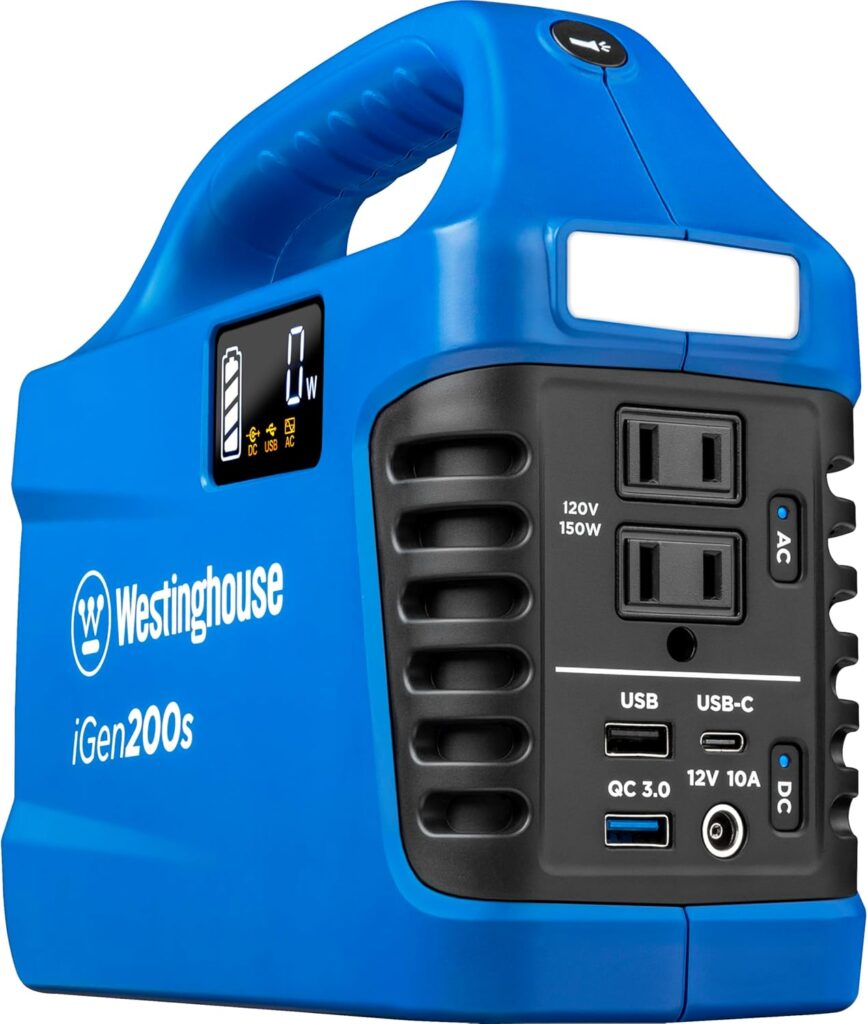
| Ports | 2 × 120V AC outlets, 3 × USB (including USB-C and Quick Charge 3.0), 1 × 12V car outlet (cigarette style), DC output |
| Simultaneous output | Up to 9 devices |
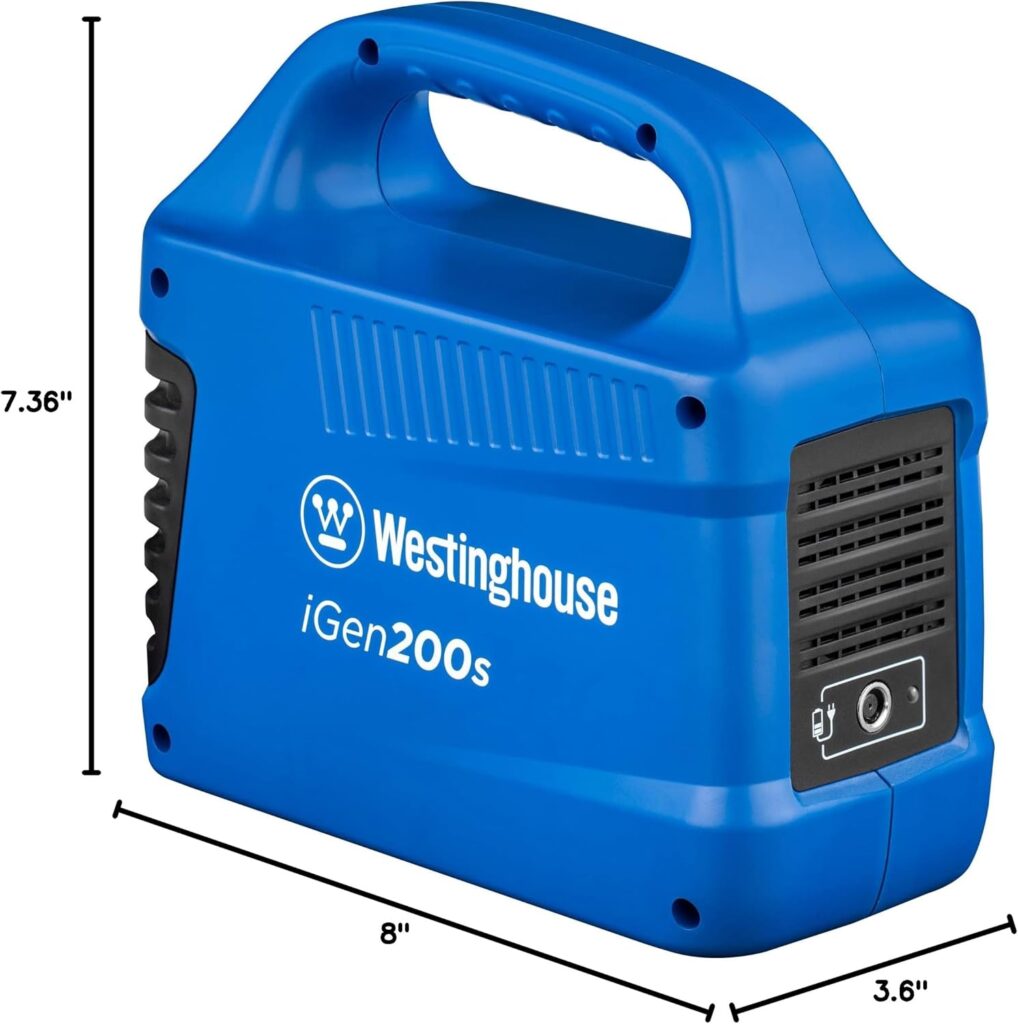
| Weight | 4 lb |
| Charging options | Wall charger (included), car charger (included), optional solar panel (sold separately) |
| Display | LED display for controls and power info |
| Indoor/camping friendly | Yes (no fuel, no fumes, no noise) |
| Lock feature | Hold AC and DC buttons 5 seconds to lock/unlock |

Performance and power output
You can expect reliable short-burst power handling from this unit thanks to its 150W continuous and 300W peak ratings. That means it performs well for lower-draw devices and can handle small surge loads for brief moments — but it isn’t meant for running high-wattage appliances like full-size fridges or space heaters.
The modified sine wave AC outlets make many common devices run fine, but there are limitations with sensitive electronic equipment that prefers a clean pure sine wave. If you need to run motors or certain medical devices, check the device’s compatibility first.
Battery capacity and runtime estimates
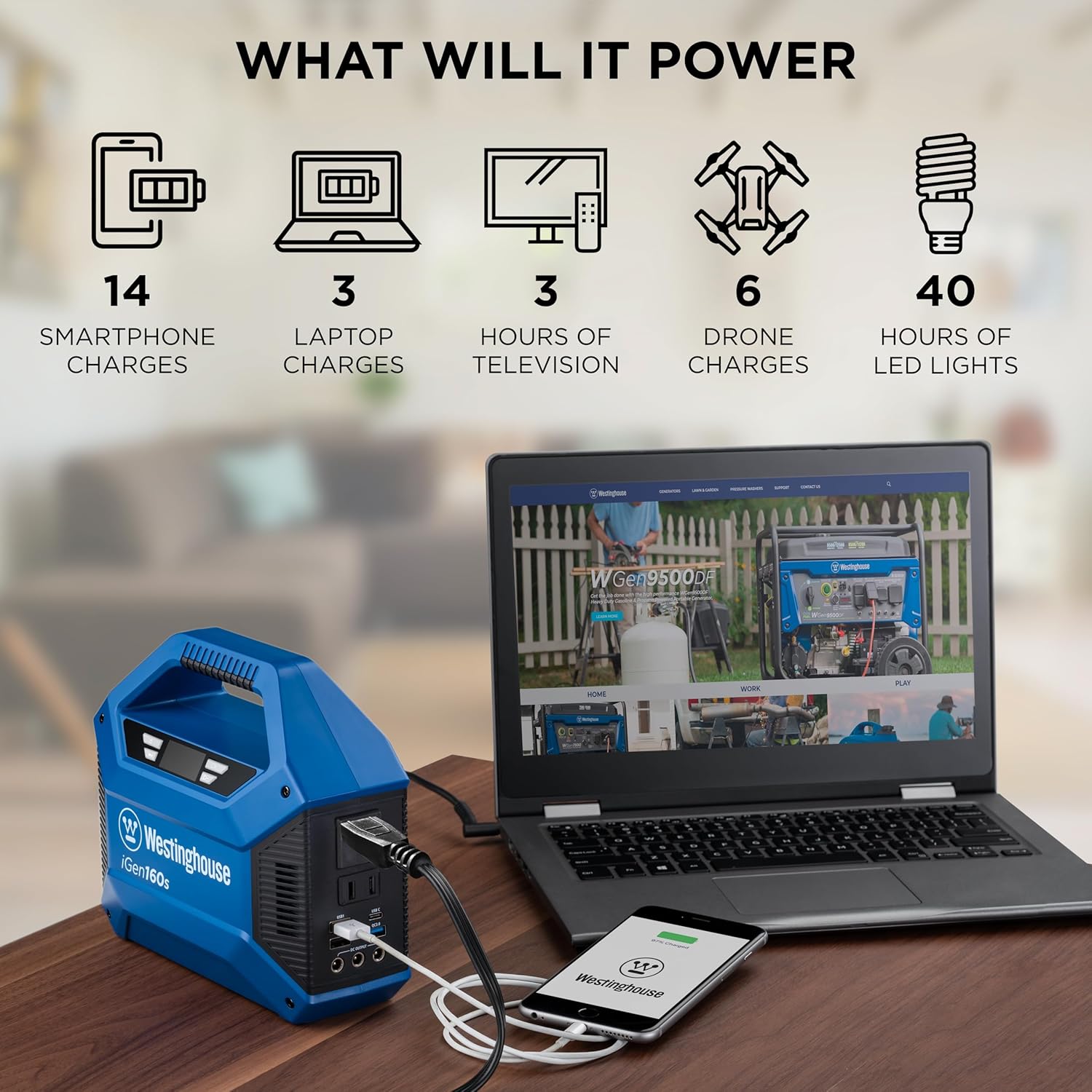
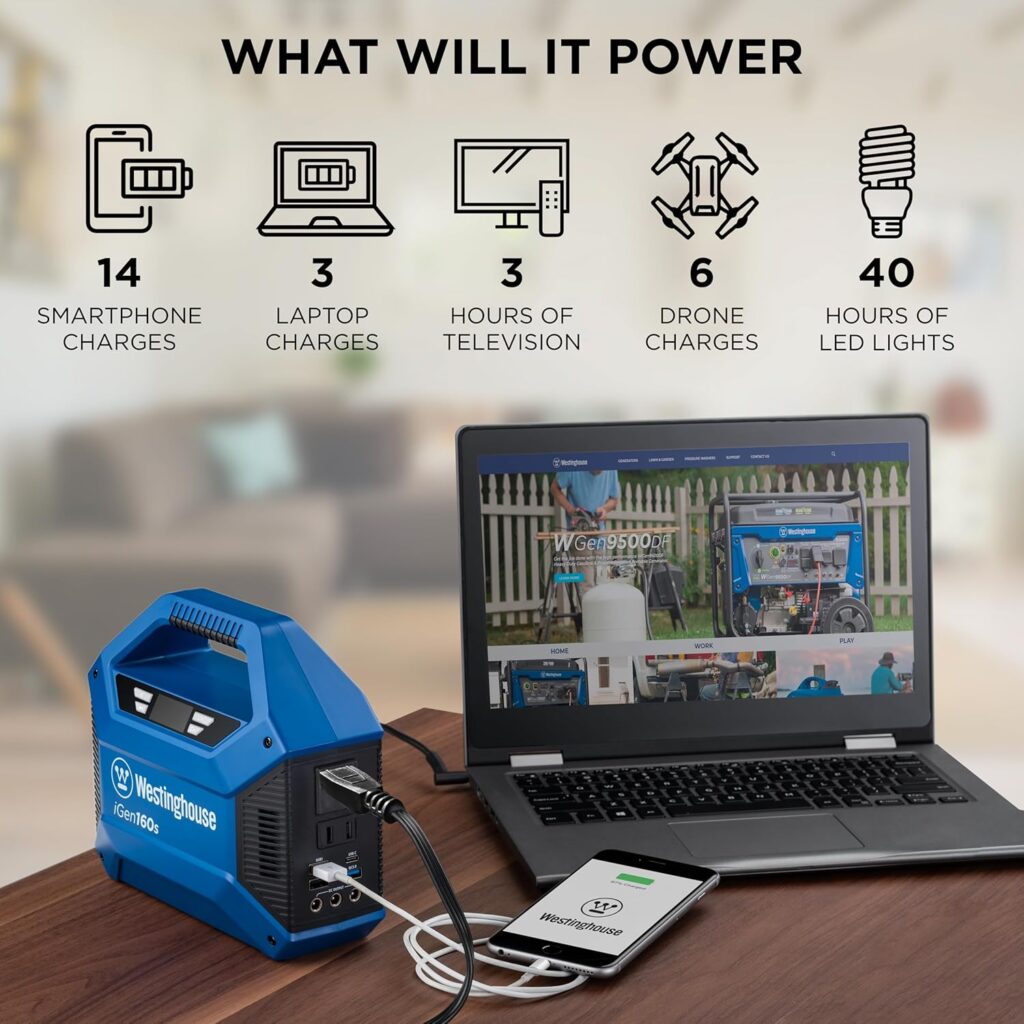
The 194Wh battery gives you a compact energy reserve that’s big enough for extended light use and multiple device charges. The product information includes manufacturer-provided example runtimes, which are useful estimates for planning outings or emergency scenarios.
Here’s a quick runtime snapshot using the manufacturer-supplied figures and common device use cases:
| Device / Use | Estimated Runtime or Charges (manufacturer-provided) |
|---|---|
| LED lights | Up to 40 hours |
| TV (small LED) | About 3 hours |
| Smartphones | Up to 14 charges |
| Laptops | Up to 3 charges |
| Drones | Up to 6 charges |
Remember these are estimates: actual runtimes will vary based on device power draw, charging efficiency, and environmental conditions like temperature. If you are powering a device continuously, calculate expected hours by dividing the 194Wh by the device’s watt draw and factoring in conversion losses (AC inverter efficiency).
Port selection and connectivity
You’ll appreciate the variety of outputs for different device types: two 120V AC outlets, multiple USB ports including USB-C and Quick Charge 3.0, plus a 12V car outlet. This diversity lets you charge or run several items at once without carrying separate adapters.
Being able to charge up to nine devices simultaneously gives you flexibility when you’re with family or friends, or when you have a gadget-heavy setup at camp. The LED display shows status information so you know what’s drawing power and how much runtime or battery remains.
Charging methods and what to expect
There are three ways to charge the unit: the included wall charger, the included car charger, and an optional solar panel (sold separately). Those options let you top the battery while at home, in a vehicle, or off-grid via solar if you add a compatible panel.
The product doesn’t list a precise full recharge time for each method in the specs provided, so expect variable charge durations depending on the charger’s output and the solar panel you pair with it. When using solar, panel wattage and sunlight conditions will strongly influence how quickly the power station recharges.
Build, weight, and portability
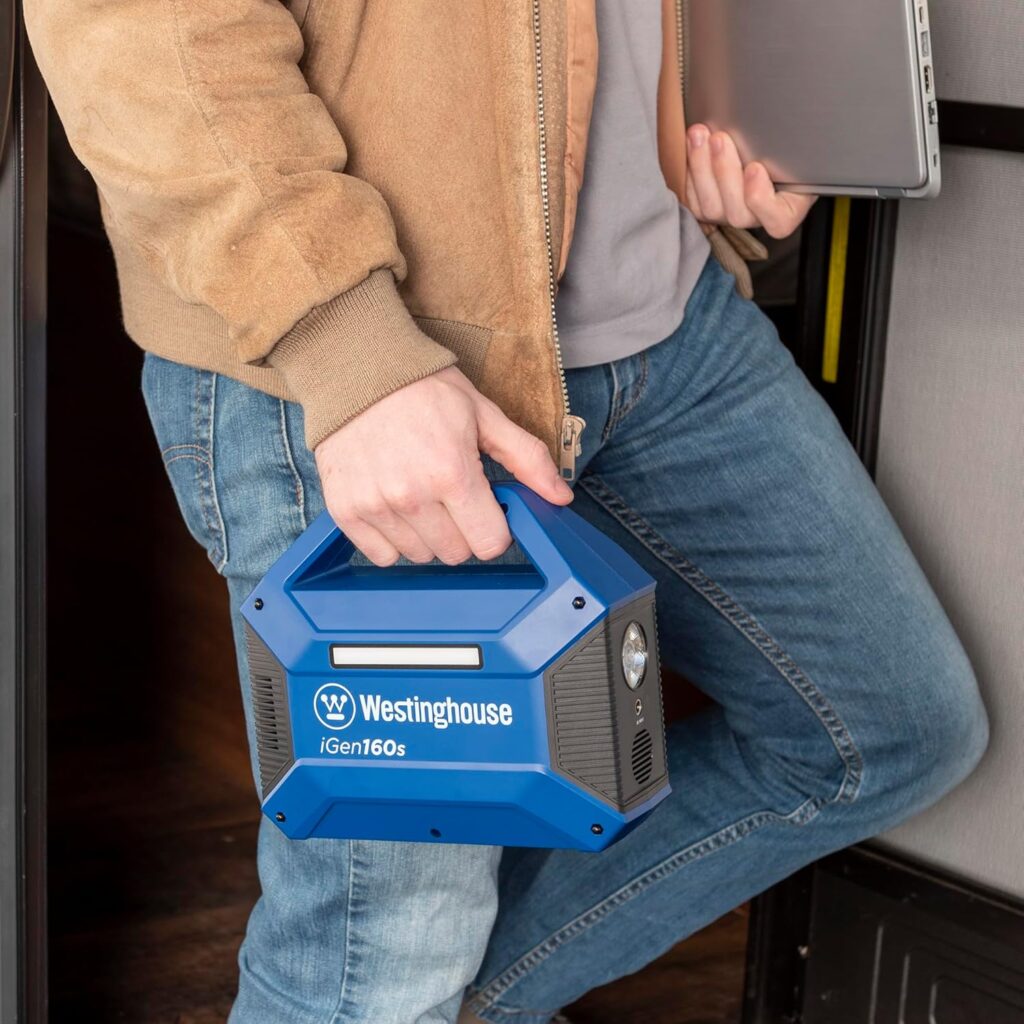
At around 4 lb, this power station is notably lightweight compared to many larger models, which makes it easy to throw into a car, backpack, or RV storage. The compact form factor means it won’t take much space and is practical for short trips and day-use scenarios.
The construction is sturdy for its size, so you won’t feel like it will fall apart after a few uses. For trekking in rough conditions, pack it securely, but for general camping and emergency kits it’s an excellent portable option.
Noise, emissions, and indoor use
Since it’s battery-powered, you’ll get zero engine noise, no exhaust fumes, and no fuel handling, which makes the station safe for indoor environments like living rooms and bedrooms. That clean, quiet operation is a major advantage when you want to run lights or charge devices inside during a power outage.
You’ll also avoid the ventilation and safety concerns associated with gas-powered generators, which is ideal if you need a safe backup in confined spaces. Still follow manufacturer guidance and common-sense safety rules like not exposing the unit to water and keeping it on stable surfaces.
Safety features and battery management
The unit includes built-in safety mechanisms to protect the battery and connected devices from common problems like overcurrent, over-discharge, and short circuits. This added layer of protection helps prevent damage to both the power station and anything you plug into it.
There’s also a lock/unlock feature you can use to prevent accidental power drain: hold the AC and DC buttons for 5 seconds to toggle the lock state. The LED display helps you monitor battery level and output so you can manage use and avoid unexpected shutdowns.
Modified sine wave AC outlet: what that means
The AC outlets deliver a modified sine wave rather than a pure sine wave, which is typical for compact and budget-friendly power stations. Most chargers, lamps, and electronics will run without issue on a modified waveform, but some sensitive devices might run less efficiently or not at all.
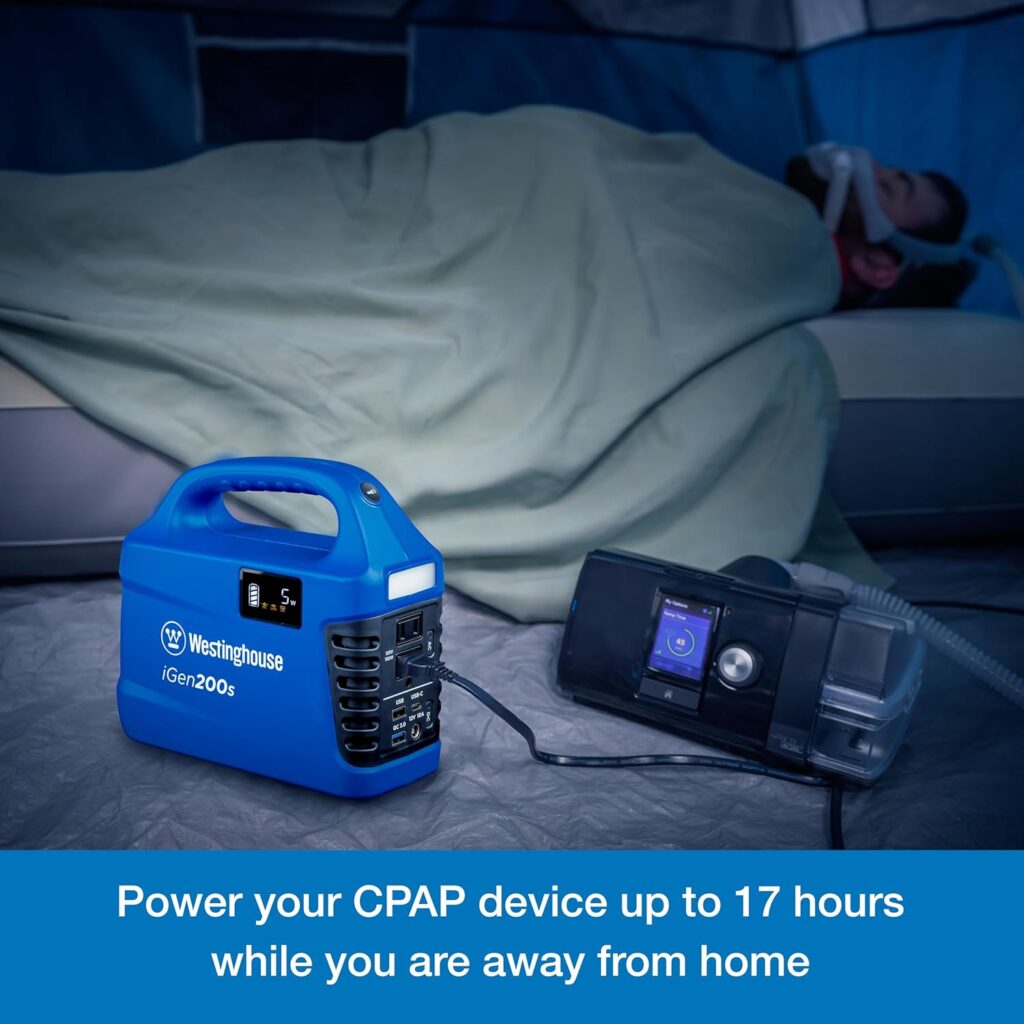
If you plan to power CPAP machines, certain variable-speed motors, or high-end audio equipment, confirm compatibility before relying on this station as your main power source. For smartphones, laptops, small TVs, and general camping gear, modified sine wave is usually fine.
Real-world use cases — camping and hiking
When you’re camping, you’ll find this model useful for lighting, charging phones, running small cooking gadgets, and powering a small fan or mini cooler for short periods. Its light weight and quiet operation make it easy to move around camp and use inside a tent vestibule or at a picnic table.
If you hike with it, prioritize how much you’ll carry: 4 lb is light for a power station but you’ll want to balance weight with the rest of your kit. For short hikes or car-camping where you don’t carry everything on your back, it’s a convenient power source.
Road trips and travel
On road trips the included car charger is handy for topping the battery while you drive, which is great if you need to recharge during long travel days. You can keep devices charged for entertainment, navigation equipment, and small appliances in an RV.
Because it’s compact, you can also stow it under seats or in overhead compartments where allowed, keeping your devices powered without taking up luggage space.
Emergency backup at home
This unit is a solid option for temporary home backup to keep lights on, run routers, charge phones, and power a small TV or medical devices that tolerate modified sine wave power. It’s especially helpful for short outages or to keep essential electronics alive while you manage a longer-term power plan.
For longer-term outages or to run heavier loads like refrigerators, you’ll need a larger-capacity power station or generator, but this unit gives you immediate, quiet relief for basic power needs.
Tailgating, festivals, and outdoor parties
You can run small speakers, lights, and charge phones for your group while tailgating or at a festival, and the Quick Charge USB port helps top phones faster. Because it’s quiet and lacks fuel emissions, it’s suitable for spots where noise or fumes are unwelcome.
Just be mindful of the collective draw if multiple people plug in devices; the combined load should stay under the 150W continuous limit.
Photography, drones, and work on the go
Photographers and drone pilots will appreciate the ability to recharge batteries in the field: the manufacturer cites up to six drone charges depending on battery size, and multiple laptop charges mean you can edit remotely for a stretch. The USB-C port also supports faster charging for compatible gear.
If you rely on heavier hardware or frequent full-day shoots, you may pair this with a larger packable power system or a solar panel for extended field days.
Pros and cons
You’ll want a clear list of strengths and limitations so you can weigh whether this model fits your needs. Below, the pros show where it shines and the cons identify scenarios where a different solution might serve you better.
Pros:
- Lightweight and highly portable at ~4 lb, making it easy to transport.
- Quiet, fume-free operation suitable for indoor use and campsites.
- Multiple output types (AC, USB, USB-C, Quick Charge 3.0, 12V) let you charge many devices simultaneously.
- LED display and lock feature provide straightforward control and prevent accidental drain.
- Three charging options (wall, car, optional solar) for flexible recharging.
Cons:
- 150W continuous output limits what you can run — not meant for large appliances or heavy tools.
- Modified sine wave AC may not be compatible with some sensitive electronics or medical devices.
- Solar panel is not included, so off-grid solar use requires additional purchase.
- 194Wh capacity is good for short-term use but not for extended outages without recharging.
How to get the most from your power station
Simple practices will extend runtime and make your unit more effective when you need it most. Use these tips to maximize battery life and ensure reliable operation.
- Prioritize low-wattage devices and stagger heavier draws to avoid exceeding the 150W continuous limit.
- Use USB ports (especially USB-C and Quick Charge) for efficient phone and tablet charging rather than drawing from AC outlets when possible.
- Turn off the unit or lock it when not in use to prevent parasitic drain from phantom loads.
- Keep the unit at room temperature for optimal battery performance — extreme cold or heat reduces usable capacity.
- If using solar, match the power station to a compatible panel with appropriate voltage and wattage to avoid slow or ineffective charging.
Maintenance and storage
Treating the unit with basic care will keep it ready for the next trip or emergency. Proper storage and occasional maintenance preserve battery health and avoid surprises when you need power.
- Store the power station in a cool, dry place and keep it partially charged (around 40–60%) for long-term storage to reduce battery degradation.
- Avoid leaving the battery fully depleted for long periods; recharge it every few months if not used frequently.
- Clean the ports and exterior with a dry cloth and avoid liquids or abrasive cleaners.
- Inspect cables and chargers for wear and replace any frayed or damaged cords before use.
Troubleshooting common issues
If you encounter problems, a few basic checks will solve most common issues without the need for replacement. These steps help you identify whether the unit, cable, or connected device is the likely source.
- No power: Ensure the battery has charge and the unit isn’t locked. Try holding the power button and check the LED display for status indicators.
- Devices not charging: Confirm you’re within the output limit and the correct port is used. Swap cables and test another device to isolate the issue.
- Unit won’t charge from solar: Check solar panel compatibility, connections, and sun exposure. Inadequate sunlight or mismatched voltage could prevent charging.
- Unexpected shutdowns: Verify you didn’t exceed the continuous 150W output. Disconnect some loads and restart the unit.
If problems persist after basic troubleshooting, consult the manufacturer’s support resources for warranty or service options.
Comparison with other options
You’ll find this Westinghouse model fits a niche between small power banks and larger, heavy-duty power stations. It’s more capable than a phone power bank and far quieter and cleaner than a gas generator, but it does not match the capacity or AC output of larger portable power stations.
If you require multi-day power for large appliances, consider a higher-capacity model with pure sine wave output. If you need something ultra-portable for only phone charging, a high-capacity battery pack might be lighter and cheaper. This model sits comfortably in the middle for versatility and portability.
Practical setup and first use
Getting started is straightforward, and a few setup tips will ensure you use the unit correctly from day one. The included chargers let you bring it up to full charge before relying on it in the field.
- Charge the power station fully via the wall charger before your first extended use.
- Practice connecting your typical devices at home so you understand how long each device draws power and how the LED display reports usage.
- If planning solar charging, test the solar panel setup on a sunny day ahead of a trip to ensure all connections and voltages work as expected.
Travel and airline considerations
This unit contains a lithium-ion battery, so airline regulations may apply. You’ll need to check with your carrier for their rules about carrying battery devices in carry-on or checked baggage.
Most airlines restrict large lithium-ion batteries and require them to be in carry-on only if permitted. Confirm the Wh rating and check airline policies before attempting to fly with the power station.
Accessories and complementary gear
To get more from the unit, you may want one or two accessories depending on your use. Solar panels, robust carrying cases, and extra output cables can make outdoor use more convenient.
- Solar panel (compatible with Westinghouse power stations) for off-grid recharge.
- Heavy-duty 12V and AC extension cables if you’ll run multiple devices remotely.
- Protective case to prevent bumps and exposure to dirt or moisture during transport.
Environmental considerations
You’ll appreciate that this battery system produces no emissions during use and avoids the noise pollution associated with gas generators. When you’re finished with the unit or its battery reaches end-of-life, follow local battery recycling guidelines to dispose of lithium-ion cells responsibly.
Using solar to recharge reduces your carbon footprint further, but remember solar panels and power stations ultimately need end-of-life disposal planning.
Who should buy this
You should buy this Westinghouse 194Wh power station if you want a lightweight, quiet, and flexible backup for short trips, emergency kits, and device charging. It’s a good match if you need a balance between portability and multiple output options without the complexity of larger systems.
If you need sustained power for high-wattage appliances or strict pure sine wave AC for sensitive devices, look at higher-capacity models. For everyday device charging, weekend camping, and short-term outage coverage, this unit is a practical choice.
Frequently asked questions
Can you use this unit indoors safely?
Yes, the unit is safe for indoor use because it emits no fumes and makes no noise. Always keep it dry, avoid covering ventilation ports, and follow the manufacturer’s safety guidance.
How many devices can I charge at once?
You can charge up to nine devices simultaneously using the various USB, DC, and AC outputs. However, monitor the total wattage to avoid exceeding the 150W continuous limit.
Is the solar panel included?
No, the solar panel is not included; you’ll need to purchase a compatible solar panel separately for sustainable off-grid charging. Choose a panel with appropriate voltage and wattage for efficient charging.
Will it run a refrigerator?
It can temporarily run small compressors or mini fridges if their starting surge and continuous draw fit within 300W peak and 150W continuous limits. Most full-size refrigerators typically require more continuous power than this unit provides, so it’s not a reliable full-time solution for standard household fridges.
How do I lock the power station to prevent accidental drain?
Hold the AC and DC buttons for 5 seconds to lock or unlock the power station. This prevents accidental button presses or phantom draws when you’re transporting or storing the unit.
What is a modified sine wave and will it harm my devices?
Modified sine wave is a stepped waveform that approximates a pure sine wave and works well with most electronics and chargers. Some sensitive devices may not perform optimally or may be incompatible, so check device requirements if you’re unsure.
Final verdict
You’ll find this Westinghouse 194Wh power station to be a capable, lightweight, and practical solution for short-term power needs whether you’re camping, traveling, or preparing for brief outages. It balances portability and versatility with safety features and multiple ports, making it a solid option if you don’t need heavy-duty continuous power.
If you prioritize silent operation, easy transport, and reliable device charging for small electronics, this unit is a worthwhile buy. If your needs include running high-wattage appliances or sensitive equipment, consider sizing up to a higher-capacity, pure sine wave model.
Disclosure: As an Amazon Associate, I earn from qualifying purchases.