
Have you ever wondered whether a single portable power station can really keep your household running through a long outage and still be light enough to move around?

First impressions: what you’ll notice right away
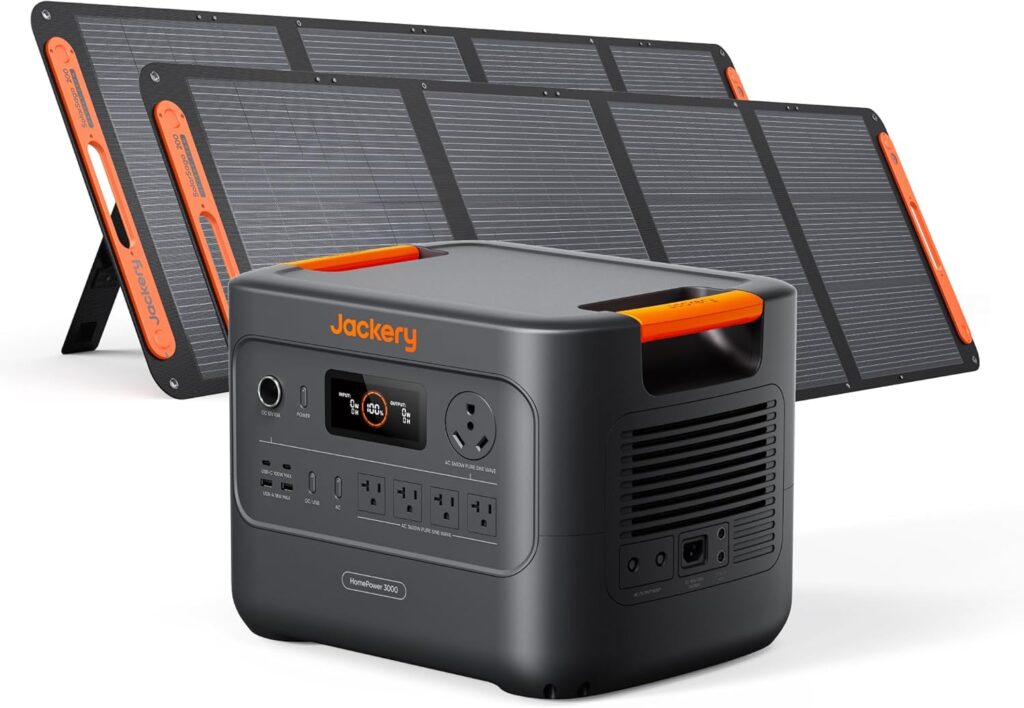
When you unbox the Jackery HomePower 3000 Portable Power Station with 2x 200W Solar Panels, the thing that stands out is how compact and thoughtfully packaged it is for its capacity. You’ll immediately notice that the power station and solar panels may arrive in separate packages, so don’t worry if they don’t appear together.
The build feels sturdy, and Jackery’s claim of a honeycomb-style bottom shell and integrated design comes across as a product that’s made to be handled and moved. You’ll appreciate the handle placement and the relatively light weight compared with other 3kWh-class units.
What’s included and what to expect on arrival
You’ll receive the HomePower 3000 unit itself; the two SolarSaga 200W panels are sold/packaged separately and may ship independently. Included accessories typically cover AC and DC charging cables and basic connectors, but you’ll want to verify the specific box contents at purchase.
Because panels arrive separately, plan for a short wait if you ordered a bundled kit. When everything is assembled, you’ll have a versatile solar generator ready for home backup, RV use, or emergency readiness.

Key specifications (at-a-glance)
Below is a compact breakdown to help you quickly see the most important specs. This table is useful when you want quick comparisons or need to match the unit to your devices.
| Specification | Detail |
|---|---|
| Model | Jackery HomePower 3000 |
| Battery type | LiFePO4 (LFP) |
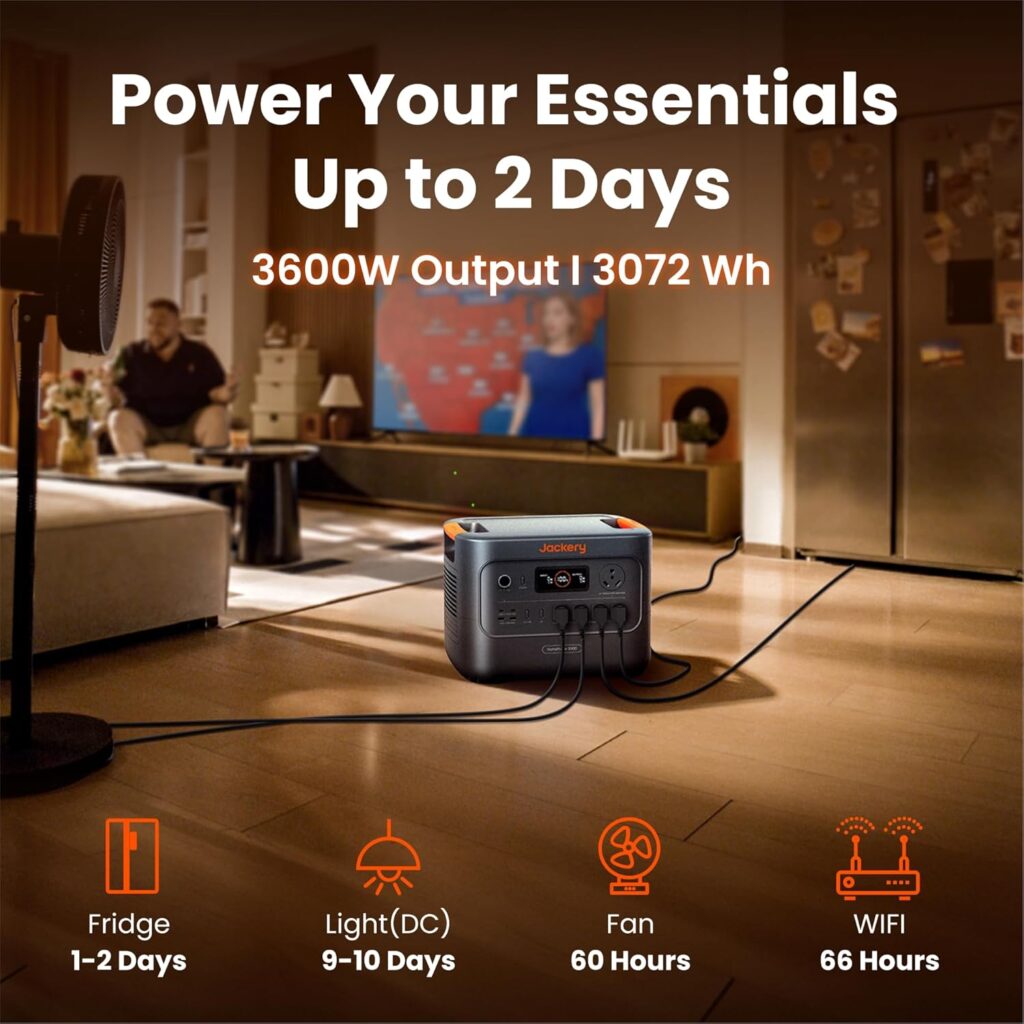
| Usable capacity | 3072 Wh |
| Rated continuous output | 3600 W |
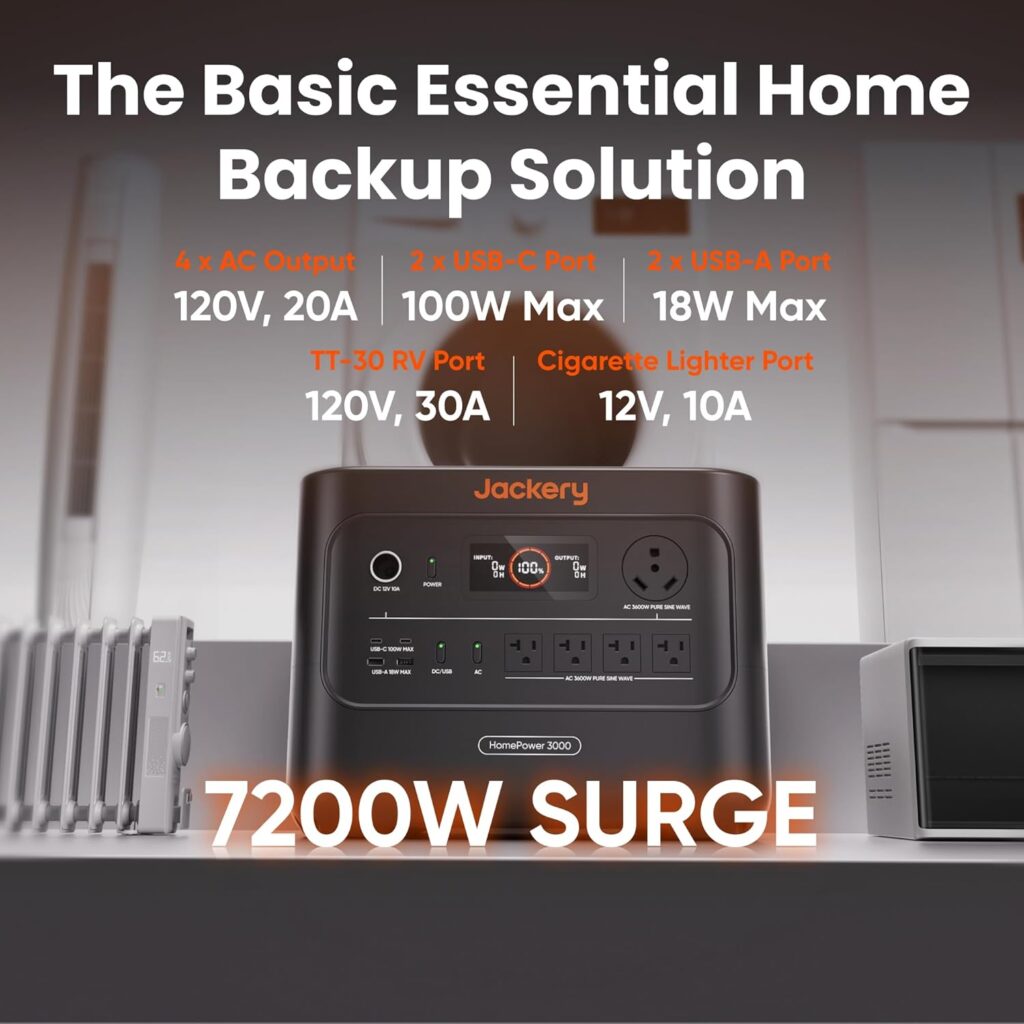
| Surge (peak) output | 7200 W |
| Battery cycle life | ~4,000 cycles to 70% capacity |
| AC recharge time (AC only) | 2.2 hours |
| Hybrid AC + DC recharge time | 1.7 hours |
| Solar charging (2x 200W) | Up to 80% in ~9 hours |
| UPS switchover | ≤20 ms (UL certified) |
| Ports | Multiple AC outlets, 2x 100W USB-C PD, USB-A, DC ports, TT-30 RV port |
| Extra features | ChargeShield 2.0 (AI), CTB technology, honeycomb shell |
| Weight/size claims | 47% smaller and 43% lighter vs comparable 3kWh models |
| Tax credit | Eligible for Residential Clean Energy Credit (30% through Dec 31, 2025) — verify eligibility |
| Shipping note | Power station and panels may ship separately |
Design and build: portability without compromise
The HomePower 3000 is designed to be as portable as possible given its 3kWh capacity. You’ll notice the compact footprint that Jackery advertises, and the shell’s structure gives a sense of rigidity that reassures you when moving it around.
The handle and balanced weight distribution make it easier for one person to carry than many other units in the same capacity range. The integrated PV and inverter design also reduces the number of external components you must manage, which increases safety and simplifies setup.
Size and weight considerations
You’ll appreciate that the unit is significantly smaller and lighter than many comparable power stations, which helps if you need to move it between the garage, an RV, or different rooms during an outage. The reduced size doesn’t sacrifice safety features; in fact, it’s designed to improve them.
Because it’s smaller, be mindful of placement options: ensure there’s ventilation space and avoid stacking heavy items on top.
Battery technology and longevity
The HomePower 3000 uses LiFePO4 (LFP) cells. For you, that means better thermal stability, improved safety, and substantially longer cycle life compared with traditional lithium-ion chemistries.
Jackery claims around 4,000 cycles to 70% capacity — this translates into many years of use even with regular partial cycles, so you won’t be replacing the battery frequently.
ChargeShield 2.0 and AI-assisted charging
With ChargeShield 2.0 and AI algorithms, you’ll notice optimized charging speeds and supposedly improved battery life. These algorithms adjust charging curves to reduce stress on the battery while still allowing fast top-ups, especially when combining AC and DC or using solar input.
This is particularly helpful if you plan frequent recharges or want the unit to retain strong health for many years.
Output power and what it means for your home
Rated at 3600W continuous and 7200W surge, the HomePower 3000 can start and run more demanding appliances than many competitors. For you, that means it can handle refrigerators, small freezers, microwave ovens (short term), space heaters (with care and within power limits), and multiple electronics at once.
The high surge capacity is especially useful for motor-driven appliances like fridges that draw a lot on startup.
UPS function (≤20 ms switchover)
The UL-certified UPS feature switches the HomePower 3000 into backup mode within ≤20 milliseconds. You’ll find this fast enough to keep routers, security cameras, medical refrigerators, and even certain medical devices operating without interruption during short power cuts.
This small switchover time ensures that sensitive electronics and your Zoom calls don’t drop out when the grid goes down.
Ports and connectivity: powering everything at once
The HomePower 3000 provides a comprehensive array of output options. You’ll have multiple AC outlets, two 100W USB-C PD ports for fast charging laptops and phones, USB-A ports, a DC port, and a built-in TT-30 RV port for plug-and-play RV power.
This variety lets you charge and run many items simultaneously without juggling adaptors.
Fast charging and device compatibility
Those dual 100W PD ports are particularly handy for laptop users and for quickly charging USB-powered devices. If you’re traveling or working remotely, you can power laptops, tablets, and phones together while still running essential AC devices.
Make sure to total the combined draw so you don’t exceed the 3600W continuous limit.
Charging options and recharge times
You’ll find multiple ways to recharge the HomePower 3000:
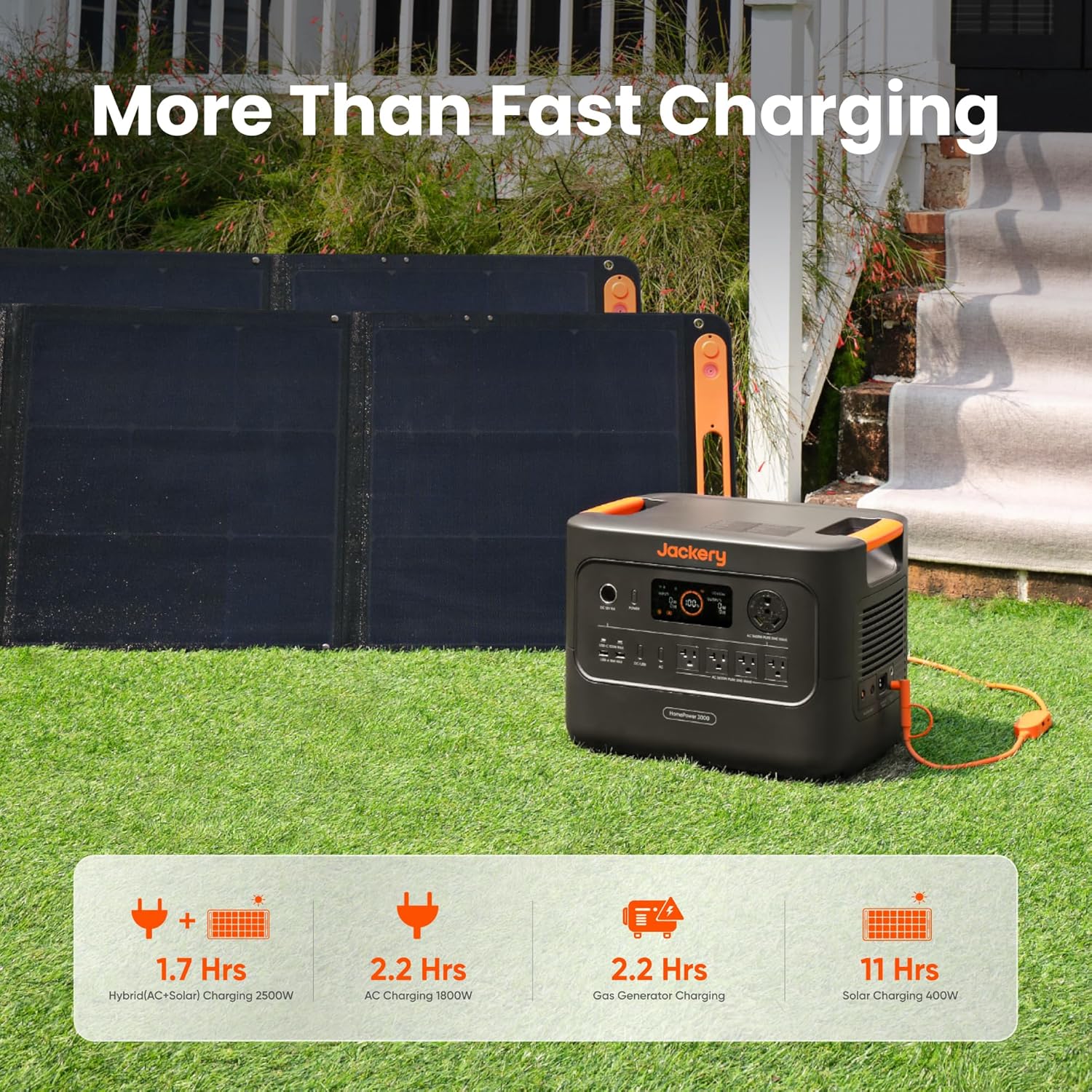
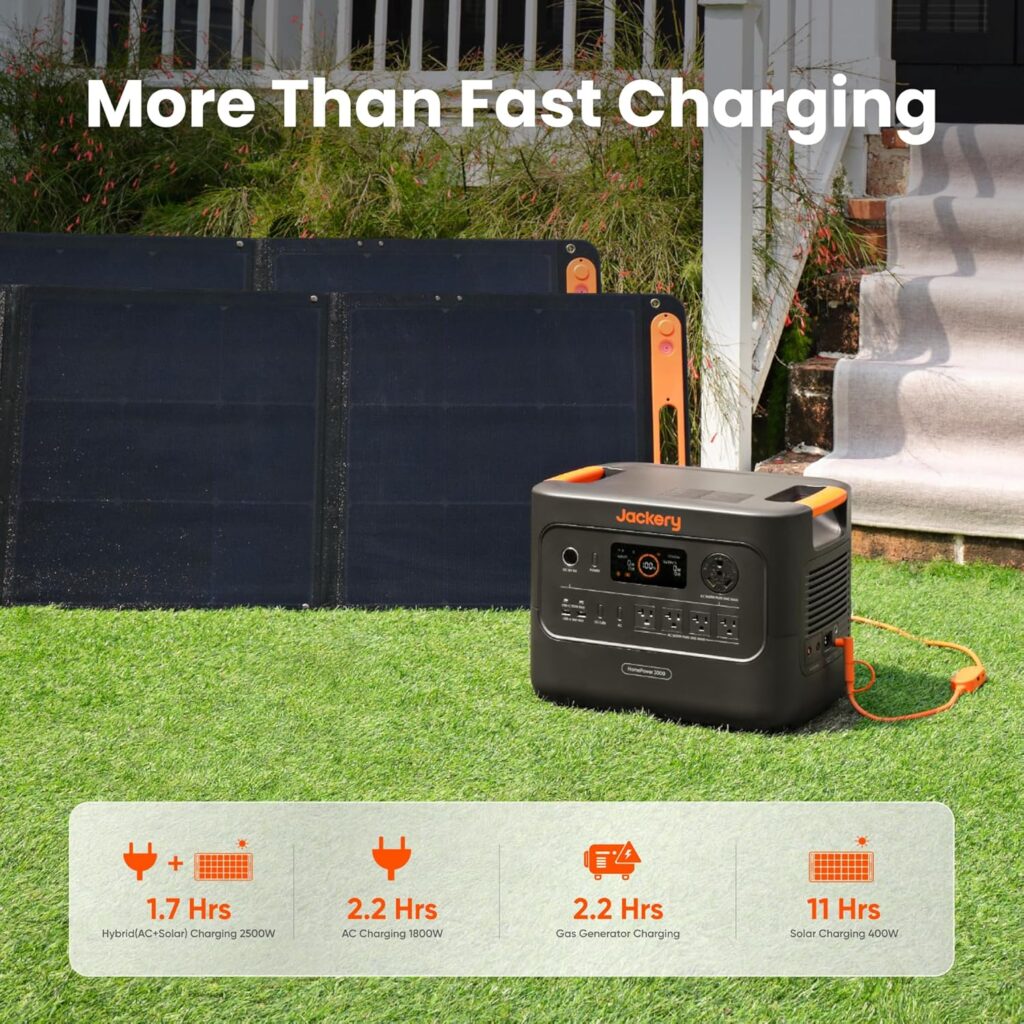
- AC recharge: about 2.2 hours (AC only)
- Hybrid AC + DC: about 1.7 hours
- Solar (with 2 x SolarSaga 200W): up to 80% in ~9 hours (sun dependent)
- 12V car charging and gas generator supported for flexible situations
These options give you flexibility — at home, you’ll typically use AC; on the road, you can add solar or car charging.
Solar performance expectations
With two SolarSaga 200W panels, you’ll see meaningful solar recharge rates in good sunlight. The 9-hour figure to reach 80% is a real-world estimate that assumes strong, consistent sun. Cloud cover or poor angle can extend that time.
If you plan to rely primarily on solar, think about panel placement and potential expansion if you need faster solar replenishment.
Real-world runtimes: how long will your devices run?
You’ll want practical estimates for what the HomePower 3000 can handle. Here are some sample runtimes to help you plan. These are approximations and will vary with device efficiency and real-world conditions.
- Router / modem: ~50–100 W — continuous for 30–60+ hours
- LED lighting (10–50 W total): multiple days depending on usage patterns
- Refrigerator (avg. draw including cycles 100–300 W): 1–2 days for a typical household fridge
- Laptop (45–90 W): 20–60 hours depending on power draw and screen usage
- CPAP machine (30–60 W): 40–100+ hours depending on mode and humidifier use
- Microwave (1000 W while running): short bursts—multiple uses but not continuous
- Electric kettle/coffee maker (1500–3000 W): usable for several boils if you budget for surge power
- Small space heater (1500 W): runs but will deplete battery faster — plan limited use and combine with supplemental heat
These estimates show you can run essentials comfortably and keep many devices charged simultaneously, especially if you manage usage during an outage.
Use cases: home, RV, emergencies, and more
You’ll find the HomePower 3000 versatile for several scenarios:
- Home backup: keeps critical loads like fridge, WiFi, lights, and medical devices running.
- RV and camping: TT-30 RV port plus solar compatibility make it a solid off-grid companion.
- Remote work: dual 100W PD ports let you power laptops and devices for extended time.
- Emergency preparedness: UPS and long battery life mean you’ll be ready for most outages.
This unit is a strong all-around solution if you want a single power station to handle multiple roles.
Seasonal and regional considerations
If you live in a hurricane-prone or storm-prone area where outages last days, pair the HomePower 3000 with a reliable solar setup or a small generator for long-term resilience. In milder outage regions, the unit may cover your needs for multiple days without extra fuel or charging sources.
Safety features and certifications
Safety is a priority with this product. LiFePO4 chemistry reduces thermal runaway risk; UL-certified UPS ensures safe switching for connected equipment; and the integrated inverter design minimizes external connections.
You’ll also see Jackery’s emphasis on ChargeShield 2.0 and internal protections against overcharge, overcurrent, and short circuits.
Handling and storage tips
Store the power station in a cool, dry place and avoid extreme temperatures. Keep ventilation clear during charging or heavy discharge. If you plan to store it long-term, maintain a partial state of charge and periodically top up to keep the battery healthy.
Maintenance and expected lifespan
You’ll get thousands of cycles before capacity reduces to 70%, meaning the unit can serve you for many years with proper care. Regularly update firmware if Jackery provides updates, and avoid deep discharges when you can to extend long-term battery health.
Charge cycles are less harmful with LFP than other chemistries, so even frequent partial cycles are relatively benign.
Setting up and getting started
Getting started is straightforward:
- Unpack both the HomePower 3000 and the SolarSaga panels when they arrive.
- Position the unit on a flat, ventilated surface.
- Connect solar panels when using solar, ensuring proper cable connections and orientation.
- Plug in AC for faster recharge when available.
- Configure any settings or check an included manual for UPS setup.
You’ll find the controls intuitive and the display clear about input/output and battery status.
Using the UPS with a household circuit
If you plan to integrate the UPS into your home circuits, consult a qualified electrician for transfer switch options and safe installation. The ≤20 ms switchover is fast, but proper integration prevents parallel utility issues and keeps everything code-compliant.
Portability and transport
Because it’s smaller and lighter than comparable units, you’ll be more inclined to carry it between locations. It’s suitable for RV travel, moving between rooms during outages, and taking to remote job sites.
Remember to secure it during transport and avoid heavy impacts.
Pricing, value, and the 30% Residential Clean Energy Credit
You’ll likely notice the HomePower 3000 sits in a higher price bracket than smaller power stations, but its capacity, features, and battery longevity make it a good value if you need sustained home backup.
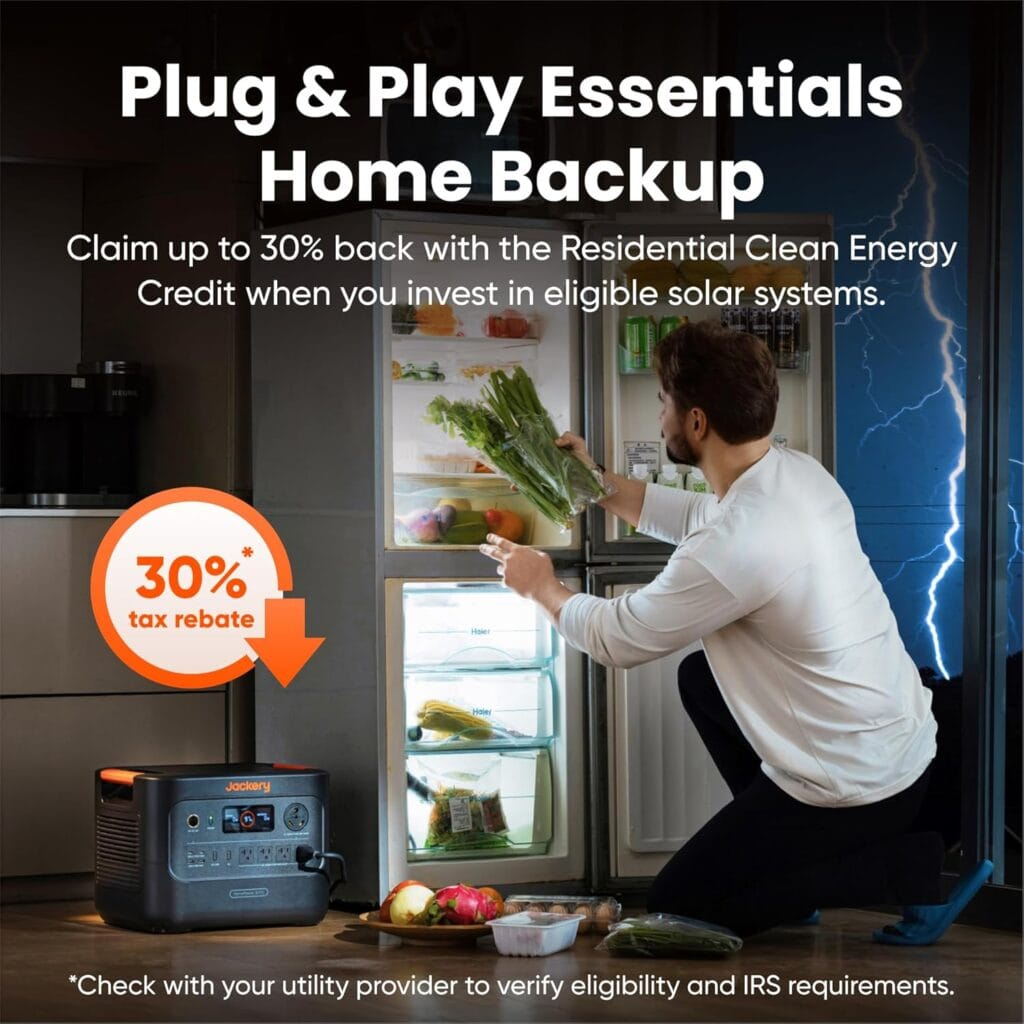
Importantly, you may be eligible for a 30% federal Residential Clean Energy Credit for costs linked to qualified solar electric property — this credit may offset the cost if the purchase meets program requirements. The 30% credit is currently available through Dec 31, 2025 (check for any changes or extensions). To claim the credit:
- Keep all purchase receipts and documentation.
- Confirm eligibility with your utility provider and review program requirements.
- Consult a tax professional or refer to IRS guidance (Form 5695 is commonly used for residential energy credits) to ensure correct filing.
Tax rules change, so you should verify current eligibility before finalizing your purchase. Don’t treat this as tax advice; consult a professional.
Pros and cons — what you’ll love and what to watch for
Pros:
- High continuous and surge output for a 3kWh-class unit.
- Long-lasting LiFePO4 battery with ~4,000 cycles.
- Fast UPS switchover (≤20 ms) for sensitive devices.
- Multiple ports including 2x 100W PD and TT-30 RV.
- Versatile recharge options: AC, hybrid AC+DC, solar, car.
- Compact, lighter, and smaller than many competitors.
Cons:
- Panels may arrive separately, so setup could take longer at delivery.
- Solar recharge times depend heavily on sunlight and positioning; 9 hours to 80% is optimistic in ideal conditions.
- While lighter than peers, a fully loaded unit is still a few dozen pounds — not pocket-portable.
- Advanced home integration for whole-house transfer requires professional electrical work.
Comparisons and alternatives
If you’re comparing the HomePower 3000 to other 3kWh-class units, note that LiFePO4 chemistry, cycle life, and surge capacity can vary widely. Some competitors may offer modular add-on batteries or different inverter designs.
You’ll want to compare:
- Continuous output and surge capacity
- Battery chemistry and cycle life
- Real-world recharge times (AC vs solar)
- Port selection (USB-C PD, RV ports, etc.)
- Weight and footprint constraints for your storage and transport
Make a list of your essential loads and compare runtimes and recharge strategies to choose what’s best for your needs.
Practical setup examples
Here are a few realistic setups you might consider:
Home emergency kit:
- HomePower 3000
- 2x SolarSaga 200W panels
- Extension cords and surge protectors
- Essential medical or communication devices
Weekend RV setup:
- HomePower 3000 with TT-30 RV port
- Single 200W panel for top-ups
- Use AC at campgrounds when available for faster recharge
Remote work station:
- HomePower 3000 powering two laptops via 100W PD ports
- Router, monitor, and lights connected to AC outlets
- Solar panels to extend autonomy for multi-day work
Safety checklist before using the unit
Before you rely on the HomePower 3000, check:
- All connectors are secure and cables undamaged.
- The unit is on a stable, ventilated surface.
- You understand the combined wattage of devices so you don’t exceed 3600W continuous.
- For whole-house or circuit-level integration, a licensed electrician performs the installation.
Warranty and support
Jackery typically provides a manufacturer warranty; you should check current terms at purchase. Keep your proof of purchase and register the unit if registration is available — this helps with warranty claims and technical support.
If you need assistance, Jackery support can help with setup questions, firmware updates, and troubleshooting.
FAQs you’ll want answers to
Q: Can the HomePower 3000 run my entire house? A: It depends on your total load. You’ll comfortably run essentials (refrigerator, router, lights, some electronics) but not all high-demand appliances simultaneously. For whole-house backup, professional transfer switches and additional capacity are usually required.
Q: How long will the battery last in real life? A: With LiFePO4 chemistry and around 4,000 cycles to 70% capacity, you can expect many years of use. Actual calendar life will depend on usage patterns and environmental conditions.
Q: Is solar always required for long outages? A: Solar helps immensely for multi-day outages. Pairing the unit with solar panels or a generator extends autonomy beyond the battery’s stored energy.
Q: Do I need a special inverter for sensitive electronics? A: The HomePower 3000’s inverter is designed to handle sensitive electronics and the UPS minimizes interruption. For very sensitive medical equipment, consult manufacturer specs.
Final verdict: who should buy this and why
If you want a single, high-capacity, portable power station that’s capable of keeping core household systems running through a multi-day outage, you’ll find the Jackery HomePower 3000 an excellent candidate. You’ll benefit from LiFePO4 longevity, strong continuous and surge outputs, fast UPS switching, and versatile port options.
It’s especially suited for:
- Homeowners wanting reliable emergency backup without the complexity of permanently installed systems.
- RV owners who want plug-and-play power with solar recharging ability.
- Remote workers who need long runtime for laptops and communications gear.
- Anyone who values battery longevity and safety.
If you need whole-house capability or longer-than-several-days autonomy without solar or a generator, you’ll want to plan for additional capacity or a hybrid approach.
Quick checklist before buying
- Confirm how and when your solar panels will ship if bundled.
- Check the latest guidance on the 30% Residential Clean Energy Credit and gather documentation.
- Map out the devices you must power and calculate combined wattage.
- Consider whether you’ll add more solar panels or a small generator for extended outages.
- Verify warranty terms and support options.
If you follow these steps, you’ll be set up to get the most out of the Jackery HomePower 3000 and feel confident that your essentials will stay powered when you need them most.
Disclosure: As an Amazon Associate, I earn from qualifying purchases.