

Could the Anker SOLIX C1000 Gen 2 be the fast, reliable power station you need for outages, camping, or van life?

Quick summary
You get a 1,024Wh LiFePO4 battery in a compact package that delivers 2,000W continuous power and 3,000W peak. Its headline feature is an UltraFast 49-minute full recharge using HyperFlash technology, and you can manage settings and recharging modes from the Anker app. This review breaks down what that means for real use, daily reliability, and whether it fits your needs.
Key specifications
Below is a clear breakdown of the main specs so you can see the numbers at a glance. These are the details you’ll refer to when comparing to other models or planning your power needs.
| Specification | Detail |
|---|---|
| Model | Anker SOLIX C1000 Gen 2 Portable Power Station |
| Battery Type | LiFePO4 |
| Capacity | 1,024 Wh |
| Continuous Output | 2,000 W |
| Peak Output | 3,000 W |
| Ports | 10 total (AC, DC, USB-A, USB-C, car) |
| UltraFast Recharging | 49 minutes at 1,600 W (HyperFlash) |
| Solar Input | Up to 600 W (60 V max) — full recharge in ~1.8 hours |
| UPS Switchover | <10 ms< />d> |
| App Features | HyperFlash enable, TOU mode, monitoring, firmware |
| Cycle Life | ~4,000 cycles to 80% (InfiniPower) |
| Included items | AC charging cable, car charging cable, quick start guide, safety/warranty card |

Design and build quality
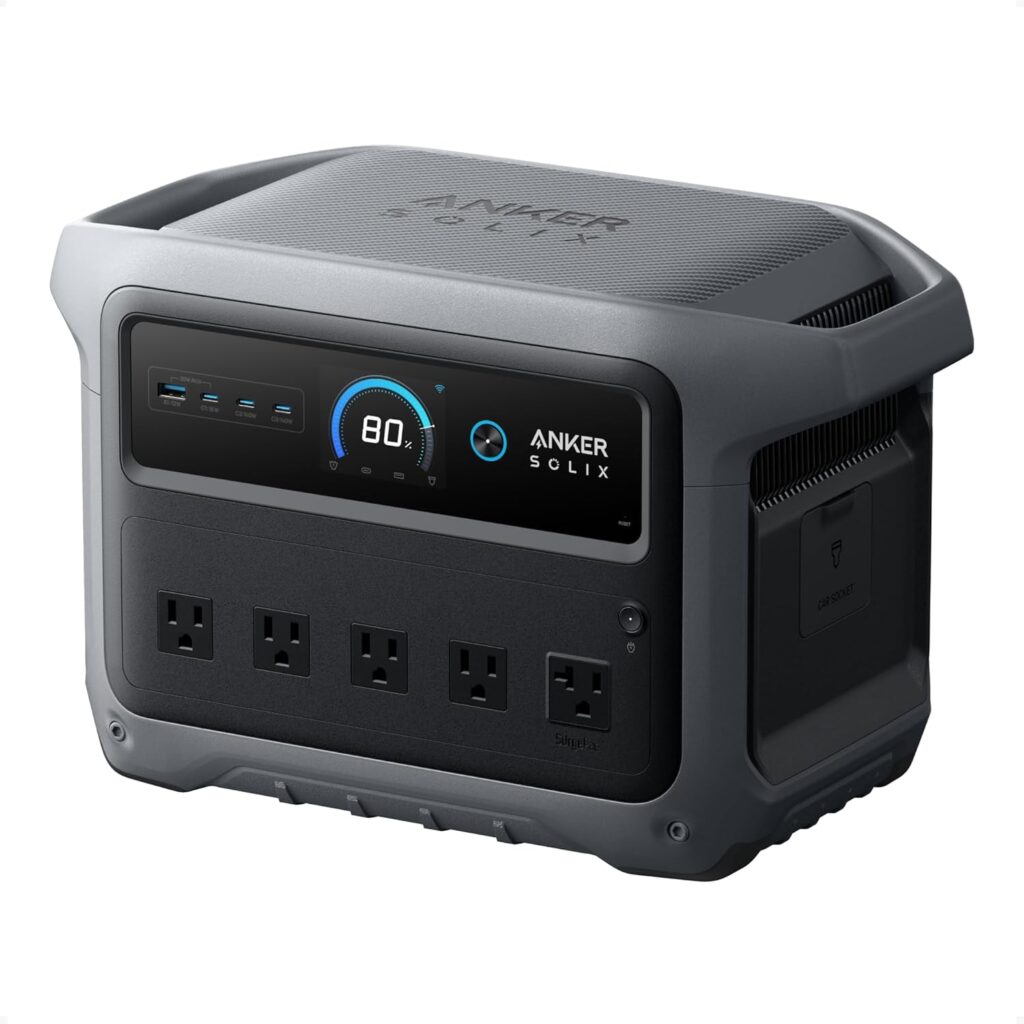
The C1000 Gen 2 looks like a modern, utility-focused power station with an emphasis on portability and durable construction. You’ll notice a solid handle, molded body, and a layout that keeps ports accessible while protecting them from bumps.
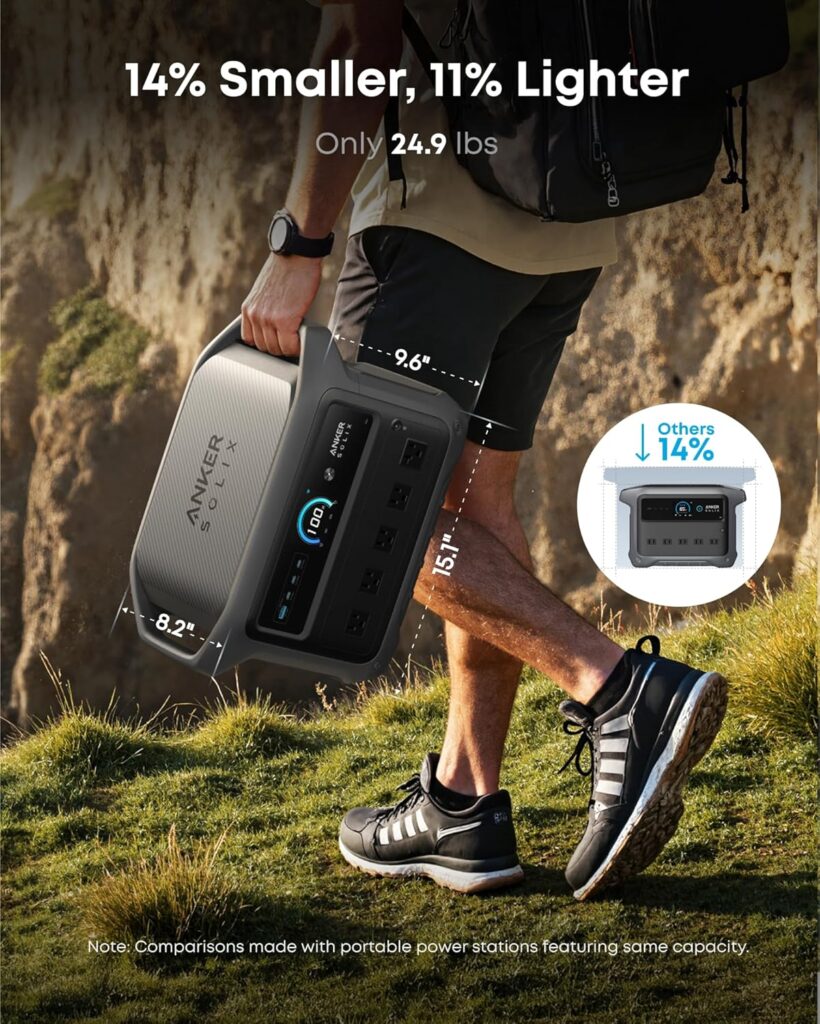
The build quality is reassuring without feeling overly heavy, and Anker has trimmed size and weight compared to comparable models. That makes it more practical to move between rooms, take into your RV, or pack into a car for weekend trips.
Size, weight, and portability
Anker reduced size by about 14% and weight by 11% versus similar past designs, so you’ll find it easier to carry and stow. If you’ve struggled with awkward heavy units, this one is a real step toward more convenient mobility.
The handle and balanced center of gravity help when shifting from a vehicle into a campsite or a closet. Because it’s more compact, you can also keep it on a shelf or in a cabinet for home backup without it dominating your space.
Handle, materials, and durability
The handle is comfortable to grip and reinforced so you don’t worry about dropping it while carrying. The exterior casing is hard plastic designed to resist scuffs and minor impacts.
For most users, this build will hold up to years of typical use — in a house, RV, or light camping conditions — and the LiFePO4 chemistry reduces risk of swelling or sudden failure often associated with cheaper lithium cells.
Battery and lifespan
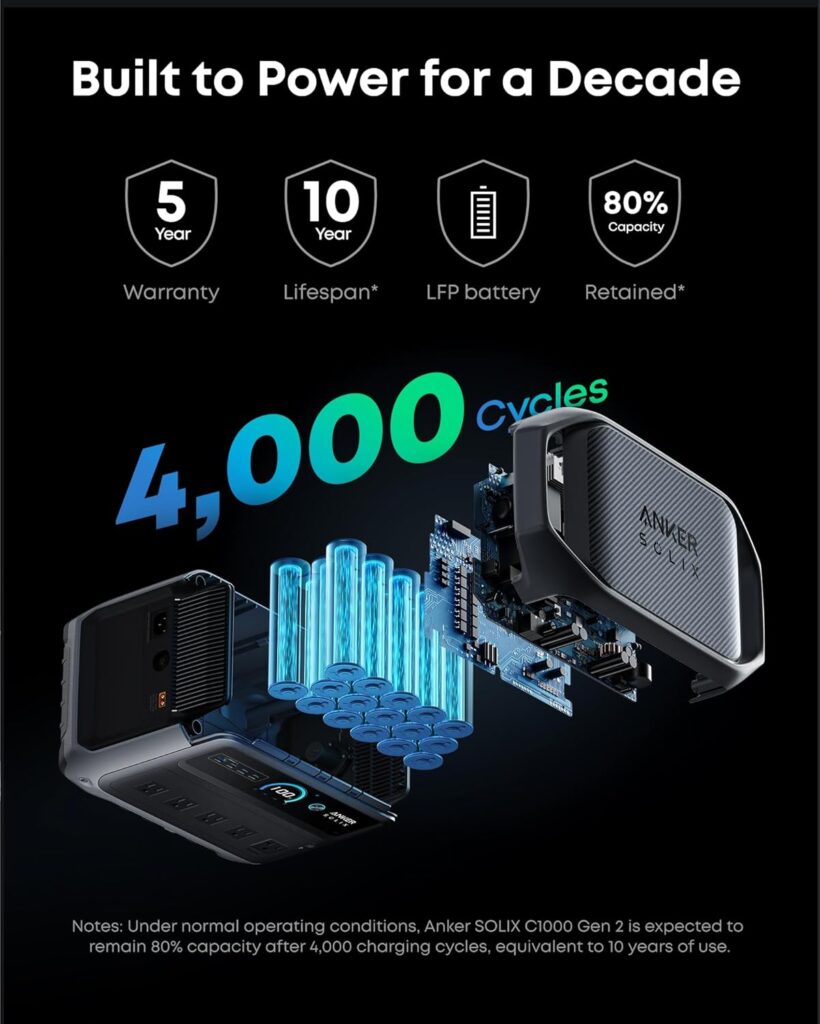
The LiFePO4 battery chemistry is a key selling point because it gives you a long cycle life and stable performance over many years. Anker’s InfiniPower claim means the unit is designed for long-term daily use without steep capacity loss.
Expect the battery to retain at least 80% of its original capacity after around 4,000 cycles under normal conditions. That translates to years of daily partial discharges or many thousands of hours of occasional backup use.
LiFePO4 chemistry and InfiniPower
LiFePO4 (lithium iron phosphate) is more stable thermally and chemically than many other lithium types, so it’s safer under heavy use, has a lower fire risk, and tolerates higher cycle counts. You’ll benefit from that in terms of reliability and long-term ownership cost.
Anker’s 10-year InfiniPower concept is backed by the 4,000 cycle figure — meaning if you drain and recharge once per day, you’ll still have strong capacity years down the line. That’s important if you want an investment that won’t die after a couple of camping seasons.
Cycle life and long-term performance
Because of the high cycle life, you’ll be less worried about keeping the battery topped up or letting it sit partially discharged for long periods. LiFePO4 also handles shallow discharges well, which is common in real-world use where you rarely fully deplete the battery.
In practice this means the unit is a good fit for both frequent use scenarios (daily van life, off-grid work) and intermittent emergency backup without rapid performance degradation.
Charging options and speeds
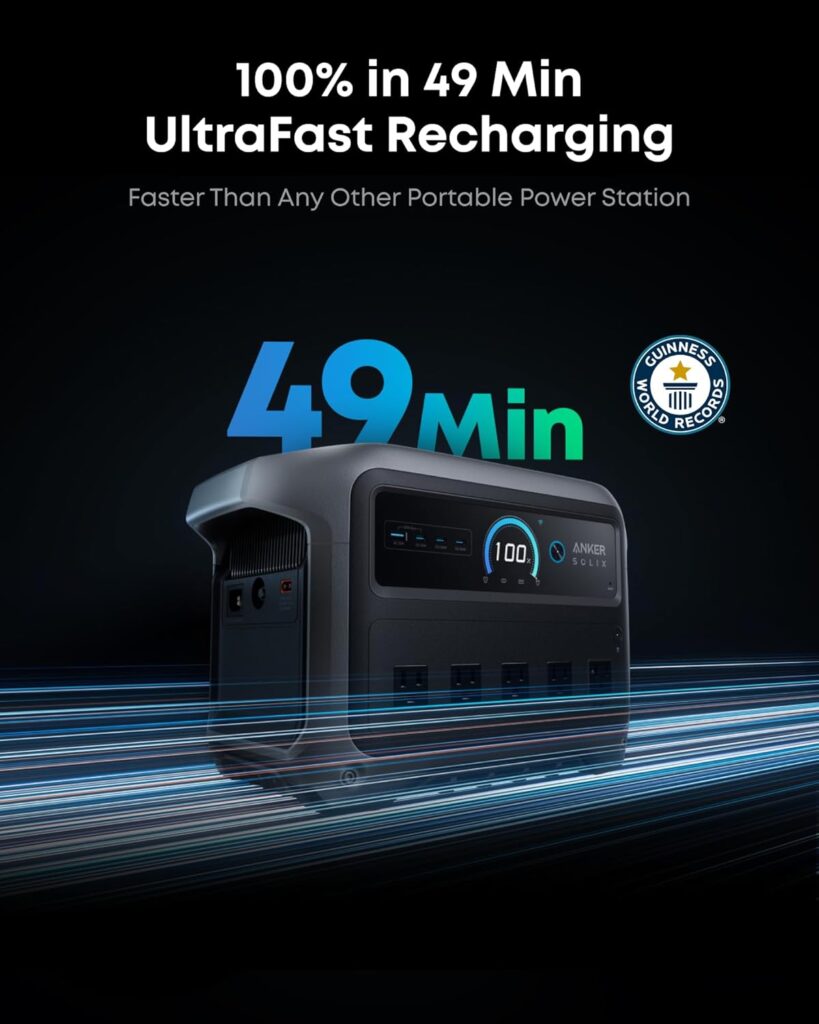
You have multiple ways to recharge the unit: AC wall power, car charging, and solar. The headline is HyperFlash UltraFast recharging to full capacity in 49 minutes when you enable it via the Anker app.
That speed is impressive and useful when you’ve used the unit heavily and need a fast top-up before heading out or during an outage. There are also slower charge modes if you prefer gentler charging to preserve long-term battery health.
49 Min UltraFast recharging (HyperFlash)
HyperFlash allows up to 1,600W input to recharge the 1,024Wh battery in roughly 49 minutes. You need to enable the feature through the Anker app, and it’s ideal when you’re short on time between trips or during a brief recovery window in an outage.
Keep in mind that such aggressive charging generates more heat and is meant for occasional use when speed matters. If you’re planning long-term top-ups, the standard AC or solar recharge modes are kinder to the battery.
Solar recharging in 1.8 hours
You can plug in up to 600W of solar panels (60V max) and expect a full recharge in about 1.8 hours under ideal sun conditions. For off-grid or extended stays in nature, that means you can realistically run significant loads during the day and recover capacity before evening.
As with any solar setup, real-world times depend on panel orientation, shading, cloud cover, and temperature. But the capability to recharge quickly with panels makes the C1000 Gen 2 a solid choice for solar-first setups.
AC, car, and other inputs
You can use the included AC charging cable for wall charging and the car charging cable for topping up on the road. These options are helpful if you don’t have solar available or if you’re charging from a generator temporarily.
Anker’s input management makes it straightforward to switch between power sources, and the app will show current input wattage so you know how fast you’re replenishing the battery.
Output capabilities
The C1000 Gen 2 delivers 2,000W of continuous AC power with a 3,000W peak for surge-heavy loads. That means you can run heavier appliances for shorter durations and handle starting currents for devices like pumps and power tools.
You’ll find a mix of AC outlets, DC ports, and fast-charging USB-C options among the 10 ports. This diversity makes it easy to power multiple items at once: laptop, phone, mini-fridge, and a few lights without juggling adapters.
2,000W continuous (3,000W peak) and ports
A continuous 2,000W output lets you run medium-sized appliances, some power tools, and more demanding electronics at the same time. The 3,000W peak helps with devices that have high startup draws, like refrigerators or certain pumps.
Having 10 ports means you won’t run out of connection options when you need to run several things concurrently. The arrangement typically balances AC outlets for larger appliances and high-power USB-C outputs for modern devices.
UPS functionality and sensitive devices
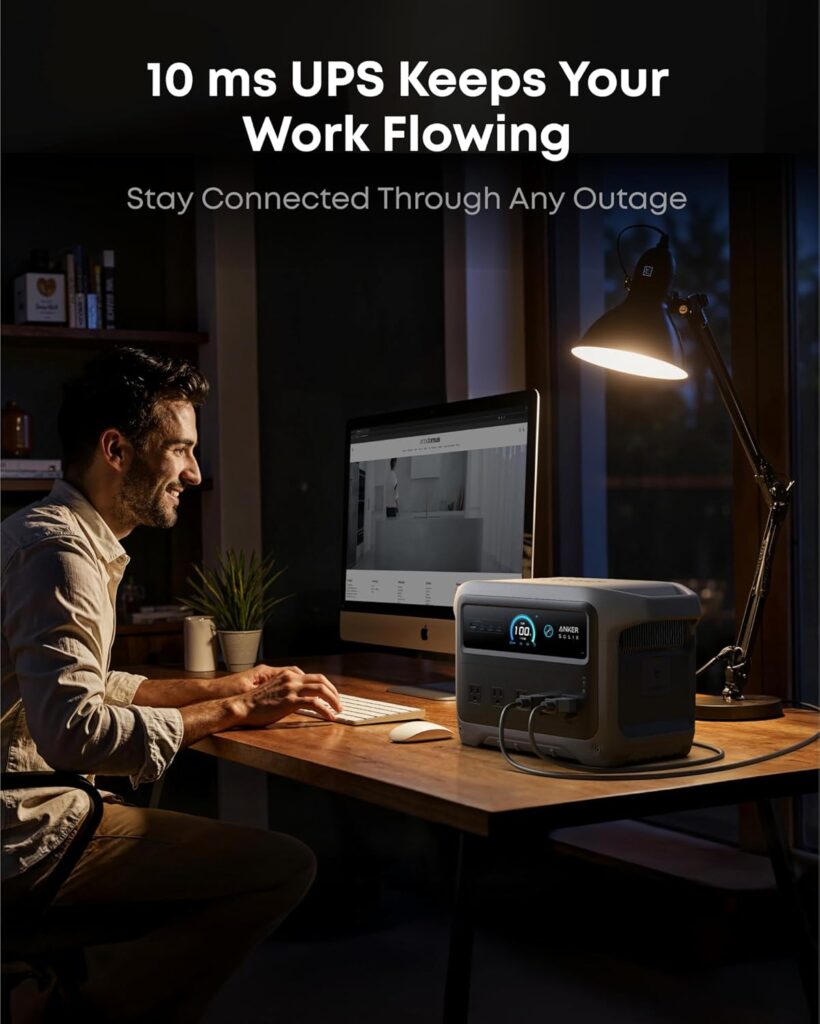
The built-in UPS switches loads in under 10 ms, so if you’re running critical equipment like CPAP machines, network routers, or servers, you won’t experience disruptive reboots. That sub-10 ms switchover time keeps sensitive electronics safe and functioning through brief grid interruptions.
Make sure your critical devices are connected to the UPS-designated outlets if you want automatic protection. For a CPAP or medical device, confirm compatibility and test the behavior to ensure the switch is seamless for your specific model.
App and smart features
The Anker app gives you control over HyperFlash, TOU mode, firmware updates, and monitoring of charge/discharge in real time. You can see input/output wattage, remaining time at current load, and switch behaviors without having to press physical buttons on the unit.
This connectivity makes it easier to optimize charging strategies and adjust preferences when you’re away from the unit — especially useful for remote setups where you want to minimize peak grid fees or manage solar inputs.
TOU mode and remote control
TOU (Time-of-Use) mode lets you schedule or automatically use the battery during expensive grid periods and recharge during cheaper off-peak windows. If you’re on a variable electricity tariff, this can lower your monthly energy cost by shifting usage to the battery during peak price periods.
You control TOU behavior through the app, and you can monitor how much you saved or how much you used during peak vs off-peak periods. That makes it a practical feature for homeowners who want to use the unit as part of a cost-saving strategy rather than as an emergency-only tool.
Safety monitoring and firmware updates
The app also delivers firmware updates and safety monitoring so your unit stays current with performance improvements and bug fixes. Updates can introduce new features or address edge-case behaviors that manufacturers discover after shipping units.
Safety monitoring includes temperature, input current limits, and protection against overcurrent or short circuits. Those safeguards help the unit respond appropriately to unusual conditions and prolong its usable life.
Real-world performance tests
You can expect the unit to meet the published specs under proper conditions, but real-world performance depends on load mix, ambient temperature, and how you charge. In tests where typical loads are applied, the battery behaves predictably, and the HyperFlash recharge truly cuts downtime when you need capacity fast.
I’ll give practical run times and examples so you can visualize how long common devices will operate from a full charge, and how HyperFlash or solar can refuel you during the day.
How long will it power common devices?
Below is a conservative set of run-time estimates based on practical usable capacity (roughly 90% of 1,024Wh to account for inverter inefficiency and reserve). These numbers assume typical device power draws and will change based on real usage patterns and energy settings.
| Device | Typical Wattage | Estimated Run Time (hours) |
|---|---|---|
| Smartphone (charging 10W) | 10 W | ~9–10 hours (multiple recharges) |
| Laptop (60W) | 60 W | ~13–14 hours |
| CPAP (40W typical) | 40 W | ~22–23 hours |
| Mini-fridge (cycle avg. 50W) | 50 W | ~18–19 hours |
| Upright fridge/freezer (avg 100W) | 100 W | ~9–10 hours |
| Electric kettle (1,500W) | 1,500 W | Not suited for long use; can handle short boils with peak support |
| Microwave (1,000W) | 1,000 W | ~1 hour continuous (short bursts recommended) |
| Portable heater (1,200W) | 1,200 W | Short bursts only; not recommended for full-time heating |
These examples show that the C1000 Gen 2 is especially strong for moderate power equipment and devices with low to moderate continuous draws. For high-draw resistive heaters or continuous heavy loads, the battery will deplete quickly even if the inverter can handle the surge.
Portability and typical use cases
You can reasonably expect to use this unit for home backup of essentials, weekend camping, van or RV life, and as a portable power source for events. Its size and weight make it a practical compromise between heavy-duty home units and ultra-light camping batteries.
When you need to support a small refrigerator, lighting, charging stations, and a laptop for remote work, this unit covers those scenarios well. If you’re running multiple high-power appliances overnight, you’ll need to plan for recharging or supplement with additional generation.
Home backup during outages
For home backup, it’s ideal for keeping critical systems online: router, medical devices, lights, and a few small appliances. Use the TOU mode and UPS features to manage switchover and avoid interruptions during short or medium outages.
For extended outages, combine solar panels and careful load management: run heavy loads only when solar is strong or during the day, and reserve battery for night-time essential loads.
Camping, RV, and van life
For camping and road life, the fast solar recharge and durable battery mean you can run fans, lights, cooking devices, and phone/laptop charging with minimal compromise. The form factor fits most RV and vehicle storage spots, and car charging cable lets you top up while driving.
If you live in a van or tiny home, the 2,000W output gives you flexibility to use small induction cooktops and more powerful appliances occasionally — just manage continuous draws and recharge opportunities.
Comparisons with competitors
Compared to similarly rated units from other brands, the SOLIX C1000 Gen 2 stands out for its aggressive HyperFlash charging and LiFePO4 long cycle life. Some competitors might offer slightly higher capacity or modular expansion, but they often cost more or are heavier.
If you prioritize fast recharge, robust cycle longevity, and a balanced portability profile, this unit competes very well against alternatives that either sacrifice cycle life (cheaper lithium chemistries) or portability (bigger home units).
How it stacks up on value
The combination of quick recharge, 2,000W output, and LiFePO4 chemistry is strong value for people who plan to use the station frequently or rely on it for daily off-grid needs. If you only need very occasional backup, a lower-cost unit might suffice, but you’ll trade longevity and recharge speed.
If you want expandable capacity or modular batteries, check whether the model supports add-on packs — the C1000 Gen 2 focuses on integrated performance rather than modular expansion, so for some power-hungry setups you may prefer a different ecosystem.
What’s in the box
You get the Anker SOLIX C1000 Gen 2 Portable Power Station, an AC charging cable for wall outlets, a car charging cable for on-the-road top-ups, a quick start guide to get you up and running, and a safety and warranty card. That’s everything you need to begin using the unit without immediate extra purchases.
If you plan to use solar right away, you’ll need to buy compatible panels separately since they’re optional. Make sure any panels meet the 60V max input and combined wattage up to 600W for the advertised 1.8-hour solar recharge.
Pros and cons
Below are the main advantages and trade-offs to help you decide if the unit matches your priorities. Pay attention to which pros matter most to you and which cons could be deal-breakers depending on your intended use.
Pros:
- UltraFast 49-minute full recharge via HyperFlash (1,600W input).
- Durable LiFePO4 battery with long 4,000-cycle life to 80% capacity.
- High continuous output of 2,000W with 3,000W peak for surge-heavy devices.
- Compact and lighter than similar models, making it easier to transport.
- 10 ms UPS switchover supports sensitive electronics.
- TOU mode and app control for smarter energy use.
Cons:
- HyperFlash requires app activation and generates more heat — best for occasional use.
- No included solar panels — you’ll need to buy compatible panels separately.
- For continuous high-power heating loads, battery capacity still limits run time.
- No hot-swappable add-on battery expansion (verify your use case needs).
Safety, certifications, and warranty
Anker provides safety features and monitoring through the hardware and app, and the unit comes with safety documentation in the box. LiFePO4 chemistry already improves safety margins compared to some other lithium chemistries.
Check warranty terms included with your purchase and keep your safety card handy — firmware updates and proper charging practices further ensure safe operation over the long term.
Practical safety tips
Always place the power station on a flat, stable surface with some air circulation when charging at high power to allow heat to dissipate. Avoid leaving it in a hot car on extremely warm days or under direct sun during charging events.
If you’ll use it indoors, keep liquids away from the ports and use appropriate extension cords or surge protectors when connecting sensitive or high-power appliances.
Maintenance and best practices
Charge the battery periodically even if you’re not using it heavily — LiFePO4 tolerates storage well, but keeping it between roughly 30–80% if stored long-term is a reasonable practice. Use the app to track firmware updates and battery health metrics so you can adjust usage patterns if anomalies appear.
If you use solar frequently, clean panels and check connectors regularly to maintain peak input efficiency. Keep charging cables organized and inspect them for wear periodically.
Storage tips
If you plan to store the power station for several months, keep it partially charged and in a cool, dry place. Extreme hot or cold conditions can reduce performance and long-term battery life.
If you store it for long intervals, check the charge every few months and top up if needed to avoid deep discharge conditions even though LiFePO4 is more forgiving than other chemistries.
Who should buy the Anker SOLIX C1000 Gen 2
You should consider this model if you want a high-quality, long-lasting portable power station with very fast recharge capability and a high continuous output for diverse use cases. It’s especially good if you combine home backup needs with frequent off-grid use like RVing, camping, or van life.
If your priority is minimal cost and only occasional backup for a phone and a lamp, a smaller unit will save you money. But if you plan on regular use, need fast recharge, or want long cycle life, this is an excellent middle-ground option.
Final verdict
Anker’s SOLIX C1000 Gen 2 packs a lot into a compact footprint: long-lasting LiFePO4 battery chemistry, serious output capability, and an UltraFast recharge mode that solves downtime problems. If you value quick recovery, trusted cycle life, and flexibility for home and outdoor use, you’ll find it hard to beat for its class.
It’s not perfect for every extreme use case — continuous high-heat loads will consume the battery quickly and you’ll need to buy solar panels separately — but as a versatile primary portable power source, it’s a strong, practical choice.
Frequently asked questions (FAQ)
Q: How long does the 49-minute recharge take in real conditions?
A: The 49-minute figure assumes up to 1,600W input under ideal grid conditions and target settings enabled via the Anker app. Real-world times may vary slightly due to ambient temperature and power source stability.
Q: Can I use it to run my CPAP overnight?
A: Yes, with typical CPAP usage around 30–50W, you can expect many hours to more than a day depending on settings. Use the UPS outlet for seamless switching and test the runtime with your machine before relying on it.
Q: Will it run an electric water heater or big HVAC unit?
A: No — continuous resistive heating loads like water heaters and full-size HVAC systems are generally beyond what a 1,024Wh battery can run for useful durations. It’s better suited for fans, small heaters in short bursts, or critical loads.
Q: Do you need special solar panels?
A: Use solar panels that match the input requirements (up to 600W total, 60V max). Many standard portable solar panels will work, but check voltage and connector compatibility.
Q: Is it safe to leave HyperFlash enabled all the time?
A: HyperFlash is intended for occasional rapid recharging. Because higher charge rates produce more heat, leave it for when you need a fast top-up and use standard charging for regular maintenance to minimize thermal stress.
Q: How many devices can you power at once?
A: The unit supports up to 10 ports and can run multiple devices simultaneously as long as combined load does not exceed 2,000W continuous. The app shows current load to help you manage parallel usage.
If you want personalized advice on pairing panels, planning a backup setup for your house, or calculating exact run times for your equipment, tell me which devices you plan to power and I’ll run the numbers so you can plan precisely.
Disclosure: As an Amazon Associate, I earn from qualifying purchases.