
?Have you ever faced a dead battery at an inconvenient time and wished you had a compact, reliable way to get your vehicle started right away?

Product overview
You’re looking at the Sharmeal Car Jump Starter 3000A, Jump Starter Battery Pack for 9.0L Gas and 7.0L Diesel, 12V Portable Jump Box with LED Light. This model positions itself as a high-power portable booster designed to restart big engines quickly while doubling as a power bank and emergency light. You’ll find it marketed for cars, motorcycles, RVs, tractors, and other 12V vehicles.
You’ll want to understand what this unit really does before relying on it. Below I break down features, real-world performance, safety, how to use it, and tips to get the most out of it so you can decide if it fits your needs.
Key specifications
You’ll appreciate having a quick reference for what this unit offers. The following table summarizes the core specs and features so you can see at a glance whether this jump starter matches your vehicle and everyday gear.
| Feature | Detail |
|---|---|
| Peak Current | 3000 Amps (peak) |
| Engine Start Capacity | Up to 9.0L gasoline engines and 7.0L diesel engines |
| Output Voltage | 12V |
| USB Outputs | Dual USB 5V/2A |
| LED Light | 400 lumens (Flash, Strobe, SOS modes) |
| Protection | Integrated battery + intelligent clamps; spark-proof, reverse-polarity protection and 10 types of protection (examples include short circuit, over-voltage, over-current, temperature protection) |
| Included Items | 1× jump starter, 1× smart jumper cables, 1× Type-C charging cable, 1× user manual, 1× portable carrying case |
| Warranty | 24 months |
| Portability | Lightweight, compact design (advertised as more portable than older bulky jump packs) |
| Charging Recommendation | Use the original charging cable provided to ensure best charging performance |
You’ll note the big headline is the 3000A peak figure — that’s what sellers use to show this unit will take on large engines. Keep reading to understand how that translates in real life.
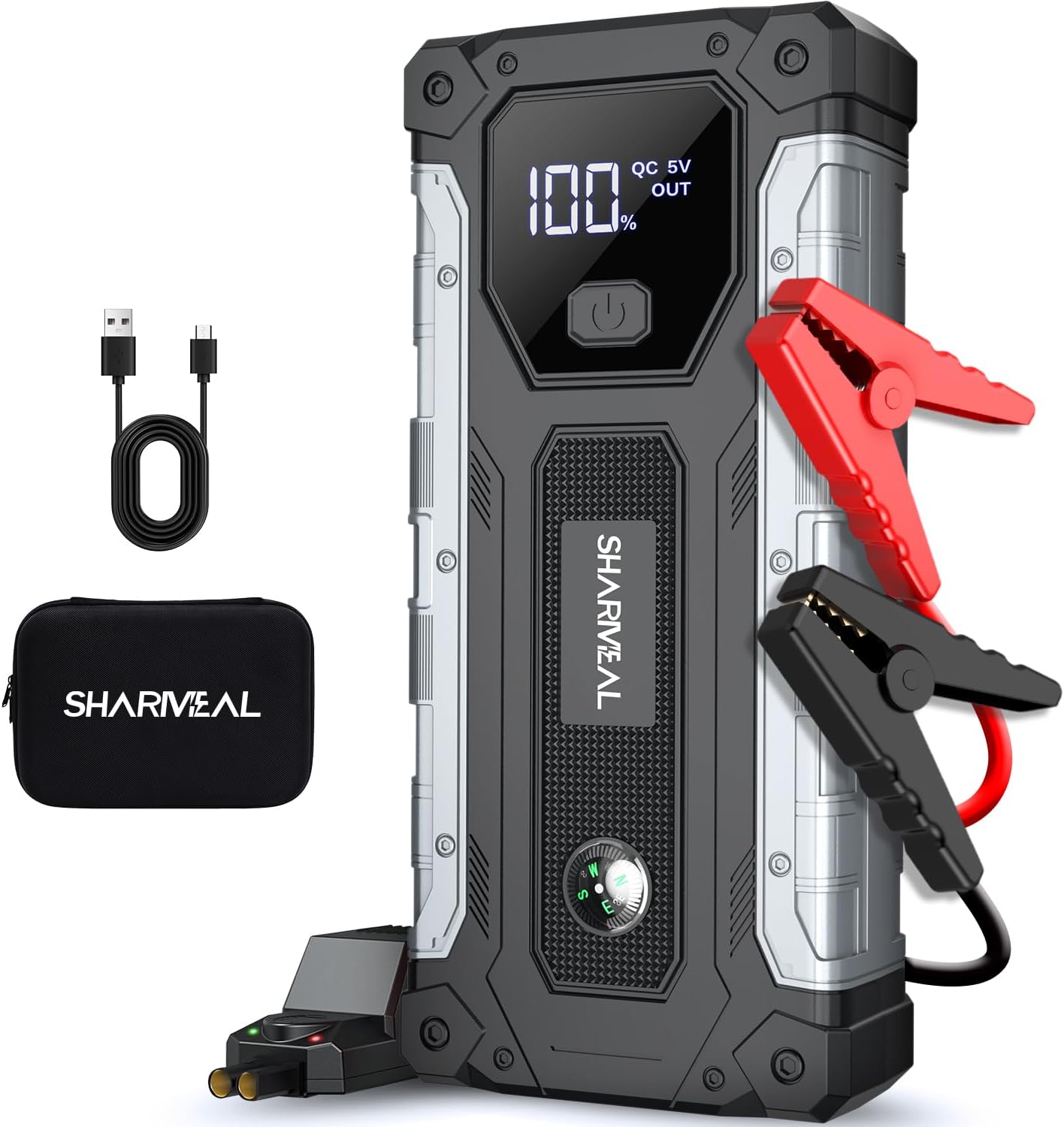

What the 3000A rating really means
That 3000A peak rating is an attention-grabber, and for good reason: you want enough cranking power to start large engines, especially diesel ones. The unit’s peak amp figure refers to the maximum instantaneous current the pack can deliver during the initial cranking surge.
You should know peak amps are not the same as continuous cranking rating or battery capacity. Peak numbers tell you the boost potential during a start, while sustained performance depends on the internal battery chemistry, temperature, and remaining charge. In practical terms, this unit is designed to start big engines quickly, but the real-world number of jump attempts per full charge will vary.
Design and portability
The first thing you’ll notice is the compact, portable format. Sharmeal has aimed to make this smaller and lighter than old-school brick jump packs so you can store it in a trunk or under a seat without added bulk.
You’ll like the hard carrying case that keeps the unit and cables organized. The smart clamps are integrated and insulated for safer handling, which reduces the chance of accidental shorting and makes it easier to store with the main unit.
Build quality and ergonomics
The housing feels rugged enough for roadside use without being overbuilt. The clamps are labelled and designed to be intuitive to attach. The smart clip’s indicator lights provide immediate visual feedback when you connect the clamps: the traffic lights flash alternately on insertion, and the green light indicates a successful connection.
You’ll find the overall fit and finish to be on par with most modern portable jump packs — practical, with user-friendly features designed for safety and convenience.
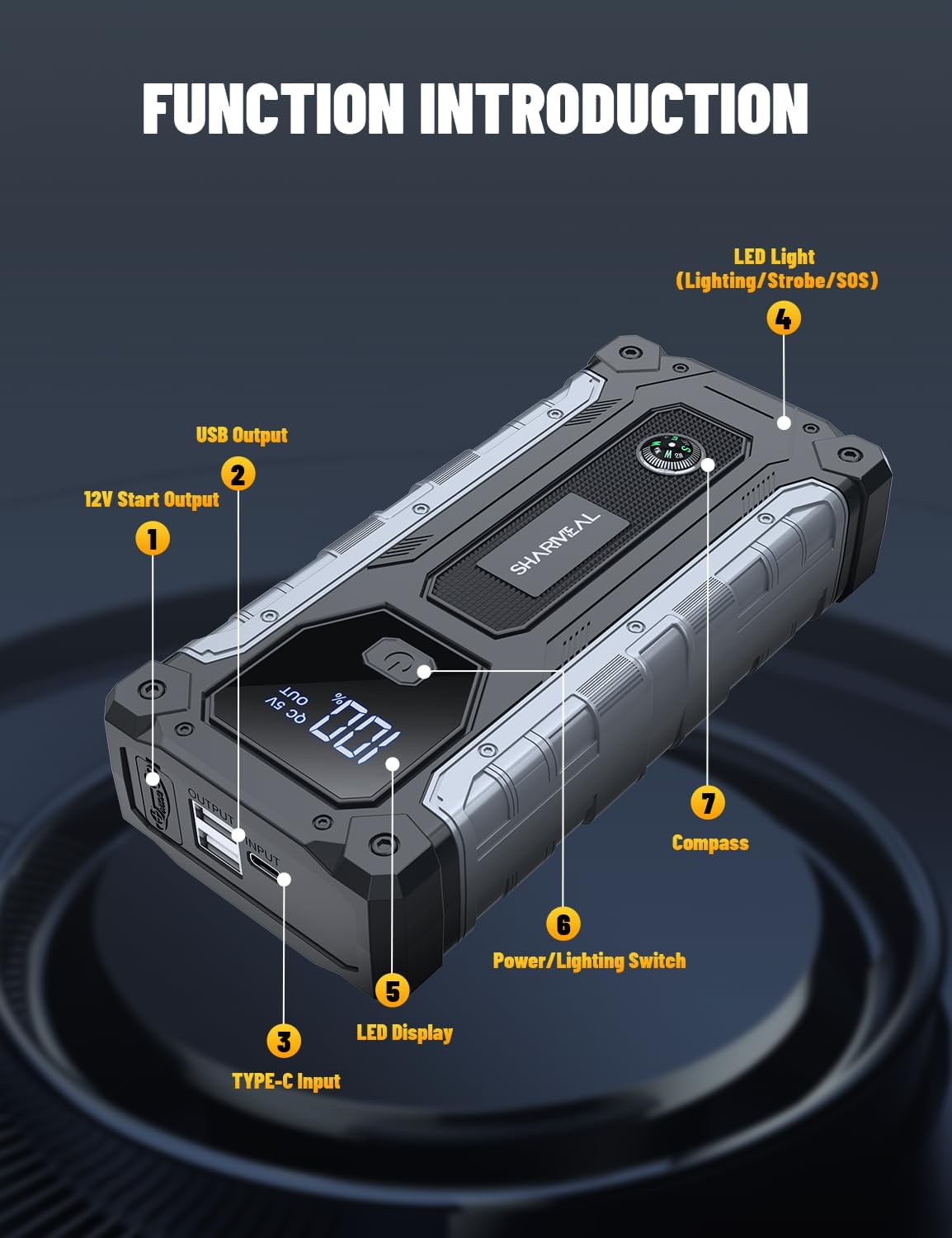
Multi-protection and safety features
Safety should be a priority when you’re working with jumper cables and high currents. Sharmeal emphasizes integrated battery design and intelligent clamps with full insulation.
You can expect multiple layers of protection to reduce risk. Typical protections include:
- Spark-proof operation
- Reverse-polarity protection
- Short-circuit protection
- Over-current protection
- Over-voltage protection
- Over-charge protection
- Over-discharge protection
- Over-temperature protection
- Auto-shutoff for long inactivity
- Surge protection
You’ll find these protections invaluable when you’re working alone or in low-light conditions. The smart clamp lights help prevent incorrect connections, and the protective circuitry reduces the hazards of sparks or electrical mishaps.
How to use it — step-by-step
You’ll want to use the unit correctly to get a reliable jump and stay safe. Here’s an easy, stepwise method based on the product’s instructions and best practices:
- Insert the jumper cable into the booster. When you do this, the smart clip’s traffic lights will flash alternately to indicate the system is ready.
- Connect the clamps to your car battery. Connect the red clamp to the positive (+) terminal first, then the black clamp to a good chassis ground or the battery’s negative (–) terminal. The green light indicates a successful connection.
- Start your vehicle’s engine. If your vehicle doesn’t start after a few seconds, wait 1–2 minutes and try again. Avoid cranking continuously for more than recommended by your vehicle’s manual.
- Remove the jumper cable once the engine is running. Disconnect the clamps in reverse order: black clamp first, then red.
- Recharge the jump starter when possible. Follow the manufacturer’s recommendation to use the provided Type-C cable to maintain charging performance.
You’ll want to follow those steps carefully and check the user manual for any model-specific warnings before your first use.
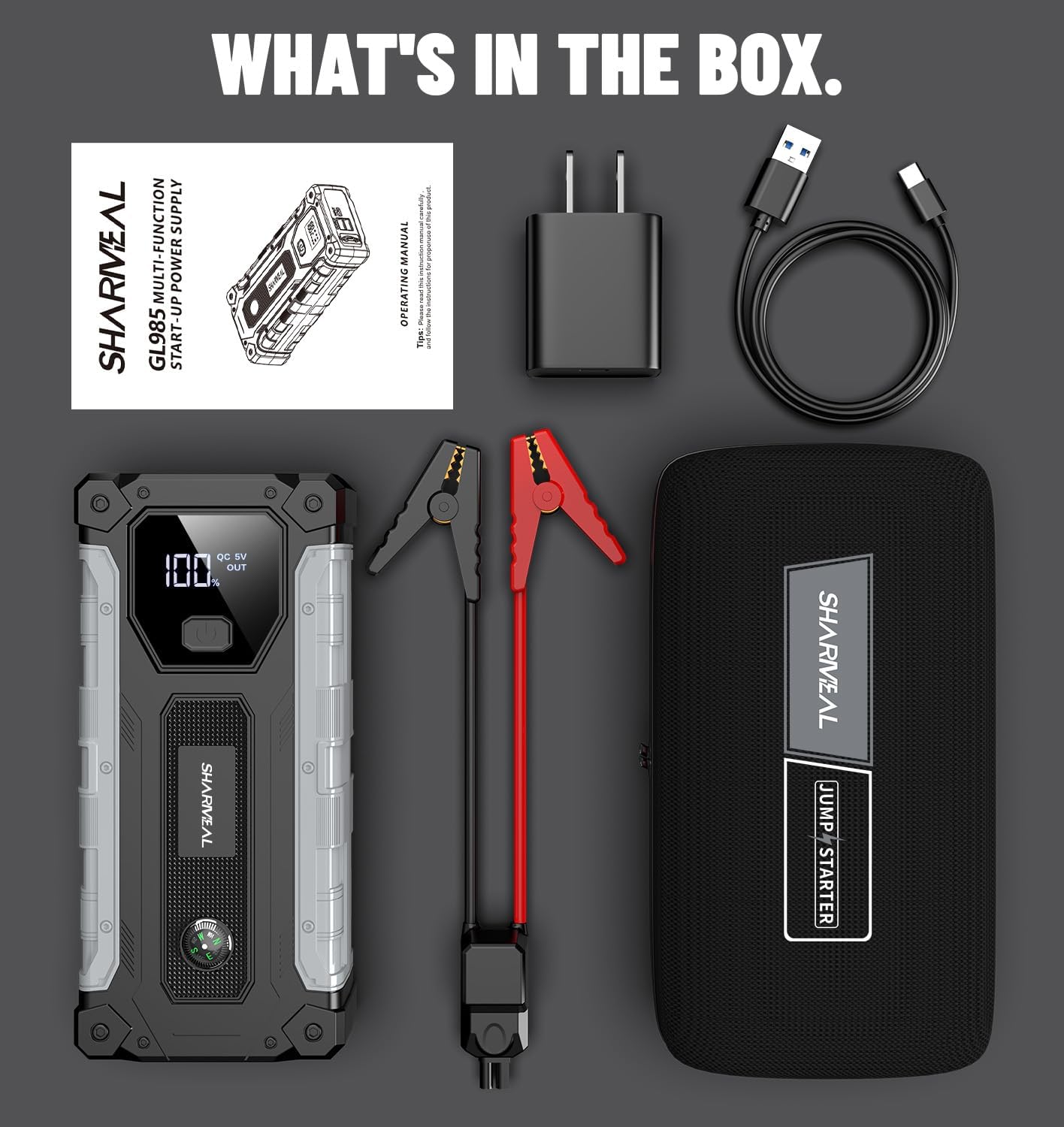
Charging the Sharmeal jump starter
The unit charges via the included Type-C cable. The manufacturer recommends using the original charging cable to ensure optimal charging performance and battery health.
You should be aware of a few key points:
- Charging time will vary depending on the wall charger’s output. Use a suitable USB power adapter and avoid low-quality chargers.
- Avoid leaving the jump starter discharged for long periods. Periodic top-ups will help maintain battery health.
- If you don’t use it frequently, perform a recharge at least every few months so it’s ready when you need it.
You’ll want to store the unit somewhere dry and not exposed to extreme heat or cold, since temperature extremes can reduce battery performance and lifespan.
USB power bank capabilities
You’ll enjoy the dual USB 5V/2A outputs for charging phones, tablets, and other small USB devices. This makes the unit useful beyond emergency starting — it’s handy for topping up devices during trips.
Be realistic about laptop charging: many modern laptops require USB-C Power Delivery at higher voltages and wattages (e.g., 30W–100W). This jump starter’s 5V/2A outputs deliver about 10W max per port, so it can charge phones and small USB accessories quickly but won’t fast-charge most laptops. If your laptop accepts 5V USB charging and runs on low power, it may charge slowly.
You’ll find the dual ports useful for keeping your phone and a second device running while you handle roadside tasks or wait for help.

LED light and emergency lighting modes
You’ll find a 400-lumen LED built into the unit with three modes: steady flashlight, strobe, and SOS. That’s bright enough for roadside repairs, signaling, or lighting up a dark engine bay.
The manufacturer claims the light can last up to 48 hours, which likely refers to lower-intensity modes and intermittent use. In real usage, full-intensity continuous operation will drain the battery faster than intermittent or low-power modes. The multiple modes let you conserve power when you don’t need full brightness and use the SOS mode to signal rescuers in emergencies.
You’ll appreciate that having an integrated light keeps your hands free and reduces the need to carry an extra flashlight.
Real-world performance and reliability
You’re probably most interested in whether it will actually start your vehicle when the battery is dead. In practical situations:
- The unit’s 3000A peak is aimed at big engines like 9.0L gas and 7.0L diesel, so it should deliver the initial surge necessary for high-compression engines.
- Environmental factors (temperature, battery health, engine condition) affect performance. Cold weather reduces both battery output and the starter’s effectiveness, which is typical for all jump starters.
- You should expect multiple starts per full charge, but the exact number will vary. If you frequently need multiple jump starts in a short period, keep the pack charged between uses.
You’ll get reliable results for single or occasional starts. For heavy-duty repeated use (commercial tow work, continuous starts), a dedicated professional-grade unit may be more appropriate.
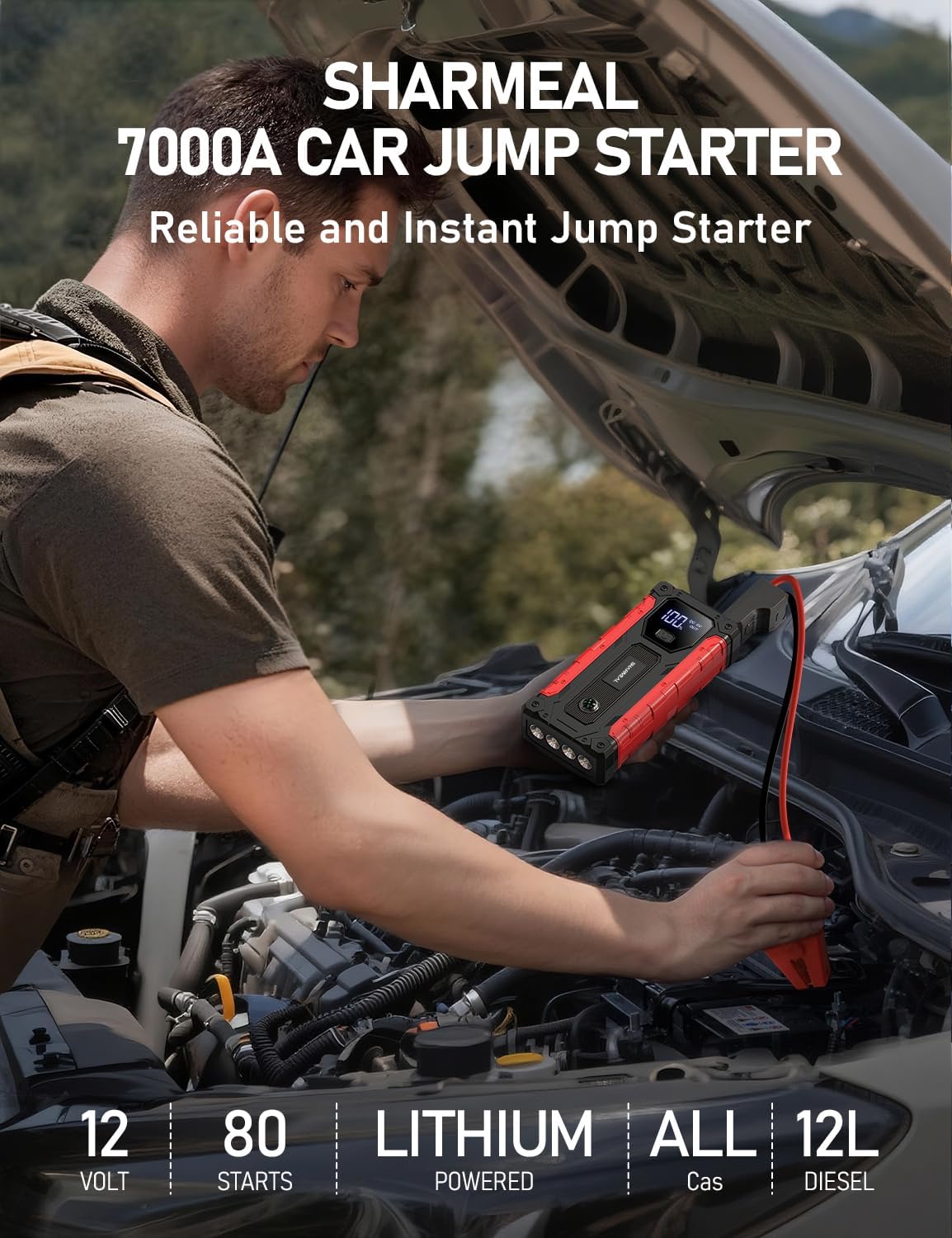
Use cases where this unit shines
You’ll find this unit particularly useful in situations such as:
- Weekend road trips where you want a compact emergency option in the trunk.
- Owners of trucks, SUVs, or older vehicles with higher-displacement engines who want peace of mind.
- Remote or rural areas where you might wait for roadside assistance and need a reliable source of power.
- Motorcyclists, ATV owners, or small-engine users who want a lightweight multi-use pack.
- Keeping in an RV or on a tractor for farm use where 12V starts are frequently needed.
You’ll appreciate the versatility: jump starts, phone charging, and emergency lighting make it more than just a basic booster.
Limitations and realistic expectations
It helps to set realistic expectations so you’re not disappointed:
- Peak amps do not equal continuous power. Don’t assume unlimited starts or continuous high-current output.
- The USB ports are limited to 5V/2A; they’re not intended for high-wattage laptop charging unless the laptop supports low-power USB charging.
- Extremely cold temperatures reduce performance. If you live in severe winter climates, consider storing the pack in a temperature-moderate area when possible.
- If your vehicle has other electrical issues beyond a dead battery (starter motor failure, alternator problems, major corroded terminals), a jump starter won’t fix those.
You’ll avoid surprises if you plan for these practical limitations and include routine maintenance and charging in your prep.
Troubleshooting common issues
When something doesn’t work as planned, here’s how you can troubleshoot:
- Unit won’t turn on: Ensure the internal battery is charged with the original Type-C cable. Confirm cable and charger are functioning.
- Vehicle doesn’t start: Check clamp connections. Make sure the clamps are attached in the correct order and the green light indicates successful connection. Wait a minute and retry. If it still won’t start, the vehicle might have an issue beyond a dead battery.
- Indicator lights behave oddly: Remove and reconnect the jumper cables. Consult the user manual for specific light codes. If the lights indicate a fault, disconnect and inspect clamps and connections for damage.
- USB charging fails: Test the USB ports with a known-good cable and device. Verify the jump starter has sufficient charge.
You’ll want to keep the user manual handy for any device-specific LED codes and error indicators.
Maintenance tips to keep it ready
You’ll want this unit to be ready when you need it. Follow these tips:
- Charge the jump starter after any use and at least every few months if it sits idle.
- Store in a cool, dry place. Avoid leaving it in extreme heat or cold for long stretches.
- Inspect clamps and cables regularly for damage or corrosion.
- Use the original Type-C cable provided for charging when possible, as the manufacturer recommends it for optimal charging performance.
- Keep the carrying case dry and clean to prevent moisture-related issues.
You’ll preserve battery life and readiness with minimal maintenance.
Included accessories and warranty
You’ll receive a practical kit that includes the essentials:
- Jump starter main unit
- Smart jumper cables (integrated, insulated)
- Type-C charging cable (use this for best results)
- User manual with operation steps and safety information
- Portable carrying case to keep everything together
The product comes with a 24-month warranty, which gives you decent coverage for defects or early failures. You’ll want to register the device (if required) and follow the warranty terms for claims.
Pros and cons summary
You’ll find this straightforward pros and cons list helpful when weighing the purchase decision.
Pros:
- High peak current (3000A) for large-displacement engines
- Compact and portable design with a protective carrying case
- Integrated 400-lumen LED light with three modes for emergency use
- Dual USB outputs to keep phones and small devices charged
- Smart clamps and multiple safety protections reduce chance of user error
- 24-month warranty provides reasonable peace of mind
Cons:
- USB outputs are limited to 5V/2A and may not fast-charge most laptops
- Real-world starts per charge will vary and are not precisely specified
- Performance reduced in extreme cold like most batteries
- No built-in AC outlet or USB-C PD for higher-wattage devices
You’ll find these points helpful in deciding if this pack covers your needs or if you’ll need additional accessories.
Comparison with other jump starters (general guidance)
You’ll see many jump starters on the market. Here’s how the Sharmeal model compares in general terms:
- Against low-amp pocket jump starters: The 3000A peak gives you a sizeable advantage for larger engines versus 400–1000A pocket-style units.
- Against heavy-duty professional packs: Some professional devices offer sustained cranking amps, better repeated-start capability, and high-wattage USB-C PD; those are larger and heavier but built for continuous heavy use.
- Against multi-function power stations: Power stations offer AC outlets and higher wattage USB-C PD for laptops but are bulkier and not optimized just for jumps.
You’ll want to match the unit to your priorities: portability and strong peak cranking power versus heavyweight repeat performance or multi-device high-watt charging.
Who should buy this
You should consider this Sharmeal jump starter if:
- You own a large-engine vehicle (truck, large SUV, diesel) and want a compact emergency starter.
- You value portability and a lighter pack compared to bulky jump boxes.
- You want an integrated emergency light and basic device charging on the go.
- You like the safety features such as intelligent clamps and multiple protections.
You’ll get good value if your main use cases are occasional emergency starts and powering small devices on trips.
Who might want something else
You might want a different unit if:
- You need high-wattage laptop charging via USB-C PD frequently.
- You perform repeated multiple starts in a commercial setting and need sustained high current and rapid recharge cycles.
- You require in-car AC power or a full power station for appliances.
You’ll be better served by a heavier-duty or higher-output unit in those scenarios.
Practical tips for buying and using
A few pragmatic suggestions to help you get the most from this purchase:
- Always buy from a reputable seller and verify the warranty and return policy.
- Keep the original charging cable in the case so you don’t lose the recommended cable.
- Practice the connection process at home so you’re familiar with the lights and steps before you need it in a stressful situation.
- If you live in extreme climates, consider a small insulated bag or keep the unit in a temperature-moderate place when possible.
- Label the unit inside your glove compartment or trunk with a brief instruction sticker so others can use it if needed.
You’ll be much more confident in an emergency if you’ve practiced and kept the unit charged and accessible.
Troubleshooting advanced scenarios
If you run into more unusual problems, here are a few additional checks:
- If the pack won’t charge at all, test the Type-C cable with another device and the charger with a different cable. If neither works, the pack may need service under warranty.
- If the clamps indicate reverse polarity repeatedly, inspect the clamp sensors and look for internal damage or heavy corrosion on vehicle terminals.
- If the light or USB ports won’t power up despite a full charge, there may be an internal fuse or protection in a triggered state; consult the manual for reset instructions or contact support.
You’ll often resolve issues with systematic isolation of cable, charger, and clamp problems before concluding a hardware fault.
Final verdict
You’ll find the Sharmeal Car Jump Starter 3000A, Jump Starter Battery Pack for 9.0L Gas and 7.0L Diesel, 12V Portable Jump Box with LED Light a strong candidate if you want a portable, safety-focused booster with a high peak start rating. It’s a well-rounded option for drivers of larger vehicles who want compact convenience, a built-in light, and the convenience of basic device charging.
You’ll get a lot of practical utility from the smart clamps, the multi-protection design, and the included accessories. Just remember the realistic limitations regarding USB power output and battery behavior in extreme cold, and follow the manufacturer’s charging recommendation to keep it ready.
Frequently asked questions (FAQs)
You’ll likely have a few final questions; here are answers to common ones.
Q: Can this jump starter charge my laptop? A: The unit has dual USB 5V/2A outputs (about 10W each). Many laptops require higher voltage and wattage through USB-C PD, so this jump starter is best for phones and small USB devices. Check your laptop’s charging specs before relying on it.
Q: How many times can it start my vehicle on a single charge? A: The manufacturer does not state a fixed number because it depends on engine size, battery condition, temperature, and how long you crank. Expect multiple starts under normal conditions but fewer in cold weather or with severely discharged batteries.
Q: Is it safe to use by yourself? A: Yes, the intelligent clamps, full insulation, and multiple protections are designed to make single-person use safer. Still, follow the step-by-step connection method and basic safety precautions.
Q: Do I need to use the included cable to charge it? A: The manufacturer recommends the original Type-C cable for best charging performance. Using the provided cable reduces the chance of charging anomalies and helps maintain battery health.
Q: What does the green light on the smart clamp mean? A: A green light indicates a successful connection between the clamps and the vehicle battery (proper polarity and sufficient contact). If the light remains red or flashes differently, refer to the manual for exact indicator codes.
You’ll find these answers useful, but if you have a specific scenario or vehicle type in mind, tell me and I can provide tailored advice.
Disclosure: As an Amazon Associate, I earn from qualifying purchases.