
Looking for a reliable, fast-charging portable power station that fits in your car and can power essentials at camp or during a power outage?

Quick overview
You get a compact, fast-charging power station with the EF ECOFLOW Portable Power Station River 2 Max 500, 499Wh LiFePO4 Battery/ 1 Hour Fast Charging, Up to 1000W Output Solar Generator (Solar Panel Optional) for Outdoor Camping/RVs/Home Use. It’s designed to be lightweight while giving you enough capacity and output to run multiple devices concurrently, and it comes with a five-year service plan for added peace of mind.
Key features at a glance
The River 2 Max 500 charges from empty to full in one hour using standard AC outlets thanks to EcoFlow’s X-Stream fast-charging technology, which is exceptionally convenient if you need power quickly. You also get LiFePO4 battery chemistry for long cycle life, the ability to accept 220W solar input for fast solar charging, and a maximum output rating up to 1000W so you can run many essentials at once.
Detailed specs table
Below is a clear breakdown of the most important technical details so you can quickly see if the River 2 Max 500 fits your needs. The values come from the product’s official details and practical calculations for typical use.
| Specification | Detail |
|---|---|
| Model | EF ECOFLOW River 2 Max 500 |
| Battery capacity | 499 Wh |
| Battery chemistry | LiFePO4 (LFP) |
| AC recharge time (AC) | 1 hour (X-Stream) |
| Solar recharge time (220W input) | As fast as 2.3 hours |
| Maximum output | Up to 1000W |
| Typical AC outlet power | 300W AC outlets mentioned (varies by port) |
| Weight | 13.3 lbs |
| Ports | Multiple AC outlets, USB-C, USB-A, DC ports (variety for essentials) |
| Included | Power station, AC charging cable, user manual, 5-year service |
| BMS features | Monitors voltage, current, temperature |
| Best uses | Camping, RVs, home backup, outdoor activities |
| Warranty / Service | 5-year service included |
What’s included in the package
You’ll receive the River 2 Max 500 power station, an AC charging cable to take advantage of the 1-hour recharge, and a user manual to help you get started right away. EcoFlow provides a five-year service offering to support reliability and long-term ownership.

Design and build quality
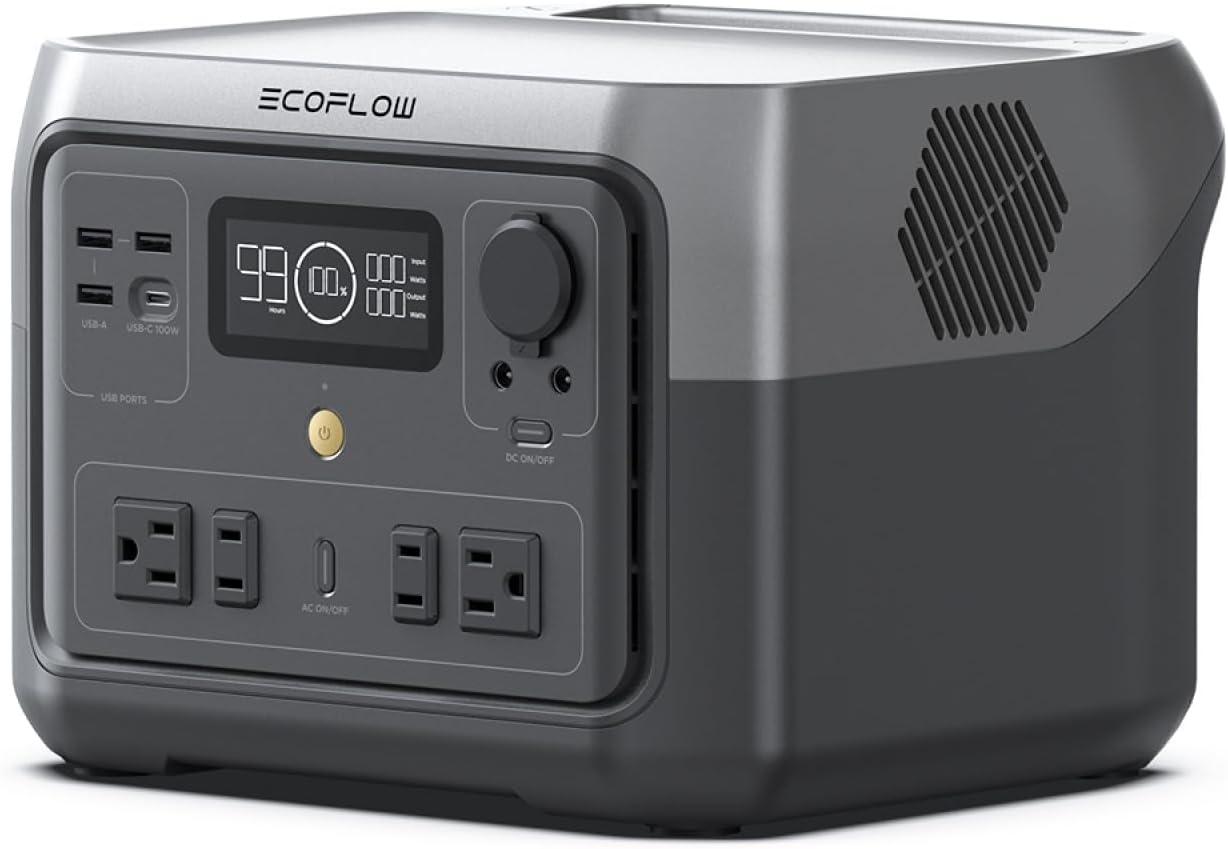
The River 2 Max 500 is built to be portable without feeling toy-like; it balances a compact footprint with robust construction so you can toss it in the trunk and head out. The handle and chassis design are intended for frequent transport, and the materials give you confidence that it will handle the occasional bump while traveling.
Port layout and accessibility
You’ll like that ports are grouped logically so you can plug in a mixture of AC appliances and USB devices without cable spaghetti getting in the way. The layout also reduces the need to constantly swap plugs; you can keep a couple of AC devices and a couple of USB devices connected at the same time with minimal hassle.
Portability and real-world handling
At 13.3 pounds you’ll find the River 2 Max 500 easy to carry for short hikes from car to campsite or for moving around your house during an outage. It’s light enough for one person to manage comfortably while still beefy enough to provide meaningful power for your essential devices.
Storage and transport tips
When you transport the unit, place it upright on a flat surface to avoid putting pressure on ports or buttons, and secure it with straps if you’re moving over rough roads. For longer-term storage, keep it in a cool, dry place and charge it to around 50–70% every few months to maintain battery health.
Battery and longevity
The LiFePO4 cells in the River 2 Max 500 are the major reason this unit is attractive for long-term use — you should expect many more cycles compared to typical lithium-ion chemistries. EcoFlow claims over 10 years of use, and while real-world timelines depend on how you charge and discharge the unit, LFP is widely known for stability and longevity.
Advantages of LiFePO4 (LFP)
Because you’re getting LiFePO4 chemistry, you’ll benefit from higher cycle life, better thermal stability, and reduced risk of capacity loss over time. This makes the River 2 Max 500 a better long-term investment if you plan to use it frequently for camping or as a backup power source.
Battery management system (BMS)
EcoFlow includes an advanced BMS that continuously monitors voltage, current, and temperature to protect the cells and ensure safe operation. That monitoring not only enhances safety but also helps prolong battery life by preventing conditions that could degrade the cells.
Charging options and speed
One of the standout selling points is the 1-hour AC recharge — that’s a game-changer if you need to refill the battery quickly between uses. You also have fast solar charging available when you pair the unit with a compatible solar array, which makes the River 2 Max 500 useful off-grid.
1-hour AC recharge with X-Stream
With X-Stream fast charging technology, you can charge the River 2 Max 500 from empty to full using a standard AC outlet in roughly 60 minutes. That speed is especially useful if you’ve drained the unit during a trip and only have a short window to recharge before leaving.
Solar charging performance (220W input)
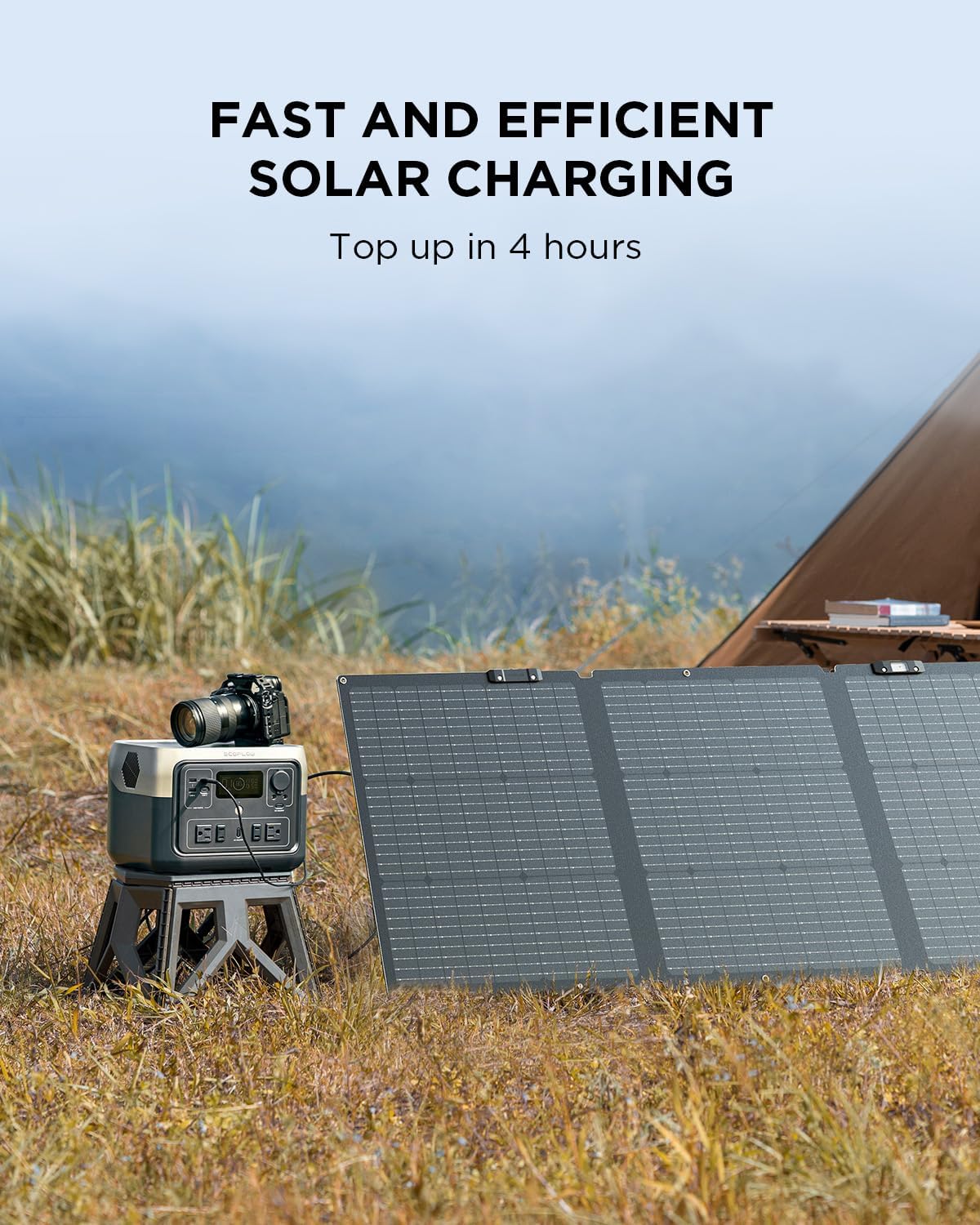
If you’re using solar for off-grid recharging, a 220W solar input can recharge this unit in approximately 2.3 hours under ideal sun conditions. This lets you top the battery quickly during a sunny day, reducing the downtime between uses while you’re outdoors.
Recommended charging strategies
If you have access to both AC and solar, use AC to quickly top up when you’re near a mains outlet and use solar during the day to maintain charge while at camp. For long-term storage or infrequent use, keep the battery partially charged (about 50–70%) and perform periodic top-ups to preserve the LFP cells.
Output capability and how it handles appliances
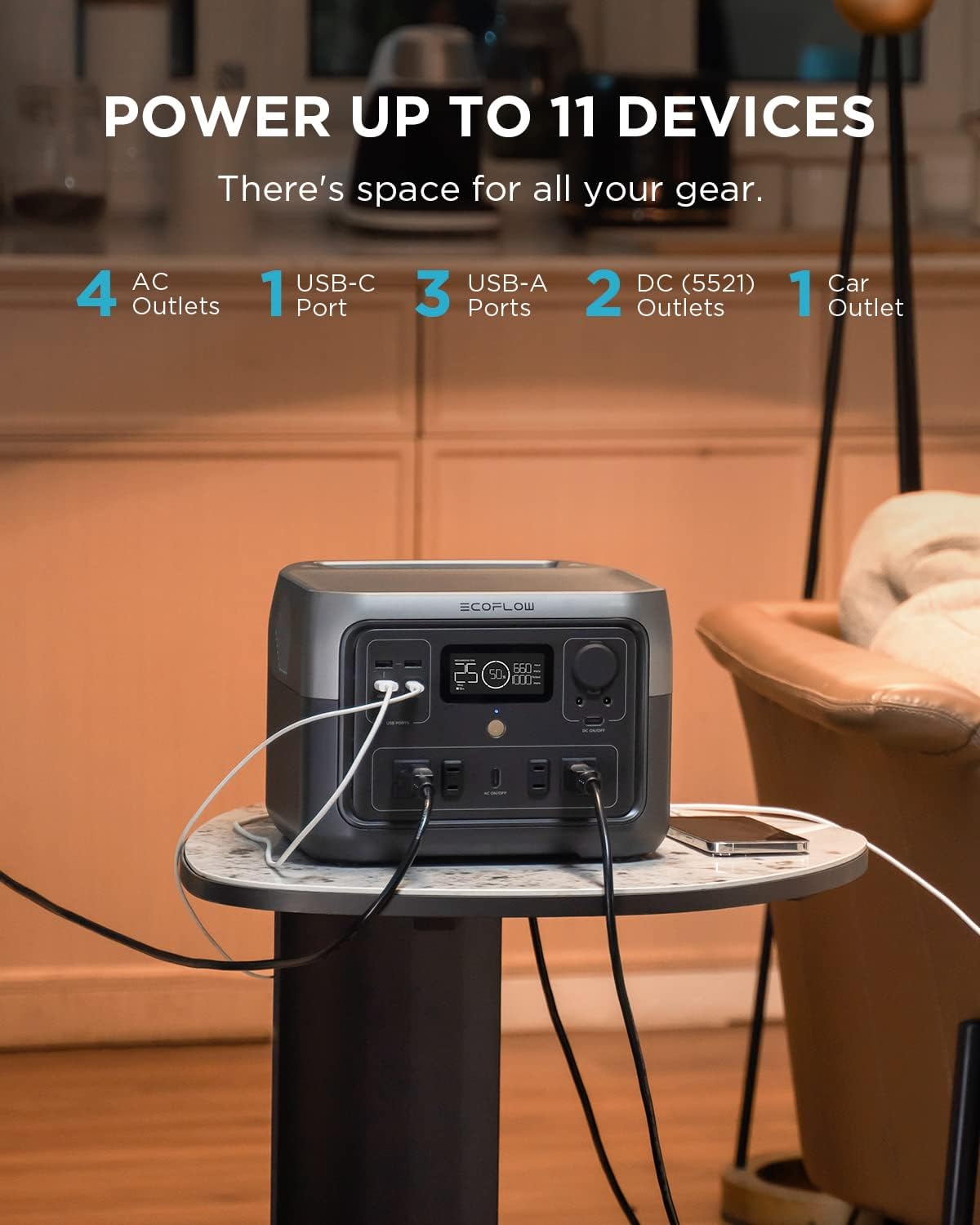
With an output rating of up to 1000W, this power station can run a surprising range of devices — everything from laptops and TVs to small microwaves or blenders depending on the draw. EcoFlow indicates you can run up to 11 essential appliances at once, which usually refers to low-power essentials such as lights, phones, fans, and laptops.
AC output and appliance handling
The AC outlets will run most common household electronics, though high-startup appliances with very large surge demands (larger air conditioners, large full-size refrigerators, electric ovens) may exceed the 1000W limit or require checking the starting surge. You’ll want to check device wattages before connecting heavy appliances to avoid overloading.
USB, USB-C, and DC ports
You’ll also have USB-C and USB-A ports for fast charging phones, tablets, cameras, and smaller electronics without needing an inverter. These ports make the River 2 Max 500 practical for modern devices, and you won’t need separate power bricks for every gadget.
Real-world performance and estimated runtimes
To help you plan, here are common devices and realistic run-time estimates using the 499Wh capacity. Numbers are approximate and assume average power draws; actual runtime depends on device efficiency and usage patterns.
| Device / Load | Typical power draw (W) | Estimated runtime (hours) |
|---|---|---|
| Smartphone charging (10W) | 10 W | ~40–50+ hours (multiple charges) |
| Laptop (60 W) | 60 W | ~6–8 hours |
| LED camp lights (2 × 10 W) | 20 W | ~20–25 hours |
| CPAP machine (30–60 W) | 45 W (avg) | ~8–10 hours |
| Mini-fridge (60 W continuous) | 60 W | ~6–8 hours (longer if fridge cycles) |
| TV (LED, 50–80 W) | 70 W | ~6–7 hours |
| Blender / coffee maker (300 W continuous) | 300 W | ~1–1.5 hours |
| Portable fan (20–40 W) | 30 W | ~12–15 hours |
How to read these numbers
These estimates assume you’re not frequently hitting the maximum inverter output or using features that reduce efficiency. For devices with motors or compressors (fridges, pumps), initial start-up current can be higher than continuous draw, so keep some margin. The LFP chemistry and BMS mean you can use a large portion of the 499Wh capacity safely, but plan to leave a buffer for unexpected needs.
Typical scenarios and use cases
You can use this power station for a weekend camping trip, powering small appliances and charging devices in an RV, or keeping essentials running at home during a short outage. The combination of fast AC charging and optional rapid solar charging means you’ll rarely be stuck without a way to replenish the battery.
Camping and overland trips
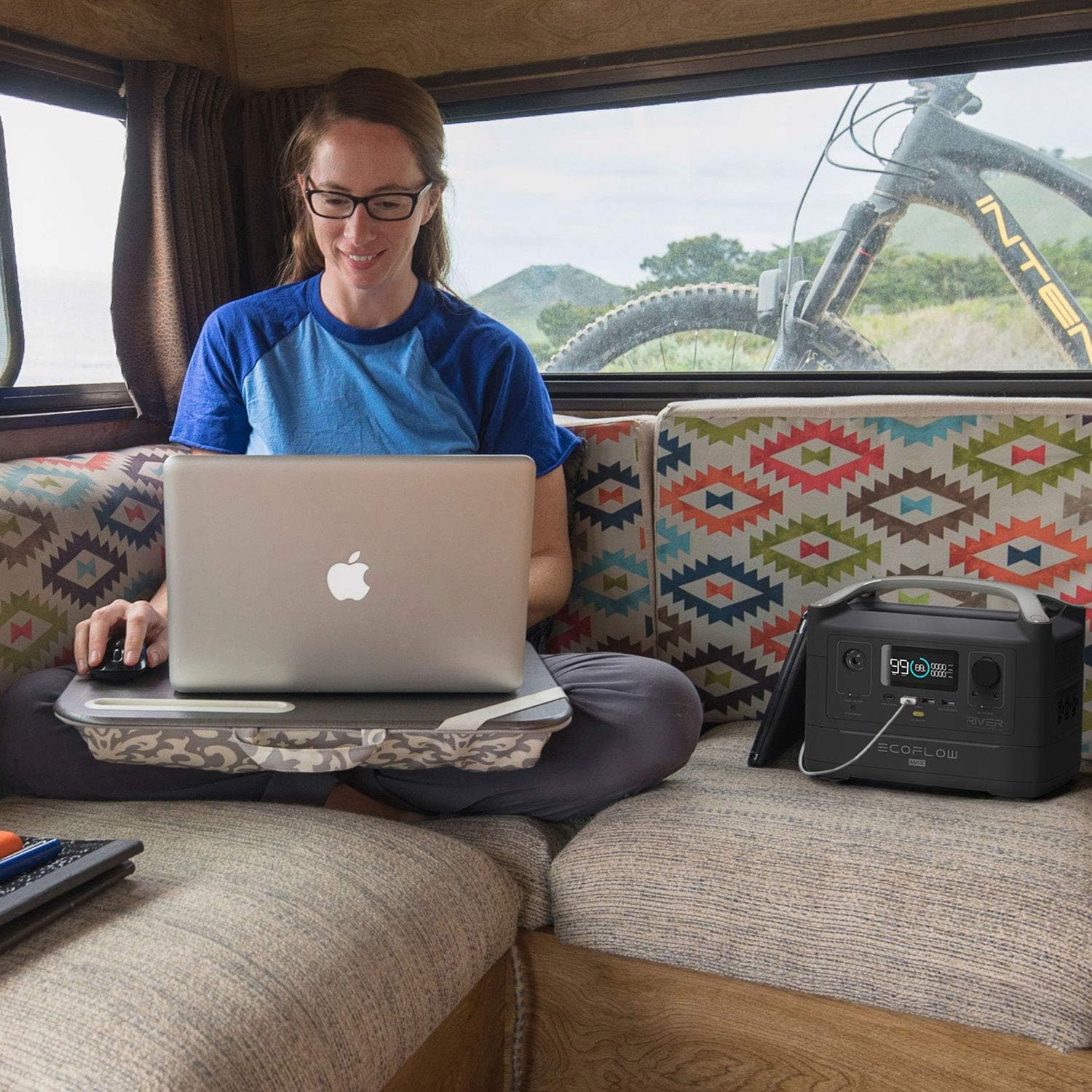
At camp, the River 2 Max 500 can run your lights, charge cameras and phones, run a small fridge or cooler for a day, and power a speaker or small induction stove for short bursts. Its portability and solar compatibility make it convenient for multi-day stays where you want to stay connected and comfortable.
RV and vanlife
For smaller RVs and vans where power needs are moderate, you can use this as an auxiliary power source to reduce reliance on the vehicle alternator or campground hookups. It’s particularly handy for running laptops, small fridges, LED lights, and charging devices while you’re parked.
Home backup and emergency use
Use this unit to keep critical devices alive during a power outage: charge phones, run Wi-Fi routers, power lights, and keep medical devices like CPAP machines running for a night or more depending on usage. Because it charges quickly via AC, you can plug it into a generator or another power source to refill it efficiently if outages are extended.
Safety features and reliability
The advanced BMS and LFP chemistry together make this unit inherently safer and less prone to thermal runaway compared to standard lithium-ion batteries. You benefit from monitoring and protections that reduce risk and help maintain consistent performance over many cycles.
Environmental considerations
Using solar to recharge the River 2 Max 500 reduces your reliance on fossil fuels and lowers your environmental footprint while camping or during emergency situations. The long lifespan of LFP cells also means less frequent battery replacement, which is better for the planet than systems requiring frequent battery swaps.
Maintenance and care
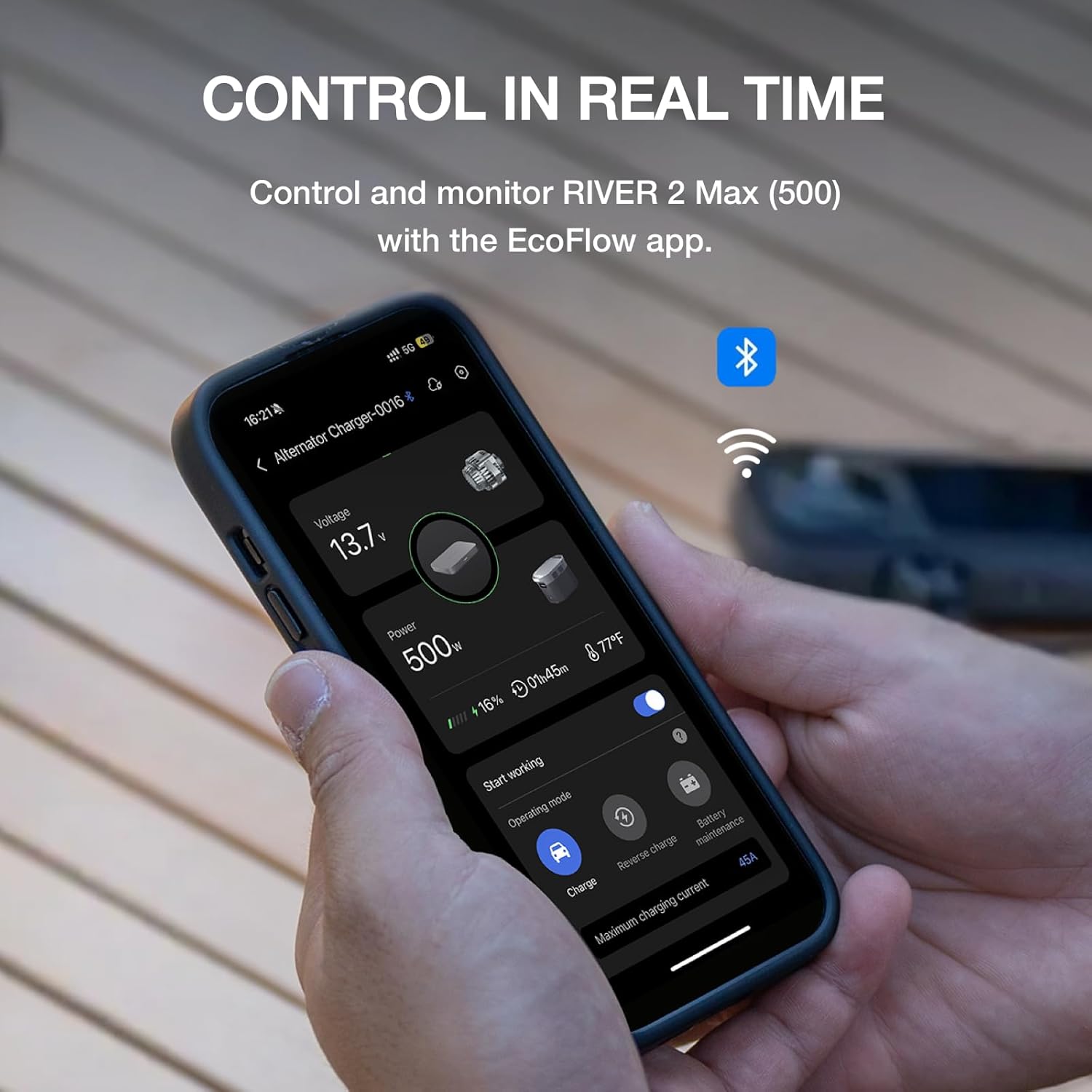
Caring for the River 2 Max 500 is straightforward: keep it clean, avoid exposing it to extreme temperatures for extended periods, and store it partially charged for long-term storage. Regular firmware updates (if applicable via EcoFlow apps) and periodic checks of charge cycles will help you get the most life from your unit.
Storage best practices
If you won’t use the unit for a while, store it at a partial charge and recharge it every few months to avoid deep-discharge conditions. Keep it in a dry, temperature-stable environment to preserve the battery and the unit’s electronics.
Pros and cons
You’ll appreciate the speed and longevity of the River 2 Max 500, but there are trade-offs to consider depending on your needs.
Pros:
- Extremely fast 1-hour AC recharge reduces downtime between uses.
- LiFePO4 battery chemistry offers long cycle life and better stability.
- Lightweight and portable at 13.3 lbs for easy transport.
- Fast solar recharge possible with 220W panels in around 2.3 hours.
- Up to 1000W output covers many appliances and simultaneous devices.
- Advanced BMS monitoring keeps operations safe.
- Five-year service included for added confidence.
Cons:
- 499Wh capacity is substantial for many uses but may be limiting for extended off-grid trips without solar top-up or a larger system.
- High-startup appliances or extended power needs may require a bigger system or additional units.
- You’ll need to purchase solar panels separately if you want the fastest solar recharge; they’re optional and not included.
Tips to maximize value and lifespan
To get the most from the River 2 Max 500, avoid constantly running the battery to absolute zero; use a mid-range discharge where possible and recharge before outings. Pair it with a suitable 220W solar panel if you’re frequently off-grid and want fast recharges during the day, and keep it updated and maintained.
Best practices for daily use
For everyday use in home backup scenarios, keep the unit connected to a trickle charge or top it off regularly so it’s ready when you need it. For camping, plan your power budget using the runtime estimates above and prioritize essential loads like refrigeration, lighting, and medical devices.
Comparison and alternatives
If you’re deciding between this and other sizes or brands, think about the trade-off between weight, capacity, and recharge speed. The River 2 Max 500 is excellent if you value rapid recharge and portability, but if you need multi-day capacity without solar, look at larger-capacity options or consider pairing multiple units.
When to choose a larger system
If you’re planning long off-grid stays without reliable solar or need to run high-wattage appliances for extended periods, a larger battery bank or a modular setup that allows expansion will serve you better. The River 2 Max 500 shines for relatively compact and mobile setups.
Who should buy the River 2 Max 500
You should consider this unit if you want a lightweight, fast-charging power station that can handle multi-device charging, small appliances, and moderate loads while being easy to transport. It’s an excellent fit for campers, RVers, small-home backup use, and anyone who prioritizes fast recharge and long battery life.
Who might want something different
If your daily power needs include running full-size refrigerators or electric heaters, or you rarely have the option to recharge via solar or AC quickly, look at higher-capacity or expandable systems that better match sustained heavy loads.
Setup and first-use checklist
When you open the box, inspect the unit and accessories, charge the battery fully using a standard AC outlet before first use, and register the product for the five-year service. Keep the manual handy and consider planning a short test run to measure actual runtimes for the specific devices you’ll use.
Recommended accessories
If you plan to use solar frequently, buy a 220W (or compatible) solar panel to take advantage of the 2.3-hour solar recharge claim under good sun. Additional accessories like a car charging cable (if supported) or a protective carrying case can make transport and everyday use easier.
Final verdict
If you want an easy-to-carry power solution with rapid recharge times, long-term battery life, and enough output for multiple essentials, the EF ECOFLOW Portable Power Station River 2 Max 500 is a compelling option. Its combination of 1-hour AC recharge, LiFePO4 reliability, solar compatibility, and a 1000W output rating makes it versatile for camping, RV trips, and short home outages.
Bottom-line recommendation
You’ll get the most satisfaction from this unit if you value portability, fast refueling of the battery, and a long-lasting LiFePO4 battery chemistry. If your priorities include maximum runtime without recharging, then consider pairing this with fast solar panels or evaluating a larger-capacity alternative, but for many users, this balances convenience and power extremely well.
Disclosure: As an Amazon Associate, I earn from qualifying purchases.