
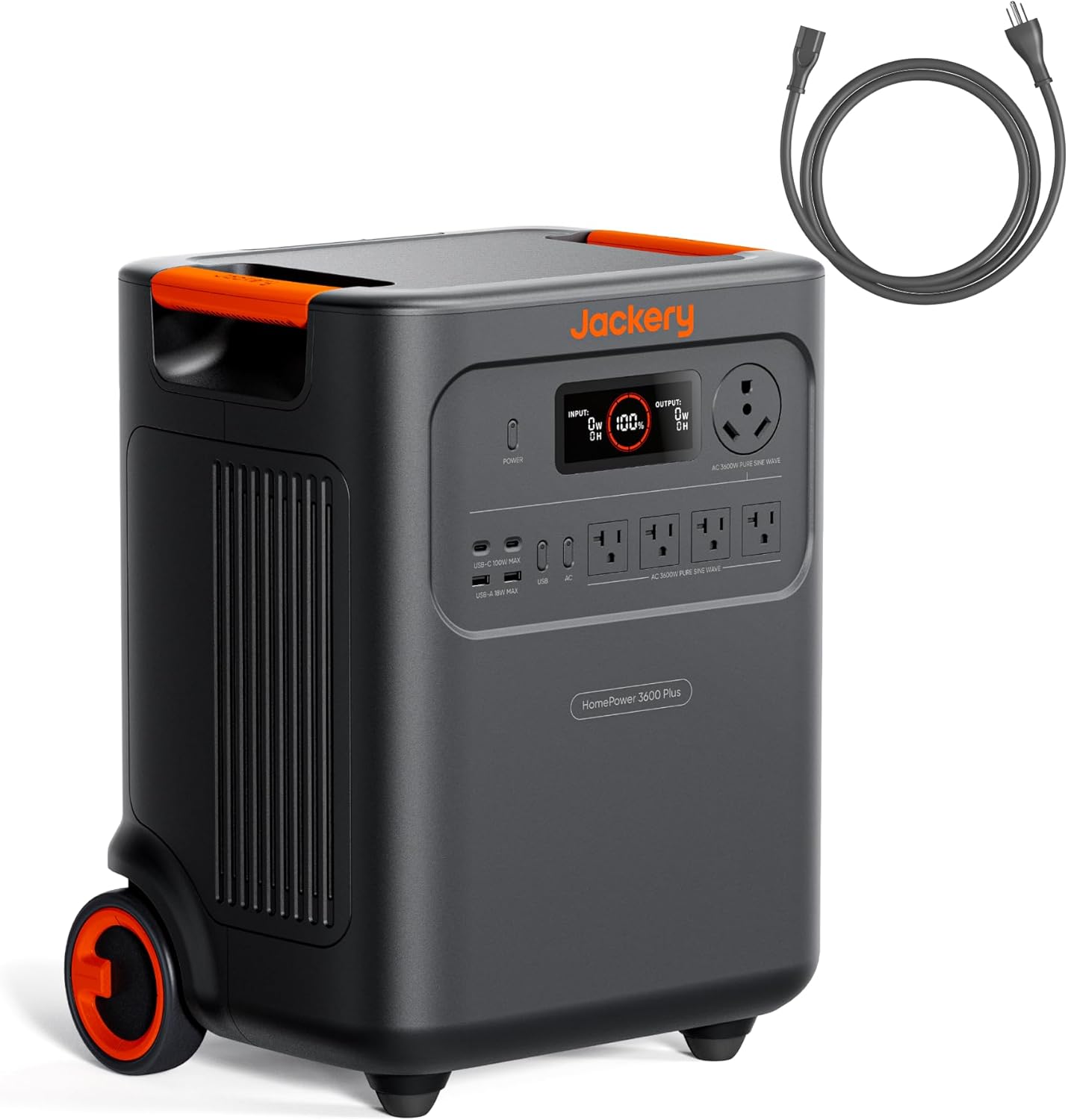
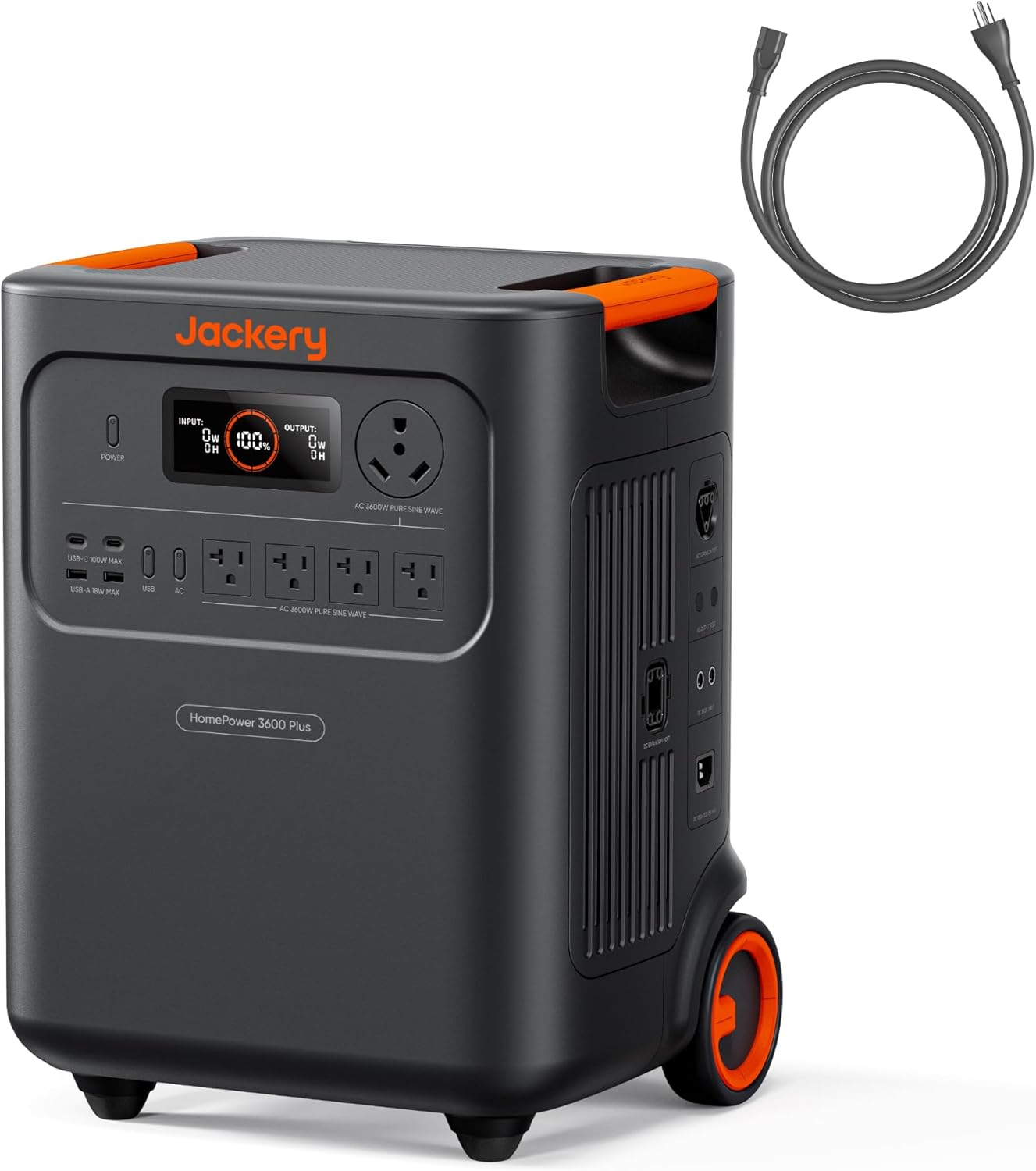
? Are you trying to decide if the Jackery HomePower 3600 Plus Portable Power Station is the right home backup for your needs?

Quick verdict
You get a lot of capability in a single, transportable unit with the Jackery HomePower 3600 Plus. It combines a high continuous AC output, a Lithium Iron Phosphate (LFP) battery rated for thousands of cycles, and multiple fast charging options so you can keep essential circuits and appliances running through outages.
Who this is for
If you want a reliable, plug-and-play home backup that’s easy to move around and can scale up as your needs grow, this unit is designed with you in mind. It’s especially useful if you need 240V capability in parallel, want fast recharge times, or live in an area where outages are frequent.
Who this is not for
If you need tiny, lightweight emergency power for just a phone or a handful of devices, this is more capacity than you probably need. If you prefer a fully hardwired whole-home transfer solution installed by an electrician, you may want a permanent generator or professionally installed battery system instead.
Key specifications
Below is a clear breakdown of the most important specs so you can compare and plan around them. These figures come from the product details and standard arithmetic using the spec sheet.
| Item | Specification |
|---|---|
| Model | Jackery HomePower 3600 Plus Portable Power Station |
| AC Output (per unit) | 3600W continuous |
| Parallel/Combined Output | 7200W in parallel (with compatible units) |
| Voltage | Dual voltage (120V & 240V in parallel) |
| Battery Capacity | 3584 Wh (LFP) |
| Expandable Capacity | Up to 21 kWh per unit; up to 43 kWh with multiple units (manufacturer-stated) |
| Battery Chemistry | LFP (Lithium Iron Phosphate) with ceramic membrane cells |
| Cycle Life | ~6,000 cycles |
| Expected Lifespan | 10 years (manufacturer-stated) |
| Fastest Charge Time | 0–100% in ~2 hours (hybrid AC + DC) |
| AC Charge Time | ~2.5 hours |
| Solar Charge Time | ~4 hours (when using suitable solar array) |
| Gas Generator Charge Time | ~2.5 hours |
| Low Temperature Operation | Rated to operate in -4 °F (manufacturer-stated) |
| Thermal Test Rating | Cells tested at 302 °F (ceramic membrane safety test) |
| Portability Features | Wheels, telescopic handle, luggage-style design |
| Relative Size/Weight | 34% smaller and 29.3% lighter than comparable 3.6 kWh LFP models (manufacturer-stated) |
| Plug-and-Play | Yes; supports pairing with MTS (transfer switch accessory) |
You’ll find these specifications helpful when you plan runtimes, charge sources, and whether you’ll need expansion batteries or an extra unit.

Performance: AC output and load handling
You can run demanding appliances with confidence because the 3600W continuous AC output handles many large loads that smaller power stations can’t. That level of continuous power means you can run pumps, heaters, or dryers without immediate overload issues.
Running heavy appliances
A 3600W continuous output lets you operate medium-to-large appliances that require high surge or steady wattage for extended periods. You should, however, check each appliance’s startup surge to ensure the initial draw doesn’t exceed the unit’s inverter surge capacity (and consult the manual for maximum surge limits).
Parallel and dual-voltage capability
If you need more power, two units in parallel boost your output to 7200W, and the system supports dual voltage behavior—120V by itself and 240V when units are paired appropriately. That gives you flexibility to run specific circuits or 240V equipment when necessary.
Battery and chemistry: longevity and reliability
This model uses LFP chemistry with a ceramic membrane on the battery cells for improved heat tolerance and stability. LFP is a strong choice for home backup because it typically offers safer thermal characteristics and longer cycle life compared with other lithium chemistries.
LFP cells and safety
The ceramic membrane battery cells have been tested at high temperatures (product literature references testing at 302 °F), which helps prevent thermal runaway in extreme conditions or overcharge situations. That makes the unit more robust under stress and more tolerant of temperature extremes than some other chemistries.
Cycle life and expected lifespan
With a quoted 6,000 cycles and a 10-year lifespan, the battery is engineered for long-term use if you cycle it regularly but responsibly. That means you can expect many years of daily or frequent backup without the rapid capacity fade you might see in lower-cycle batteries.
Charging options and times
You get four different charging methods, so you can adapt to whatever power source is available. Fast recharge options mean you won’t be left powerless for long during short windows of grid availability.
Hybrid AC + DC (fastest charging)
Using hybrid AC+DC charging, you can recharge from 0 to 100% in about two hours, giving you the fastest possible recovery when you have multiple sources available. This is useful if you want minimal downtime after a long outage day.
AC charging
If you have access to mains power, AC charging fills the unit in approximately 2.5 hours. That’s quicker than many other battery stations with similar capacities, and it lets you restore most of your household capability within a few hours.
Solar charging
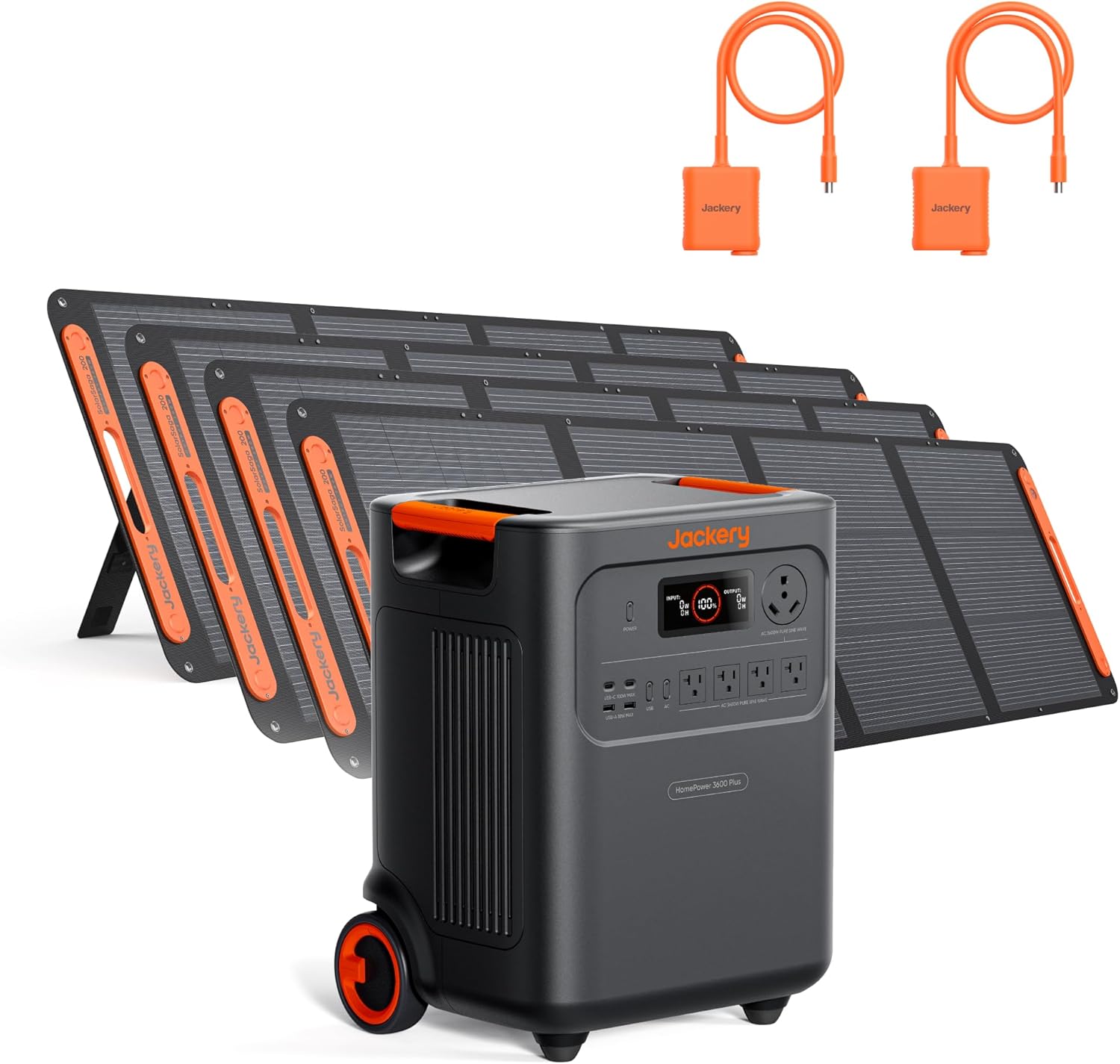
With a suitable solar array, the HomePower 3600 Plus can recharge in about 4 hours according to the product specs. Solar is quieter and cleaner, and if you pair the station with panels and sunlight, you’ll extend your runtime while avoiding fuel or noisy generators.
Gas generator charging
If you prefer a generator as a charge source, you can recharge the unit in about 2.5 hours using a gas generator. That’s a practical backup when sunlight is limited and the grid is out for prolonged periods.
Expandability and scalability
If your needs change over time, the system is designed to scale—both per-unit expansion and multi-unit parallel setups are possible. The product states it can expand to 21kWh per unit and up to 43kWh when multiple units are combined, which is useful if you want to gradually increase backup capacity.
How expansion helps you
Growing capacity lets you maintain critical loads for longer without buying a separate whole-house system upfront. You can start with a single unit and add another later to increase power and runtime.
Portability and design
The HomePower 3600 Plus is built to be more transportable than typical home-grade LFP stations. Jackery emphasizes a luggage-style form factor with active wheels and a telescoping handle for easy movement around the house or garage.
Wheels and telescopic handle
The rolling design means you don’t have to lift the entire weight when you move the unit between rooms or to a vehicle. That’s particularly helpful if you plan to use it in different areas like the kitchen during an outage and the garage during maintenance.
Size and weight compared to competitors
According to the manufacturer, it’s 34% smaller and 29.3% lighter than comparable 3.6 kWh LFP models, which makes handling and stowing easier. If you need mobility combined with high capacity, the smaller footprint will be noticeable when you’re maneuvering it through doorways or up a short flight of stairs.
Safety and thermal management
You benefit from multiple safety design decisions—battery chemistry, ceramic membrane protected cells, and thermal testing—that reduce the risk of thermal runaway or premature aging. The unit is intended to maintain safe operation even in challenging conditions.
Temperature tolerance and cold-weather operation
Jackery lists operation down to -4 °F, meaning it can operate in colder climates where other batteries might be restricted or require special enclosures. For very cold or very hot conditions, you should still follow the recommended storage and operation guidance in the user manual to preserve cycle life.
Setup and everyday use
You don’t need a complicated installation to start using the HomePower 3600 Plus—its plug-and-play nature lets you power essentials quickly. It’s built for everyday readiness, not just emergency use, so you can use it for planned power shifts as well.
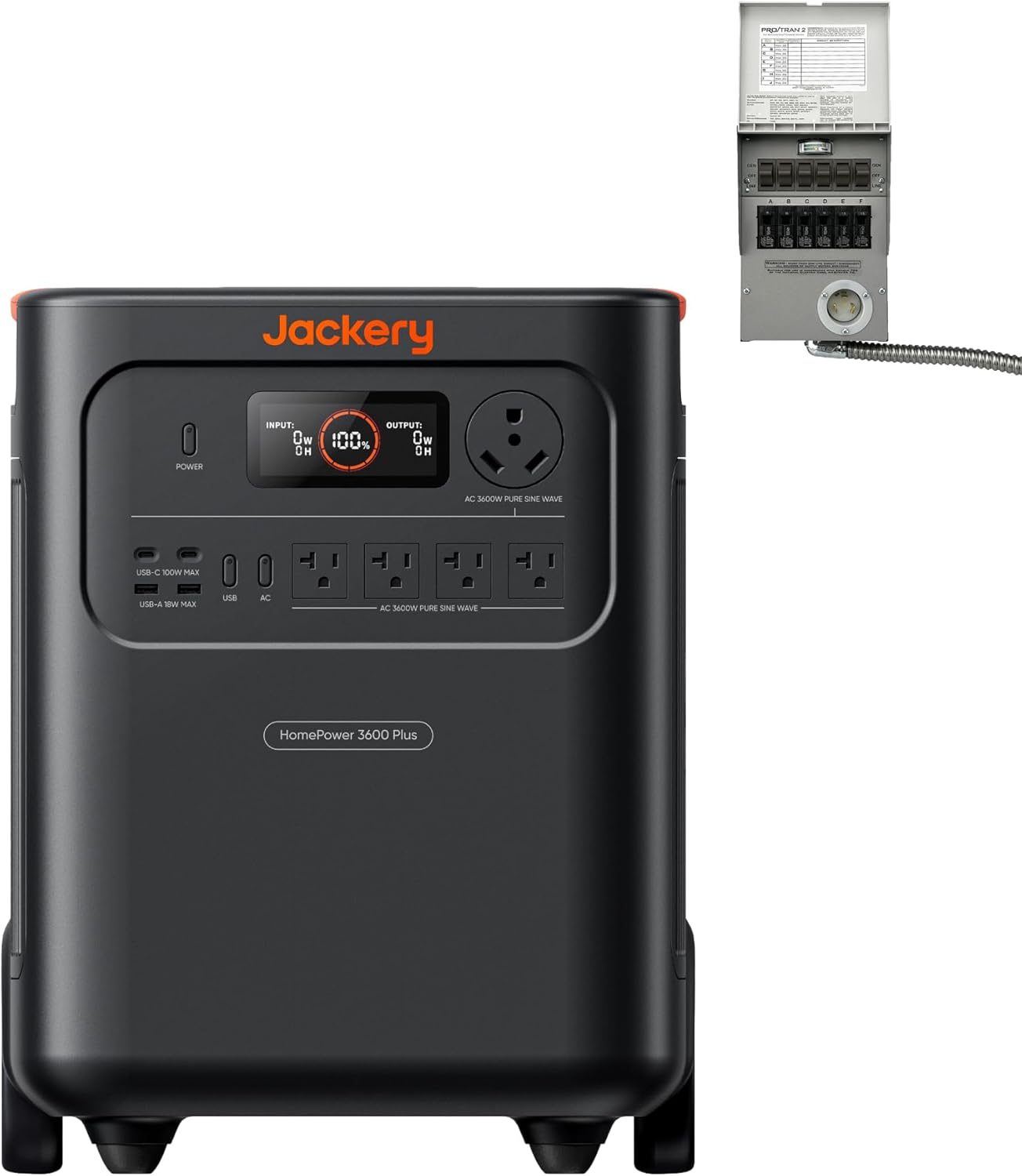
Using it with MTS
The product notes pairing with MTS, which is a transfer switch accessory that lets you isolate and connect household circuits safely without complex rewiring. When set up properly, this pairing allows you to power critical circuits directly, which is cleaner and safer than ad-hoc extension cord setups.
Practical runtime examples and calculations
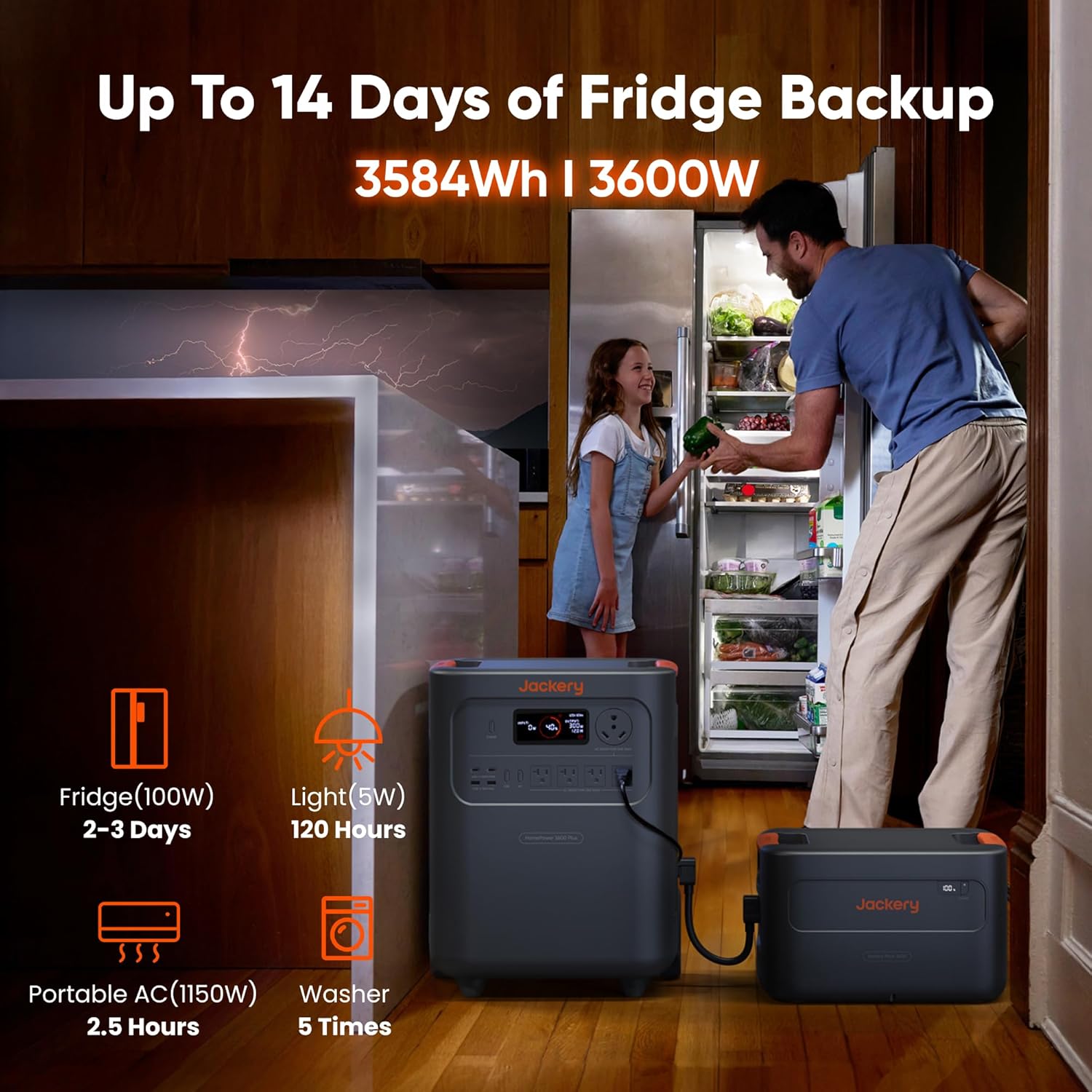
Concrete examples help you plan what to expect during an outage. Below are approximate runtimes based on the 3584 Wh battery, with a simple calculation of battery capacity divided by appliance wattage. These are approximate and don’t account for inverter losses, startup surges, or efficiency differences.
| Appliance | Typical wattage (approx.) | Estimated runtime on 3584 Wh (simple) |
|---|---|---|
| Refrigerator (modern, efficient) | 100–200 W | ~18–36 hours |
| Chest freezer | 150–300 W | ~12–24 hours |
| Well pump | 500–1500 W (running) | ~2.4–7 hours |
| Sump pump | 400–800 W | ~4.5–9 hours |
| Electric space heater | 1000–1500 W | ~2.4–3.6 hours |
| Window AC (small) | 800–1200 W | ~3–4.5 hours |
| Laptop (charging) | 50 W | ~71.6 hours |
| Smartphone (charging) | 10 W | ~358 hours |
You should treat these numbers as planning guides rather than guarantees. Real-world runtimes will be lower due to inverter conversion losses and the intermittent cycling of some appliances.
The “3-person household for over 2 weeks” claim
The manufacturer indicates the unit can power a three-person household for over two weeks. That projection typically assumes selective powering of essential loads (fridge, lighting, some electronics) and conservative daily energy budgets—rather than running every appliance at once. If you combine expansion options or add a second unit, that duration increases substantially.
Comparison with alternatives
Compared with other consumer-grade LFP power stations, Jackery’s offering focuses on portability, faster charging, and a strong cycle life. Some competitors may offer higher base capacity or integrated whole-home transfer systems, but they can be larger, heavier, or slower to recharge.
Where it stands against traditional gas generators
Gas generators often provide indefinite runtime with enough fuel, but they’re noisy, require fuel storage, and need routine maintenance. The HomePower 3600 Plus trades infinite runtime for quiet, clean operation, simpler setup, and the option to recharge via solar—making it better for short-to-medium outage scenarios or where quiet operation is valued.
Pros and cons
Below you’ll find a balanced list of the major strengths and trade-offs to consider before buying.
Pros:
- High continuous 3600W AC output supports many household loads.
- Fast recharge options including hybrid AC+DC (0–100% in ~2 hours).
- LFP chemistry with long cycle life (6,000 cycles) and 10-year expected lifespan.
- Expandability up to 21 kWh per unit or 43 kWh with multiple units.
- Portable luggage-style design with wheels and telescopic handle.
- Operates in cold climates and uses thermally hardened battery cells.
- Plug-and-play setup for quick deployment.
Cons:
- A single unit’s 3584 Wh capacity, while substantial, may still be limiting for extended whole-house use without expansion.
- To power full 240V loads or significantly larger homes, you may need multiple units or a different permanent solution.
- Cost of expansion batteries or multiple units can add up compared with a single fixed installation.
- If you need a fully hardwired whole-home transfer that’s professionally integrated, this unit is more of a portable solution than a permanent replacement.
Real-world tips and best practices
You’ll get the most from the unit if you think of it as a flexible, core part of your outage planning rather than a one-size-fits-all solution. Small adjustments in how you use power during outages will make a large difference in runtime.
Smart charging strategy
Keep the battery topped off when you know storms or outages are likely, and use the faster AC/hybrid charge when the grid briefly returns to minimize downtime. If you have solar, charge during peak sun hours and cycle the battery conservatively when possible to maximize longevity.
Load prioritization
Identify critical circuits—lights, refrigerator, well pump, medical devices—and power those first. Avoid trying to run everything at once; stagger big loads, or use the parallel/240V option only for specific high-power devices as needed.
Storage and maintenance
Store the unit in a dry, temperature-stable place when not in use, and follow the manufacturer’s guidelines for long-term storage charge levels (often around 40–60% for long-term storage to preserve battery health for LFP cells). Perform periodic test discharges to confirm health and update your emergency plan.
Setup FAQ
Here are common questions people ask and clear answers to help you plan.
Q: Can you hardwire this to a subpanel? A: The unit is plug-and-play and is designed to work with accessories like MTS (transfer switch). For permanent hardwiring to a whole-house panel, consult a licensed electrician and refer to local electrical codes.
Q: How many solar panels will I need to charge in four hours? A: Solar charging time depends on panel wattage and sun conditions. To reach ~3584 Wh in about 4 hours you’d need roughly 900 W of effective solar input under ideal conditions (since 900 W × 4 h = 3600 Wh), but real-world factors make it sensible to oversize the array.
Q: Can you run medical equipment? A: Many medical devices run fine on inverter power, but you should check device power requirements and consult the device manufacturer. Consider a dedicated, redundant solution for critical life-support equipment.
Q: How noisy is the unit when charging or discharging? A: The unit is designed for quiet operation compared with gasoline generators. Only accessories like gas generator charging will introduce noise when that source is used.
Q: What happens during a cold winter night? A: Jackery cites operation down to -4 °F. Still, battery performance can be affected by extreme cold, so consider an insulated enclosure or placing the unit in a temperature-regulated area if you expect long-duration cold exposure.
Planning an installation and power budget
To make the most of the HomePower 3600 Plus, create a prioritized power budget. List appliances by wattage and required hours per day, then do simple math to estimate daily energy consumption. Always include a buffer for startup surges and inverter inefficiency (typically 10–15%).
Example planning steps:
- List essential loads and their wattage.
- Multiply wattage by expected hours per day to get daily Wh.
- Sum Wh values to get daily energy need.
- Compare daily need to 3584 Wh and consider expansion or energy-conservation measures if needed.
This exercise helps you decide whether a single unit is enough or if you should add batteries, panels, or a second unit for parallel operation.
Warranty and support considerations
Check the warranty terms and local support options before purchase so you know what’s covered and how to get repairs or updates. Jackery typically offers customer support, but warranty details vary so confirm length, coverage, and any shipment or service processes for your region.
What to check before warranty service
Keep purchase documents, serial numbers, and any usage logs that might be requested during a claim. Perform basic troubleshooting (power-cycle, confirm charge sources, check connections) before initiating a support request to speed up the process.
Environmental and noise profile
One of the strengths of this system is quiet operation and the ability to charge from solar, lowering your carbon footprint during outages. Compared with fossil-fuel generators, you’ll have far less noise and fewer emissions, which can be important in neighborhoods with noise restrictions or for indoor use.
Fuel independence and emissions
If you pair the station with solar panels and avoid gas charging altogether, you’ll reduce fuel use and emissions significantly. The fast solar charge time means solar can be a practical primary recharge method if you size your panels correctly.
Final verdict and buying considerations
If you want a powerful, portable, and safe home backup that’s easy to move and fast to recharge, the Jackery HomePower 3600 Plus is a strong option. You’ll benefit from LFP safety, long cycle life, and multiple charging methods, plus the option to scale capacity as needs change.
Before buying, you should:
- Map out your critical loads and daily energy needs.
- Decide whether you’ll rely on a single unit or plan for expansion.
- Consider pairing the unit with MTS for safer circuit transfer.
- Plan for solar capacity if you want extended off-grid runtime with quiet, clean charging.
You’ll find this model hits the sweet spot for many households that want more than a small emergency battery but don’t want the complexity, noise, or fuel logistics of a full-size gas generator. If scalability, safety, and portability are priorities for you, the HomePower 3600 Plus makes a compelling case.
Appendix: quick checklist before you use it
You can use this short checklist to get started quickly when your unit arrives.
- Read the manual and safety instructions.
- Charge the unit fully before first use.
- Label and prioritize critical circuits you plan to power.
- Confirm compatibility with MTS or any transfer switch accessory you plan to use.
- Plan where you’ll store the unit for cold or hot weather.
- Test-run your essential loads once to confirm runtime expectations.
If you follow these steps, you’ll have a clear understanding of how the HomePower 3600 Plus integrates into your home-resilience plan and what to expect during an outage.
Disclosure: As an Amazon Associate, I earn from qualifying purchases.