
?Are you looking for a powerful, fast-charging portable power station that can keep your essentials running at home, in an RV, or while you’re off-grid?
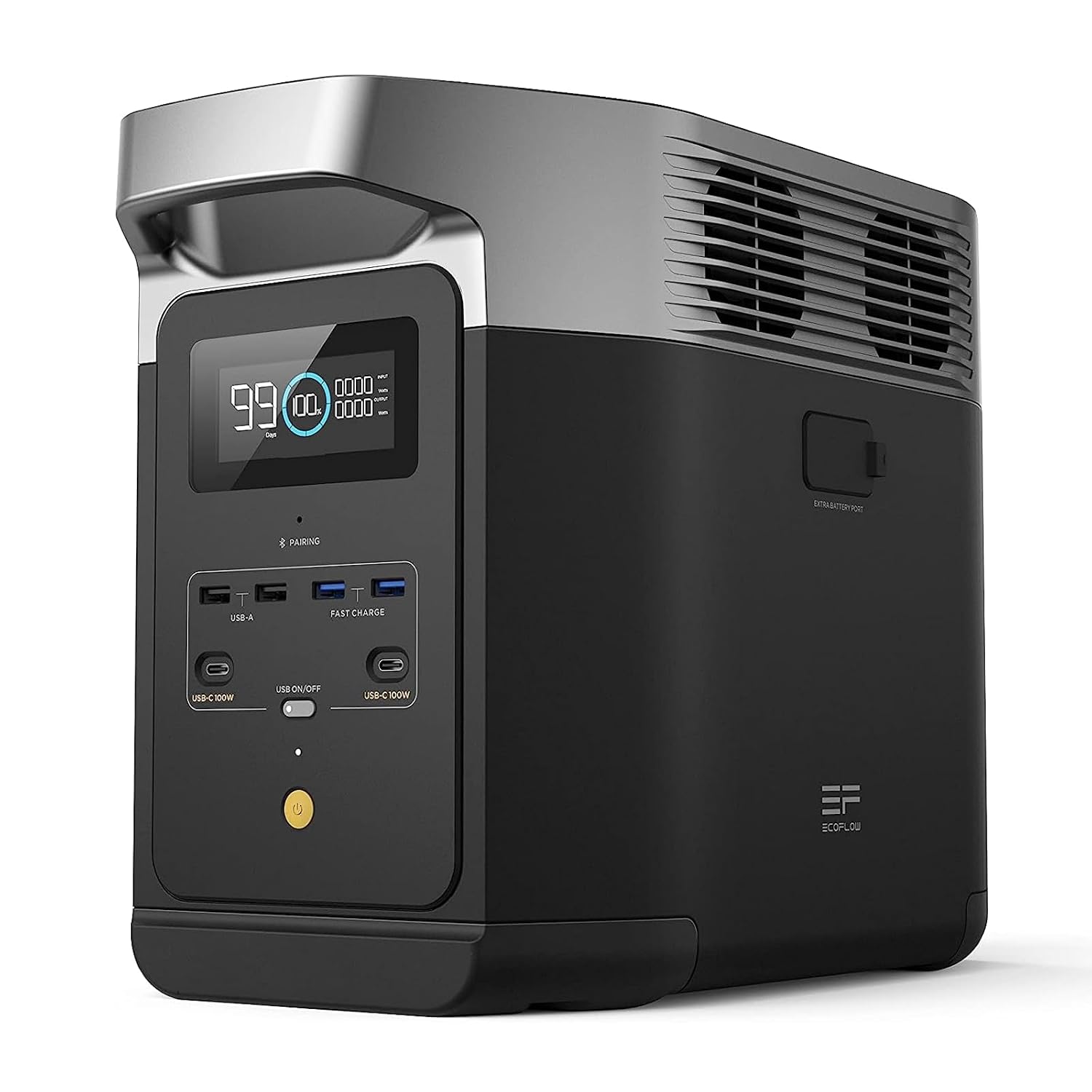

Overview of EF ECOFLOW Portable Power Station DELTA 2, 1024Wh LiFePO4 (LFP) Battery, 1800W AC/100W USB-C Output, Solar Generator(Solar Panel Optional) for Home Backup Power, Camping & RVs
You’re looking at a portable power station built to cover a lot of real-world scenarios, from brief outages to multi-day trips. The EF ECOFLOW DELTA 2 combines fast charging, solid output capability, and LiFePO4 battery chemistry to give you a durable, flexible energy source.
First impressions and design intent
You’ll notice the emphasis on fast recharge and longevity, which are two of the product’s biggest selling points. ECOFLOW positions this as both a home backup and a mobile solar generator, so it’s designed to be usable in many settings without fumes or loud noise.
What’s in the box
You get the ECOFLOW DELTA 2 portable power station, an AC charging cable, a user manual, and an exclusive 5-year customer service package. That means basic setup items are included, and ECOFLOW backs the unit with an extended support period.
Key specifications
This section gives you the essential numbers so you can quickly compare the DELTA 2 to other options. Below is a concise breakdown that highlights the features you’ll likely care about most.
| Specification | Detail |
|---|---|
| Battery Capacity | 1024 Wh (LiFePO4 / LFP) |
| AC Output (continuous) | 1800 W |
| USB-C Output | 100 W (PD) |
| Solar Input | Up to 500 W |
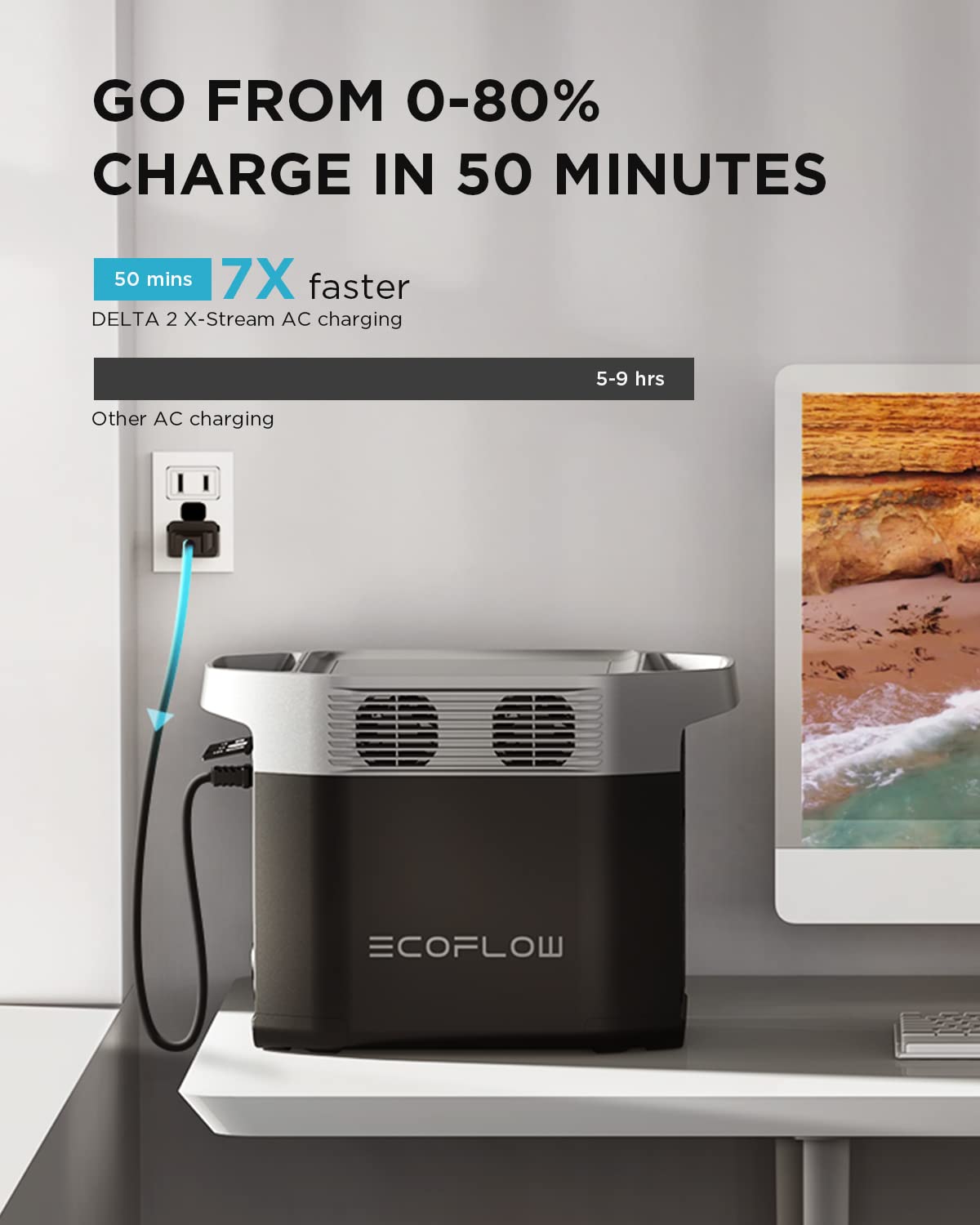
| AC Charging Speed | 0–80% in 50 minutes; 0–100% in 80 minutes |
| Expandable Capacity | Up to 3 kWh with additional batteries |
| Cycle Life | 3000+ cycles (LFP chemistry) |
| Outlets | 15 outlets (various types) |
| In the Box | DELTA 2 unit, AC cable, user manual, 5-year customer service |
You’ll see that ECOFLOW focuses on a balance of capacity, quick recharge, and high output. Those specs make it useful for powering a wide range of devices while giving you flexibility to scale capacity when needed.

Charging performance and speed
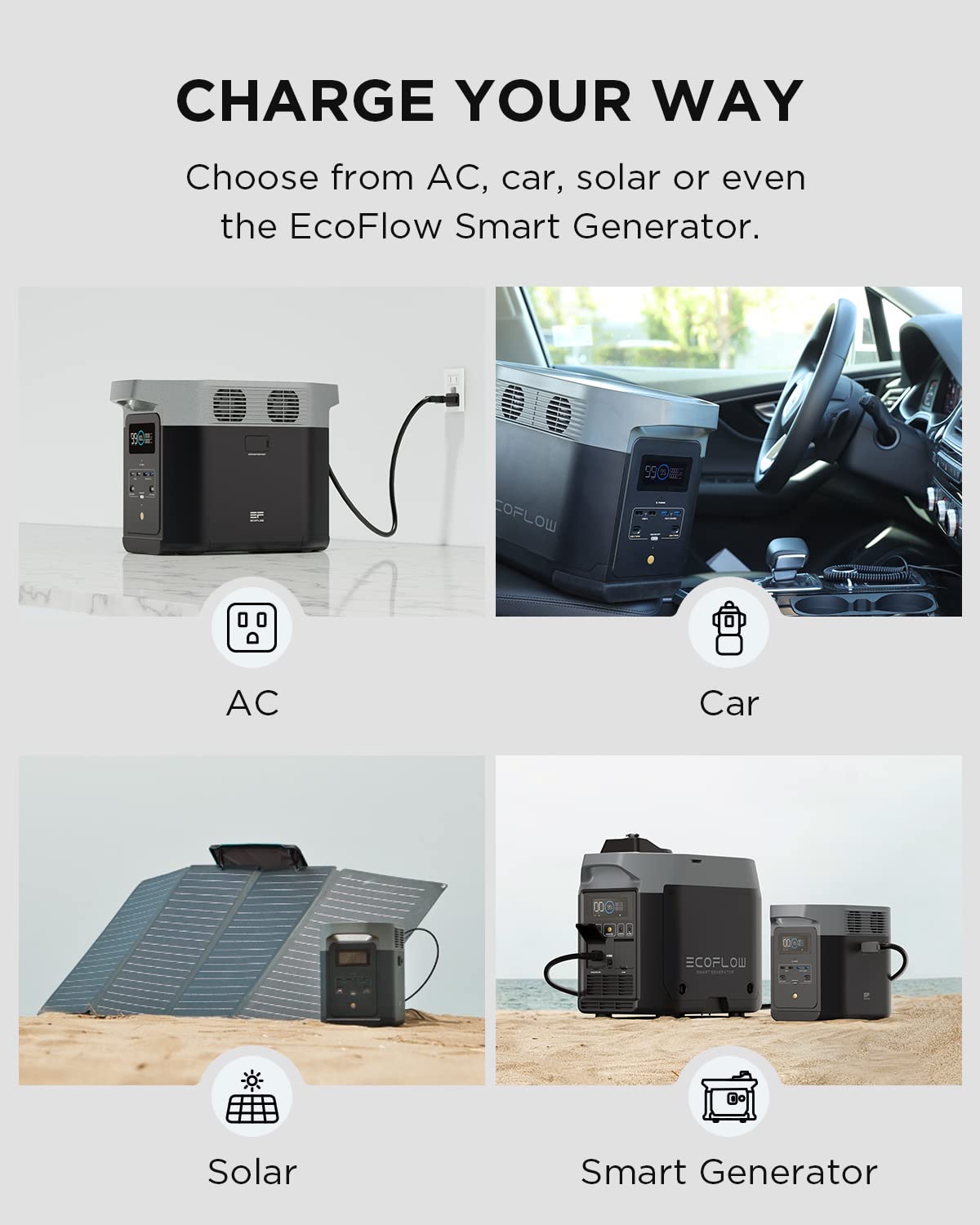
You’ll probably be most impressed by how quickly the DELTA 2 can recharge from an AC outlet and how versatile its charging inputs are. Faster charging reduces downtime and makes the unit more practical for everyday use.
AC charging: 0–80% in 50 minutes, 0–100% in 80 minutes
If you need a near-full battery fast, the AC charging performance is a standout. The claim of 0–80% in 50 minutes and 0–100% in 80 minutes means you can plug into a wall outlet and get usable power very quickly — ideal for sudden outages or when you’re packing for a trip.
Solar charging: up to 500 W input
When you’re outdoors, DELTA 2 supports up to 500 W of solar power input, letting you recharge from solar panels during the day. Under ideal sun conditions, that can substantially shorten recharge time compared to smaller solar input systems, though real-world factors like panel angle, shading, and weather will affect total charge time.
Other charging avenues and convenience
The unit also supports multiple charging pathways which are convenient when you have mixed power sources available. The 100 W USB-C port is particularly useful for fast charging laptops, tablets, and phones, cutting down the number of chargers you need to bring with you.
Battery technology and longevity
You’ll appreciate the battery chemistry the DELTA 2 uses because it directly affects how long the unit will serve you and how it will age. ECOFLOW chose LiFePO4 (LFP) for a reason.
LiFePO4 advantages
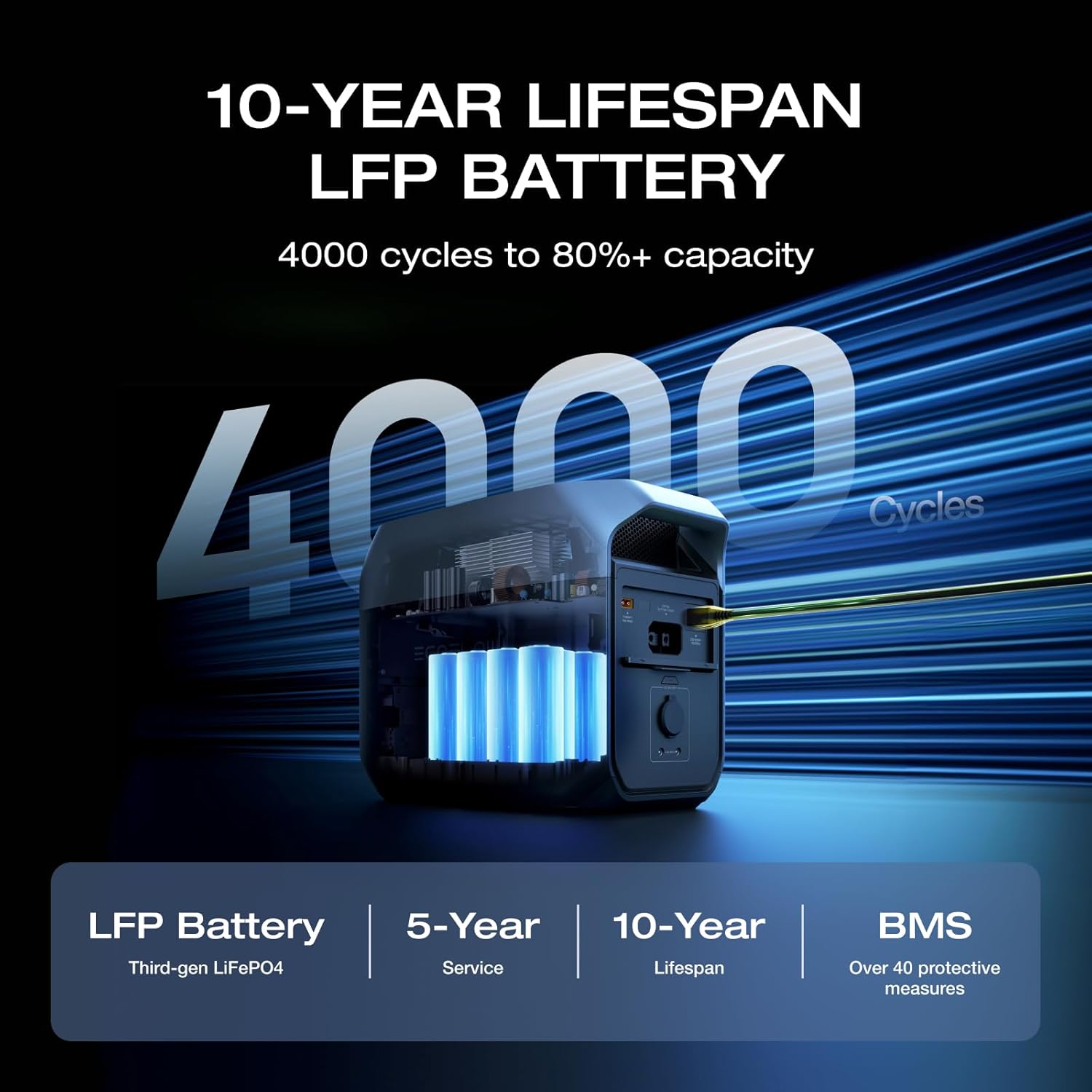
LFP batteries provide excellent cycle life, better thermal stability, and improved safety compared to many other lithium chemistries. For you, that means the DELTA 2 should keep decent capacity for years even with regular use.
Cycle life and warranty support
The advertised 3000+ cycle life translates to many years of heavy use before the battery falls to a lower percentage of its original capacity. ECOFLOW’s inclusion of 5-year customer service is a practical plus that complements the long technical lifespan of the battery.
Output capability and what you can power
You’ll find the DELTA 2 aims to power most household and outdoor electronics without the emissions and noise of a gas generator. With an 1800 W continuous output, it covers a wide range of devices.
Practical runtime estimates
Below is a set of realistic runtime estimates based on a 1024 Wh battery and assuming approximately 90% inverter efficiency. These figures are meant as a guide; real-world runtimes will vary by device duty cycle and conditions.
| Device | Typical Power Draw (W) | Estimated Continuous Runtime (hours) |
|---|---|---|
| LED light (10 W) | 10 | ~92 hours |
| Smartphone charging (10 W) | 10 | ~92 full hours/charges |
| Laptop (60 W) | 60 | ~15.4 hours |
| CPAP machine (40 W) | 40 | ~23 hours |
| Mini-fridge (average 60–100 W) | 60–100 | ~9–15 hours (duty cycles extend real time) |
| 32″ LED TV (80–100 W) | 80–100 | ~9–11.5 hours |
| Blender (300 W) | 300 | ~3 hours |
| Microwave (1000 W) | 1000 | ~0.9 hours (~54 minutes) |
| Hair dryer (1500 W) | 1500 | ~0.6 hours (~36 minutes) |
You should always check appliance nameplate wattage and account for starting surges or duty cycles. For cyclical loads like refrigerators, actual runtime tends to be longer than continuous-draw math suggests because compressors cycle on and off.
Handling high-watt appliances and surge needs
While 1800 W continuous output is strong, some appliances have brief surge requirements that exceed continuous ratings. You’ll want to check peak or surge capabilities before using high-startup-load appliances such as some well pumps or heavy power tools. If an appliance’s startup or peak demand is above what the DELTA 2 can handle, you’ll want to avoid running it or use a controlled start solution.
Expandability and modular use
If your needs exceed the base 1024 Wh capacity, you can scale the system. ECOFLOW allows you to add extra batteries to reach a total of up to 3 kWh.
Adding extra batteries up to 3 kWh
Scaling up to 3 kWh makes the DELTA 2 a much stronger solution for extended outages or longer off-grid stays. When you add battery modules, you should plan placement, charging strategy, and safety spacing to keep performance predictable and safe.
How modularity changes your usage
With expansion, you’ll use the same high-power outputs but enjoy much longer runtimes for the same loads. That flexibility means you can keep the base unit for portability and add capacity when you plan longer trips or want a more robust home backup solution.
Use cases: home backup
You’ll find the DELTA 2 well-suited to short-to-moderate power outages at home, powering essentials and giving you time to plan or restore mains power.
What you can realistically back up at home
Think lights, routers, small refrigerators, medical devices, and entertainment systems for many hours depending on loads. If you want whole-house backup or to power high-wattage HVAC systems for long periods, you’ll either need extra capacity or a different setup, but for essential circuits this unit performs very well.
Tips for setting it up as a backup unit
Keep the DELTA 2 charged when not in use, label the outlets you’ll need during an outage, and assemble a short list of priority appliances beforehand. You can combine it with manual transfer switches or dedicated circuits if you plan to install it as part of a semi-permanent backup setup.
Use cases: camping, RVs, and off-grid living
You’ll like how the DELTA 2 bridges the needs of recreational users and more serious off-grid applications with expandable capacity and solar input.
Setting it up with solar while camping
Pairing the DELTA 2 with sufficient solar panels and good mounting will let you keep essential devices charged throughout the day and into the evening. For remote camps, plan panel placement to avoid shade, and consider a tilt/mounting solution for maximum energy capture during morning and late afternoon sun.
RV integration and on-the-road considerations
In an RV, you can use the DELTA 2 as a silent alternative to a generator to run appliances at campsites or when boondocking. Make sure you verify inverter compatibility with RV systems and check any shore power or vehicle charging restrictions before relying on it as your sole power source.
Noise, fumes, and comparison to gas generators
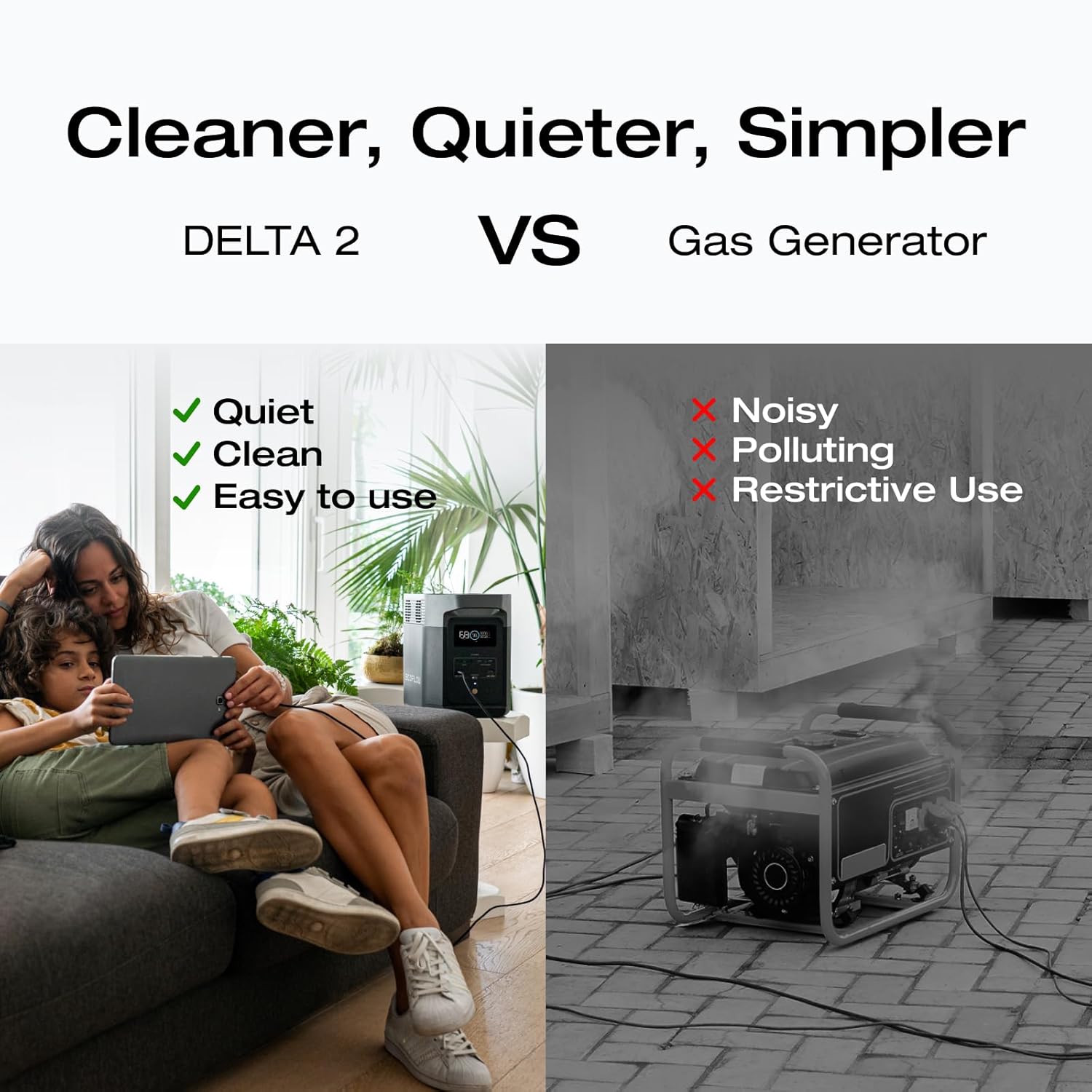
You’ll immediately notice the differences compared to gas or diesel generators because the DELTA 2 runs silently and without exhaust. For campsite etiquette, indoor use, and health reasons, that’s a clear advantage.
Practical advantages over gas generators
No fumes, no regular fuel topping-off, and no routine oil or engine maintenance make the DELTA 2 much simpler to use. It also avoids the noise complaints and permits issues you sometimes face with fuel-burning generators.
Portability, design, and daily use
You’ll find the unit portable enough to move around when necessary, but keep in mind portable power stations with 1 kWh capacity often have a practical size/weight tradeoff. That said, ECOFLOW designs its units for user-friendly placement and frequent handling.
Placement and everyday handling
Set the unit on a stable, dry platform and away from direct heat sources while in use. Keep ventilation space around it so the BMS and cooling systems can operate efficiently during heavy draws or fast charging.
Safety features and battery management
You can rely on the DELTA 2’s battery management system (BMS) to protect the pack, outputs, and your connected devices. These protections make the unit safer to use around the house and in variable outdoor conditions.
What the BMS does for you
An advanced BMS will monitor cell voltages, temperatures, charge/discharge rates, and provide automatic cutoffs for fault conditions. For you, that means less worry about overcharging, deep discharge, short circuits, and abnormal thermal events.
Pros and cons summary
It helps to have a quick, friendly list to weigh whether the DELTA 2 fits your needs. These are the high-level takeaways to help you decide.
- Pros: Very fast AC charging, LiFePO4 long life (3000+ cycles), 1800 W output that powers most appliances, expandable to 3 kWh, up to 500 W solar input, 100 W USB-C for laptops, and 5-year customer support.
- Cons: Base 1024 Wh capacity can be limiting for long whole-house outages unless expanded, larger units can be heavy to carry for long distances, and real-world solar recharge depends on conditions.
You’ll find that for many users the pros outweigh the cons because of the unit’s flexibility and longevity.
Maintenance and care tips
If you want the DELTA 2 to last, some simple maintenance habits will extend its performance and life. The LiFePO4 chemistry reduces a lot of maintenance concerns but doesn’t eliminate the need for smart storage and care.
Charging habits, storage, and temperature recommendations
Store the unit partially charged (around 40–60%) if you won’t use it for long periods. Avoid exposing the unit to extreme temperatures; keep it indoors during cold weather and out of direct sun when charging at high power for long durations.
Troubleshooting basics
If you run into issues, many problems have straightforward fixes that you can try yourself. Here are a few friendly pointers to handle typical situations.
- If the unit won’t turn on, make sure it’s charged and the power button isn’t in a locked state.
- If an outlet won’t provide power, try restarting the unit and check the user manual for outlet-specific protections or modes.
- If solar charging is slow, verify panel orientation, MPPT compatibility, and clean the panels to ensure unobstructed sunlight.
You’ll find the user manual included in the box useful for unit-specific reset procedures and detailed diagnostics.
Frequently asked questions
This section answers common questions you’re likely to have when considering, setting up, or using the DELTA 2.
Can the DELTA 2 run a refrigerator?
Yes, it can run most refrigerators. Fridges often cycle on and off, so average power may be lower than peak; check your fridge’s start-up surge and average draw to confirm runtime estimates.
How long will the DELTA 2 run a CPAP machine?
You can expect very long run times for CPAPs because they generally draw modest power (often in the 30–60 W range). Depending on your machine and settings, you could run for a full night or multiple nights from a single charge.
Can you charge the DELTA 2 via solar while using it to power devices?
Yes — with solar input, you can both charge and discharge simultaneously, though net charging speed will depend on solar power, load, and environmental conditions. In full sun with high panel wattage, you may be able to offset much of your daytime usage.
Is the DELTA 2 safe for indoor use?
Yes, because it doesn’t produce exhaust, it’s much safer to use indoors than fuel generators. Still, follow standard electrical safety practices and keep it vented and stable.
How do I know when I need an extra battery?
If you frequently run out of power during stretches when you need continuous loads, or you want whole-circuit backup for longer than the base capacity can deliver, adding up to 3 kWh total will provide a meaningful improvement.
Final verdict and recommendations
If you want a portable power station that blends fast charging, long battery life, and substantial output for home backup and outdoor use, the EF ECOFLOW DELTA 2 is a strong pick. You’ll get a reliable daily driver for frequent use, and the modular expandability makes it future-proof for larger needs.
Short recommendation summary
You should consider the DELTA 2 if you value rapid recharge, a 1800 W output rating, and LFP longevity for repeated cycling. If your main requirement is extremely long whole-house backup without adding extra batteries, you might want a larger base-capacity system; otherwise, this unit is a flexible, practical solution.
Buying checklist and accessory recommendations
Before you finalize your purchase, check a few practical items so you get the setup that fits your routine.
- Confirm the outlets and port types you need for your devices.
- If you plan for long outages, budget for extra battery modules to reach up to 3 kWh.
- If you plan to use solar, choose panels that can reliably provide near 500 W and confirm cable/connector compatibility.
- Consider protective cases or mounts if you’ll use the unit in harsh outdoor conditions.
You’ll see the best results when you match your accessory choices to the scenarios you plan to use most.
Closing thoughts
You’ll find the ECOFLOW DELTA 2 is engineered around speed of recharge and durable, long-lived battery chemistry, which makes it an excellent all-around choice for many users. With thoughtful setup and the right accessories, it can serve as a dependable companion for home backup, camping, RVing, and off-grid living for years to come.
Disclosure: As an Amazon Associate, I earn from qualifying purchases.