
Looking for a compact, versatile power solution you can trust for CPAP, camping, RV trips, or emergency home backup?

Quick Verdict
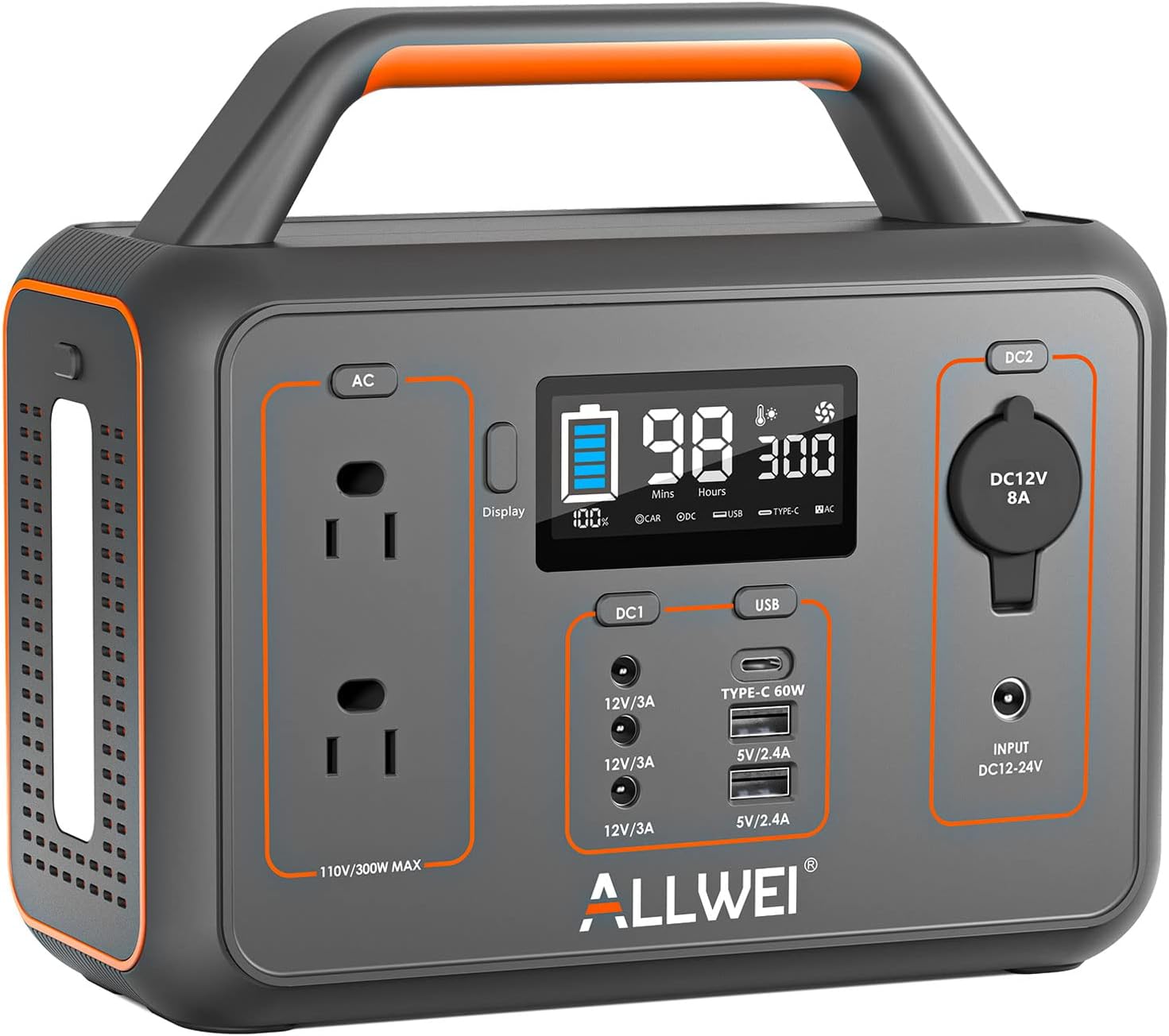
You get a compact and thoughtfully designed 280Wh portable power station that balances portability with useful output options. It’s not a heavy-duty generator for whole-house power, but it’s very practical for charging phones, laptops, running CPAPs for several hours, and powering small appliances on the go.
Who this suits
You’ll like this unit if you need something lightweight, easy to carry, and able to power several small-to-medium devices simultaneously. If you want full home backup for high-wattage appliances, you’ll need a larger inverter and battery capacity.
Key Specifications
Below are the core specs summarized so you can quickly compare against your needs. These specs are derived from the product details and expressed in clear terms so you don’t have to hunt for numbers.
| Item | Specification |
|---|---|
| Product Name | ALLWEI Portable Power Station 300W, 280Wh Solar Generator with 110V Pure Sine Wave AC Outlet |
| Battery Capacity | 280 Wh (watt-hours) |
| Continuous Output | 300 W rated |
| Peak/Surge Output | Not explicitly listed (check for short-term surge limits in manual) |
| AC Outlets | 2 x 110V/120V Pure Sine Wave |
| USB-C PD | 1 x 60W |
| USB-A | 2 x USB-A |
| DC Outputs | 3 DC ports + 1 car-style 12V cigarette lighter |
| Recharging Methods | AC wall, 12V car, 100W solar (MPPT built-in) |
| AC Recharge Time | 5.5–6.5 hours (AC) |
| Car Recharge Time | 4.5–5.5 hours |
| Solar Recharge Time | 3–4 hours (100W panel, full sun) |
| Weight | ~6 lbs |
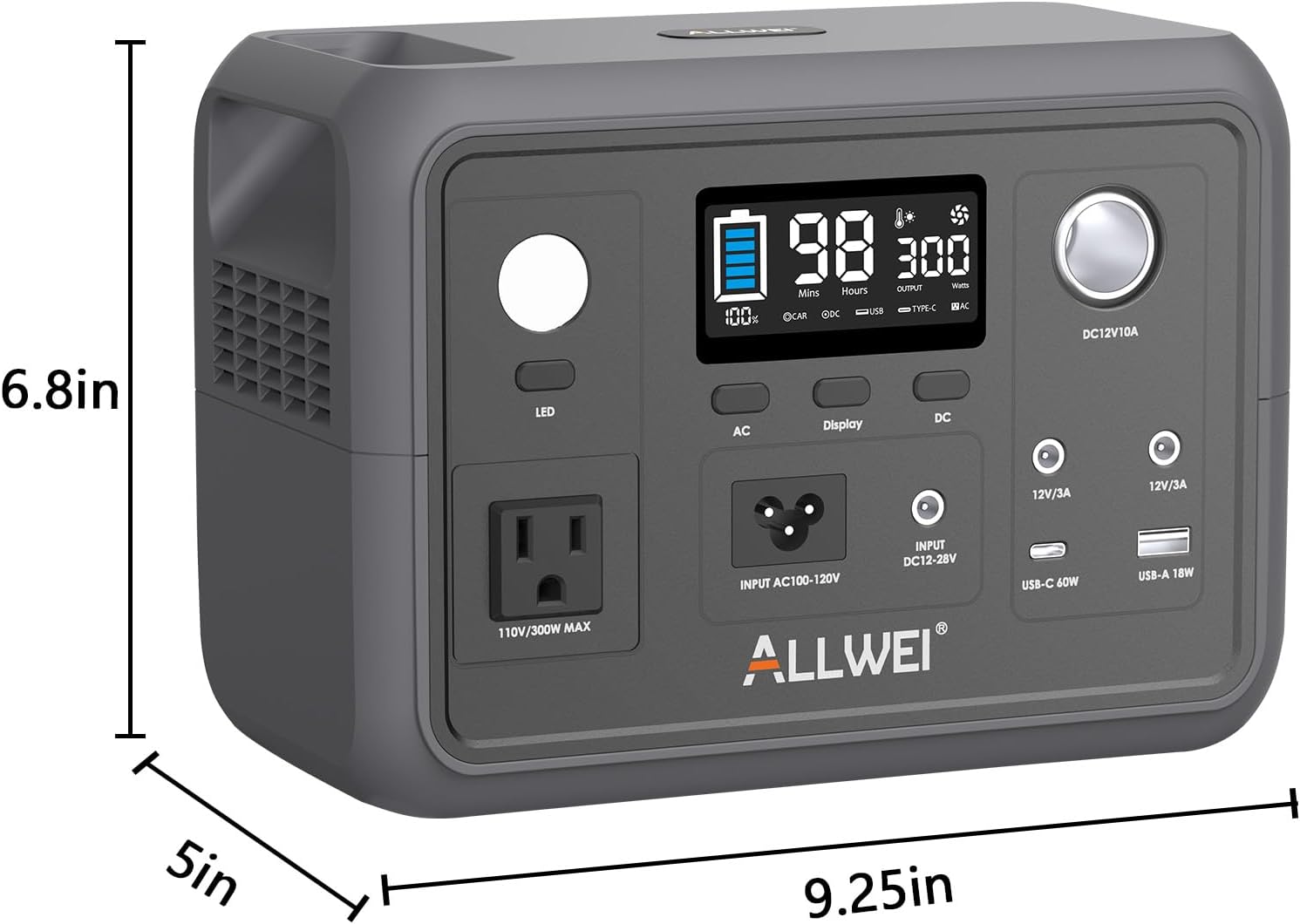
| Size | 8.86 x 4.53 x 8.07 inches |
| Battery Type | Lithium-ion |
| Cycle Life | ~1500 cycles |
| Protections | BMS + MPPT controller (overload, overtemp, short-circuit, etc.) |
| Extra Features | 3-level LED light with SOS, silent cooling fan |
| Package | Unit, AC adapter & cable, car cable, manual (solar panel sold separately) |
Design and Build
You’ll notice the unit has a compact, boxy design that feels rugged enough for travel and occasional outdoor use. The build focuses on portability, with a handle and small footprint so it won’t dominate your gear or take up much trunk space.
Controls and Display
The LCD status display gives you clear icons for battery level, input/output wattage, and protection alerts. You’ll appreciate seeing an estimated charge level and icons that flash if the BMS or MPPT triggers a protection mode.
Materials and Durability
The enclosure is plastic but feels solid for regular outdoor use and emergency home storage. You shouldn’t treat it like a heavy-duty worksite tool, but it will stand up well to camping bumps, RV use, and handling in your car.
Portability and Ease of Use
You’ll find its 6 lb weight and compact dimensions make it genuinely portable compared with many station models. It’s light enough to carry with one hand and small enough to stash beneath a seat or in a closet for emergencies.
Carrying and Storage
The integrated handle and compact footprint mean you can bring it along for overnight trips or tuck it away as an emergency power supply at home. For long-term storage, you should follow the recommendation to recharge every three months.
Setup and Operation
You’ll be operating simple push-button controls and direct plug-in ports—no complex setup required. When you use AC outlets, remember the unit enforces a 300W limit; exceed that and the unit will cut off to protect itself.
Power Output and Port Configuration
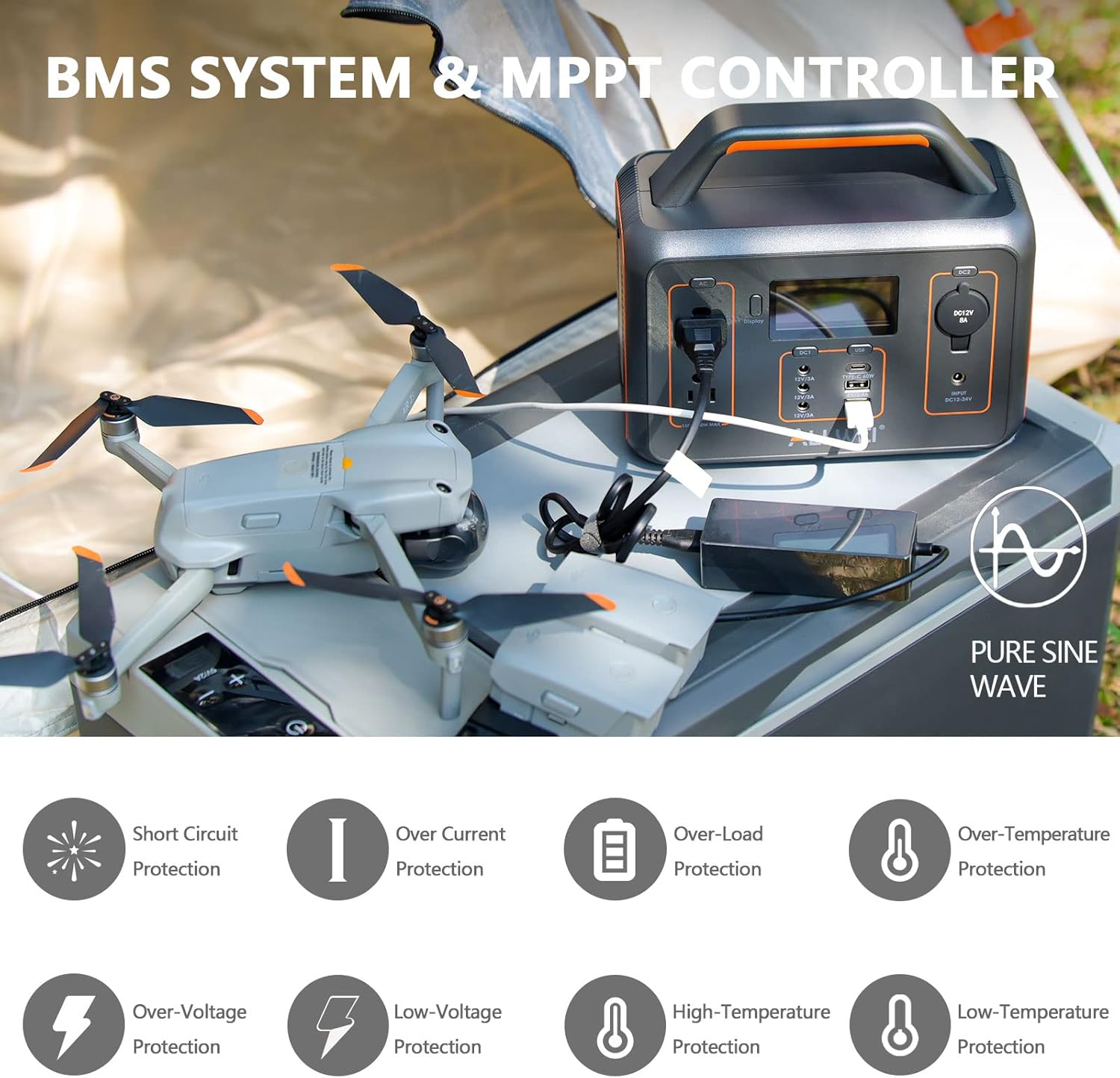
You’ll be able to power up to nine devices simultaneously across AC, USB, and DC outputs, which is a strong point for a unit of this size. The pure sine wave AC outlets are particularly useful for sensitive electronics like CPAP machines and laptops.
AC Performance
The two 110V/120V pure sine wave AC outlets deliver clean power suitable for electronics that expect mains-quality electricity. You must keep total AC load under 300W to avoid triggering overload protection.
USB and DC Ports
One 60W USB-C PD port allows you to fast-charge laptops and modern devices, while the two USB-A ports handle smaller gadgets. The 12V car outlet plus three DC ports let you power small automotive appliances, camera batteries, and other DC accessories.
Charging Options and Times
The built-in MPPT controller is a huge plus for solar charging efficiency, and you can recharge the unit in three different ways depending on your situation.
AC Wall Charging
Using the included AC adapter, expect a full charge in 5.5–6.5 hours. This is convenient for overnight recharges and prepping the unit before travel.
Car Charging
If you’re on the road and need to top up from your vehicle, car charging takes about 4.5–5.5 hours. This method is slower than solar in ideal sun but is reliable when you’re moving between stops.
Solar Charging (MPPT)
With a 100W solar panel (sold separately), you can reach a full charge in 3–4 hours under full sunlight. The MPPT controller optimizes solar input so you get faster, more efficient charging than a basic charge controller would provide.
Battery Management and Safety
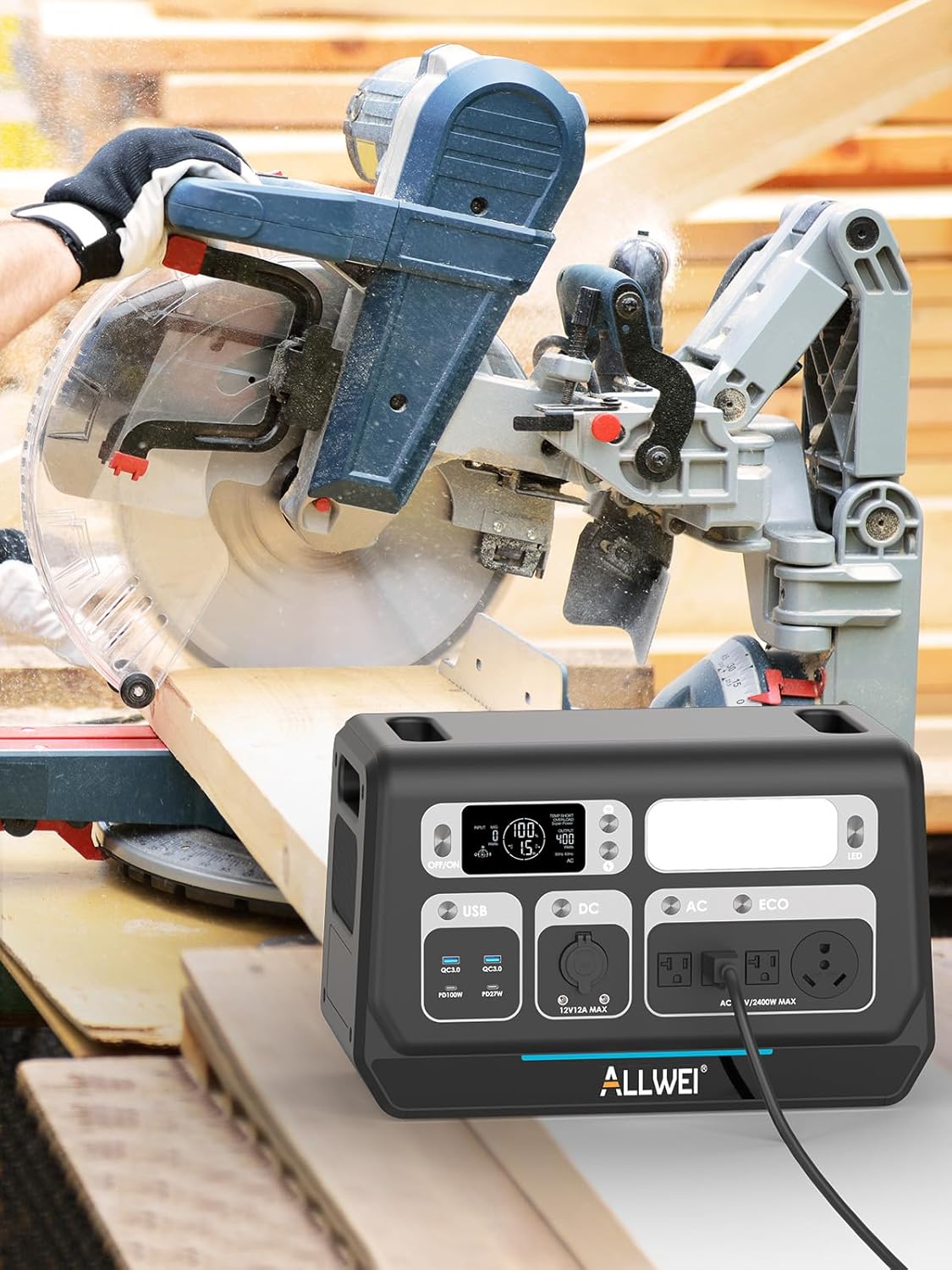
The ALLWEI station includes a BMS (Battery Management System) and MPPT controller that provide multiple layers of protection. These systems manage charging, balance cells, and protect against overcurrent, overvoltage, and overheating.
Protections You’ll Benefit From
You’ll be protected from overload and short-circuit hazards, and the unit will shut down gracefully if internal temperature thresholds are exceeded. The built-in cooling fan will turn on as needed to keep temperatures in range.
Cycle Life and Longevity
With an advertised ~1500 cycle life, you can expect years of regular use—assuming you follow best practices for storage and charging. For long periods of inactivity, you should recharge every three months to maintain battery health.
Real-World Run Time Estimates
You’ll want to know how long the 280Wh battery will run your gear. Use the manufacturer’s formula to estimate runtime: Run time = 280 Wh × 85% ÷ Device Watts. The 85% accounts for inverter and conversion losses.
| Device | Typical Wattage (W) | Estimated Run Time (hours) |
|---|---|---|
| Smartphone (charging) | 10 W | (280*0.85)/10 = ~23.8 hrs |
| Laptop (light use) | 45 W | (280*0.85)/45 = ~5.3 hrs |
| CPAP (average) | 30–60 W | 30W -> ~7.9 hrs; 60W -> ~3.9 hrs |
| Portable fridge / cooler | 50 W | ~4.8 hrs |
| Camera battery charger | 15 W | ~15.9 hrs |
| Drone charger | 40 W | ~6.0 hrs |
| LED Light strip | 10 W | ~23.8 hrs |
How to interpret these numbers
You’ll notice lighter loads like phones and LED lights last an extremely long time, while continuous high-wattage loads naturally reduce runtime. CPAP runtime depends heavily on your machine model, humidifier use, and pressure settings, so test your setup beforehand.
Simultaneous Usage Scenarios
You’ll commonly want to power multiple devices at once—phones, a laptop, and a CPAP, for example. The combined wattage must remain under the 300W AC limit to avoid tripping overload protection. The 60W PD port makes it realistic to fast-charge a laptop while running other devices from AC or USB.
Example Setup
If you run a 50W portable fridge, a 45W laptop, and a 10W phone charger simultaneously, your total draw is 105W—well within limits and giving you several hours of operation. Use the run-time formula to estimate total runtime for combined loads.
Sound, Cooling, and Temperature Management
You’ll hear a slight fan noise when the unit begins active cooling; this is normal and designed to protect internal components. The fan engages when temperatures rise and stops once the unit cools down.
Noise Levels
You’ll find the fan to be quiet compared with gas generators and most larger inverters. It’s smart to position the unit where the slight fan hum won’t bother you at night if you’re using it for a CPAP or in a tent.
Thermal Safety
You’ll appreciate that the BMS monitors internal temperatures and will shut down the unit if needed. This means the product prioritizes safety over continuous operation in extreme conditions.
Limitations and Things You Should Know
You should be realistic about the 300W/280Wh envelope: it’s ideal for phone, laptop, small appliance, and CPAP duty, but insufficient for most microwaves, space heaters, and high-draw power tools.
Overload Protection
When you exceed the 300W AC limit, the unit will shut off to prevent damage. If you need higher wattage peak support, consider a different model with higher continuous and surge capacities.
No Included Solar Panel
The product ships without a solar panel included, so you’ll need to buy a compatible 100W panel to take full advantage of the fastest recharge rate. Ensure any panel you buy matches the input voltage and connector type recommended in the manual.
Where This Unit Shines
You’ll find value in the unit for lightweight, portable power needs. It’s especially good for people who travel in RVs, camp frequently, use CPAPs, or want a small emergency backup in the home.
Camping and Overlanding
You’ll appreciate the combination of weight and output when packing for a weekend trip—enough power for lights, phones, cameras, a portable fridge, and occasional laptop use without hauling heavy gear.
CPAP and Medical Use
You’ll find the pure sine wave AC output and the recommended run time estimates helpful for CPAP users. Because CPAPs vary, test your machine’s draw and humidifier usage ahead of time to ensure it meets the hours you need.
Practical Tips for Maximizing Use
You’ll get the most from the unit by managing loads, charging smartly, and storing it properly when not in use.
Load Management
Combine low- and medium-draw devices and prioritize critical gear. Use the 60W PD port for laptops where possible, and keep total AC draw below 300W.
Charging and Storage Best Practices
Charge the unit every three months if idle, avoid exposing it to extreme temperatures, and use the MPPT solar input for fastest outdoor recharges. Don’t leave it in direct sun or in a hot car for extended periods.
Comparison Considerations
If you’re comparing this unit to others, look at these aspects: real usable watt-hours, continuous output rating, number and type of ports, weight, and whether it includes MPPT and BMS. You’ll often trade off capacity for portability—this model favors lightness and convenience.
Alternatives to Consider
You may want a higher-capacity or higher-wattage unit if you expect to run heavy appliances. Consider units with 500–1500W continuous output and 500–2000Wh capacity if you need whole-room or extended fridge support.
Frequently Asked Questions
You’ll likely have a few practical questions before buying or using the unit; here are answers to common concerns.
Can you run a CPAP all night?
Yes, for many CPAP models. Using the run time formula, estimate your CPAP’s watt draw and then calculate runtime. If you have a heated humidifier, expect higher wattage and shorter runtime.
How long does the battery last overall?
The lithium-ion cells are rated for around 1500 cycles, meaning many years of regular use if you keep the unit within its operating parameters. Cycle life will vary with depth of discharge and storage conditions.
Is the fan noise a problem when sleeping?
It’s generally quiet and only runs when the system needs cooling. In most scenarios, it won’t be louder than a quiet room air conditioning unit or other small electronics.
Can you charge from solar while running devices?
Yes, depending on solar input and device load, you can simultaneously charge and discharge. The MPPT controller helps maximize solar input, but heavy loads may still outpace incoming solar power.
Final Thoughts
You’ll find the ALLWEI Portable Power Station 300W, 280Wh to be a strong contender if you want a lightweight, feature-packed station for everyday portable power. It’s ideal for travel, CPAP use, small appliance support, and as an emergency backup in your home.
Bottom line
You’ll benefit most if your needs are moderate—phones, laptops, cameras, small fridges, and CPAP devices—rather than full-house backup. If portability, clean power, and multiple ports are your priorities, this unit should serve you well.
Buying Checklist
Before you buy, make sure you’ve checked these points so you get the right setup for your needs.
- Confirm your key devices’ wattage and calculate estimated runtimes.
- Plan whether you’ll buy a 100W solar panel separately for faster recharge.
- Consider how often you’ll need to use the unit and whether 280Wh capacity is sufficient.
- Verify connectors and cable compatibility for any DC accessories you plan to use.
If you want, tell me which devices you plan to run and for how long, and I’ll calculate estimated run times based on the unit’s 280Wh capacity and the 85% usable efficiency.
Disclosure: As an Amazon Associate, I earn from qualifying purchases.