
Looking for a compact portable power station that can keep your devices running during trips, power outages, or while you use a CPAP on the road?

Product Overview
You’ll find the ALLWEI Portable Power Station 300W, 280Wh Solar Generator with 110V Pure Sine Wave AC Outlet, Backup Lithium Battery Generator for CPAP Outdoor RV Camping Emergency Home Use to be a compact and versatile option for short-term power needs. It’s designed to serve as both a small emergency backup and a travel companion, balancing portability with enough capacity to run essential devices for multiple hours.
Key Features
This power station offers 280Wh of usable capacity and a continuous 300W output with pure sine wave AC, which makes it safe for sensitive electronics. It includes multiple charging and discharge ports, a built-in MPPT controller for efficient solar charging, a smart cooling fan, and a basic LED light with an SOS mode to add utility in low-light situations.
What’s in the Box
In the package you get the ALLWEI 300W/280Wh Portable Power Station, an AC power adapter, an AC cable, a DC car charging cable, and a user manual. The solar panel required for solar charging is sold separately, so you’ll need to purchase or already own an appropriate solar panel (100W recommended) if you plan to charge from the sun.
Specification Breakdown
Below is an easy-to-scan table that breaks down the main specifications so you can quickly understand what this unit offers and how it compares to what you might need.
| Specification | Detail |
|---|---|
| Model | ALLWEI Portable Power Station 300W, 280Wh |
| Battery Capacity | 280 Wh |
| Continuous AC Output | 300 W (pure sine wave) |
| Peak/Surge Output | Not specified (assume limited surge headroom) |
| AC Outlets | 2 × 110V/120V pure sine wave AC outlets |
| USB Ports | 1 × USB-C PD 60W, 2 × USB-A |
| DC Ports | 3 × DC ports |
| Car Port | 1 × 12V cigarette lighter port |
| Charging Methods | AC wall, car, solar (built-in MPPT) |
| AC Charge Time | 5.5–6.5 hours |
| Car Charge Time | 4.5–5.5 hours |
| Solar Charge Time (100W) | 3–4 hours (full sunlight) |
| Weight | ~6 lbs |
| Dimensions | 8.86 × 4.53 × 8.07 inches |
| Battery Type | Lithium-ion |
| Lifecycle | ~1500 cycles |
| Cooling | Smart fan (automatic) |
| Additional Features | 3-level LED light with SOS, BMS protection, LCD icons |
| Included Accessories | AC adapter, AC cable, DC car cable, user manual |
| Solar Panel | Sold separately |
Design and Build Quality
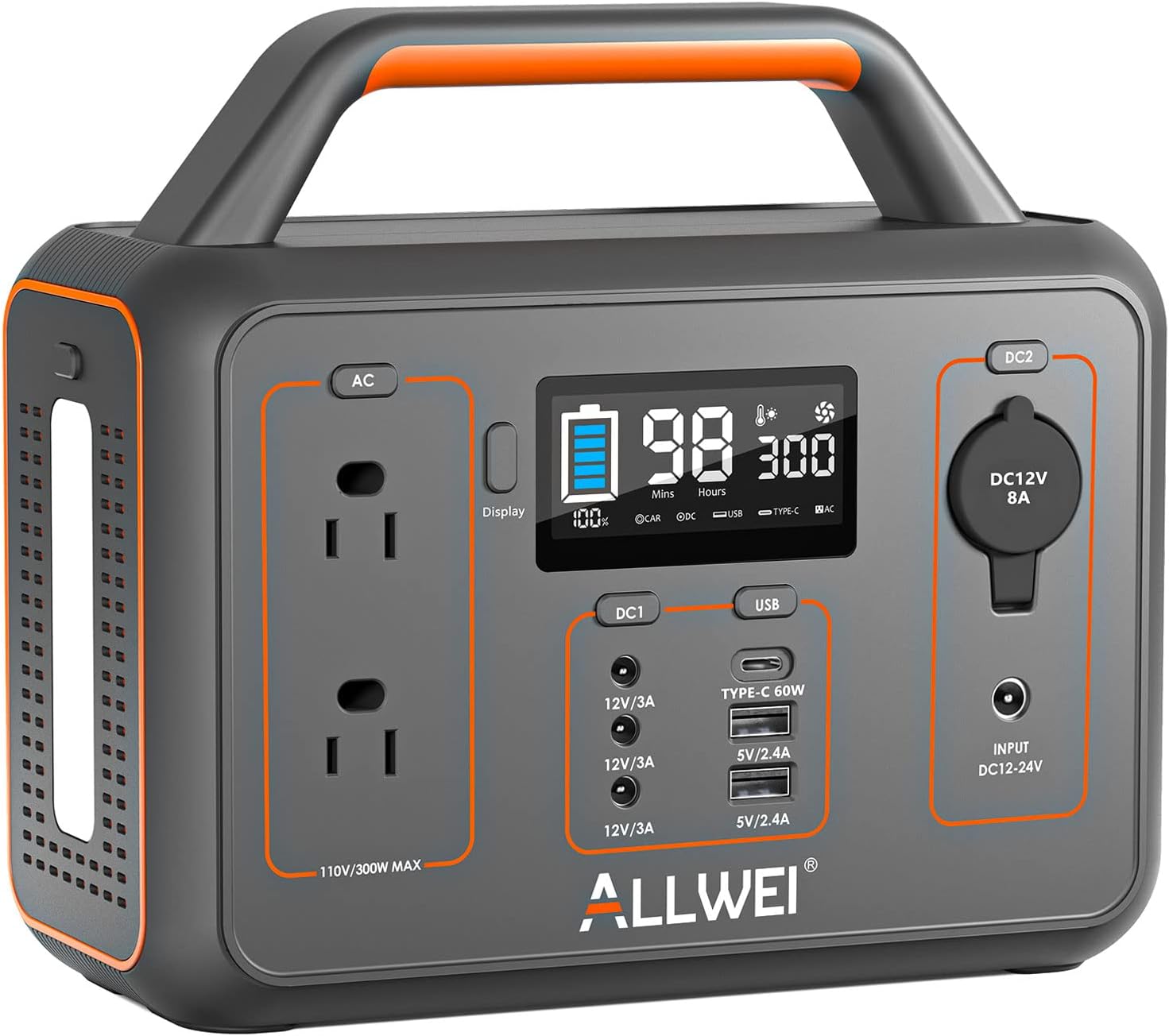
The ALLWEI 300W is built to be compact and easy to handle, which is one of its strongest selling points if you prioritize portability. The case feels solid for light travel and household use, though it’s not an overbuilt, heavy-duty rugged unit meant for harsh construction environments.
Size, Weight, and Portability
At roughly 6 lbs and with dimensions under 9 × 5 × 8 inches, you can easily toss this power station in a car trunk, RV storage compartment, or carry it into your home for emergency use. You’ll appreciate how it balances size and capacity, especially when you don’t want to haul a heavy generator.
Materials and Durability
The outer shell uses common impact-resistant plastics that are lightweight and durable for general travel and camping; however, you should avoid excessive drops or prolonged exposure to wet conditions. For long-term durability, treat it like other consumer electronics: keep it dry, don’t overload it, and store it charged.
Power and Performance
You’ll get a reliable 300W continuous output that’s suitable for laptops, small appliances, phones, cameras, fans, LED lights, and CPAP machines that don’t exceed the output limit. Because it’s a pure sine wave inverter, it handles sensitive electronics better than modified sine wave units.
Battery Capacity and Output
With 280Wh nominal capacity and around 85% inverter efficiency recommended by the manufacturer, you can estimate usable energy for your devices. The simple formula they provide — Your Device’s Run time = 280Wh × 85% / Device Watts — gives a practical way to estimate runtime. That means roughly 238Wh of useful output after accounting for conversion losses.
Real-World Run Times
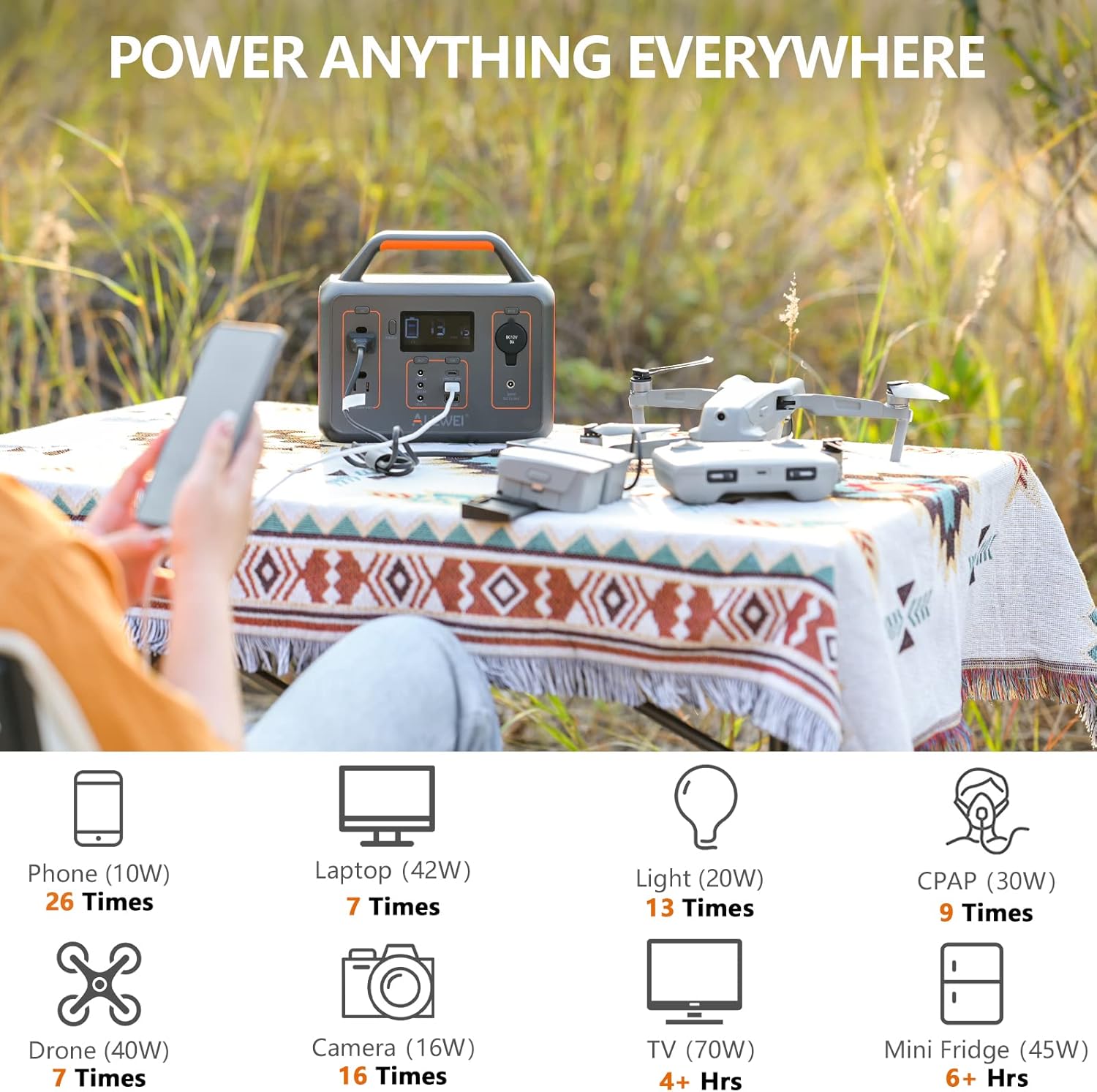
Estimating run times using the efficiency-adjusted capacity helps set realistic expectations. For example: if your laptop draws 45W, you could power it for about 238Wh / 45W ≈ 5.3 hours; a smartphone at 10W could run for almost 24 hours; a CPAP machine using 40W could run for around 6 hours. Keep in mind actual times vary with device efficiency, battery health, and environmental factors.
Charging Methods and Times
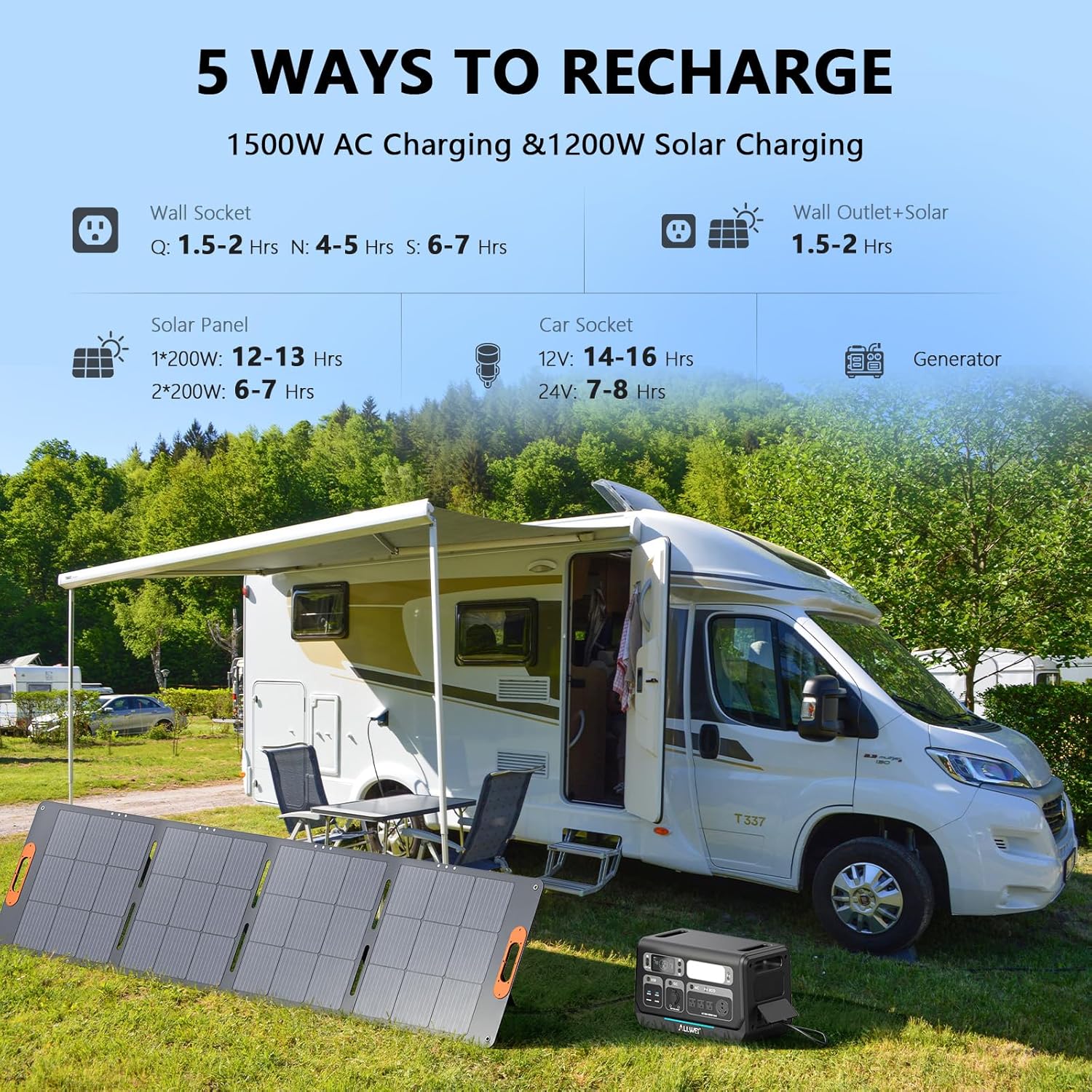
You can recharge this unit three ways: AC wall charging, car charging, and solar charging with the built-in MPPT controller. The MPPT increases solar charging efficiency compared to units without it, so you’ll generally see faster and more stable charge times when using suitable solar panels.
AC Charging
AC charging is straightforward and fully charges the unit in about 5.5–6.5 hours. You’ll want to use the included AC adapter and follow standard room-temperature conditions for best longevity; fast or high-heat charging may trigger the cooling system and slow the rate.
Car and Solar Charging
Car charging offers a slightly faster alternative at 4.5–5.5 hours, which can be convenient on road trips. When paired with a 100W solar panel under full sun, ALLWEI estimates 3–4 hours to full charge — realistically this depends on sun conditions, panel angle, and cell temperature, but the MPPT helps maximize energy harvest when conditions are good.
Ports and Connectivity
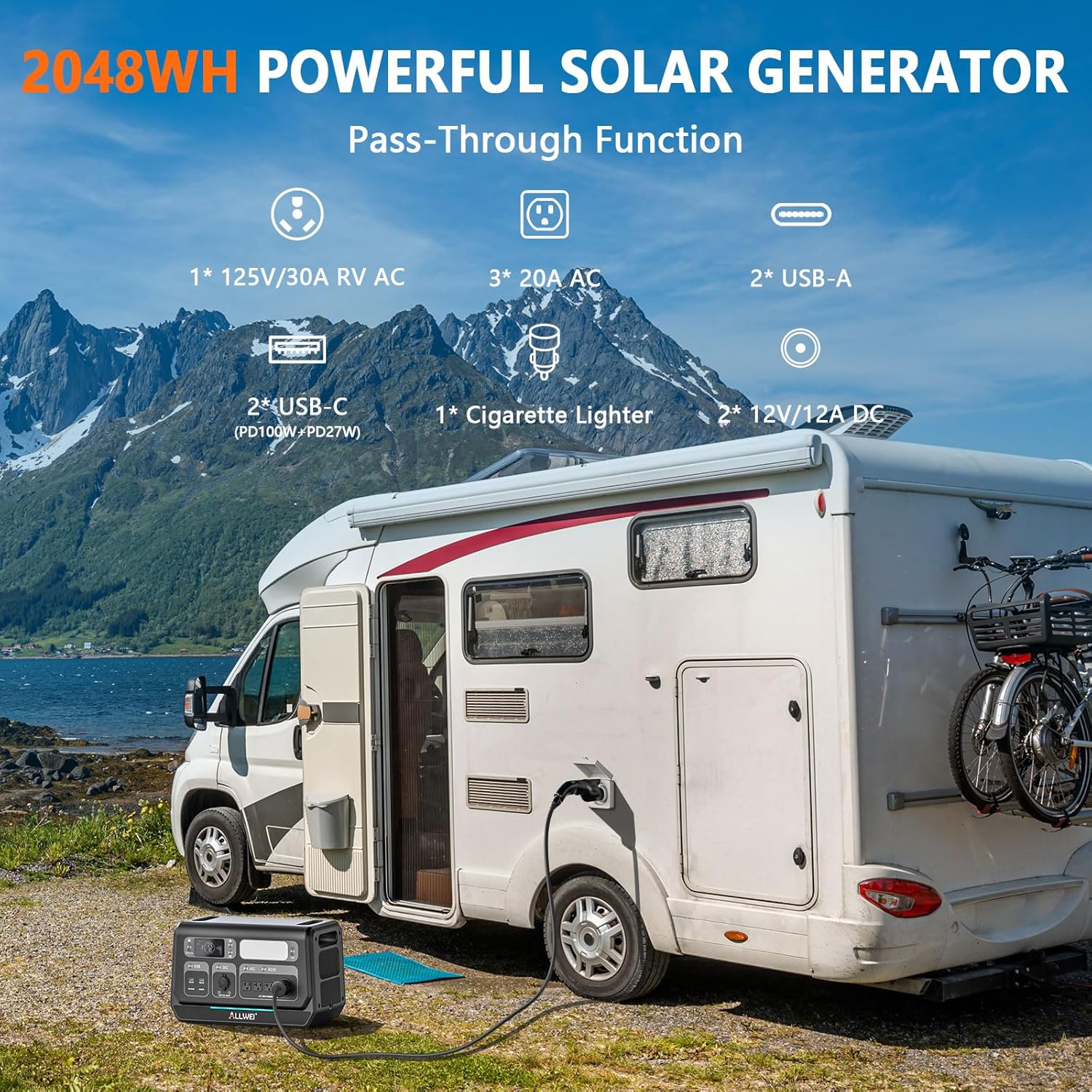
You’ll appreciate the mix of ports for a range of devices — two pure sine wave AC outlets for 110V devices, one USB-C PD 60W for fast-charging modern laptops and phones, two USB-A ports, a cigarette-lighter style DC output, and three additional DC ports. That makes this unit useful for small appliances, charging multiple gadgets, and powering DC accessories in an RV.
AC, USB, USB-C, DC, Car Port
The AC outlets are especially notable because they are pure sine wave and suitable for sensitive electronics like medical devices and laptops. The 60W USB-C PD port provides meaningful fast charge capability for many ultrabooks and phones, though heavier laptops requiring more than 60W will charge slowly or not at full power.
Simultaneous Powering
You can power up to nine devices at once across the available ports, which helps when you need to charge phones, run a small fan, or operate camera equipment simultaneously. Just be careful not to exceed the 300W continuous draw or the unit will trigger overload protection and shut off.
Noise, Cooling, and Thermal Management
The unit uses a smart cooling fan that engages when the internal temperature reaches a threshold and stops when the temperature lowers. Expect a slight audible noise when the fan is running; this is normal and essential for protecting internal electronics, especially during heavy draw or longer charging cycles.
Fan Noise and Behavior
You’ll notice the fan comes on primarily during charging or high-load operation and then quiets once the temperature drops. The noise level is generally unobtrusive for most outdoor and indoor uses, but if you sleep near the unit (for CPAP use, for example), you may want to position it a bit away from your head for comfort.
Safety Features (BMS and Protections)
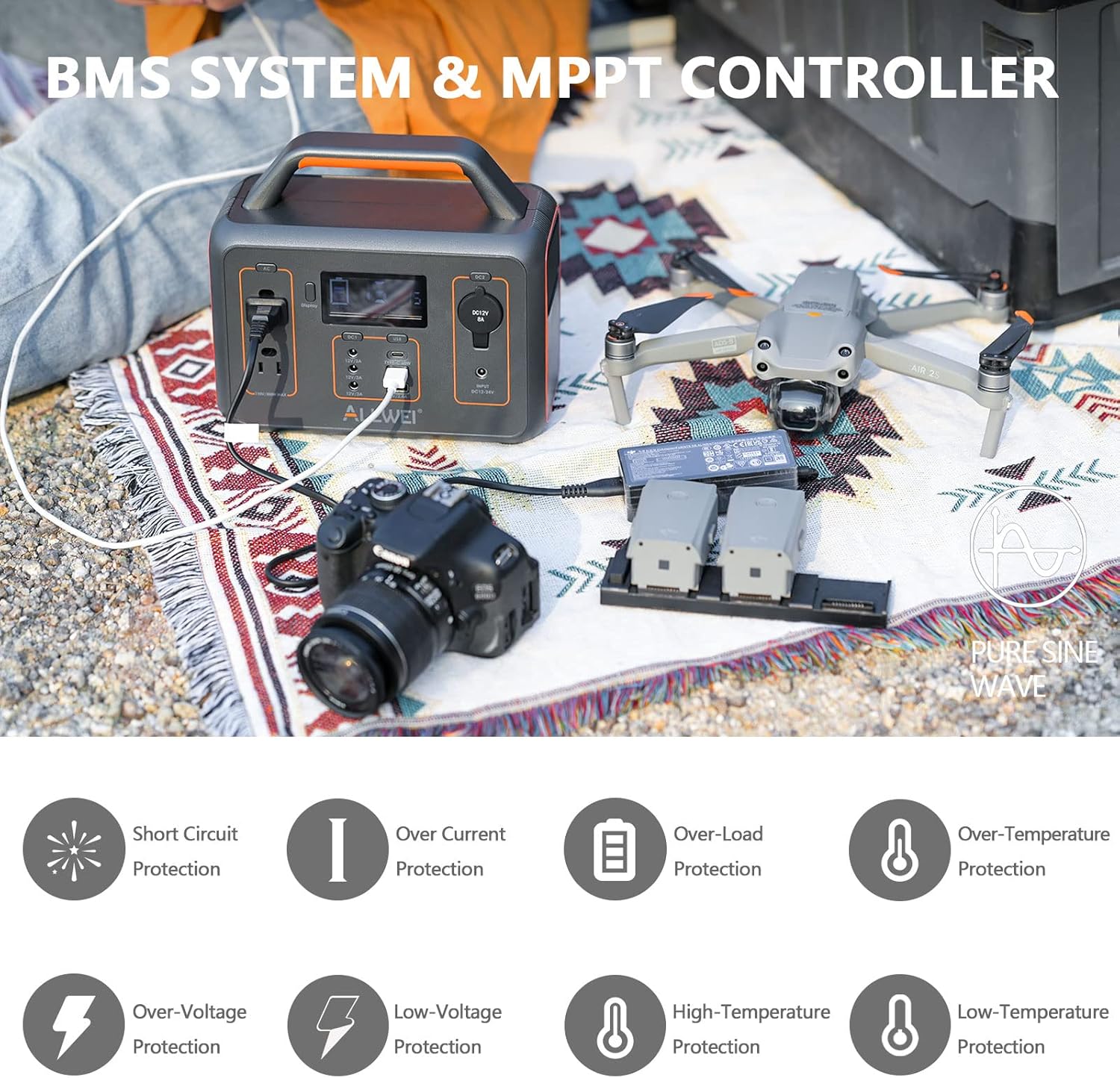
This ALLWEI model includes a Battery Management System (BMS) that handles overcharge, over-discharge, short-circuit, and temperature protections. The unit also indicates protective states via LCD icons, so you’ll have a visual cue if the system has shut down due to an overload or another fault.
Use Cases and Practical Scenarios
This power station fits multiple scenarios where you don’t need a full-size generator: short camping trips, RV weekend getaways, emergency backup for small essential devices, and running CPAP for one night. It’s ideal when you want quiet, low-maintenance power without fumes or heavy fuel.
Home Backup During Outages
For power interruptions, you can keep lights, phones, a router, and a small fridge or medical device running for a few hours, depending on the load. If you expect longer outages or want to power larger appliances, you’ll need a higher-capacity unit or multiple units.
Outdoor Use: Camping, RV, CPAP
When camping or traveling in an RV, you can charge phones and cameras, run a portable fridge for a limited time, and power a CPAP machine for one or more nights depending on the machine’s wattage and mask humidifier usage. If you rely on CPAP nightly, calculate your machine’s draw and consider carrying a secondary charging option (solar panel or car charging) for extended trips.
Pros and Cons
You’ll want to weigh strengths and limitations before buying so the unit meets your specific needs.
Pros
The unit is lightweight, genuinely portable, and has a pure sine wave inverter that’s safe for sensitive electronics. Its MPPT-supported solar input and multiple charging options give you flexibility when you’re on the move or off-grid.
Cons
With only 280Wh, this power station won’t run high-draw appliances for long, and the 300W output limit restricts use with many common home devices like microwaves or larger space heaters. Also note that surge capacity isn’t clearly specified, so devices with high startup currents (like some refrigerators or pumps) may not be suitable.
Comparison with Similar Models
Compared with other entry-level portable power stations, the ALLWEI 300W strikes a good balance of features and price for casual users. You’ll find slightly larger capacity models if you need more runtime, but they’ll be heavier and cost more.
Compared to Larger Power Stations
If you need to run multiple high-watt devices or want several nights of CPAP operation without recharging, a larger 500–1000Wh station would be a better fit. For day trips, light camping, and emergency phone/laptop backup, this 280Wh unit is easier to carry and more affordable.
Price and Value
The ALLWEI 300W is positioned as an affordable, entry-level solar generator with features often found at higher price points, like pure sine wave output and MPPT solar charging. If you match it to the right use cases, you’ll likely find good value for money.
How to Estimate Run Time for Your Devices
You’ll be able to calculate estimated runtimes using the manufacturer’s efficiency guidance and the power draw of your devices. Using the formula: Estimated Run Time = (280Wh × 0.85) / Device Wattage gives a practical starting point for planning.
Examples of Estimated Run Times
Use practical device examples to help you plan: a smartphone (10W) ~ 23–24 hours, a laptop (45W) ~ 5–6 hours, CPAP without humidifier (40W) ~ 6 hours, small 12V cooler (30W) ~ 8 hours. Remember that devices with heating elements or motors will draw more and reduce runtime.
Tips for Getting the Most from Your ALLWEI 300W
You’ll get the best performance if you charge the unit regularly, avoid exposing it to extreme heat, and use efficient charging cables and devices. For solar charging, pair it with an efficient 100W solar panel and position the panel to maximize sunlight exposure.
Smart Charging Habits
If you won’t use the unit for long periods, store it at about 50–60% charge and recharge it every three months as recommended to maintain battery health. Also avoid fully discharging it repeatedly if you want to keep the cycle life closer to the specified 1500 cycles.
Maintenance and Storage
Treat this power station like any high-quality battery pack: keep it clean, store it in a cool, dry place, and avoid exposing it to moisture or extreme temperatures. Regularly check the ports and cables for wear, and use the included manual for recommended storage charge levels.
Long-Term Care
If you need to store the power station for extended periods, charge it every three months or as the manufacturer suggests to prevent deep discharge and prolong battery life. Ensure the storage environment doesn’t exceed recommended temperature ranges to avoid battery degradation.
Troubleshooting and FAQ
If the unit shuts off unexpectedly, it’s likely due to overload protection or thermal protection from the internal BMS. You can reduce load or allow it to cool down, then restart; the LCD icon indicators help you identify the cause.
What if the Unit Won’t Turn On?
Check that the battery has sufficient charge and that any output buttons are engaged. If the unit has been stored long-term, connect it to an AC charger for a while and then try again, and consult the manual if problems persist.
What if My Device Isn’t Charging Properly?
Verify that your device’s wattage is within the 300W continuous limit and that you’re using the correct port (USB-C PD for PD-compatible devices). If you’re charging a high-power laptop that expects more than 60W from PD, it may charge slowly or not at full power.
How Loud Is the Fan?
The fan runs only when necessary, during heavy charging or discharge, or when the internal temperature rises. Expect low to moderate noise which is normal and part of the thermal management system.
Can It Run a CPAP Machine?
Yes, it can run many CPAP machines, especially if they draw less than 300W combined. You should confirm your CPAP’s power draw (including heated humidifiers) and calculate expected run time using the formula provided earlier.
Safety Notes
Always follow the weight and load recommendations and don’t attempt to open the unit or replace the internal battery yourself. Keep the unit away from liquids and don’t operate it in a flammable environment.
Overload and Temperature Protection
If you exceed the 300W limit the unit will shut down due to overload protection; likewise, the smart fan and BMS protect against excessive temperature and electrical faults. These protections help ensure safety but also mean you should size your usage appropriately for your needs.
Final Verdict
You’ll find the ALLWEI Portable Power Station 300W, 280Wh to be a friendly, lightweight option for short-term off-grid power needs, emergency backups, and travel. It won’t replace a full-size generator, but for what it aims to do — portable, quiet, and safe power for essentials — it succeeds as a practical, reasonably priced choice.
Who Should Buy This
Choose this model if you want a lightweight, portable power station for camping, weekend RV trips, occasional home outages, or powering a CPAP for short periods. If you need multi-day autonomy for high-watt appliances, you’ll need to look at larger capacity systems.
Who Should Consider a Different Unit
If your primary needs include running heavy appliances, frequent multi-night CPAP use without recharging, or powering tools and motors, consider a higher-capacity unit with larger inverter output and clearer surge ratings.
Additional Considerations Before You Buy
You should check the power draw of the devices you plan to use and how long you expect them to run before making a purchase. Also budget for a compatible 100W solar panel if you plan to use solar charging frequently, since the panel is sold separately.
Accessories to Consider
Consider a 100W folding solar panel with an MC4 connector and an RV/cigarette lighter adapter if you plan on recharging in the car or under the sun. Carry extra charging cables suitable for your devices and a protective bag to keep the station clean and secure.
Summary Table: Quick Reference
Below is a concise summary table that gives you an at-a-glance reference for key attributes and typical use suitability.
| Category | Notes |
|---|---|
| Best For | Short camping trips, emergency phone/laptop backup, light CPAP use |
| Not Ideal For | Running high-watt appliances, multi-day heavy loads |
| Portability | Excellent — ~6 lbs and compact |
| Charging Flexibility | AC, car, solar (MPPT) |
| Runtime Example | Laptop (45W): ~5–6 hours, CPAP (40W): ~6 hours |
| Safety | BMS with overcharge/overdischarge/short/temperature protection |
| Noise | Low, occasional fan noise during heavy use |
| Value | Good for casual users wanting portability and essential features |
If you need more specific runtime calculations, comparisons with other models, or guidance on picking the right solar panel to use with this unit, tell me what devices you want to run and I’ll calculate the expected runtimes and suggest compatible accessories.
Disclosure: As an Amazon Associate, I earn from qualifying purchases.