
?Looking for a reliable portable power station that can actually run serious appliances and scale up when you need more juice?

First impressions
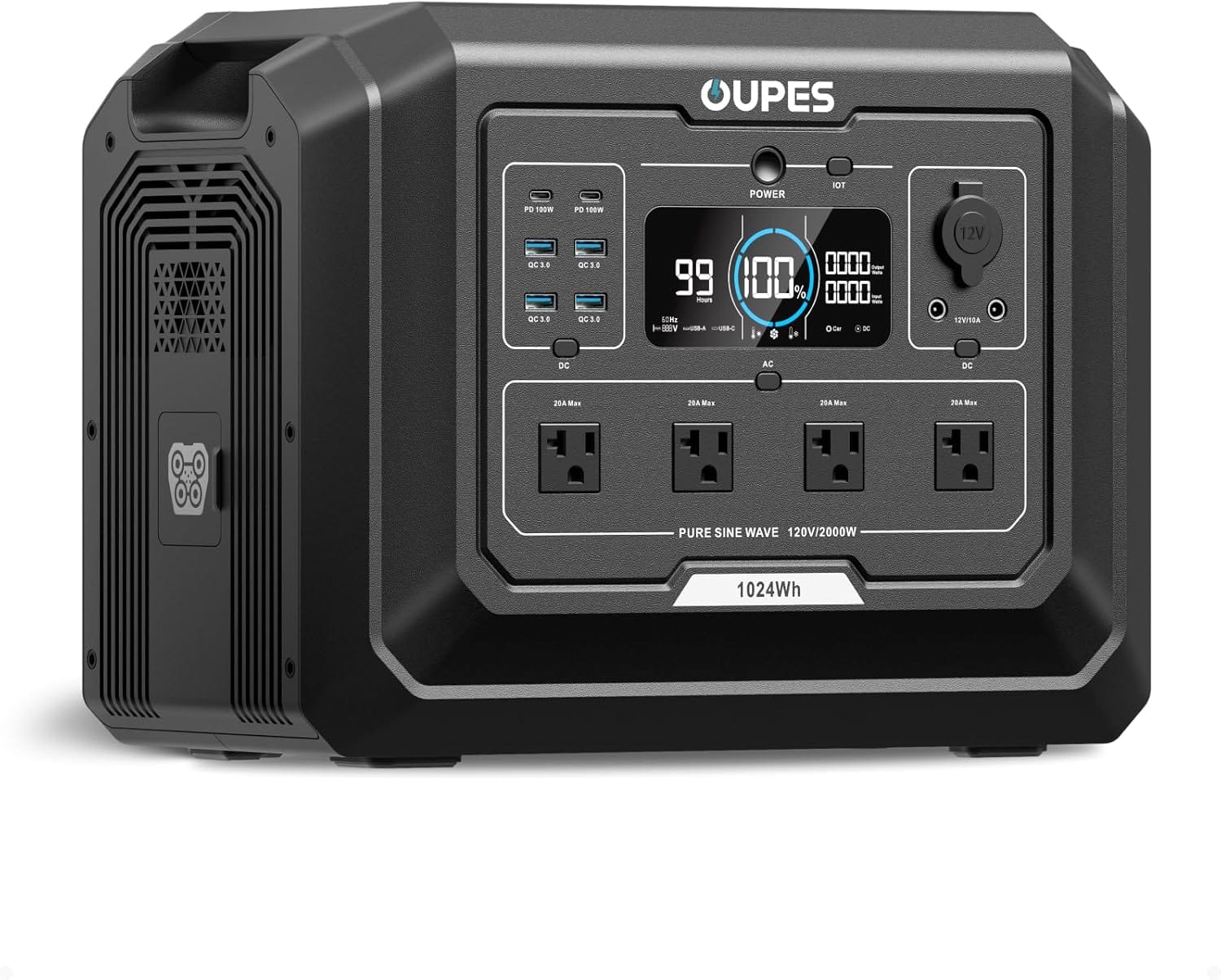
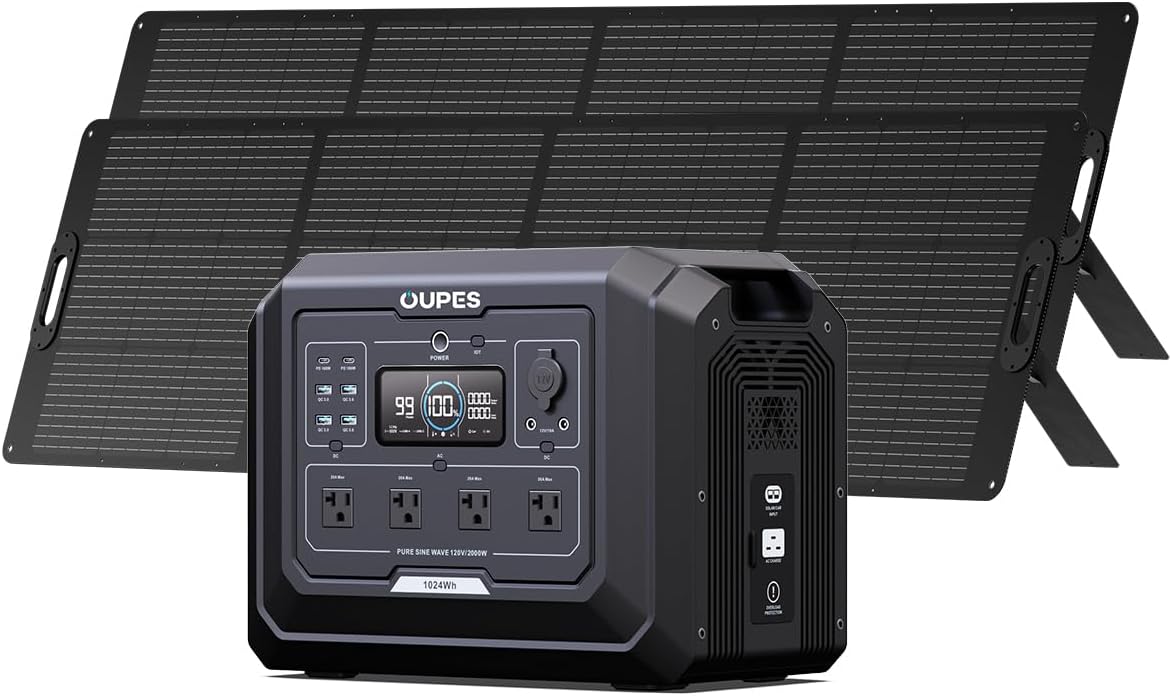
You’ll notice the OUPES Mega 1 feels like a serious piece of kit the moment you lift it. It’s compact for a LiFePO4 unit at 27.8 lbs, and the combination of high wattage outputs and expandability makes it stand out as more than a typical camping power bank.
Key specifications
Below is a clear breakdown of the main specs so you can quickly see what this unit offers and how it compares to other options you might be considering. The table gives you the headline numbers in one place so decision-making is faster.
| Feature | Specification |
|---|---|
| Model | OUPES Mega 1 Portable Power Station |
| Battery Type | LiFePO4 |
| Base Capacity | 1024 Wh |
| Expandable Capacity | Up to 5120 Wh (with B2 extra battery) |
| AC Output (continuous) | 2000 W |
| AC Peak Output | 4500 W |
| AC Outlets | 4 x 120V AC |
| USB-C | 2 x 100W |
| USB-A | 4 x 18W |
| DC Outputs | 2 x DC5521 + 1 x car lighter |
| Charge Input Options | Solar, AC, car, hybrid (solar+AC) |
| Max Charge Input | Up to 2200 W (hybrid) |
| Fast Charge | 1400 W (0–80% in ~36 minutes) |
| Slow Charge | 700 W |
| UPS Transfer Time | ~20 ms |
| Battery Cycle Life | 3500+ cycles |
| Weight | 27.8 lbs |
| Warranty | 5 years |
| Cost Positioning | ~20% lower cost than comparable higher-wattage competitors |
Capacity and expandability
You get a 1024 Wh LiFePO4 battery as the base unit, which is a solid middle-ground capacity for portable stations. Because it’s expandable to 5120 Wh with the B2 battery add-on, you can scale from weekend trips to long-duration home backup without switching platforms.
If you plan to power more than basic essentials for extended outages, that expansion option is the main selling point. Being able to add up to nearly 5.2 kWh sets this apart from many rivals that top out around 2 kWh.
Why expandability matters
You can start with a lighter package for portability and add capacity later as needs grow, which is cost- and space-efficient. That flexibility means you won’t have to buy a whole new station if your energy needs change.
Expansion also lets you configure the system specifically for where you use it — keep the base in your vehicle for trips and add batteries at home for backup, for example.
Output power and inverter performance
This unit delivers 2000 W of continuous AC power with 4500 W peak output, so it can handle high-startup loads like refrigerators, pump motors, and many power tools. The high surge rating is designed to manage those brief startup draws without tripping.
A 2000 W inverter is capable of running most heavy household appliances within reason; it’s the difference between a station that can only run lights and a station that can actually keep a fridge or CPAP going through the night.
What 2000 W means in practice
You can run devices that draw up to 2000 W continuously, and short spikes up to 4500 W. That means you should be comfortable powering a medium or large refrigerator, several lights, and electronics at once, but you’ll need to check individual appliance start-up behavior and combined loads.
When planning loads, add up all simultaneous draws and allow some headroom for inrush currents from motors or compressors.
Charging options and speeds
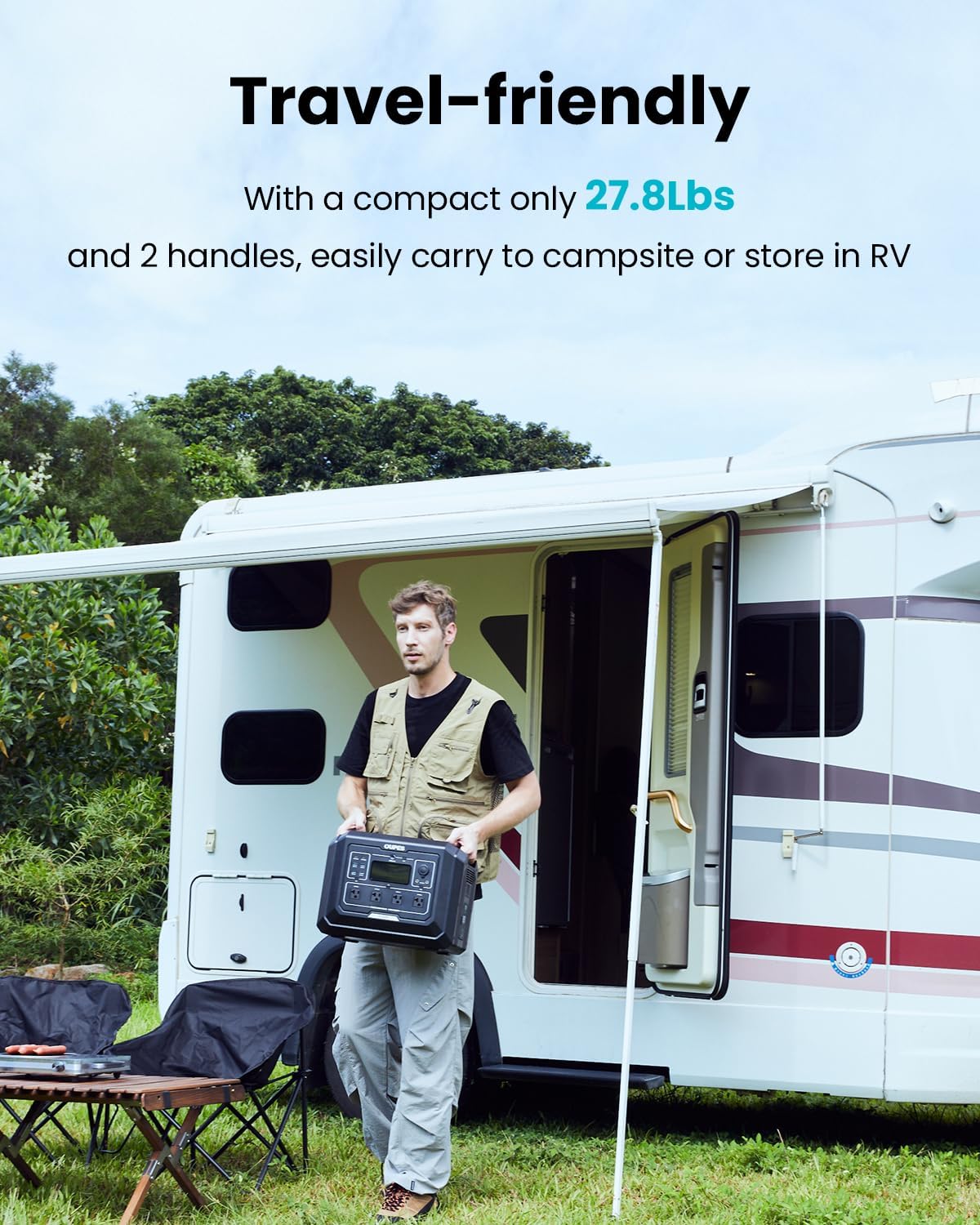
You have multiple charging sources: AC wall, solar, car outlet, and hybrid solar+AC. The unit supports fast recharging at 1400 W which gets you from 0 to 80% in about 36 minutes — a very useful feature if you need quick turnaround during outages or between travel stops.
There’s also a slower 700 W charge mode intended to preserve battery longevity when speed isn’t essential. Hybrid charging that combines solar and AC can push input up to 2200 W for even faster replenishment if you have enough solar panels and AC supply.
How fast recharging changes operations
Fast charging shortens downtime dramatically and makes the unit practical for everyday use instead of being a “reserve only” battery. If you’re on the road and land at a campsite with shore power or a fast EV charger adapter, you can recharge quickly and continue.
If you rely mainly on solar, the high input ceiling and hybrid options let you recover more energy during peak sun hours, particularly if you expand battery capacity.
Battery chemistry and expected lifespan
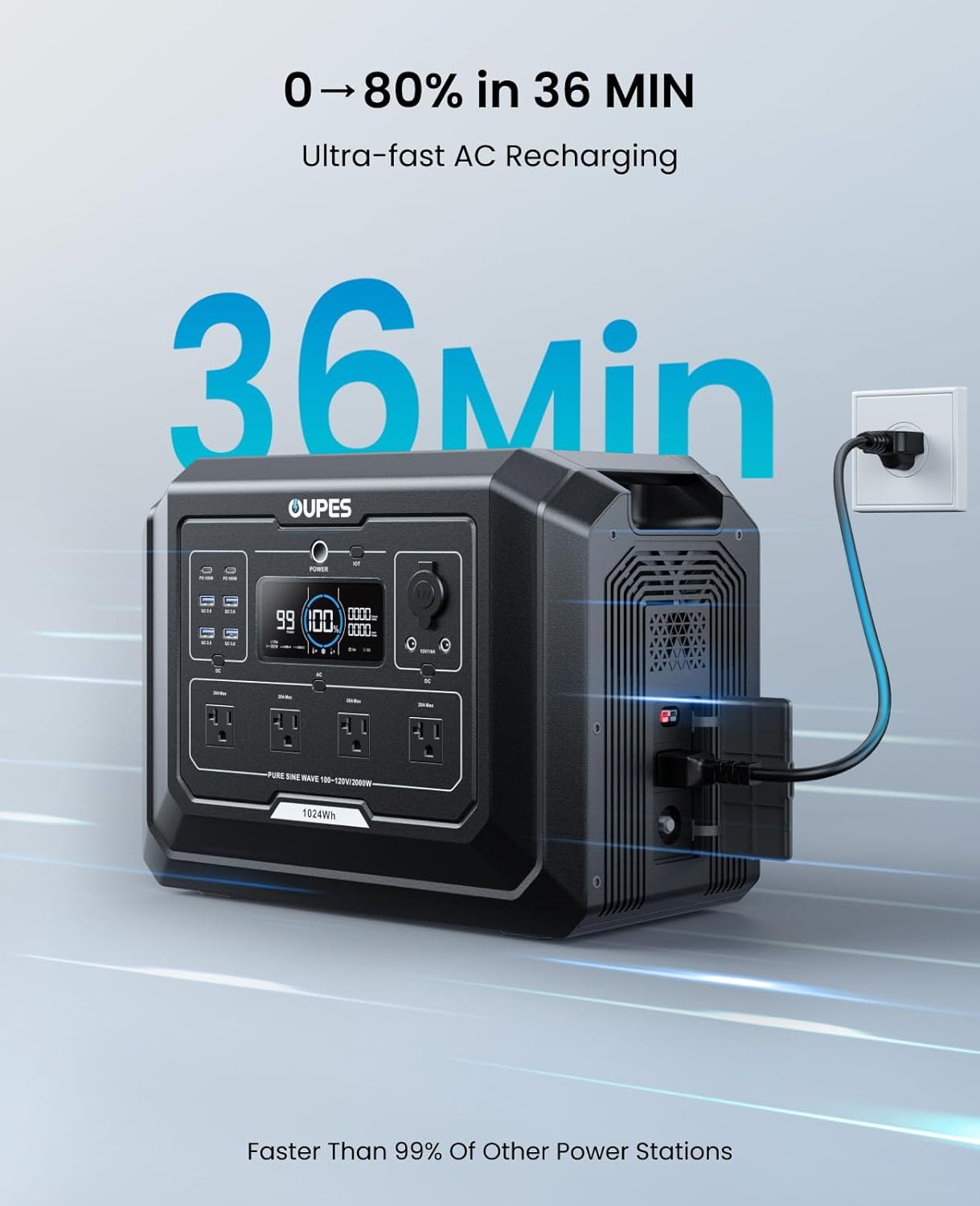
LiFePO4 chemistry is the backbone of the Mega 1, giving you high cycle life (3500+ cycles) and stability compared with many lithium-ion alternatives. That long lifespan means you’re unlikely to need a replacement battery for many years, even with frequent use.
LiFePO4 is also thermally stable and less prone to thermal runaway, which is an important safety consideration for both indoor and vehicle use.
What 3500+ cycles means for you
At typical daily use cycles, 3500 cycles can translate to several years to a decade of reliable use before capacity drops significantly. For occasional backup use, that’s effectively many decades of service life in real terms, and the included 5-year warranty adds consumer protection.
This longevity is one of the reasons many people prefer LiFePO4 for long-term investments in power stations.
UPS functionality and backup readiness
The Mega 1 includes an Uninterruptible Power Supply (UPS) feature with an advertised transfer time of about 20 milliseconds. That is fast enough to keep sensitive electronics, routers, and many medical devices running without noticeable interruption during grid switchover.
While 20 ms isn’t zero, it’s within acceptable ranges for most devices that don’t require an instantaneous transfer. This makes the station practical as a primary backup for home networks, security systems, and essential medical devices.
How to use the UPS effectively
You’ll want to identify which loads must stay on during an outage and ensure they’re connected to the UPS-protected AC outputs. Test the UPS with your specific devices before relying on it for critical needs to confirm they tolerate the transfer timing.
For truly zero-break requirements (rare), consider dedicated UPS gear, but for most home and portable uses, the Mega 1’s UPS is perfectly adequate.
Outputs and port layout
The station offers 13 outputs: 4 AC outlets, 2 USB-C 100W ports, 4 USB-A 18W ports, 2 DC5521 ports, and one car lighter socket. This mix covers nearly every device you’d want to power at a camp or during a blackout.
Having multiple fast USB-C ports means you can charge laptops and high-power devices directly without AC conversion, which is more efficient. The AC outlets let you run traditional appliances, while DC ports and the car socket handle smaller accessories and vehicle-based integration.
Practical port usage tips
Distribute devices across ports to avoid overloading any single output and use the efficient USB-C ports for laptops and phones to conserve energy. If you’re running AC loads and DC devices at the same time, monitor total wattage to stay within the 2000 W limit.
Labeling which outlets are UPS-protected can save confusion during an outage so you know which devices will remain powered.
Smart control and connectivity
You can monitor and control the Mega 1 via WiFi and Bluetooth using a companion iOS/Android app. This feature lets you check real-time battery level, input/output wattage, and change settings remotely — useful when the unit is tucked away or you’re managing several devices.
Smart control adds convenience and helps you optimize charging/discharging cycles to extend the battery’s life by enabling eco modes or scheduling.
When app control helps most
If you set up the unit as a home backup, being able to see energy usage on your phone helps manage loads during an outage. On the road, remote monitoring means you can check state-of-charge before leaving camp or switching appliances.
Connectivity also enables firmware updates if the manufacturer releases improvements over time, keeping your unit current.
Build quality, portability, and design
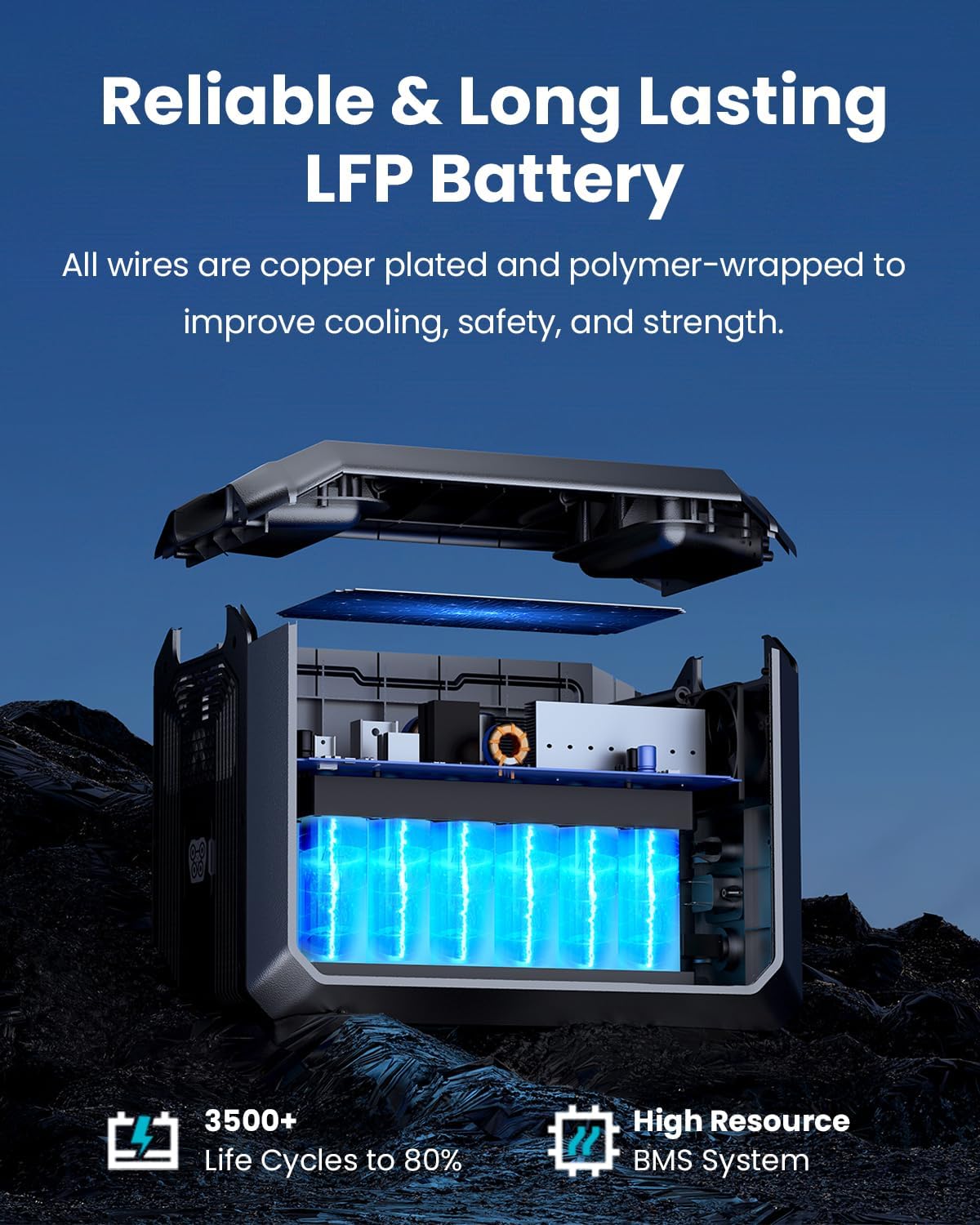
At 27.8 lbs the Mega 1 balances portability with power — you can carry it reasonably easily, though it’s heavier than small leisure units. The design is compact and durable, built for transport and storage both in vehicles and homes.
Handles and a logical layout make it easier to move around, and the LiFePO4 chemistry allows the unit to be smaller and safer compared to older battery types with similar cycle life.
Carrying and placement considerations
Place the unit on a stable, ventilated surface during charging and discharging to help with heat management. If you’ll be moving it frequently, consider a small cart or dedicated shelf to make handling easier.
For vehicle use, secure it to prevent shifting during travel and keep ventilation clear when running high loads.
Real-world performance and run-time estimates
Estimating runtime depends on device draw and conditions, but here are practical approximations using a conservative efficiency assumption of ~90% (accounting for inverter losses and real-world inefficiencies). These estimates show both the base 1024 Wh unit and the full 5120 Wh expanded setup.
| Device | Typical Draw (W) | 1024 Wh Runtime (approx) | 5120 Wh Runtime (approx) |
|---|---|---|---|
| Smartphone (charging) | 10 W | ~90–100 hours | ~450–500 hours |
| Laptop (work) | 60 W | ~15 hours | ~75 hours |
| CPAP machine | 40–60 W | ~16–28 hours | ~80–140 hours |
| Mini fridge | 70–100 W | ~8–13 hours | ~40–65 hours |
| Full-size fridge (avg) | 150 W | ~6 hours | ~30 hours |
| LED lighting (home) | 30 W | ~30 hours | ~150 hours |
| TV (LED, 50″) | 100 W | ~9 hours | ~45 hours |
| Electric kettle (boil) | 1500 W | Short bursts only | Short bursts only |
| Microwave (1200 W) | 1200 W | <1 hour (short cycles)< />d> | ~3–4 hours (short cycles) |
These numbers are approximations — real-world runtime will vary based on device efficiency, duty cycles (compressors and heaters cycle on/off), and environmental factors. High-surge devices are limited by inverter ratings for startup but will draw down the battery quickly if used continuously.
How to read these numbers
Time estimates assume continuous draw at the listed wattage and factor in about 10% system efficiency loss. Devices that cycle (refrigerators, AC units) will usually last longer than a continuous draw figure suggests because compressors run intermittently.
If you expand to 5120 Wh, you multiply runtime roughly by five, which transforms the station from a short-term backup to a multi-day outage solution.
Solar charging considerations
Solar charging is optional but supported, and the Mega 1 accepts high-power solar input that pairs well with large panel arrays. Hybrid charging that combines solar and AC increases flexibility and reduces charge times when both sources are available.
If you plan to rely heavily on solar, you’ll want panels that can collectively deliver close to the unit’s input ceiling to maximize recharge speed during peak sun hours.
How many panels for a meaningful charge
To approach the maximum solar input, you’d need multiple high-watt panels (for example, 500 W–600 W panels in parallel/series depending on voltage). For everyday camping use, a single 200–400 W panel gives slower but practical charging; for home backup, consider a larger mounted solar array.
Always ensure your panel voltage/current match the station’s MPPT input specs and follow manufacturer guidelines for safe connections.
Camping and road-trip use cases
For camping and road trips, the Mega 1 covers laptops, cameras, lights, small fridges, and cooktop accessories while providing enough reserve to power devices for multiple days depending on your usage. The 27.8 lb weight is manageable for one person to move between car and campsite.
Its USB-C ports let you charge laptops and phones directly without the inefficiency of AC, which is handy when conserving battery. The car lighter socket and DC ports make it easy to integrate with vehicle accessories.
Tips for outdoor use
Bring power cables and adapters, plan loads in advance to avoid surprising drains, and keep the unit in a shaded or ventilated spot when charging with solar or AC. If you expect heavy usage, consider the B2 expansion battery so you don’t run out of power mid-trip.
Use the app to monitor state-of-charge so you can adapt usage as needed.
Home backup and emergency preparedness
As a home backup, the Mega 1 can keep your essentials running: refrigerator, lighting, communication equipment, medical devices like CPAPs, and small appliances. With the UPS function, it takes over quickly when the grid goes down.
If you expand to 5120 Wh, you can cover larger loads and longer durations — a realistic option for households that want multi-day backup without grid dependency or reliance on a generator.
Planning a home backup setup
Prioritize which circuits or devices are essential, then calculate combined wattage and desired duration. The base unit is suited for shorter outages or partial-load backups; expand with the B2 battery for longer coverage. You might also parallel multiple units depending on your energy architecture and budget.
Remember to factor in recharge strategy — whether via solar, generator, or AC — so the system can be replenished during extended outages.
Setup, pairing, and daily use
Setting up the Mega 1 is straightforward: position it on a stable surface, connect the desired loads, and pair the unit with your phone via Bluetooth or WiFi to monitor status. If you add the B2 battery, follow the manufacturer’s instructions for safe battery coupling and configuration.
Daily use benefits from routine checks through the app and periodic charge/discharge cycles to keep battery conditioning optimal.
Safety and maintenance pointers
Avoid fully discharging the battery regularly and store it at a moderate state-of-charge for long-term storage. Keep the unit dry and clean vents to prevent overheating. Follow the recommended charging modes (fast vs. slow) depending on whether you prioritize speed or longevity.
If you’ll be integrating the unit with a home electrical panel, hire a qualified electrician to install transfer switches or dedicated circuits safely.
Pros and cons
Here’s a concise list to help you weigh strengths and limitations at a glance.
Pros:
- High continuous AC power (2000 W) with large surge capacity (4500 W).
- Fast charging (0–80% in ~36 minutes) with hybrid input up to 2200 W.
- Long-lived LiFePO4 battery (3500+ cycles) and 5-year warranty.
- Expandable to 5120 Wh, which is rare at this price point.
- Multiple output types including two 100W USB-C ports.
- UPS support keeps essential devices online during outages.
- Competitive pricing (about 20% cheaper than similar wattage competitors).
Cons:
- At 27.8 lbs it’s portable but not ultra-light for backpacking.
- 20 ms UPS transfer may not be perfect for extremely sensitive industrial equipment.
- To reach full 2200 W solar+AC benefit you’ll need a fairly large panel array.
- Expansion batteries add cost and additional weight.
Who this product is for
This power station suits anyone who wants more than a lightweight battery for phone charging and LED lights. It’s for people who need real appliance power on the move, such as campers who run fridges and cooktops, vanlifers, and homeowners who want a scalable solution for outage preparedness.
If you frequently need to run CPAP machines, refrigerators, routers, and laptops simultaneously — or you prefer the option to scale your battery bank later — this unit is an excellent fit.
When you might look elsewhere
If you need an ultra-light unit for day hikes, a smaller portable power bank is better. If you need perfect zero-transfer UPS performance for specialized servers, dedicated enterprise UPS equipment may be required.
For most consumers, though, the Mega 1 hits a sweet spot between portability, power, and price.
Comparison with typical competitors
Compared to many competitors that top out around 2 kWh and cost more for similar output, the Mega 1 claims a cost advantage of roughly 20% while offering higher expansion capacity. That makes it appealing if you want the option to scale without changing platforms.
For buyers comparing options, focus on the combination of inverter power, expandability, charge speed, and battery chemistry — the Mega 1 scores highly across these categories.
Value assessment
When you factor in the LiFePO4 lifespan and the expansion path, the total cost of ownership looks attractive. You’re paying for a unit that’s built to last and which can be upgraded in stages as your energy needs grow.
Setup scenarios and practical examples
Here are two realistic scenarios to help you picture how you might use the Mega 1:
Scenario 1 — Weekend camping with modest loads: You bring the base unit and a 200 W–400 W portable solar panel. You run a mini fridge, charge phones and laptops, and power lights. With conservative usage, a 1024 Wh capacity can last the whole weekend, and daytime solar topping up the battery reduces nighttime consumption.
Scenario 2 — Home outage with expandable batteries: You mount two B2 expansion batteries to reach 5120 Wh, connect critical circuits via a transfer switch, and rely on solar + AC hybrid charging to keep batteries topped off. You can maintain fridge, lights, communications, and medical devices for many days, depending on solar conditions and load management.
What to prioritize in each scenario
For camping, prioritize portability and efficient load planning. For home backup, prioritize expansion, dedicated circuits, and a robust recharge plan (solar or generator).
Final verdict
If you want a portable power station that genuinely bridges the gap between campsite convenience and real home backup capability, the OUPES Mega 1 is an impressive option. The combination of 2000 W continuous output, fast charging, LiFePO4 longevity, and the ability to expand to 5120 Wh makes it flexible for many use cases.
You’ll get solid real-world performance for appliances and sensitive devices, and the 5-year warranty adds peace of mind. If you plan to scale capacity or need faster recharge times during outages, this product gives you that path at a competitive price.
Bottom line recommendation
Buy the Mega 1 if you want a future-proof, scalable power station that can handle serious loads and can grow with your needs. Choose the B2 expansion later if you find yourself needing days of backup or sustained power for larger household needs.
Disclosure: As an Amazon Associate, I earn from qualifying purchases.