
Looking for a reliable portable power solution that keeps your devices running whether you’re camping, traveling, or facing an outage?
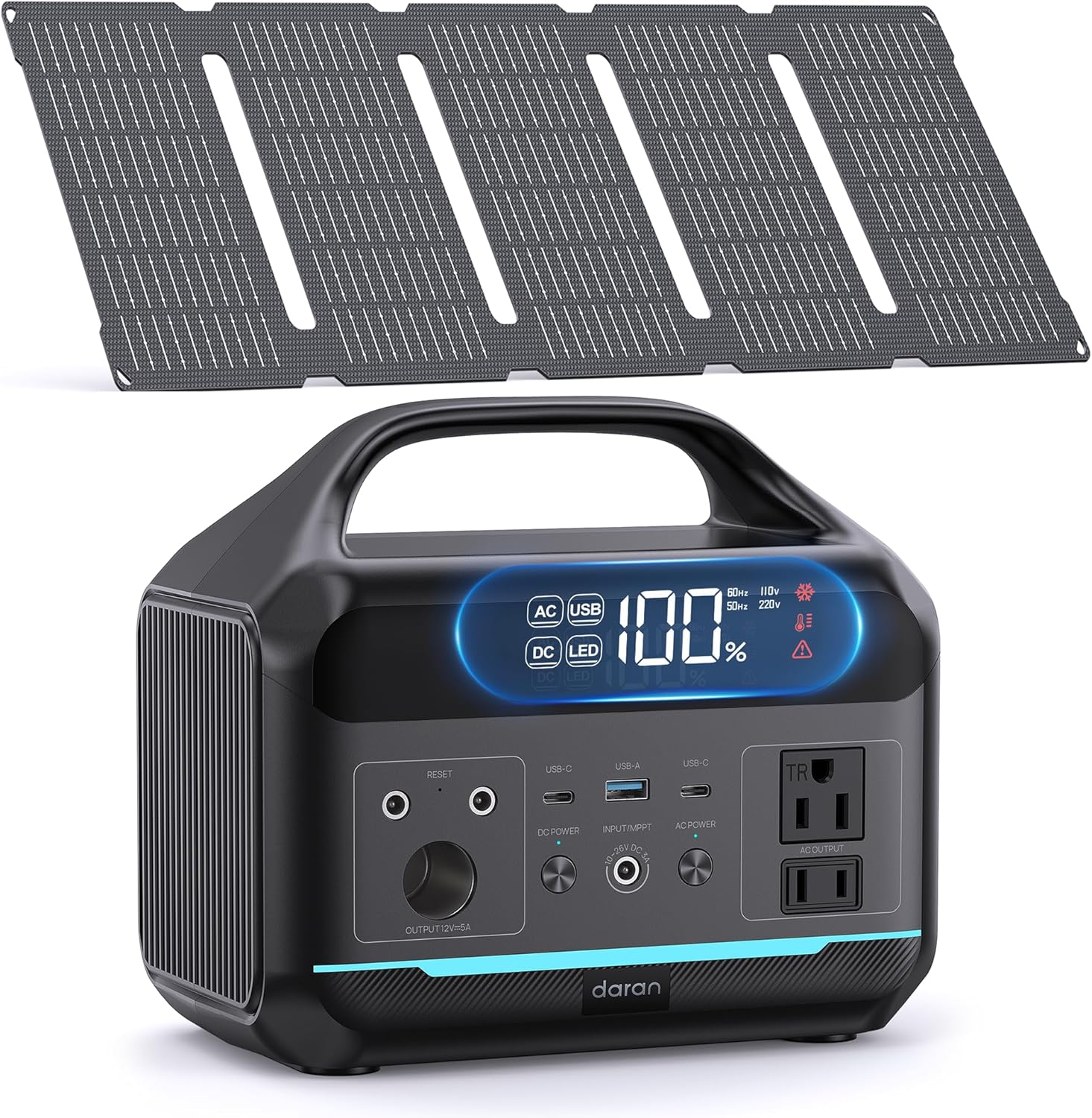

Product Overview: Solar Generator with Panels Included – Portable Power Station 300W with 30W Solar Panel, 192Wh(60000mAh) LiFePO4 Battery, Power Bank 8-Port Design w/2 AC Outlets for Home,Laptop, RV,Hurricane,Camping
You’re looking at a compact solar generator kit that combines a 192Wh LiFePO4 power station with a 30W folding solar panel. It’s positioned as an emergency-ready, multi-port power solution you can take on trips, keep in the car, or use around the house during short outages.
This review covers everything you need to know: specs, real-world performance, charging times, safety, use cases, pros and cons, and practical tips so you can decide whether this unit fits your needs.
What’s Included
You’ll receive the portable power station and a 30W high-efficiency foldable solar panel in a single kit. Accessories typically include charging cables and a user manual, but double-check the listing for the vehicle charging cable and any additional adaptors.
You should confirm the exact accessory list before purchase because the solar panel is only meant for emergency or supplemental charging, and some vehicle charging cables may not be included.
Key Specifications
Below is a compact breakdown of the most important specs so you can quickly compare features and capabilities.
| Feature | Specification |
|---|---|
| Battery Type | LiFePO4 (Lithium Iron Phosphate) |
| Battery Capacity | 192Wh (60,000mAh listed) |
| AC Output | 2 × 300W pure sine wave outlets (600W surge) |
| USB-C PD | 2 × up to 60W each |
| USB-A QC | 1 × 18W QC 3.0 |
| DC Outputs | 2 × DC5521 (60W) |
| Car Port | 1 × 12V |
| Solar Panel | 30W foldable included (EMERGENCY CHARGE) |
| Cycle Life | 3,500+ cycles (manufacturer claim) |
| Weight | Compact and lightweight (check listing for exact weight) |
| Recommended Solar for Regular Use | 80–100W panel recommended for daily charging |
You can use this table to compare with other portable generators. The 192Wh capacity and LiFePO4 chemistry are the standout specs for longevity and safety.
Design and Build Quality
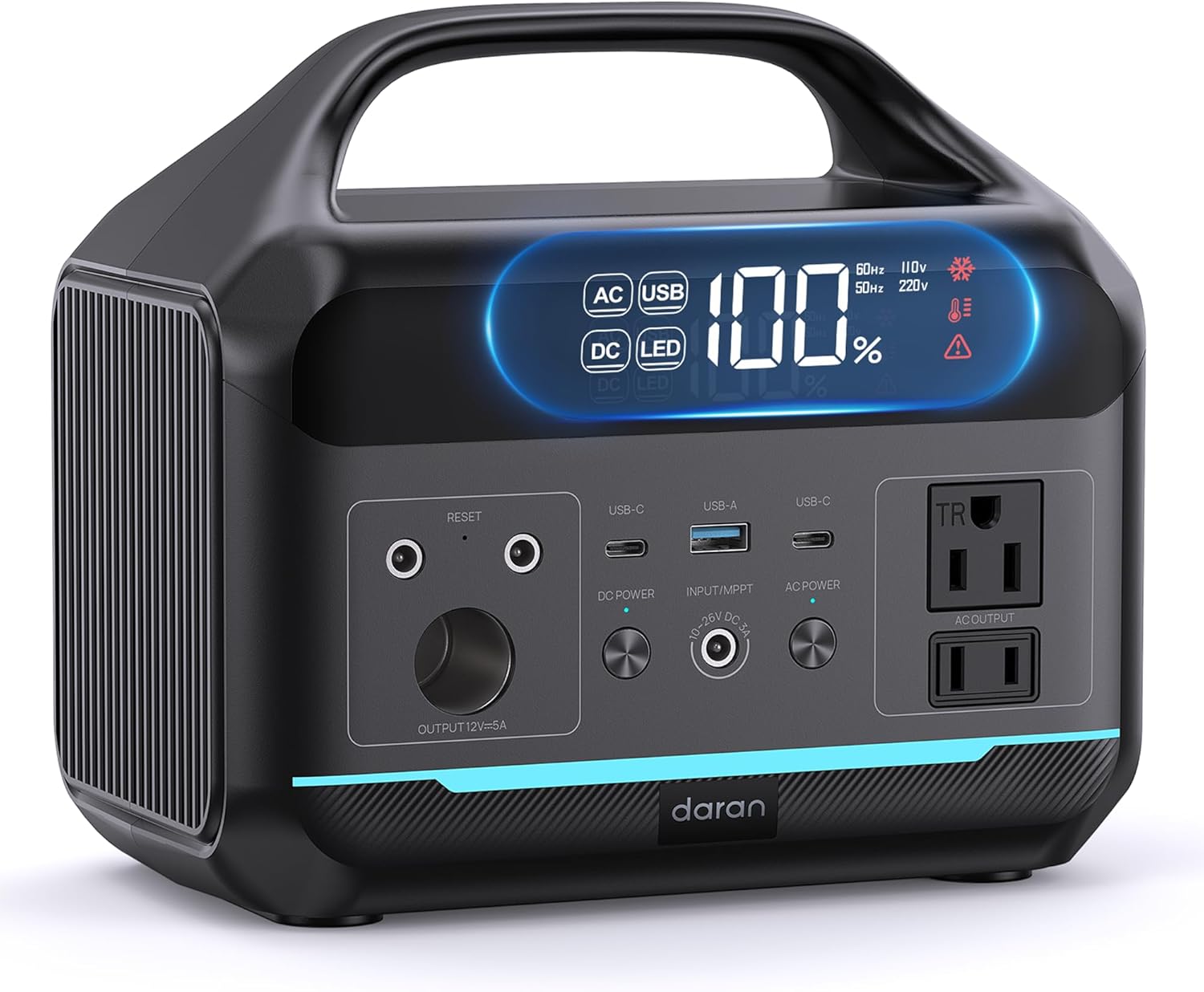
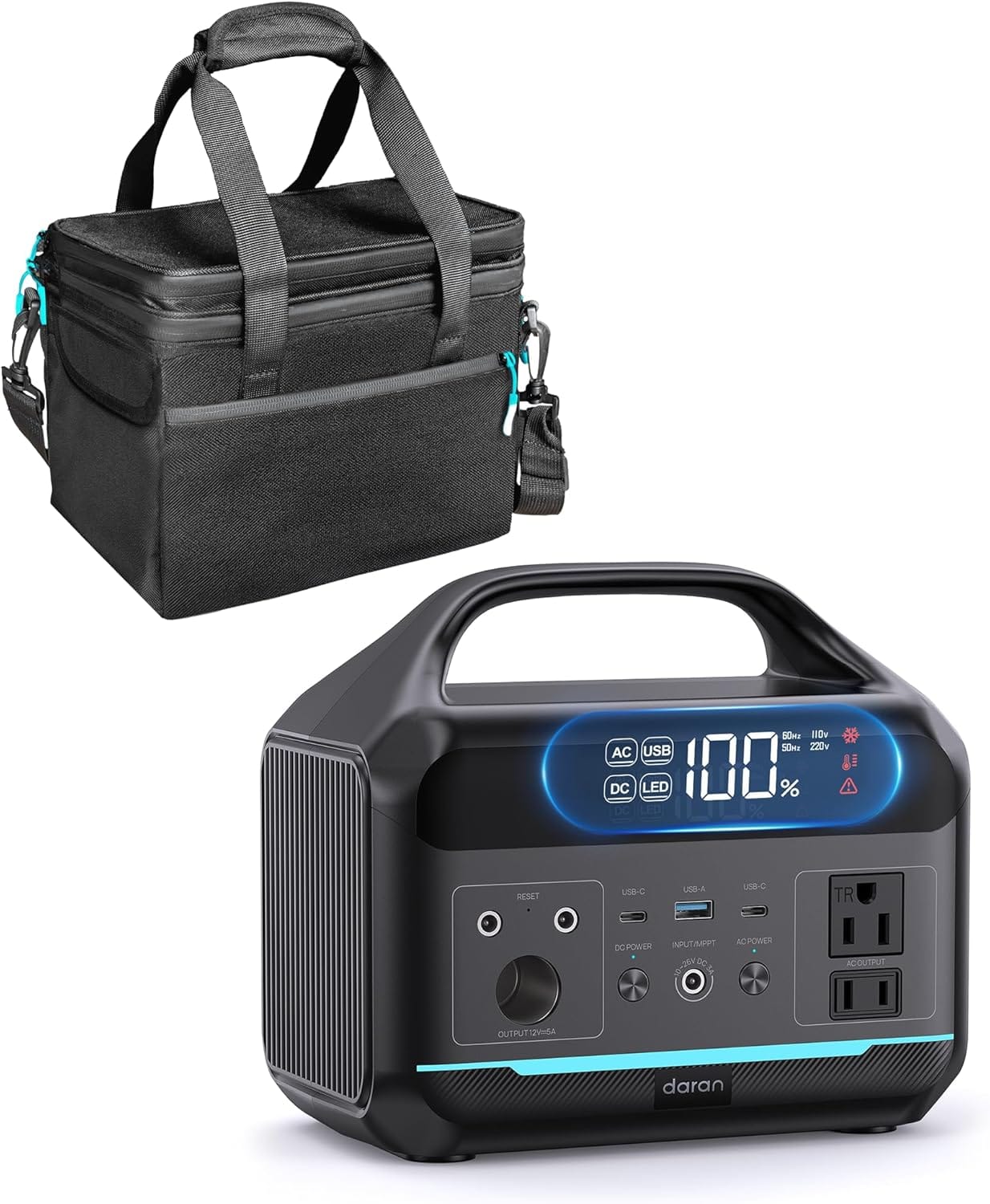
The unit is compact and designed to be portable, with a handle and a rugged plastic shell that’s typical for entry-level portable power stations. It feels solid enough for outdoor use and short-term transport.
You’ll appreciate the clean layout of ports and a simple LCD or LED display that shows remaining battery and input/output information. For a lightweight, travel-friendly power station, the build balances portability and functionality.
Solar Panel Design
The included 30W panel is foldable and lightweight, making it easy to strap to a backpack or lay on a dashboard. It’s intended for emergency charging rather than daily use because at 30W it takes many hours to recharge the 192Wh battery.
For everyday off-grid charging you’ll want to add a larger 80–100W panel. The included panel can provide top-ups or slow recharge if you’re off-grid, but don’t expect quick turnaround times.
Battery Technology and Safety
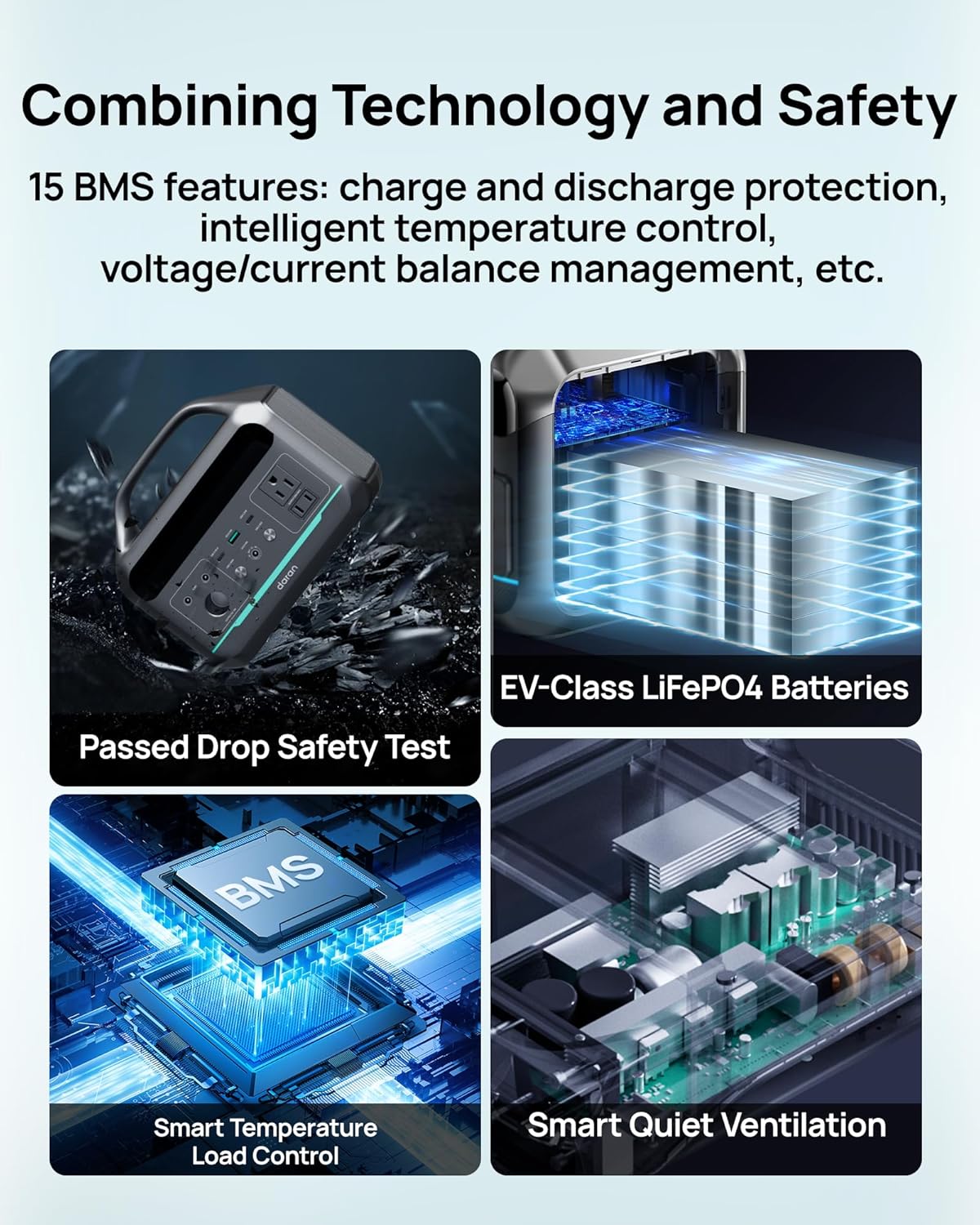
This unit uses a LiFePO4 battery chemistry, which is more stable and longer-lasting than typical lithium-ion cells. The manufacturer claims over 3,500 cycles, so the battery should outlive many competing portable stations that use standard lithium-ion packs.
You’ll also get a battery management system (BMS) that protects against overcharging, over-discharging, overheating, and short circuits. These protections help ensure safe operation in environments like camping, RVing, or emergency home backup.
Why LiFePO4 Matters
LiFePO4 cells are less prone to thermal runaway and typically retain capacity over many more cycles than standard lithium-ion. That means you’ll replace the unit less often and have a more reliable power source over the long term.
In practical terms, LiFePO4 gives you peace of mind if you plan to use the generator frequently or store it for emergency preparedness.
Output Ports and Versatility
You can power up to eight devices simultaneously thanks to the 8-port design. That includes two 300W AC outlets, two USB-C PD ports (60W max), one USB-A QC 3.0 (18W), two DC5521 outputs (60W), and a 12V car port.
The variety of ports means you can charge phones, tablets, laptops, cameras, LED lights, and low-power appliances at the same time without juggling devices.
AC Output and Pure Sine Wave
The 300W pure sine wave inverter delivers clean power suitable for sensitive electronics like laptops and CPAP machines rated under 300W. The 600W surge capability handles short startup loads, but you should avoid high-wattage appliances such as hair dryers, rice cookers, space heaters, or full-size refrigerators.
If you plan to run pumps, fridges, or high-draw cooking appliances, this unit won’t be sufficient. It’s best used for electronics and small devices.
Charging Options and Times
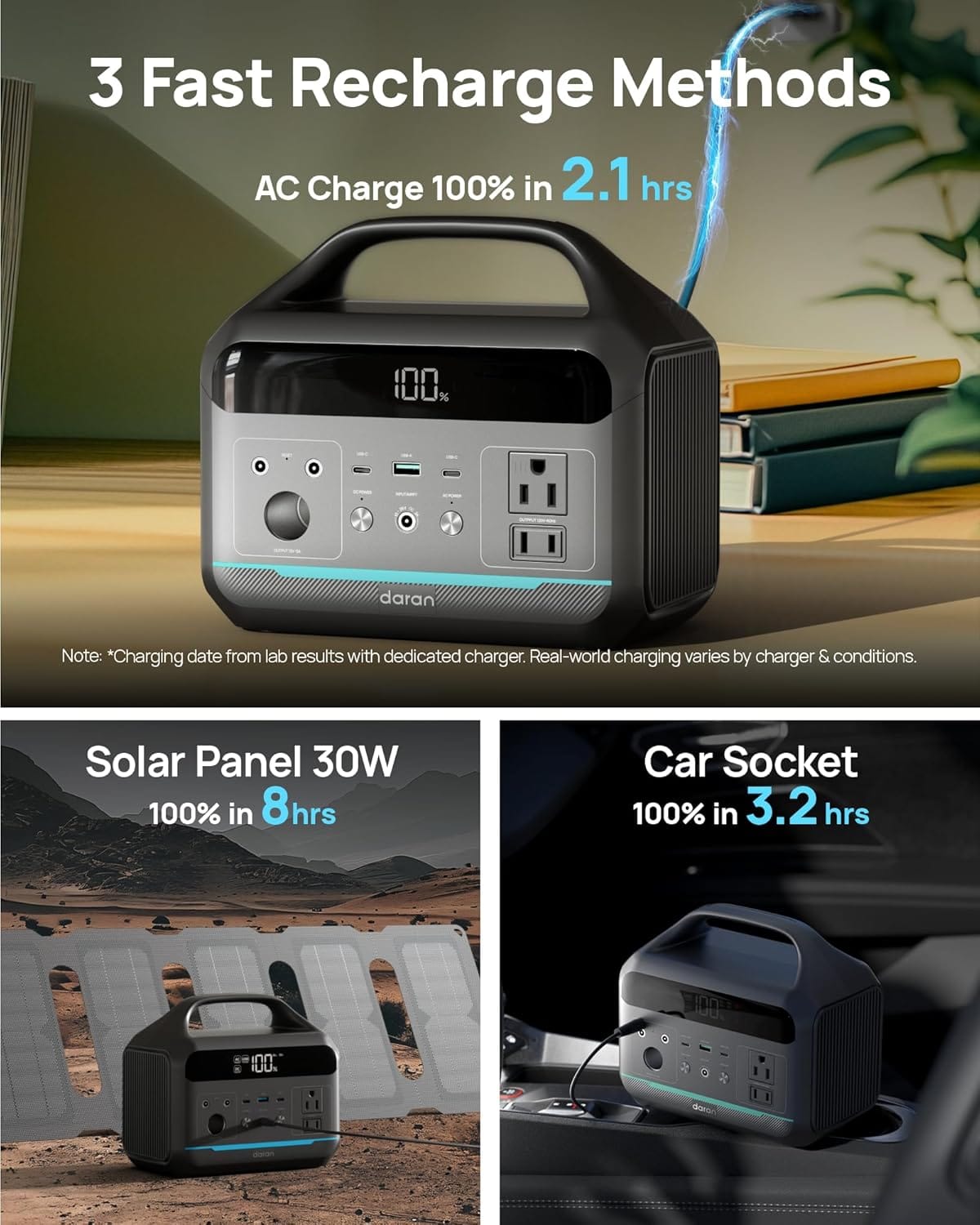
You have three main charging methods: AC wall charging, car charging, and solar charging using the included 30W panel. Each method varies significantly in time-to-full.
- AC wall charger: fastest for full recharge (check included charger specs for exact time—often several hours).
- Car charging: convenient while traveling but slower than AC.
- 30W solar panel: emergency top-up; manufacturer quotes about 8 hours or longer to fully charge the station under ideal conditions.
Realistic Charging Times
Expect roughly 6–8 hours to hit 80% via a good AC charger under typical conditions. The 30W panel requires roughly a full day of bright sun or multiple long days to replenish the battery from empty—about 8 hours in ideal sun, but real-world panels, angles, and weather usually make it longer.
If you plan to use solar regularly, invest in an 80–100W panel: that will reduce charging time significantly and make solar a practical daily charging method.
Performance in Real-World Use
To estimate run times, remember the battery provides 192Wh nominal capacity. Accounting for inverter efficiency and real-world losses, a conservative usable energy figure is around 160–175Wh for AC loads.
Here are example run-time estimates using a conservative efficiency assumption:
| Device | Typical Wattage | Estimated Run Time (hours) |
|---|---|---|
| Smartphone (charging 10W) | 10W | ~16–18 hours |
| Laptop (45W) | 45W | ~3.5–4 hours |
| Camera battery charger (20W) | 20W | ~8–9 hours |
| LED camping lights (5W) | 5W | ~30–35 hours |
| CPAP machine (40W typical) | 40W | ~4–4.5 hours |
| 12V car fridge (small, 40W avg) | 40W | ~4–4.5 hours |
These examples assume you’re using AC or DC outputs and account for some conversion inefficiencies. Devices with startup surges within the 600W surge capacity should be fine, but avoid devices that require continuous power near or above 300W.
Example Scenario: Weekend Camping
If you plan a weekend trip and need to charge phones, run LED lights, occasionally top up a laptop, and run a small fan, this unit can comfortably cover a 1–2 person outing. For multi-day trips or higher power needs, consider pairing the station with an 80–100W solar panel or adding a second battery bank.
Portability and Practical Use
You’ll find the generator is lightweight and easy to move, which makes it ideal for short trips and emergency grab-and-go. It fits in most car trunks, RV storage compartments, and basecamp kits.
Keep in mind the included solar panel adds bulk if you carry it every trip. The panel folds, so it’s manageable, but if you plan to hike long distances, you might prefer a lighter charger and a smaller battery.
Safety and Reliability
With LiFePO4 chemistry and a solid BMS, you can rely on the generator for safe, repeated use. The safety systems protect both the battery and your connected devices, and the pure sine wave inverter minimizes audio interference and potential damage to sensitive electronics.
If you keep the unit in a vehicle or storage, maintain a partial charge rather than storing fully discharged. LiFePO4 still handles deep discharges better than Li-ion, but good storage practices extend life and reliability.
Pros and Cons
You’ll find clear strengths and some limitations with this unit. The design suits specific needs well, but it’s not the right tool for everything.
Pros:
- Long-lasting LiFePO4 battery with high cycle life.
- Compact and portable with multiple useful output ports.
- Pure sine wave inverter safe for sensitive electronics.
- Good for emergency kits, camping, and short off-grid trips.
- Included 30W solar panel adds emergency solar capability right away.
Cons:
- 192Wh capacity limits duration for high-power devices or multi-day use without recharging.
- 30W solar panel is slow—only practical for emergency/occasional top-up.
- Not suitable for high-draw appliances (hair dryers, larger fridges, heaters).
- Car charging cable may not be included, verify before purchase.
Use Cases and Practical Suggestions
This unit is a strong choice for specific users. Below are practical scenarios where it works well and where you should consider alternatives.
Camping and RV Weekend Trips
You can power lights, phones, cameras, small fans, and occasionally a laptop for a small group. If you camp for multiple days with limited sun, add a larger solar panel or a secondary battery to avoid running out of power.
Make a simple charging plan: prioritize phones, lights, and safety gear like headlamps and a GPS device. Limit laptop use unless you have significant charging opportunities.
Emergency Home Backup
For power outages, this unit will keep essential devices running: phones, a small CPAP (check wattage), LED lights, and routing a router or a laptop for a few hours. It won’t power long-term refrigeration or heavy-duty appliances, but it’s a great short-term backup for maintaining communication and basic needs.
Store the unit charged and rotate the charge every few months to maintain battery health and readiness.
Photography, Field Work, and Small Electronics
If you shoot for a few hours, charge camera batteries, run a laptop, and power small accessories while on location, this generator is convenient. The 60W USB-C PD ports are especially helpful for modern laptops and cameras that support PD charging.
Carry a small toolkit of cables and a multi-port charger to maximize simultaneous charging efficiency.
Tips to Maximize Runtime and Longevity
You’ll want to use the unit smartly to extend run times and avoid unnecessary wear.
- Prioritize efficient devices: use LED lights, low-draw fans, and power-saving modes on laptops and phones.
- Charge using DC or USB when possible to avoid inverter conversion losses; DC outputs are more efficient than AC.
- Use sleep modes on devices and minimize continuous high-power loads.
- If using solar, angle the panel optimally toward the sun and avoid shading to improve output.
- Keep firmware and BMS in good condition (follow manufacturer maintenance suggestions if any).
Comparison with Alternatives
Compared to other 200–300Wh units, the LiFePO4 chemistry and the 3,500+ cycle claim make this model stand out for longevity. Many competitors use regular lithium-ion packs and advertise fewer cycles.
However, if you need higher continuous power (500W+), look at larger stations. If you anticipate heavy solar use, choose units that bundle higher-wattage panels or offer expandability.
Frequently Asked Questions
You’ll likely have a few common questions; here are clear answers to help you decide.
Q: How long does the 30W panel take to charge the 192Wh battery? A: The manufacturer indicates about 8 hours under ideal conditions, but real-world times are often longer due to sun angle, temperature, and panel placement. Treat the supplied panel as an emergency top-up, not a daily charger.
Q: Can you run a CPAP machine? A: Yes, if your CPAP draws less than 300W. Typical CPAP machines average around 30–60W, so you can run many models for 3–5 hours depending on load and pressure settings. Confirm your device’s wattage before use.
Q: Is the battery safe to store? A: Store it charged to around 50–70% if possible and in a cool dry place. LiFePO4 batteries are robust and tolerate storage better than many lithium-ion types.
Q: Do you get a car charging cable? A: Some listings include a car charging cable while others do not. Check the product details before completing purchase, since the product page notes vehicle charging cable may not be included.
Real-World Test Scenarios
Here are a few realistic scenarios you might face and what to expect from the unit.
Scenario 1 — One-Person Weekend Camping: You charge two phones (overnight), run LED camp lights (6–8 hours nightly), and top up a laptop once. You’ll likely return with 20–50% battery remaining depending on use and whether you had any solar input. Pairing with a larger solar panel stretches this to multiple days.
Scenario 2 — Short Home Outage: Power is out for a morning and you need to charge phones, keep a router running, and power small lights. The generator handles this well for several hours, letting you maintain communications and work from a laptop intermittently.
Scenario 3 — Photography Day: You charge several camera batteries and a laptop. The dual 60W USB-C PD ports allow you to charge two PD-compatible laptops or a laptop and a camera/phone at faster speeds, making this very practical for field work.
Maintenance and Support
You should keep connectors clean and store the solar panel folded in dry conditions. The manufacturer offers support—if you run into issues, contact them for troubleshooting or warranty help.
If you plan to use the unit regularly, occasionally run a charge/discharge cycle and keep firmware (if applicable) up to date.
Final Verdict
If you need a compact, long-life, and safe portable power station for camping, emergency preparedness, or day-to-day portable charging needs, this Solar Generator with Panels Included – Portable Power Station 300W with 30W Solar Panel, 192Wh LiFePO4 Battery, Power Bank 8-Port Design is a strong contender. You get a durable LiFePO4 battery, pure sine wave inverter, and a versatile set of ports that cover most small-device needs.
However, if your plan involves frequent off-grid use without wall charging or you intend to power larger appliances, you’ll want a higher-capacity battery and a stronger solar array. The included 30W panel is handy for emergencies but not suited for daily solar charging.
If you fit the use cases described—weekend trips, emergency backup for essential devices, or fieldwork charging—this unit will likely meet your needs and serve reliably for years thanks to the LiFePO4 chemistry.
If you want, you can tell me the devices you plan to power and how long you need them to run, and I’ll calculate more precise run-time estimates and recommend whether this unit or a larger model fits you better.
Disclosure: As an Amazon Associate, I earn from qualifying purchases.