
Are you considering the BROWEY Portable Power Station, 1000W Solar Generator with Built-in Solar Panel for your next trip or emergency kit?

First impressions and initial thoughts
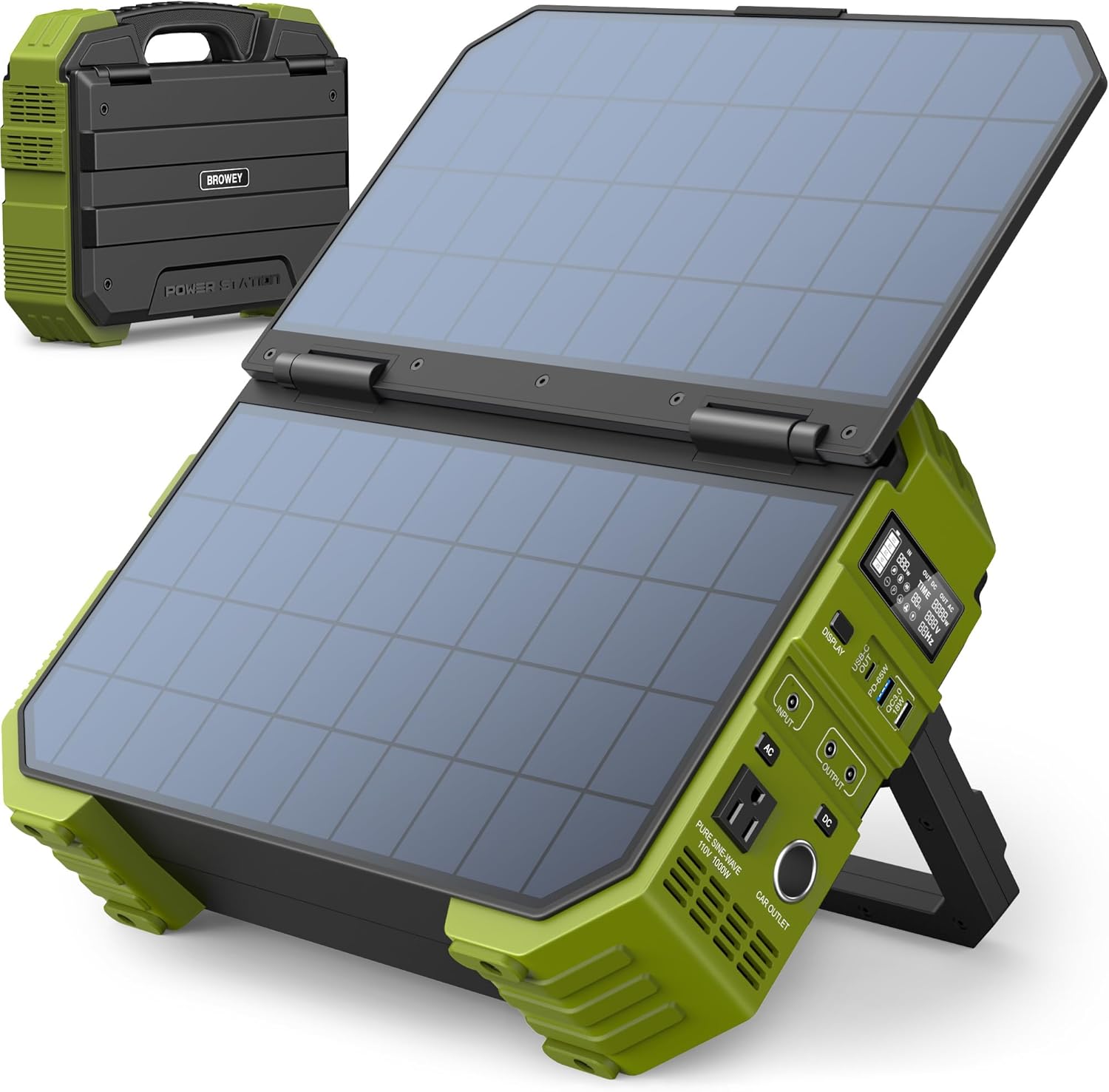
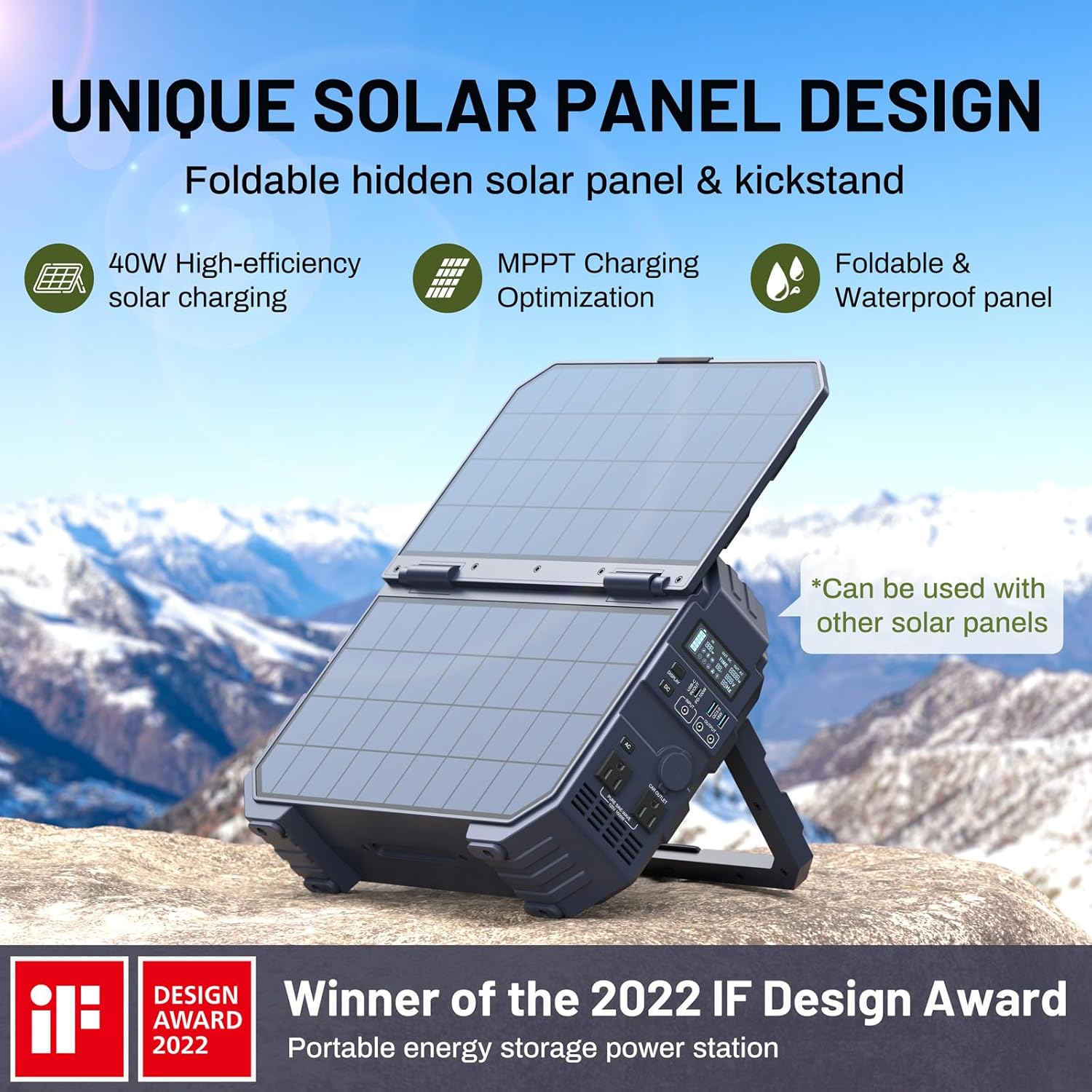
You’ll notice the BROWEY Portable Power Station immediately for its compact, foldable solar panel and comfortable carry handle. The design earned the 2022 German iF Design Innovation Award, which signals both thoughtfulness and practical styling in a portable generator.
The unit sits between small power banks and larger, heavy-duty solar generators, giving you a balanced mix of portability and usable capacity. When you unpack it, the built-in panel and solid-feeling case make it clear this is meant for repeated outdoor and emergency use rather than a single weekend.
Key specifications at a glance
You’ll want the hard numbers up front to decide if this unit matches your needs. Below is a compact breakdown of the most important specs to help you make that call.
| Specification | Detail |
|---|---|
| Model | BROWEY Portable Power Station, 1000W Solar Generator (S1000) |
| Battery Capacity | 614.4Wh (192000mAh) LiFePO4 |
| Inverter | 1000W pure sine wave continuous, 2000W surge |
| Built-in Solar Panel | 40W foldable panel with MPPT controller |
| Battery Chemistry | LiFePO4 (Lithium Iron Phosphate) |
| Cycle Life | >3500 cycles to ~80% capacity |
| Outputs | AC outlets, DC outlets, USB-A, USB-C PD (details depend on model) |
| Charging Options | AC adapter, car outlet, built-in solar panel, external solar panels |
| Display | LCD showing battery %, voltage, input/output power, fault indications |
| Accessories | Carrying case, DC power cord, car adapter cable, 10 adapter headers |
| Awards | 2022 German iF Design Innovation Award |
If you like numbers, this gives you the core picture: a medium-capacity power station with a reliable LiFePO4 battery, enough inverter power for small appliances, and multiple ways to recharge.
Design and build quality
You’ll appreciate how the BROWEY blends function with a tidy, award-winning design that folds up for transport. The housing feels sturdy and well finished, with attention to seams and vents that you commonly check for in portable power gear.
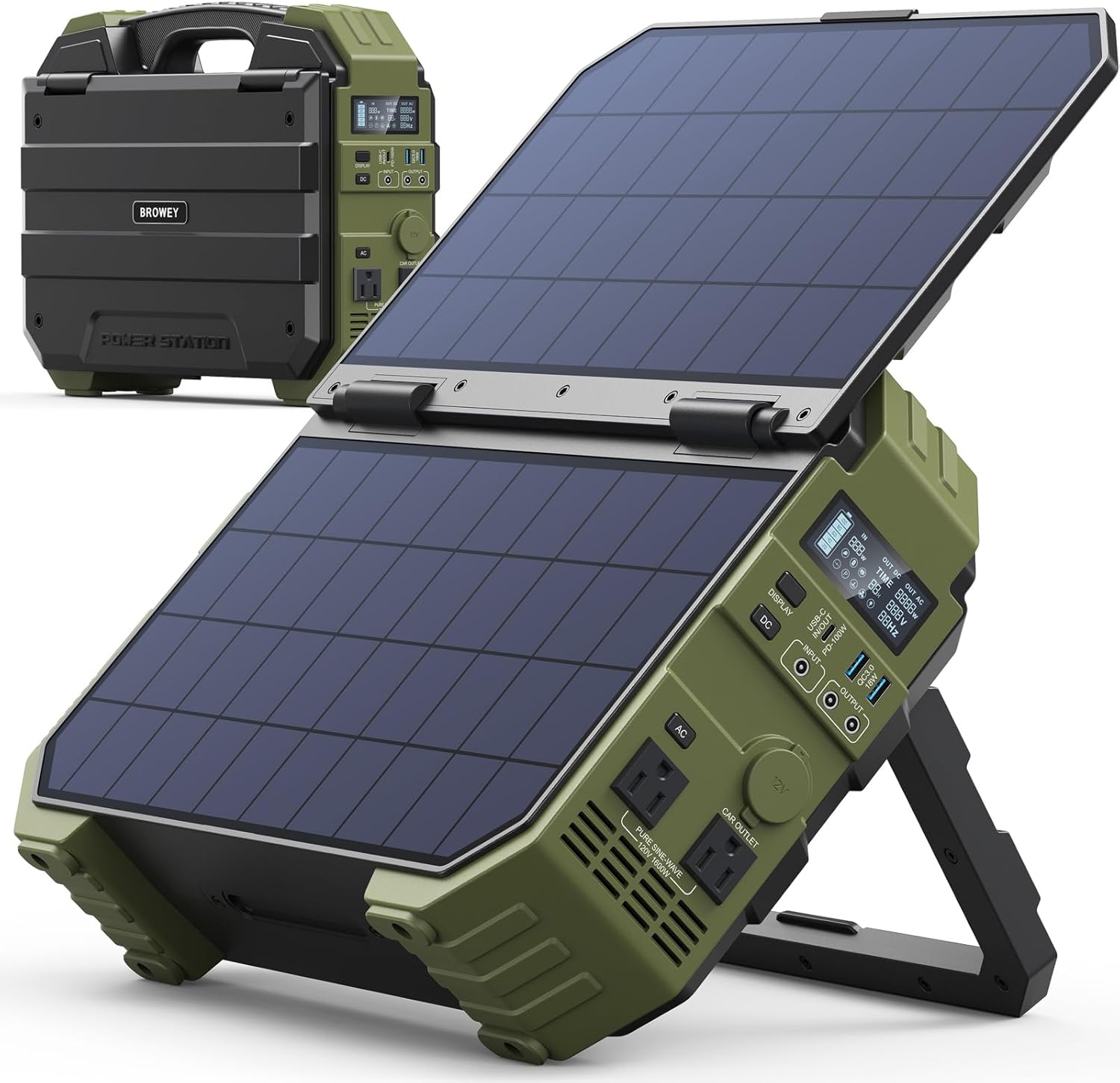
The foldable solar panel is the standout design feature because it keeps the panel integral to the unit, eliminating the need to pack a separate panel in many situations. The handle, placement of ports, and an easy-to-read LCD are practical touches you’ll use on every trip.
Battery technology: LiFePO4 explained
You’ll get a lot of life from the LiFePO4 chemistry inside this unit, which is safer and longer-lasting than many common lithium-ion cells. LiFePO4 batteries typically tolerate deeper discharge, higher temperatures, and more charge/discharge cycles.
BROWEY claims over 3500 cycles with capacity remaining around 80% after that many cycles, which translates into a decade or more of everyday use for many people. You’ll also benefit from LiFePO4’s improved thermal stability and lower fire risk compared with other chemistries.
Power and performance: what you can actually run
You’ll be able to power up to seven devices simultaneously as long as the total draw stays at or below the 1000W continuous inverter rating. The 2000W surge handles short motor starts for things like small refrigerators, pumps, or other appliances that need an initial kick.
Estimated runtimes depend on the device. For example, expect roughly 8–10 hours for a 60W laptop, 12–20 hours for LED camping lights and fans combined, and around 10–16 hours for a CPAP on typical settings—though real-world numbers will vary with device efficiency and inverter losses.
Typical device runtime estimates
You’ll appreciate having rough runtime estimates when you plan. Below are approximate numbers to give you perspective on the 614.4Wh capacity.
- Smartphone (12–15Wh battery): ~30–45 full charges.
- Laptop (45–60W draw): ~8–12 hours of usage.
- CPAP (30–60W): ~6–12 hours (depending on settings and mask humidity heater).
- LED lights + small fan (combined ~10–30W): whole-night operation easily.
- Mini-fridge (average 40–60W with compressor cycling): 6–12 hours, depending on compressor duty cycle.
These estimates assume ideal conversion efficiency and typical device draws; real-world outcomes will vary. You’ll always want to plan with some headroom for inefficiencies and colder temperatures.
Solar charging and MPPT benefits
You’ll notice the built-in 40W folding panel is convenient for low-profile charging directly from the unit without extra gear. The integrated MPPT (Maximum Power Point Tracking) controller optimizes solar input for faster, more efficient charging compared with simpler controllers.
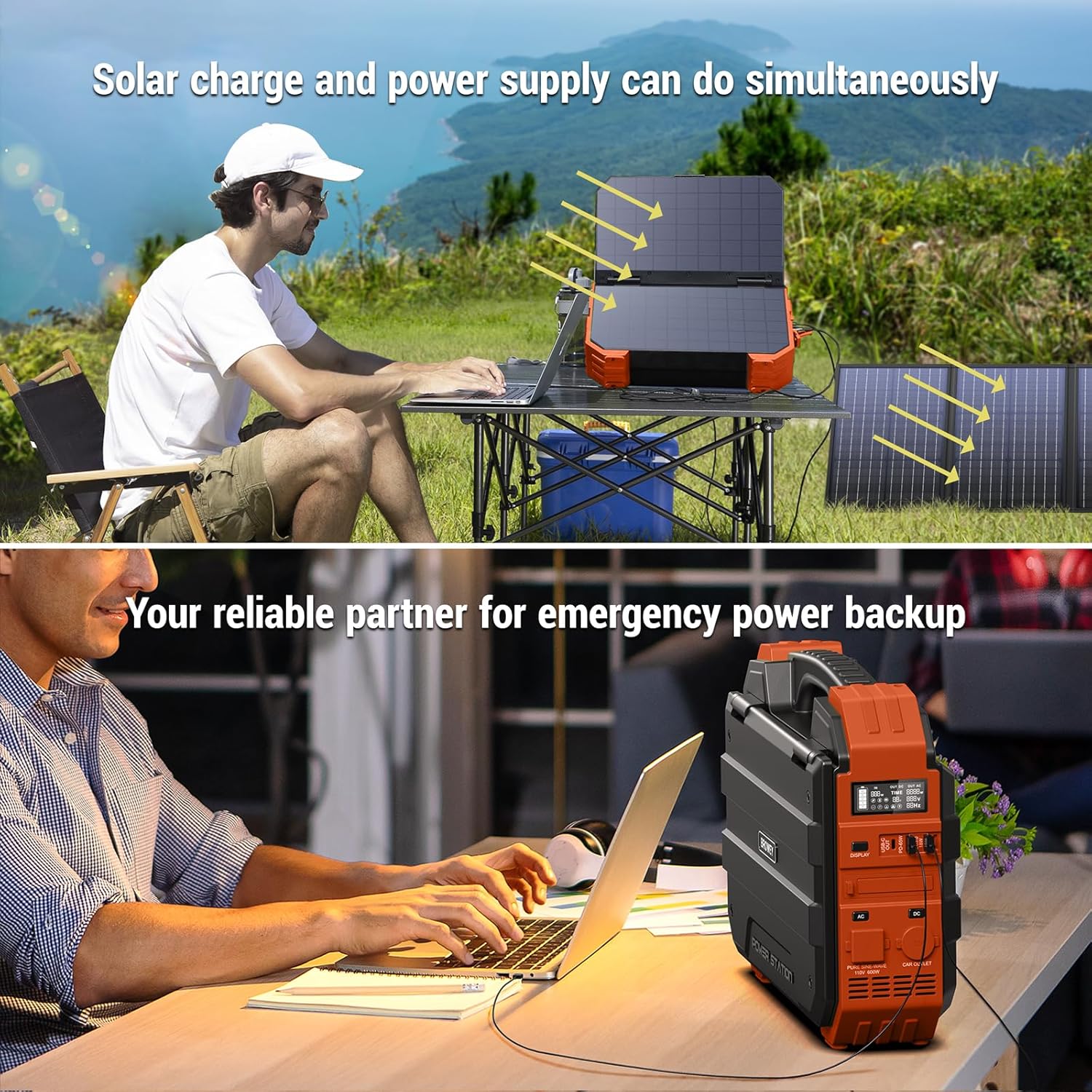
If sunlight is strong and you attach additional external panels, the MPPT system helps you make the most of that larger array and charge the battery much faster. You’ll also have the advantage of being able to run devices while the unit charges from solar, which is handy during long outdoor stays or prolonged outages.
Charging options and approximate times
You’ll have several ways to recharge this station: AC wall adapter, car outlet (12V), the internal 40W solar panel, or external solar panels connected through the input. Each method has trade-offs in speed and convenience depending on your situation.
Approximate charge times (varies with conditions):
- AC adapter (included): ~6–8 hours to full (assuming ~100W+ adapter output).
- Car outlet (DC input): ~8–14 hours depending on car power output and driving conditions.
- Built-in 40W solar panel: ~14–18 hours of solid sun (slow but available without extra gear).
- External 100–200W solar panel array: ~4–8 hours with good sun and MPPT optimization.
These figures are ballpark estimates and will shift with temperature, panel angle, cloud cover, and other real-world variables. You’ll want to plan redundancy—for instance a higher-watt external panel—if fast recharge is critical.
Outputs and port layout
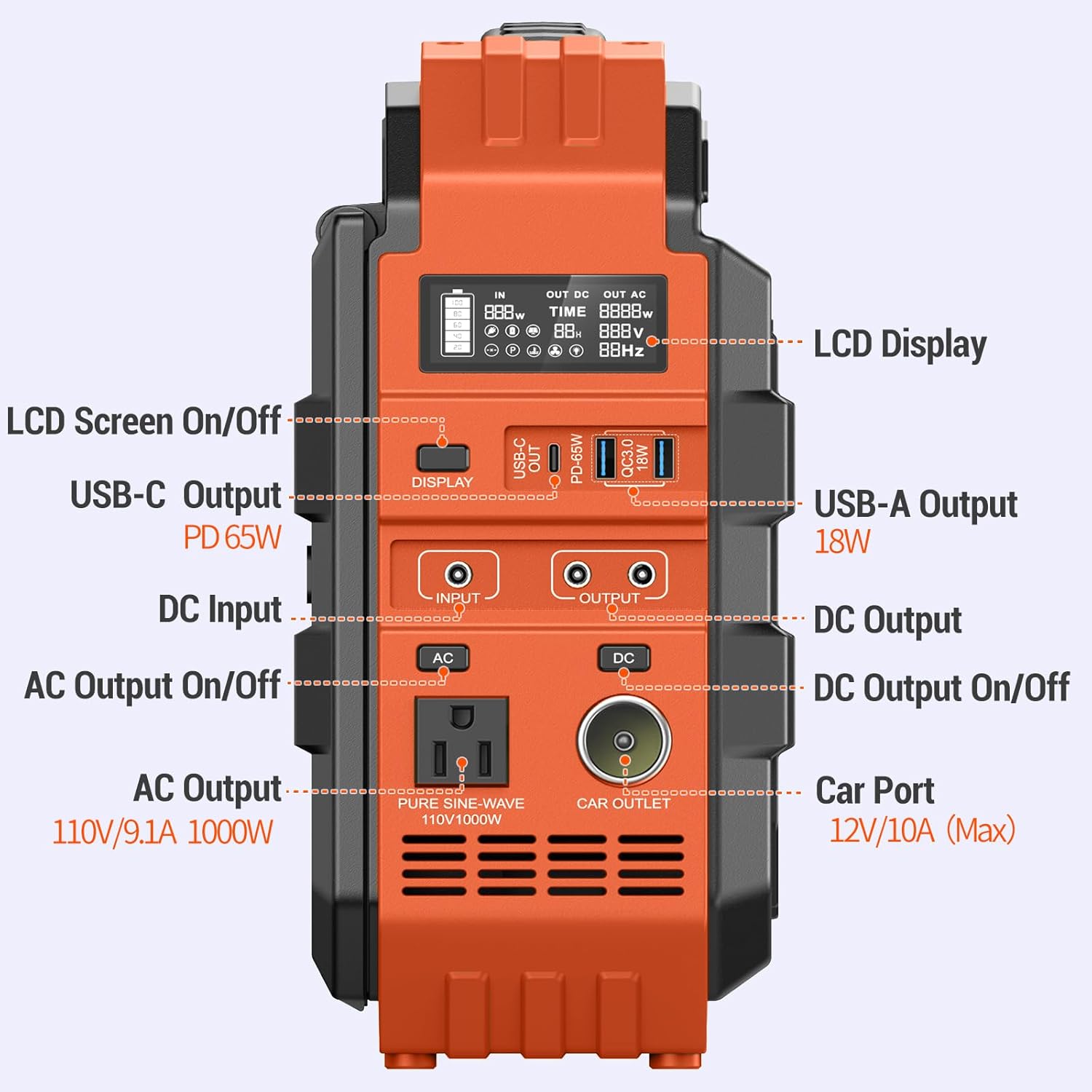
You’ll find a smart mix of ports that lets you power lights, phones, laptops, small appliances, and DC devices all at once. The unit provides AC outlets (pure sine wave), DC outputs, USB-A, USB-C PD ports, and a car outlet, plus adapter headers included for various device types.
The LCD screen helps you monitor how much power you’re sending and receiving, so you’ll know at a glance if you’re close to the inverter limit or if an input is actively charging. Using multiple ports simultaneously is one of the station’s strengths, but keep total wattage within the 1000W limit.
Portability and practical use cases
You’ll find the BROWEY S1000 portable enough to carry to a campsite, stash in an RV, or keep in a garage for emergencies. The foldable solar panel, integrated handle, and relatively compact footprint make it a solid pick for car camping and short off-grid stays.
Ideal uses include weekend camping trips where you want lights, phone/laptop charging, camera battery recharges, and possibly a small fridge; RV travelers who need a spare power source; and households that want a quiet, low-maintenance backup for short outages. You’ll appreciate how versatile it is for mixed needs.
Real-world scenario: weekend camping
You’ll charge your phones, a laptop for some work, LED lanterns, and perhaps a small camping fridge without needing a noisy gas generator. If you add a small external solar panel or recharge from a campsite AC hookup, you’ll extend your stay significantly.
Practical tips include setting devices to power-saving modes, staggering heavy loads so the inverter isn’t pushed continuously near 1000W, and keeping the LCD handy to monitor consumption.
Real-world scenario: emergency backup at home
You’ll get reliable backup for essentials like Wi‑Fi routers, phones, lighting, and small medical gear like CPAP machines for the duration of short outages. You’ll likely want multiple units or a larger capacity system if you plan to run larger loads like central heating or a whole-house refrigerator.
Pairing this unit with a small solar array can keep critical devices running through multi-day outages, especially if you top it up during daylight hours.
Pros: what you’ll like
You’ll benefit from the LiFePO4 battery chemistry, which gives you long cycle life, improved safety, and a longer service lifetime than many alternatives. The integrated folding solar panel simplifies packing and lowers the barrier to solar charging without buying a separate panel.
You’ll also like the pure sine wave inverter, which is safe for sensitive electronics, the multiple output options for everyday needs, and the included accessories and adapter headers that let you power a variety of devices right out of the box.
Cons: what to consider
You’ll want to be aware that 614.4Wh, while useful, is not enough for whole-house backup or long-term off-grid living without recharging. The built-in 40W panel is handy but slow; for practical, fast solar recharging you’ll want to add at least one external 100–200W solar panel.
Also note that the unit’s 1000W continuous inverter limits you from running large appliances—things like full-size washers, AC units, and high-power heaters are out of scope. You’ll need to match your expectations to the unit’s mid-range capacity.
Safety features and maintenance
You’ll find the advanced BMS (Battery Management System) keeps an eye on voltage, current, and temperature to prevent overcharge, over-discharge, and short circuits. The LiFePO4 chemistry itself lowers the risk of thermal runaway and makes the unit safer than many high-energy-density chemistries.
For maintenance, you’ll want to store the unit in a cool, dry place at around 40–60% state of charge for long-term storage, check port seals and vents for dust or debris, and occasionally cycle the battery to keep it healthy. You’ll also want to avoid exposing the station to heavy rain unless the manufacturer states it is weatherproof.
Setup and first-use checklist
You’ll want to unpack everything, read the quick-start guide, and inspect the carrying case and accessories before heading out. Basic first steps are: charge fully from an AC outlet, verify the LCD reports a full charge, and test each output port with a small device to make sure everything functions.
When using solar, position the folding panel perpendicular to the sun for best performance, deploy the foldable stand, and use any included adapter headers to match your panel connectors. You’ll want to confirm the MPPT input is recognized on the LCD and monitor the input watts during initial sunlight sessions.
Tips to maximize performance and battery life
You’ll extend the station’s useful life by avoiding deep discharges when not necessary, recharging it before it drops too low, and operating it in moderate temperatures whenever possible. Use external, higher-watt solar panels if you plan long off-grid trips to cut recharge times significantly.
Other tips include powering off unused outlets, switching to lower power modes on devices, using efficient LED lighting, and chaining solar panels via the MPPT controller for faster midday charging. You’ll also get more effective long-term use by updating your device charging schedule—charge smaller devices first and stagger heavier loads.
Accessories and what’s included
You’ll get the BROWEY S1000 power station, a carrying case for accessories, a DC power cord, a car adapter cable, a user guide, and 10 adapter headers for compatibility. These adapter headers are particularly useful for cameras, small appliances, and devices that commonly use barrel or specialty tips.
If you plan heavy solar use, consider buying an additional 100–200W folding panel or rigid panel that’s compatible with the station’s input to speed up charging. You may also want an extra USB-C PD cable for fast laptop charging while on the move.
Comparison with similar options
You’ll find other brands offer 500–1000Wh stations, but many use NMC battery chemistry or smaller inverter ratings. Compared to a 500Wh unit, the BROWEY gives you more headroom and LiFePO4 longevity; compared to larger 1000Wh+ stations, it’s lighter and more portable but with less runtime.
If you prioritize long cycle life and safety over raw energy density, BROWEY’s LiFePO4 choice is a smart trade-off. If you need whole-house backup or sustained high-power appliances, you’ll want to look at larger systems with higher inverter ratings and battery capacity.
| Feature | BROWEY S1000 | Typical 500Wh Unit | Typical 1000Wh Unit (NMC) |
|---|---|---|---|
| Battery Type | LiFePO4 | NMC / Li-ion | NMC |
| Cycle Life | >3500 cycles | 500–1200 cycles | 1000–2000 cycles |
| Inverter | 1000W continuous / 2000W surge | 300–500W | 1000–2000W |
| Built-in Solar Panel | 40W foldable | Usually no | Sometimes optional |
| Portability | Highly portable | Very portable | Less portable |
| Best for | Camping, short emergency backup, RV | Phones and small devices | Longer outages, heavier loads |
This gives you a sense of how the BROWEY positions itself against smaller and larger competitors.
Frequently asked questions
You’ll likely have several common questions before you buy; here are direct answers to the most frequent ones.
Q: Can the BROWEY S1000 run a CPAP machine overnight?
A: Yes, many CPAP machines draw around 30–60W; expect roughly 6–12 hours depending on settings and whether a humidifier is used. Always test with your exact CPAP model to confirm runtime.
Q: Can you charge devices while charging the unit via solar or AC?
A: Yes, the unit supports pass-through operation, so you can power devices while it’s charging. You’ll see this reflected on the LCD showing simultaneous input and output.
Q: Is the built-in solar panel sufficient for quick recharges?
A: The built-in 40W panel is convenient, but slow for full recharges. You’ll want to add an external 100–200W panel for practical, faster solar charging.
Q: How safe is the battery?
A: The LiFePO4 chemistry is one of the safest common lithium battery types and, together with the BMS, provides robust protection against common battery faults. You’ll still follow basic safety guidelines like avoiding punctures and prolonged exposure to high heat.
Q: Does it include a warranty?
A: BROWEY provides product technical support and typically a warranty; check the seller’s page for exact warranty terms and coverage. You’ll want to register the product with the manufacturer if registration is required.
Troubleshooting common issues
You’ll want to know quick fixes if something isn’t working. If an output doesn’t function, first verify the LCD shows the correct battery percentage and that the inverter is turned on.
If solar input isn’t registering, check panel orientation and connections, ensure there’s no shading, and confirm the external panel’s voltage and connector match the input requirements. For any fault codes on the LCD, follow the user manual’s guidance and contact BROWEY support if needed.
Who should consider this product?
You’ll find this unit ideal if you’re a weekend camper, RV traveler, or homeowner looking for a compact emergency backup for essentials. If you value long battery life, safety, and built-in solar convenience, this is a strong candidate for your kit.
If you need multi-day, whole-house backup or to run heavy appliances like central HVAC, you’ll need a larger system; the S1000 is best for moderate loads and portability.
Long-term ownership considerations
You’ll get excellent value if you use this station frequently because LiFePO4’s cycle life means longer useful service and reduced replacement frequency. Keep the station charged periodically in long storage, and consider purchasing an external high-watt solar panel if you plan repeat off-grid use.
Over time you’ll appreciate that the unit’s battery maintains capacity well compared to many alternatives, which can make the initial investment more cost-effective per cycle.
Warranty, support and included accessories
You’ll receive customer technical support from BROWEY along with the accessory kit: carrying case, DC power cord, car adapter cable, user guide, and 10 adapter headers. Those included pieces help you start using the station right out of the box with many common devices.
For warranty specifics, check the retailer or BROWEY support channel at purchase so you know your coverage and any registration requirements. Keep your proof of purchase and register the product if the manufacturer recommends doing so.
Final verdict: is it right for you?
You’ll want the BROWEY Portable Power Station, 1000W Solar Generator if you value a durable, safe battery chemistry, convenient built-in solar, and a compact but capable inverter for everyday outdoor and emergency uses. It’s particularly well suited if you want long-term reliability and a sensible middle ground between pocket power banks and large, heavy solar backup systems.
If your priorities are ultra-fast solar recharge without additional panels or powering very heavy loads, then consider supplementing with external panels or a higher-capacity system. For most campers, RVers, and households seeking reliable short-term backup, you’ll likely find this to be a practical and durable choice.
Where to buy and final tips
You’ll find the BROWEY S1000 through major online retailers and possibly specialty outdoor stores; check seller reviews and warranty terms before purchase. When you get it, charge fully, practice using the ports, and if solar is important, pair it with a 100–200W panel for best results.
Treat it as a living tool—exercise the battery occasionally, keep it in moderate temperatures, and you’ll have a dependable companion for years of outdoor trips and reliable emergency power.
Disclosure: As an Amazon Associate, I earn from qualifying purchases.