
Looking for a portable power solution that balances light weight, fast charging, and long battery life?

Quick Verdict
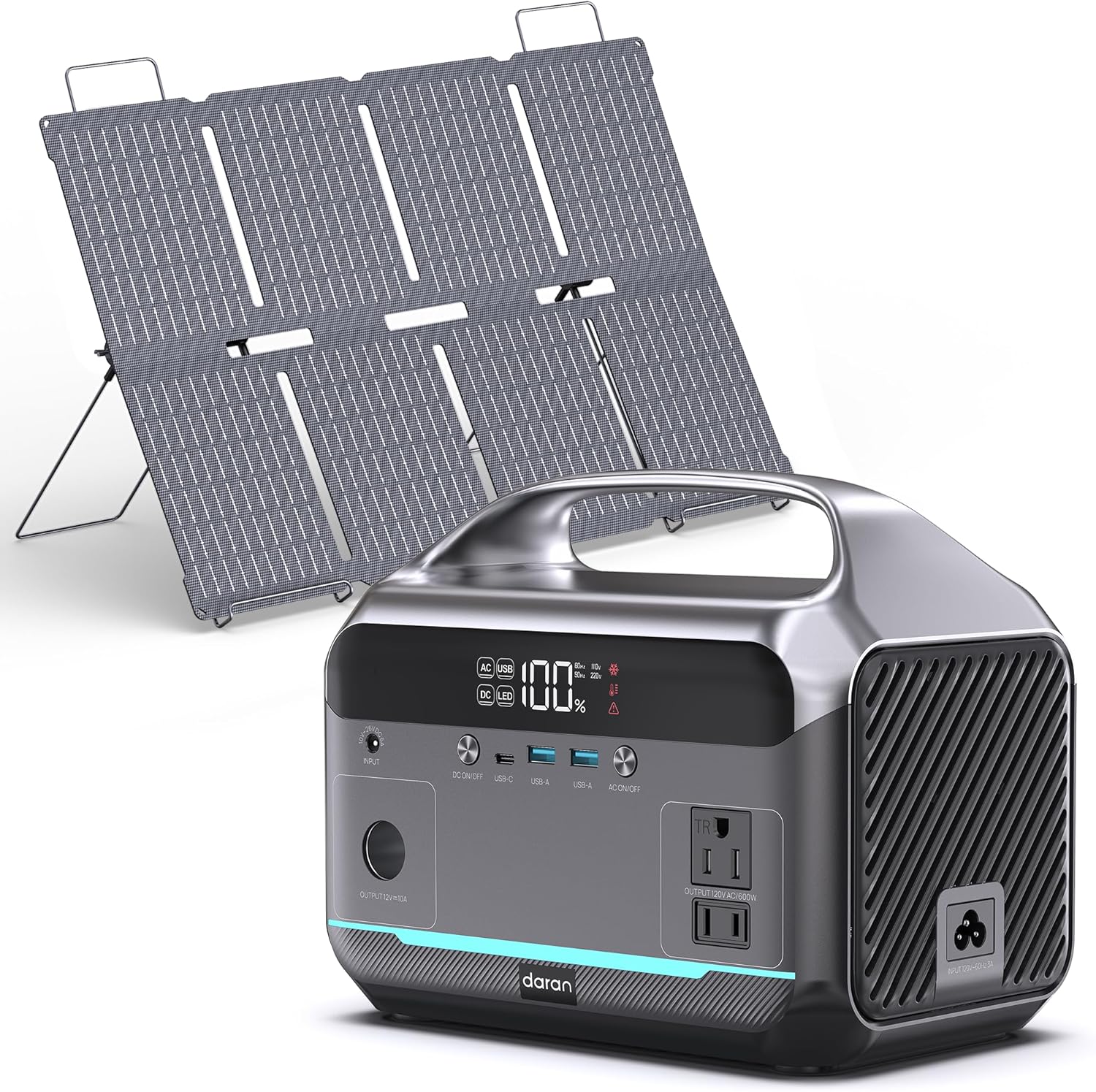
You’ll appreciate how compact and capable the DaranEner Portable Power Station 600W is for short trips and emergency top-ups. It isn’t a whole-house backup, but it offers an excellent mix of portability, fast charging, and long-lasting LiFePO4 chemistry that suits camping, RV use, and basic home emergency needs.
What You Get and How It Feels Out of the Box
You’ll notice the unit is surprisingly light at about 8.4 lb, making it easy to pick up and move. The package includes the 600W power station itself and an 80W solar panel, plus the usual AC charging cable and vehicle adapter depending on the seller’s kit.
The exterior finish feels solid and practical rather than flashy, with a built-in handle for carry. The LED display is useful and intuitive, and the LED light bar with multiple modes gives you practical utility after dark.
Specification Breakdown
You’ll find the headline numbers helpful when comparing options, and this table summarizes the core specs so you don’t have to hunt through fine print.
| Spec | Detail |
|---|---|
| Model | DaranEner Portable Power Station 600W |
| Battery Chemistry | LiFePO4 (LFP) |
| Capacity | 288Wh |
| Continuous AC Output | 600W (Pure Sine Wave) |
| Surge Output | 1200W (peak) |
| AC Outlets | 2 × AC outlets |
| USB-C Ports | 2 × 100W USB-C (fast charge) |
| USB-A | 1 × 18W USB-A |
| DC Ports | 2 × DC5521 ports |
| Car Charger | 1 × 120W car charger socket |
| Solar Panel | 80W included (max solar input stated as 100W) |
| Charging Speed | 0→80% in ~1 hour, full in ~1.7 hours (max ~170W input) |
| Cycle Life | >3,500 cycles to 80% capacity |
| Weight | 8.4 lb |
| Additional Features | LED light bar with 2 brightness levels, strobe and SOS; LED status display; advanced BMS |
You’ll want to verify packaging contents with the seller since accessory bundles sometimes vary by retailer. The solar panel included at 80W is a good match for the unit’s size, but you can usually add third-party panels up to the unit’s input limit.
First Impressions of Build and Design
You’ll get a compact, no-nonsense design that favors practicality over aesthetics. The shell looks durable enough for outdoor use while remaining lightweight for carry.
The layout of ports is straightforward, so you won’t fumble when you need to plug in multiple devices quickly. The built-in LED light and its modes add a useful function for tent setups or emergency use.
Design and Build Quality
You’ll notice robust plastics and a matte finish that resists fingerprints and scuffs. The handle integrates cleanly into the design and makes the unit feel balanced when you carry it.
Port covers are present to reduce dust ingress, and the display is bright enough to read in daylight. Overall the fit-and-finish is solid for the price range, and the unit doesn’t feel fragile in normal outdoor handling.
Portability and Weight
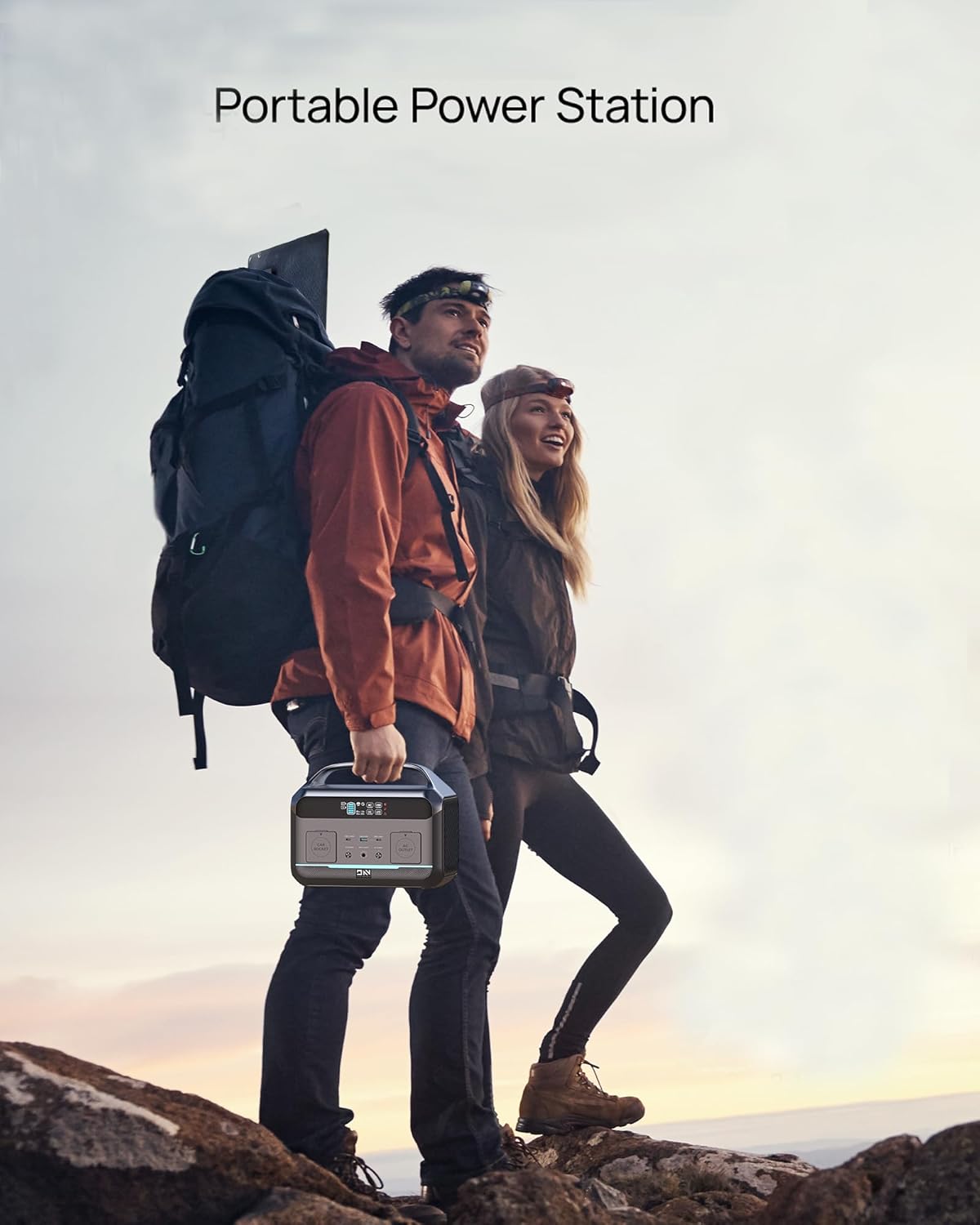
You’ll be able to carry this power station easily thanks to its 8.4 lb weight and compact footprint. It’s one of the lighter LiFePO4 units with reasonable capacity, so it’s ideal if you need to move your power source frequently.
Because it’s lighter than many comparable LiFePO4 models, you won’t feel burdened on short hikes from vehicle to campsite, and storage in an RV compartment or closet is effortless.
Battery and Chemistry: Why LiFePO4 Matters
You’ll benefit from LiFePO4 battery chemistry because it delivers a longer lifecycle and improved thermal stability compared with consumer lithium-ion cells. That means the battery is safer under heavy use and should maintain capacity significantly longer.
LiFePO4 also tolerates frequent partial charges better, which matches how many people actually use portable stations — topping up regularly rather than doing deep cycles every time. If you plan to use the unit daily or seasonally, that chemistry pays off over the long term.
Lifespan and Cycle Count
You’ll see a rating of over 3,500 cycles to 80% capacity, which translates to years of reliable use for most owners. If you charge once or twice a week, that could mean many years of service before noticeable capacity loss.
This endurance makes the unit an especially good choice if you plan repeated weekend trips, or if you want a dependable emergency power option without worrying about battery replacement soon.
Safety Features and BMS
You’ll appreciate the advanced battery management system (BMS) that monitors voltage, current, and temperature to protect the battery and connected devices. The BMS helps prevent overcharge, over-discharge, short circuits, and overheating.
Because LiFePO4 is inherently more stable than some other chemistries, adding a robust BMS yields a combination of safety and longevity that’s attractive for outdoor and home emergency applications.
Power Output and Ports Overview
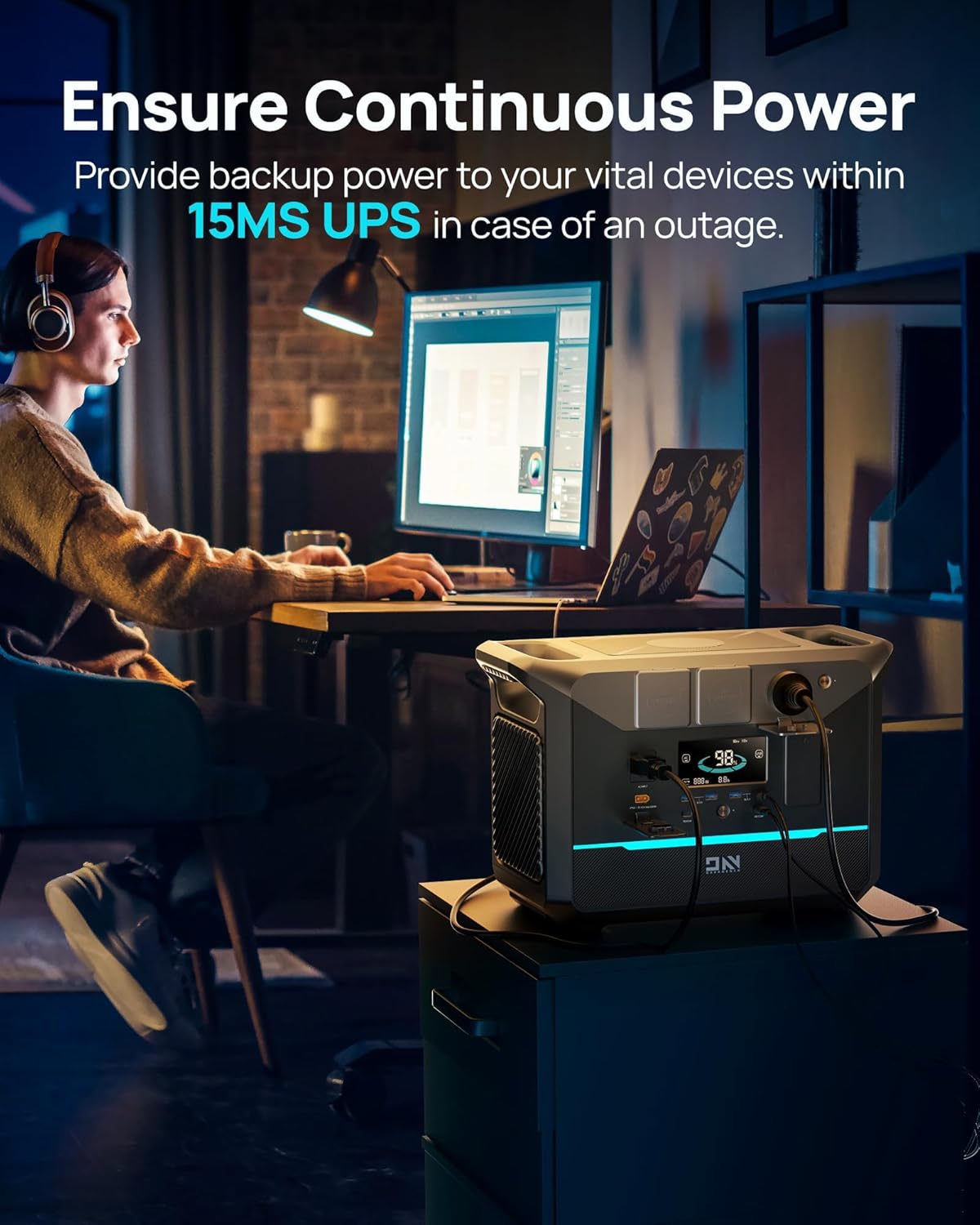
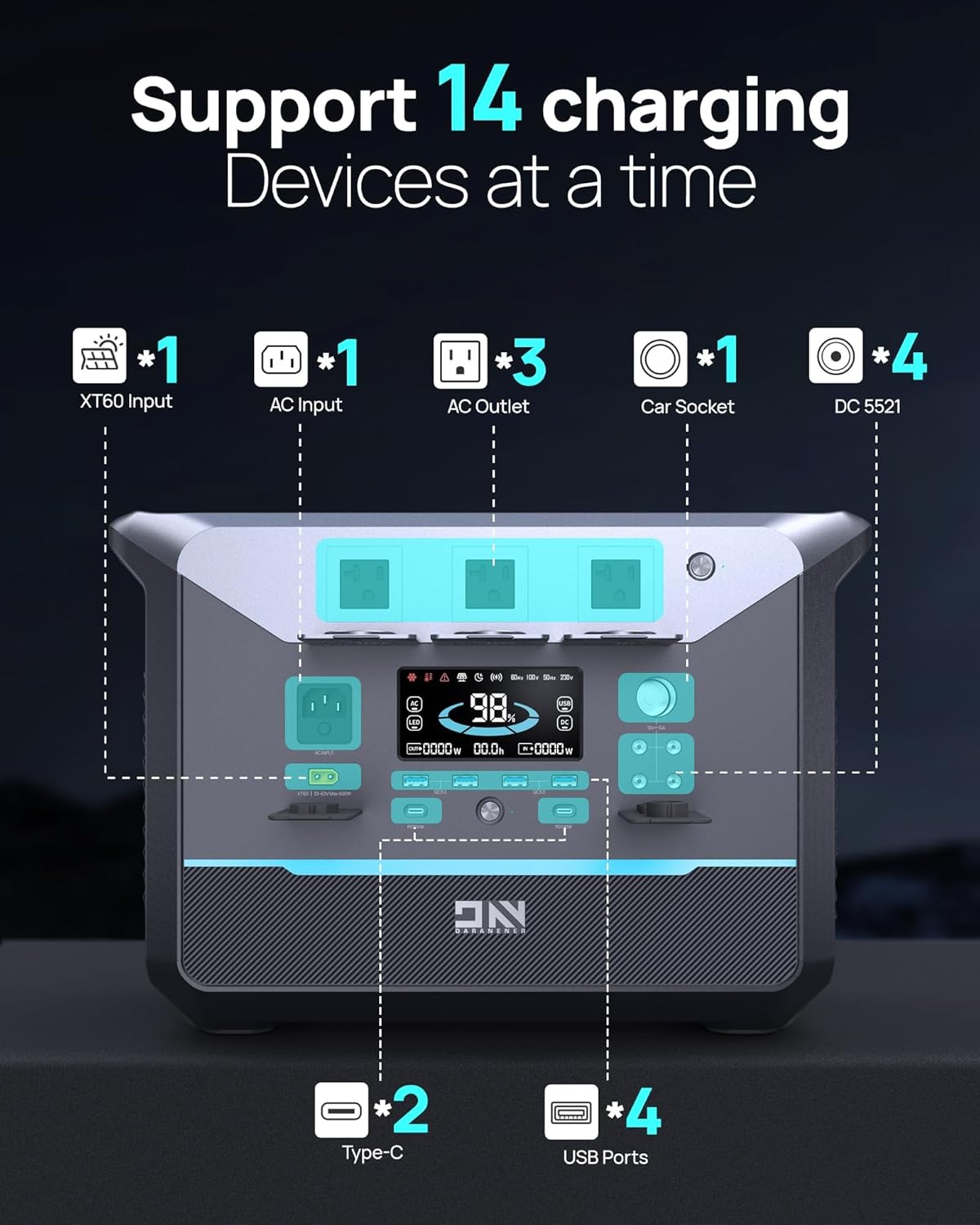
You’ll find a versatile port selection aimed at covering most small-to-medium power needs. The two AC outlets handle typical household electronics up to the unit’s 600W continuous limit, while USB-C ports offer modern fast charging for laptops and phones.
The combination of AC, DC, USB-C, USB-A, and a car charger port allows you to charge or run multiple devices at once, which is handy when you’re with a small group or have multiple devices to keep powered.
AC Outlets and Pure Sine Wave Output
You’ll be able to power sensitive electronics thanks to the pure sine wave inverter, which produces cleaner AC power similar to a household outlet. The 600W continuous output is enough for small appliances, lights, laptops, and chargers, while the 1200W surge helps start some motor-driven devices.
Be mindful of the 600W continuous cap; high-wattage appliances like electric kettles, hair dryers, or large space heaters will exceed this unit’s capacity and should not be used.
USB-C, USB-A, and DC Ports
You’ll appreciate the two 100W USB-C ports for quickly charging modern laptops and phones. The high-power USB-C ports make this unit very practical for digital nomads or people who travel with power-hungry devices.
The 18W USB-A port and two DC5521 outputs give you more options for smaller gadgets, cameras, LED strips, and older accessories that still rely on barrel-style DC plugs.
Car Charging Port
You’ll find a 120W car charger socket that’s helpful for powering 12V devices like coolers, air pumps, or small compressors. If you’re on the road in an RV or a car, that port gives you an extra option to run vehicle-compatible appliances.
Note that the car port is best for DC-native devices and is a good backup when AC or solar charging isn’t convenient.
Charging Methods and Speeds
You’ll benefit from multiple charging options: AC wall charging, solar, and car charging. The unit’s fast charge capability is one of its standout features, especially if you need to get back to full quickly between uses.
The manufacturer claims a 0% to 80% charge in about 1 hour and full charge in 1.7 hours at a max input of about 170W, so in many real-world cases you’ll spend less downtime waiting on the battery.
Wall Charging (AC)
You’ll typically plug into a standard household outlet for the fastest and most convenient recharge. The rated max input means the unit can accept a strong AC charge that accelerates recovery compared with many smaller stations.
Wall charging is straightforward and ideal when you return from a trip or when you’re at home preparing for an outing.
Solar Charging
You’ll be able to recharge via the included 80W solar panel, and the unit accepts solar inputs up to around 100W according to the product notes. Solar charging is excellent for off-grid use when you can set the panel in full sun, but expect charging times to vary with panel angle, shading, and cloud cover.
For practical purposes, a single 80W panel will charge the unit but adding more panels up to the input limit — if supported by the charge controller and connectors — can reduce recharge time. Always verify connector compatibility and nominal VOC before paralleling third-party panels.
Car Charging
You’ll find the car charging option handy for on-the-road top-ups when you have a long drive. Charging while driving is slower than a wall charger but can be useful if you forget to top up before hitting the road.
Use a high-output vehicle inverter or the provided car cable if you want to charge from your vehicle battery; just be mindful of your vehicle’s alternator load if you try to charge extensively without the engine running.
Real-World Performance and Run Time Estimates
You’ll want to know how long the station will power everyday devices. Below is a table of typical device draws and estimated run times, based on the 288Wh battery capacity and accounting for inverter and conversion losses in AC scenarios.
| Device | Typical Power (W) | Estimated Run Time (hours) |
|---|---|---|
| Smartphone (charging) | 10 W | ~20–25 hours |
| Laptop (USB-C, 60 W) | 60 W | ~3.5–4.5 hours |
| DSLR camera battery charger | 20 W | ~10–12 hours |
| Portable fan (12V DC) | 25 W | ~8–10 hours |
| CPAP machine (12–40 W average) | 40 W | ~5–7 hours |
| LED lighting (10 W total) | 10 W | ~20–25 hours |
| Mini fridge (average draw 40–60 W) | 50 W | ~5–6 hours (compressor cycling may extend usable time) |
| Small TV (32″, LED) | 40–60 W | ~4–5 hours |
| Electric kettle / heater | >1000 W | Not supported (exceeds 600W) |
You’ll want to treat these as conservative estimates because the real-world duration varies by device behavior, duty cycle, and inverter efficiency. For AC devices, expect about 10–15% overhead from inverter losses; DC direct loads (via DC ports) are slightly more efficient.
Fast Charging Performance in Practice
You’ll find the fast-charge claim impressive in many cases — getting to 80% in about an hour is a practical advantage if you use the station repeatedly on short trips. High charge rates are convenient when you have limited time between outings.
Remember that charge speed depends on the incoming power source — wall charging at the unit’s maximum allowed input yields the fastest times, while solar and car charging may be slower or more variable depending on conditions.
Solar Panel Performance and Environmental Considerations
You’ll benefit from an included 80W solar panel that’s compact enough to pack with your gear. In full sun, the panel can provide meaningful charge, but expect slower and more variable rates than plugging into the wall.
Solar is most effective when combined with planning: placing the panel perpendicular to the sun, avoiding shade, and charging over several hours will yield the best results. If you rely on solar as your primary recharge source, consider supplementing with an additional panel or planning for partial-day use.
Use Cases — How You’ll Use This Unit
Camping
You’ll appreciate the unit’s ability to power small appliances, charge devices, and light a campsite. It’s small enough to carry from vehicle to site and powerful enough to run a few essentials.
The LED modes and the quiet operation make it pleasant for overnight stays without disturbing others.
RV Travel
You’ll find the power station fits neatly in an RV compartment or under a seat for quick access. It offers a reliable backup when the RV’s battery or shore power is unavailable or when you need portable charging away from the camper.
Use it to top up devices while landing accessories like a small fridge or fans during short boondocking stops.
Home Emergencies and Severe Weather
You’ll appreciate the longevity and reliability of LiFePO4 chemistry during outages. The unit will keep phones, routers, lights, and small medical devices running through short power interruptions.
Although it won’t run major household appliances for long, it’s an excellent way to maintain communication, lighting, and essential devices during severe weather events.
Everyday and Off-grid Power
You’ll see this unit as a practical daily driver for charging laptops, phones, and small devices while working remotely. If you frequently move between locations, the combination of fast charging and light weight makes it an approachable option.
For occasional off-grid tasks like powering a saw or pump briefly, the surge capability can help start motorized devices, but watch the continuous draw.
Pros and Cons
You’ll find a balanced set of advantages and constraints that determine whether this unit is the right fit for you.
Pros:
- You’ll benefit from LiFePO4 battery longevity and safety.
- You’ll get very fast recharge times compared with many portable units.
- You’ll appreciate the light weight and portability for camping, travel, and daily carry.
- You’ll have useful port diversity including two 100W USB-C ports.
- You’ll enjoy built-in lighting modes for campsite and emergency use.
Cons:
- You’ll be limited by a 600W continuous AC output for larger appliances.
- You’ll get a moderate total capacity of 288Wh, which is great for short trips but not for extended off-grid stays.
- You’ll want to be mindful that real-world solar charging depends heavily on conditions and may be slower than wall charging.
- You’ll need to check accessory bundles—some sellers may not include all cables or might bundle different solar panels.
Comparison with Similar Units
You’ll notice this DaranEner model sits between ultraportable USB battery-style units and heavier high-capacity LiFePO4 stations. It’s lighter than most high-cycle LiFePO4 rivals while offering many of the same safety and longevity benefits.
If you want longer runtime for heavy loads, larger-capacity units exist but they’re heavier and less portable. If your priority is portability with modern fast-charging ports and long battery life, this product strikes a strong middle ground.
Practical Tips for Getting the Most Out of It
You’ll extend battery life by avoiding deep discharges when possible and storing the unit at partial charge for long-term storage. Frequent partial charging is fine with LiFePO4, but extreme temperatures and prolonged full discharges reduce longevity.
Use DC ports where possible for higher efficiency, and plan to charge from AC when available to take advantage of the fast-charge capability.
Maintenance and Care
You’ll want to keep the unit dry and stored in a cool place to maximize battery life. Clean the exterior and port covers to prevent dust buildup, and avoid exposing the included solar panel to rough handling.
Check firmware and documentation for any recommended storage charge levels if you expect long inactivity, and cycle the battery every few months to maintain it in good health.
Safety and Warranty Considerations
You’ll find safety is enhanced by the LiFePO4 chemistry and advanced BMS, but you should still follow safe charging practices. Avoid leaving the unit in direct sunlight for extended periods, and don’t attempt to disassemble it.
Review the seller’s warranty terms before purchase so you know what’s covered and for how long. Keep receipts and register the product if registration yields extended support.
What You Shouldn’t Expect
You’ll want to avoid assuming the unit can run high-wattage appliances like hair dryers, ovens, or full-size space heaters. Because the continuous AC rating is 600W, any device drawing more than that will trip the inverter or be unsupported.
Also, don’t expect overnight running of high-draw devices for days; the 288Wh capacity is best suited for shorter durations or lower-power loads.
Who Is This Best For?
You’ll find this station especially useful if you need a portable, reliable power source for day trips, weekend camping, short RV stops, or keeping essential devices alive during outages. It’s a great match for people who value fast recharge, modern ports, and long battery cycle life without the weight of larger LiFePO4 systems.
If you need a multi-day off-grid solution or want to run heavy appliances continuously, you’ll likely need a larger-capacity unit or a battery bank with higher continuous output.
Frequently Asked Questions (FAQ)
You’ll probably have a few practical questions before buying; here are answers to common ones.
-
Can you run a CPAP?
You’ll be able to run many CPAP models, especially travel-style machines that draw 40W or less. Check your CPAP’s power rating and consider using DC mode if supported for better efficiency. -
Can you add more panels to speed up solar charging?
You’ll be able to increase solar input up to the unit’s input limit (the product mentions max 100W). Before paralleling panels, confirm voltage and connector compatibility. -
Does the unit support pass-through charging?
You’ll typically be able to use devices while charging the station, but confirm this behavior in the manual for continuous use under load while charging. -
How long is the warranty?
You’ll want to check the seller’s listing and included documentation for exact warranty length and coverage details, as these can vary.
Final Thoughts
You’ll find that the DaranEner Portable Power Station 600W with 80W solar panel offers a compelling blend of portability, fast charging, and long-lived LiFePO4 battery chemistry. It’s a practical choice if you prioritize light weight, quick recharge, and modern fast-charging ports for laptops and phones.
If you need more sustained high-power output or very large battery capacity, this isn’t the unit for full-home backups, but for camping, RV trips, daily carry, and emergency essentials it offers a flexible, well-rounded option that’s easy to live with.
Disclosure: As an Amazon Associate, I earn from qualifying purchases.