
Ever had your plans halted by a dead car battery at the worst possible moment?
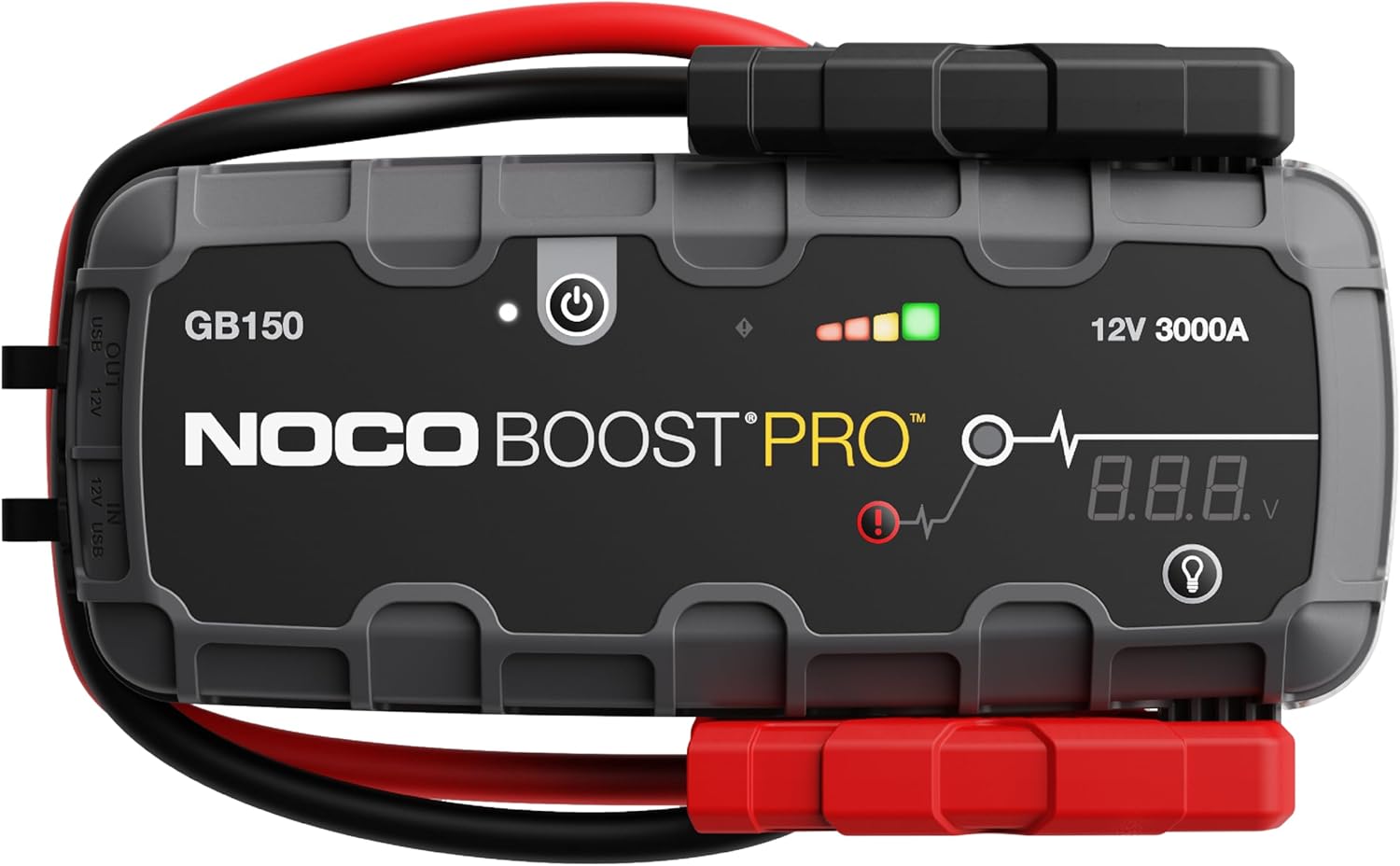

NOCO Boost GB150: Quick first impressions
You’ll notice right away that the NOCO Boost GB150: 3000A UltraSafe Jump Starter – 12V Lithium Battery Booster Pack, Portable Jump Box, Power Bank & Jumper Cables – for 9.0L Gas and 7.0L Diesel Engines feels like a serious piece of gear. It strikes a balance between muscular starting performance and a compact, travel-friendly design that makes it easy to keep in your trunk or emergency kit.
Packaging and build quality
When you unbox it, the GB150 feels solid and thoughtfully packaged, with the clamps, USB-C cable, and storage bag all neatly organized. The rubberized over-molding and IP65-rated housing make it clear NOCO designed this for rough use and outdoor handling.
Key specifications at a glance
You’ll appreciate having the main specs summarized so you know what the unit can do without scanning the manual. Below is a quick table to break down the most relevant technical details for easier understanding.
| Specification | Detail |
|---|---|
| Model | NOCO Boost GB150 |
| Peak Current | 3000 amps |
| Engine Compatibility | Up to 9.0L gas / 7.0L diesel |
| Battery Type | High-discharge lithium |
| Estimated Starts per Charge | Up to 80 starts (varies by vehicle and conditions) |
| Power Bank | Integrated (USB output) |
| Recharge Time | ~7 hours via USB-C |
| LED Flashlight | 500-lumen, 7 modes (including SOS, strobe) |
| Weight | ~7.5 lb |
| Ingress Protection | IP65 (water and dust resistant) |
| Safety Features | Spark-proof, reverse polarity protection |
| What’s in the box | GB150 unit, heavy-duty clamps, USB-C cable, microfiber bag |
| Warranty | 1-year |
| Engineered | USA |

Starting performance: power where you need it
You’ll find that 3000 amps of peak power is a lot of starting muscle for a compact unit, and it’s designed to handle larger engines you might own or work on. That capability translates into reliable starting for most cars, trucks, SUVs, boats, and even commercial equipment that fall within the specified engine sizes.
Real-world starting capability
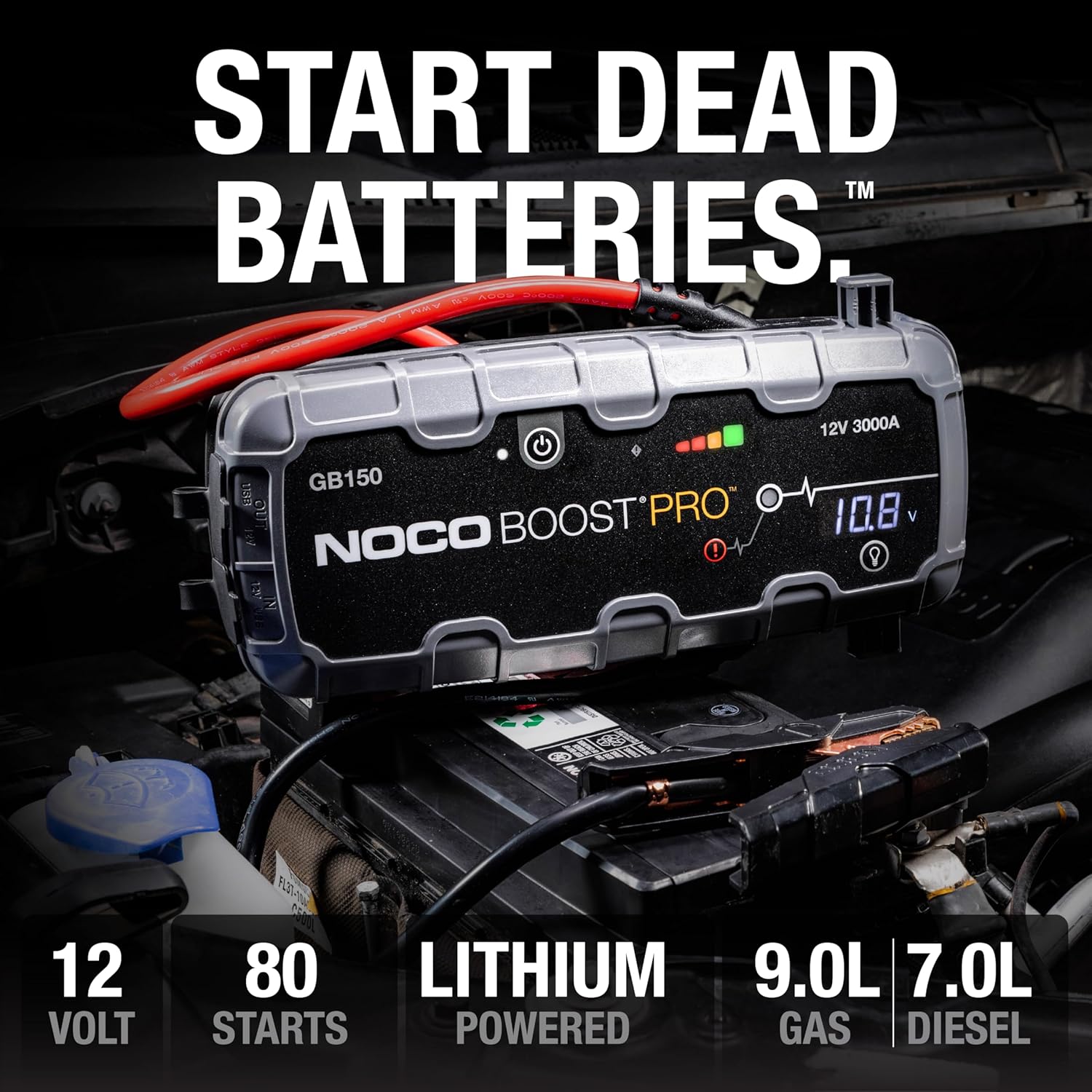
In practice, the GB150 is rated to start engines up to 9.0L gas and 7.0L diesel, and you can expect up to about 80 starts per full charge under ideal conditions. You should factor in that very cold weather, accessory loads, or severely depleted batteries will reduce that number, but the GB150 still remains one of the more capable compact jump starters you can carry.
Safety features: make connections with confidence
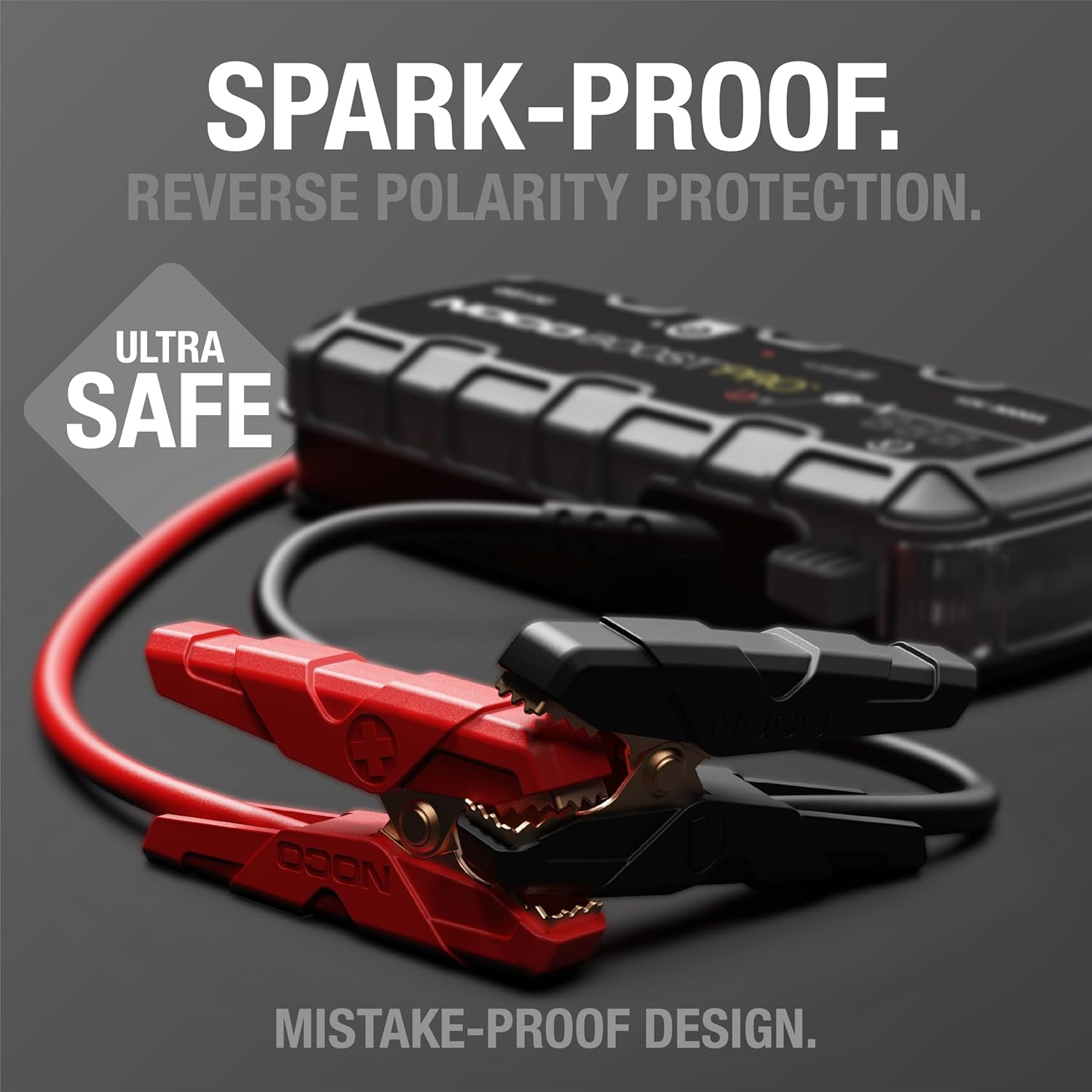
You’ll appreciate NOCO’s UltraSafe technology if you’re worried about hooking up clamps in the dark or making a mistake in the heat of the moment. Spark-proof operation and reverse polarity protection mean the unit actively prevents dangerous misconnection and avoids the sparks you might fear.
What UltraSafe actually does for you
The integrated safety systems automatically disable output if you try to connect clamps incorrectly, and they prevent sparks when making the initial connection. That translates to less stress and safer operation for you, especially if you don’t jump-start vehicles frequently.
Portability and design: compact but rugged
You’ll notice the GB150 is heavier than tiny pocket jump starters but still portable at about 7.5 pounds — light enough to carry into a workshop or stow permanently in a vehicle. The compact footprint and rubberized over-molding make it easy to handle and more resistant to the bumps and fluids a toolkit sees.
Storage and carrying
Because it’s compact, you can tuck it into a glove box, trunk compartment, or emergency kit without sacrificing too much space. The included microfiber storage bag helps keep the clamps and cable organized and prevents scratches to trim or other gear.
Power bank functionality: more than a jump starter
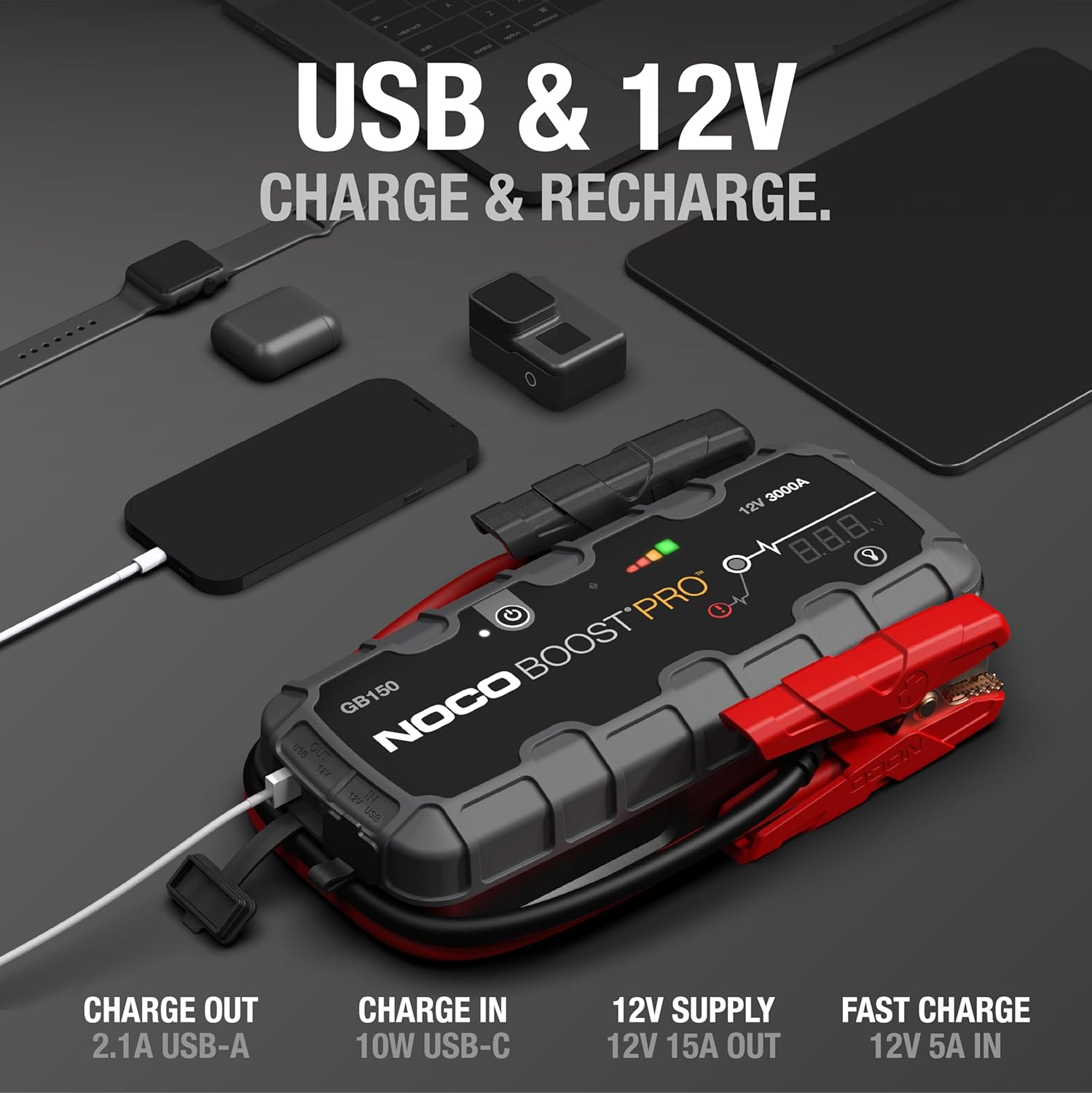
You’ll find the integrated power bank handy when your phone, tablet, or other USB devices need emergency power. The GB150 can charge small electronics via its USB output, making it useful for roadside emergencies, camping, or any time you need a backup battery.
Charging and recharge time
Recharging the GB150 takes approximately 7 hours using the included USB-C cable, and that timeframe is reasonable given the high-discharge lithium cell inside. If you rely on it frequently for powering devices, plan to top it up regularly so it’s ready when you need it.
LED flashlight: built-in illumination when you need it
You’ll appreciate the 500-lumen LED with multiple modes when working on vehicles in low-light conditions or signaling for help. Modes include standard high/low, SOS, strobe, and others to cover tasks like inspecting an engine or walking to a safe location.
Usefulness of the light modes
The SOS and strobe modes are practical safety features for roadside emergencies, while the bright 500-lumen output gives you true hands-free work light for repairs. The flashlight’s precision engineering also means the beam is well-shaped for task work and emergency signaling.
Durability and weather resistance: built to handle rough conditions
You’ll find the IP65-rated housing reassuring because it offers protection against dust and low-pressure water spray, so a sudden rain shower or dusty garage won’t immediately compromise the unit. The rubberized over-mold adds impact resistance, making it more likely to survive drops or rough handling.
Long-term resilience
NOCO’s choice of rugged materials and the heavy-duty clamps with high conductivity suggest this unit is meant for repeated field use. With proper care, the GB150 should serve you for years without failing in normal use cases.
What’s in the box: everything you need to get started
You’ll get the GB150 unit, heavy-duty clamps, a USB-C charging cable, and a microfiber storage bag. The included items make the unit usable right away and keep the accessories organized for storage in your vehicle.
Additional support and warranty
NOCO backs the product with a 1-year warranty and designs the unit in the USA, giving you some peace of mind about customer support and product reliability. Be sure to register or keep your purchase receipt for any warranty claims.
How to use the GB150 safely: step-by-step
You’ll want a clear, confident process for jump-starting a vehicle so you avoid mistakes and stay safe. Follow these steps every time to ensure proper connection and operation.
- Confirm compatibility with your vehicle (12V system, engine size within limits). Always check your vehicle owner’s manual for any jump-start restrictions.
- Turn off both vehicles and all accessories (lights, radio, HVAC). This reduces risk and avoids electrical surges.
- Attach the clamps to the GB150 if they aren’t already connected; the unit’s safety system prevents wrong connections.
- Connect the positive (red) clamp to the dead battery’s positive terminal.
- Connect the negative (black) clamp to a solid, unpainted chassis ground away from the battery. This reduces spark risk and avoids battery off-gassing.
- Power on the GB150 and follow any indicator lights to ensure it’s ready to deliver current.
- Attempt to start the engine. If it doesn’t start immediately, wait 30–60 seconds and try again. Avoid continuous cranking for more than the manufacturer recommended time.
- Once the engine starts, disconnect clamps in reverse order and allow the vehicle to run to recharge the battery.
Tips for repeatable success
You’ll get better at jump-starts with practice: clamp order, grounding technique, and troubleshooting dead batteries will become second nature. Keep the GB150 recharged and store it in a dry, accessible spot so it’s ready when you need it.
Performance in different scenarios
You’ll likely encounter a range of situations — cold starts, semi-trucks, boat batteries, or maintenance-free batteries. The GB150 handles many of them, but you’ll want to be aware of limits.
Cold weather starts
Cold weather reduces battery output and engine cranking efficiency, but the GB150’s high-discharge lithium chemistry helps compensate and provides more reliable starting in low temperatures compared with smaller jump starters. Still, expect fewer starts per charge in extreme cold, and consider storing the unit in a temperature-moderated area if you live in severe climates.
Starting larger equipment
For light-duty commercial vehicles and larger engines within the 9.0L gas and 7.0L diesel specs, you’ll find the GB150 capable. If you frequently need to start much larger engines or heavy diesel equipment beyond those limits, you might need a more powerful professional unit.
Maintenance and charging best practices
You’ll extend the life and reliability of the GB150 by adopting a few simple habits that keep the battery healthy and ready.
- Charge it after any heavy use, even if it still shows partial capacity.
- Store it somewhere cool and dry but not freezing; extreme heat and cold reduce battery lifespan.
- Periodically check clamps and cable connections for corrosion or damage.
- Don’t store it depleted — lithium batteries prefer a partial or full charge for long-term storage.
When to service or replace
You’ll know to consider a battery health check or replacement if the unit no longer holds a charge, fails to deliver starting power reliably, or if physical damage compromises the case or clamps. Contact NOCO support for warranty and service guidance before attempting repairs yourself.
Troubleshooting common issues
You’ll be able to resolve most small problems quickly if you follow a few straightforward checks. Troubleshooting helps you avoid unnecessary returns and gets you back on the road faster.
- Unit won’t charge: Verify the USB-C cable and outlet are functional and try a different cable or charger.
- No starting output: Ensure clamps are correctly attached and check that the safety indicator isn’t showing a fault.
- Reduced starts per charge: Consider environmental factors and battery age; cold weather and multiple cranks reduce capacity.
- LED flashlight not working: Confirm the unit isn’t deeply discharged and try charging; if still faulty, consult support.
When to contact support
You’ll want to reach out to NOCO support if the unit shows persistent faults, physical damage, or if safety features trigger unexpectedly after following the manual’s procedures. Keep your purchase information handy for faster service.
Pros and cons
You’ll find the strengths and trade-offs summarized here to help you decide if the GB150 fits your needs. This concise list makes it easier to weigh the decision.
Pros:
- Massive 3000A peak current for reliable starts.
- Can handle up to 9.0L gas and 7.0L diesel engines.
- UltraSafe spark-proof and reverse polarity protection reduces risk.
- Integrated power bank and a bright 500-lumen flashlight add utility.
- Compact 7.5 lb design that’s easy to store.
- IP65-rated rugged housing and heavy-duty clamps for durability.
Cons:
- Heavier and pricier than smaller pocket jump starters.
- Up to 7-hour recharge time might be inconvenient if you need rapid turnaround.
- Limited to 12V systems only — not suitable for some heavy industrial 24V vehicles.
- One-year warranty may feel short compared to some competitors offering extended coverage.
How the GB150 stacks up against alternatives
You’ll benefit from seeing how the GB150 compares to other popular jump starters so you can match features to your needs. Below is a quick comparison table to give perspective.
| Feature | NOCO Boost GB150 | Typical Mid-Range Competitor | Lightweight Pocket Unit |
|---|---|---|---|
| Peak Current | 3000A | 2000–2500A | 400–1000A |
| Engine Size Support | Up to 9.0L gas / 7.0L diesel | Up to 6.0L gas / 4.0L diesel | Small cars only |
| Weight | ~7.5 lb | 4–8 lb | <2 lb< />d> |
| Safety Features | Spark-proof, reverse polarity | Often includes polarity protection | Limited safety features |
| Power Bank | Yes | Some models | Some models |
| Recharge Time | ~7 hours | 2–6 hours | 1–4 hours |
| Build / IP Rating | IP65 rugged housing | Varies | Light duty |
What this comparison means for you
You’ll pay more for the GB150’s bigger starting capacity and rugged build compared with pocket units, but you’ll also gain far greater capability and peace of mind for larger engines. If you need something ultra-compact for occasional small-car use, a lighter unit may suffice; if you want a serious multi-purpose tool, GB150 is more appropriate.
Who should buy the GB150
You’ll be a great candidate for the GB150 if you own one or more larger vehicles, work on vehicles professionally, need a versatile emergency power solution, or frequently find yourself in remote locations. It’s built for people who want a reliable, safe, and powerful jump starter that does more than just crank an engine.
Who might not need it
If you only drive a small commuter car and rarely need emergency power beyond a phone charge, a smaller, less-expensive unit might be more practical. Similarly, if you require a unit for 24V systems or very large commercial diesel engines, you’ll need a different solution.
Price and value: is it worth it?
You’ll evaluate worth by balancing initial cost against functionality, durability, and peace of mind. The GB150 is positioned as a premium compact unit that justifies its price if you value high starting current, advanced safety features, and additional utilities like a power bank and bright flashlight.
Longevity as value
You’ll likely see the investment pay off if the unit stays reliable for several years of use, saves you from towing fees or stranded times, and serves multiple purposes beyond jump-starting. The Rugged build and engineered-in-USA pedigree add to perceived long-term value.
Frequently asked questions
You’ll probably have a few questions before buying or using it; here are answers to the most common ones.
Q: Can the GB150 be used on a motorcycle or boat?
A: Yes — it’s compatible with any 12V system within its power envelope, so motorcycles, boats, and small engines typically work fine. Always confirm your vehicle’s specifications.
Q: How often should you charge the GB150 if stored?
A: Charge it every 3–6 months if stored long-term, or after any use. Lithium batteries self-discharge slowly but regular top-ups help maintain capacity.
Q: Can you charge the GB150 from a car USB port?
A: You can charge via USB-C, but the time may vary depending on the port’s power output; a dedicated higher-output USB-C charger is recommended for the fastest recharge (~7 hours).
Q: What happens if you connect the clamps backwards?
A: UltraSafe technology prevents operation in the case of reverse polarity, and the unit will disable output to avoid damage and sparks.
Final verdict
You’ll find the NOCO Boost GB150: 3000A UltraSafe Jump Starter – 12V Lithium Battery Booster Pack, Portable Jump Box, Power Bank & Jumper Cables – for 9.0L Gas and 7.0L Diesel Engines to be a robust, well-rounded emergency power tool that’s ideal for drivers who need dependable starting power and multi-purpose functionality. Its combination of high peak current, advanced safety features, integrated power bank, and durable construction make it a top choice if you want a reliable solution for both everyday and emergency situations.
Final buying guidance
If you value reliability, safety, and broader capabilities — and you’re willing to invest in a premium compact jump starter — the GB150 is worth serious consideration. Keep it charged, store it accessibly, and you’ll likely be thanking yourself the first time it rescues you from a dead battery.
Disclosure: As an Amazon Associate, I earn from qualifying purchases.